LLNL simulations calculate ICF’s asymmetry limits

August 28, 2026, 10:52AMNuclear News
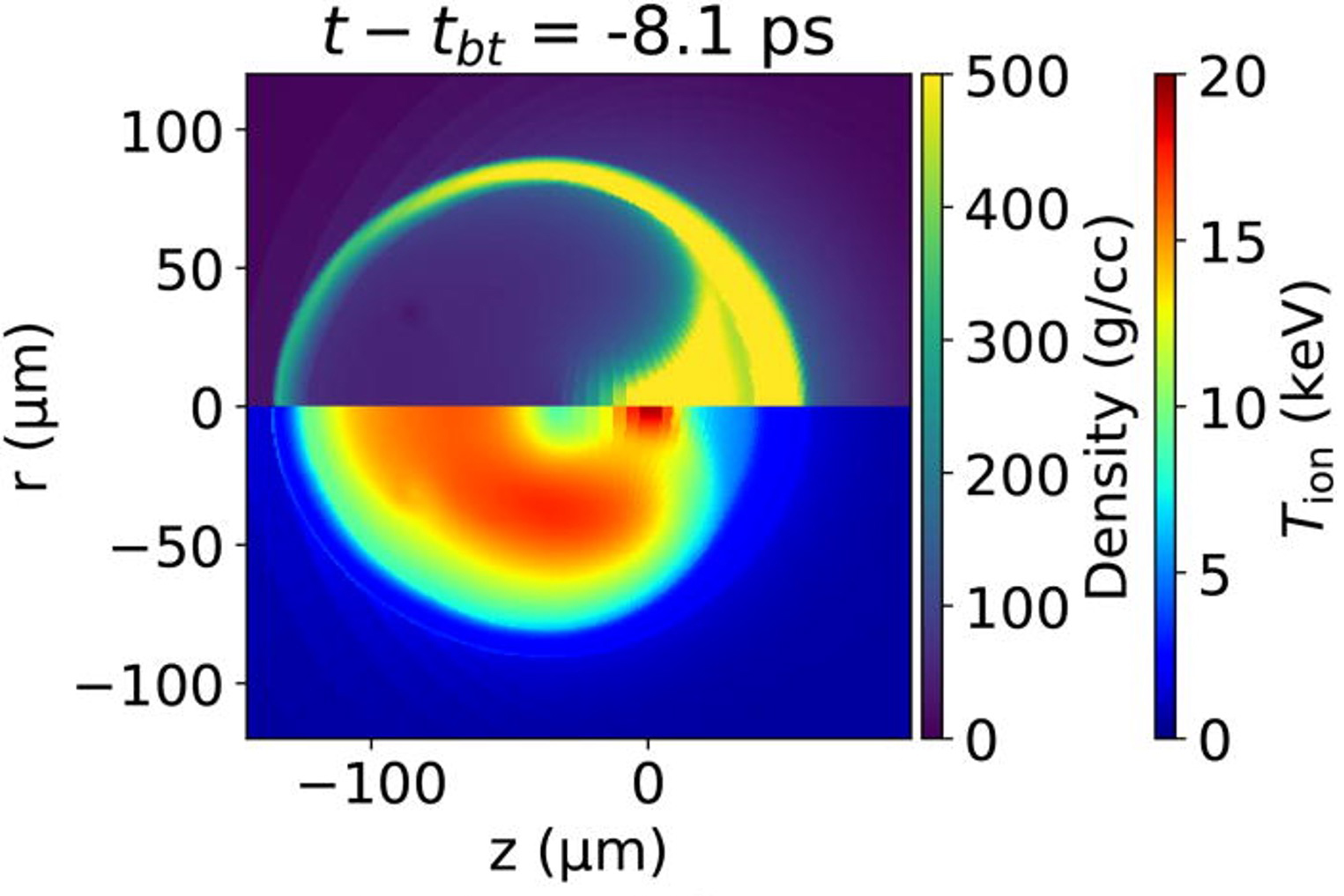
A simulation from the study shows density (top) and temperature (bottom) just before the time when fusion reactions peak in an asymmetric implosion. The hottest point coincides with the densest point of fuel, illustrating the direct ignition of a dense jet of fuel driven by asymmetry. The image was recently selected for the cover of Physics of Plasmas. (Image: LLNL)

Researchers at Lawrence Livermore National Laboratory used simulations to show that inertial fusion power plants could tolerate significant low-mode asymmetries, such as those caused by laser alignment being off-center, revealing a trade-off between robustness and yield that could impact how power plants are brought on line.

New measurement of diamond phase change could mean increased ICF energy gain

August 14, 2026, 2:10PMNuclear News
New melting experiments confirm that diamond floats in metallic liquid carbon at high pressures, much like ice cubes float in a glass of water. (Image: James Wickboldt/LLNL)

Researchers at Lawrence Livermore National Laboratory have measured how diamond melts under extreme pressures, resolving a long-standing discrepancy between experiment and theory. In inertial confinement fusion experiments, where a diamond capsule is used to hold fuel, this refined understanding of diamond’s phase change has the potential to triple energy gain, provided that other degradation mechanisms can be controlled.

Fusion simplification demonstrated by Pacific Fusion and Sandia

February 6, 2026, 10:24AMNuclear News

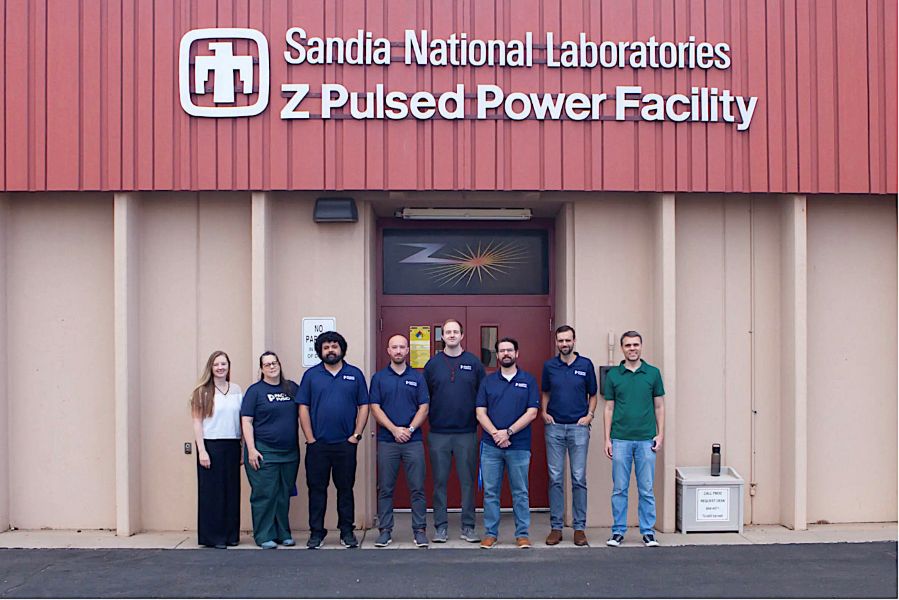
Members of the Pacific Fusion team pose in front of the Z Pulsed Power Facility at Sandia National Laboratories. (Photo: Pacific Fusion)

California-based Pacific Fusion, in partnership with Sandia National Laboratories, has reported “removing a significant roadblock to practical fusion power at scale” by achieving pulser-driven inertial confinement fusion (ICF) with a simpler, less expensive approach than previously used.

First Light Fusion wants to operate a net gain inertial fusion machine in 2027

January 27, 2023, 9:30AMNuclear News
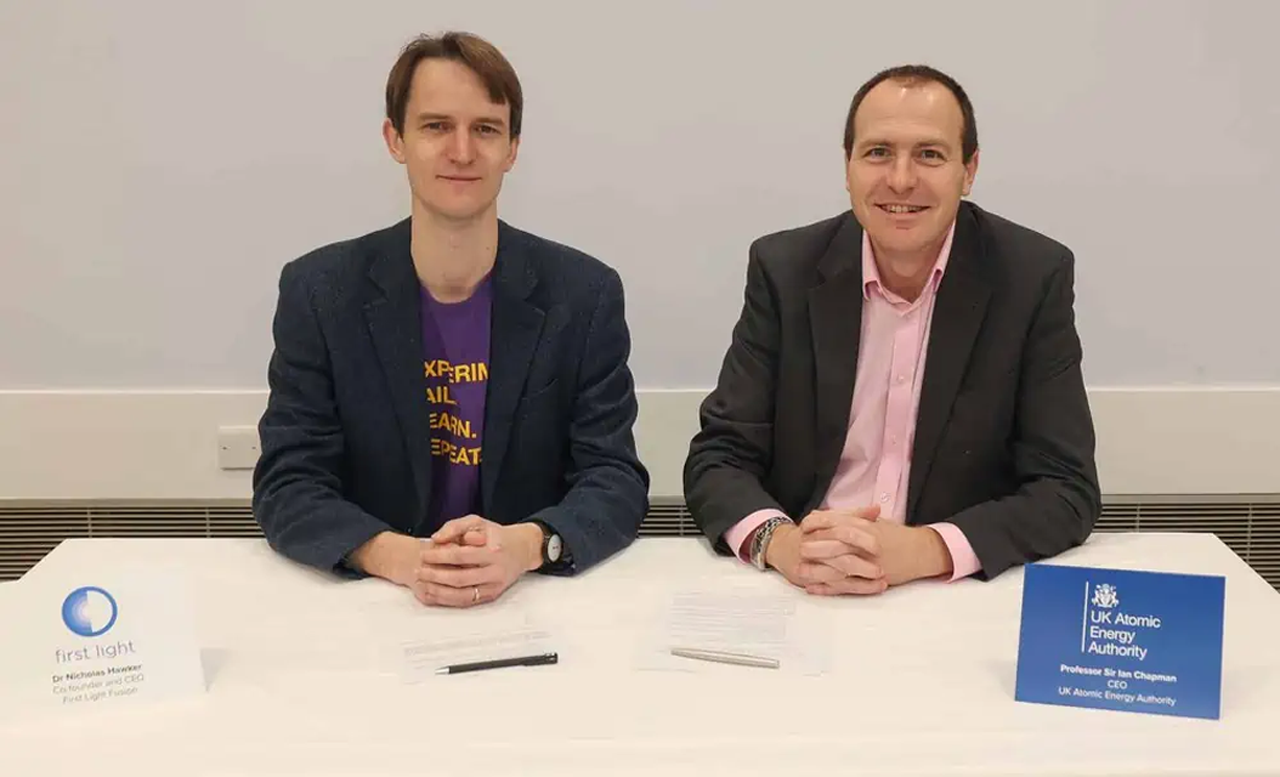
Nicholas Hawker of First Light Fusion and Ian Chapman of UKAEA. (Photo: UKAEA)

Ignition and net gain at Lawrence Livermore National Laboratory’s National Ignition Facility (NIF) in December 2022 focused global attention on the prospects of inertial fusion energy (IFE). First Light Fusion and the U.K. Atomic Energy Authority (UKAEA) acknowledged the achievement as they announced plans on January 25 to design and build a demonstration facility known as Machine 4 at UKAEA’s Culham Campus in Oxford, U.K., using First Light’s “projectile approach” to IFE. Construction is expected to begin in 2024, and operations are “likely to commence” in 2027.