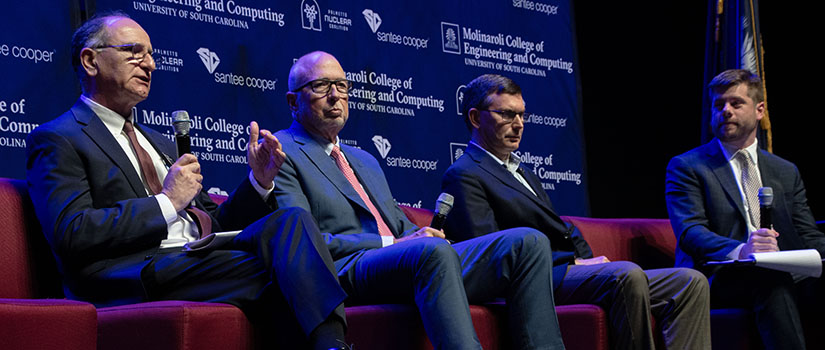
Some of the speakers at the summit. (Photo: University of South Carolina)
The second annual South Carolina Nuclear Summit held last week featured utility executives and legislators from the state, as well as leaders from Brookfield Asset Management, which is being considered to restart construction on the two abandoned reactors at the V.C. Summer nuclear power plant in Fairfield County. The summit, at the University of South Carolina’s Colonial Life Arena, attracted more than 350 attendees. The event was hosted by the university’s Molinaroli College of Engineering and Computing.
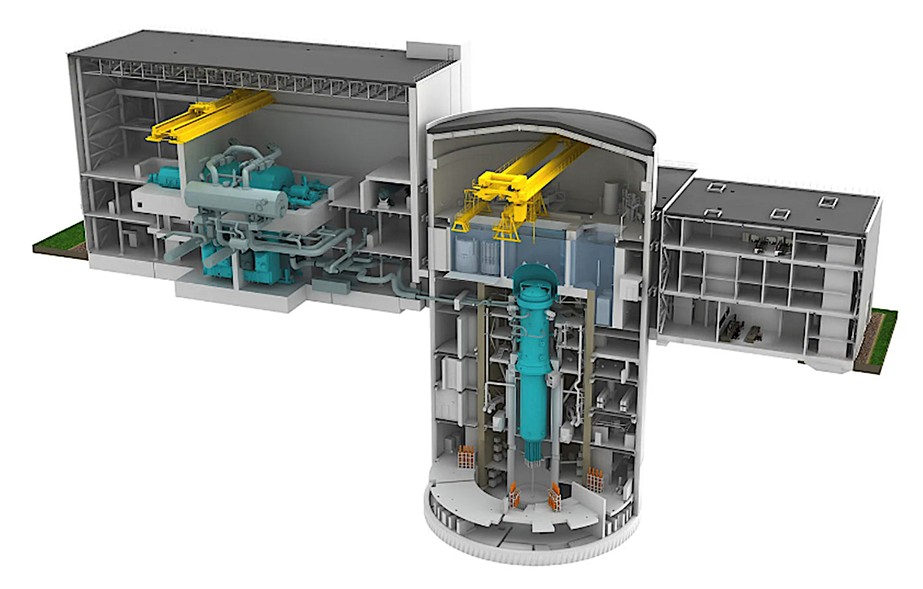
A cutaway of the BWRX-300 SMR design. (Image: GVH)
GE Vernova Hitachi Nuclear Energy’s BWRX-300 small modular reactor has completed the second step of the generic design assessment (GDA) process in the United Kingdom. In this step, the U.K. Office for Nuclear Regulation, the Environment Agency, and Natural Resources Wales did not identify “any fundamental safety, security safeguard or environmental protection shortfalls with the design of the BWRX-300.” Step 1 was completed in December 2024.
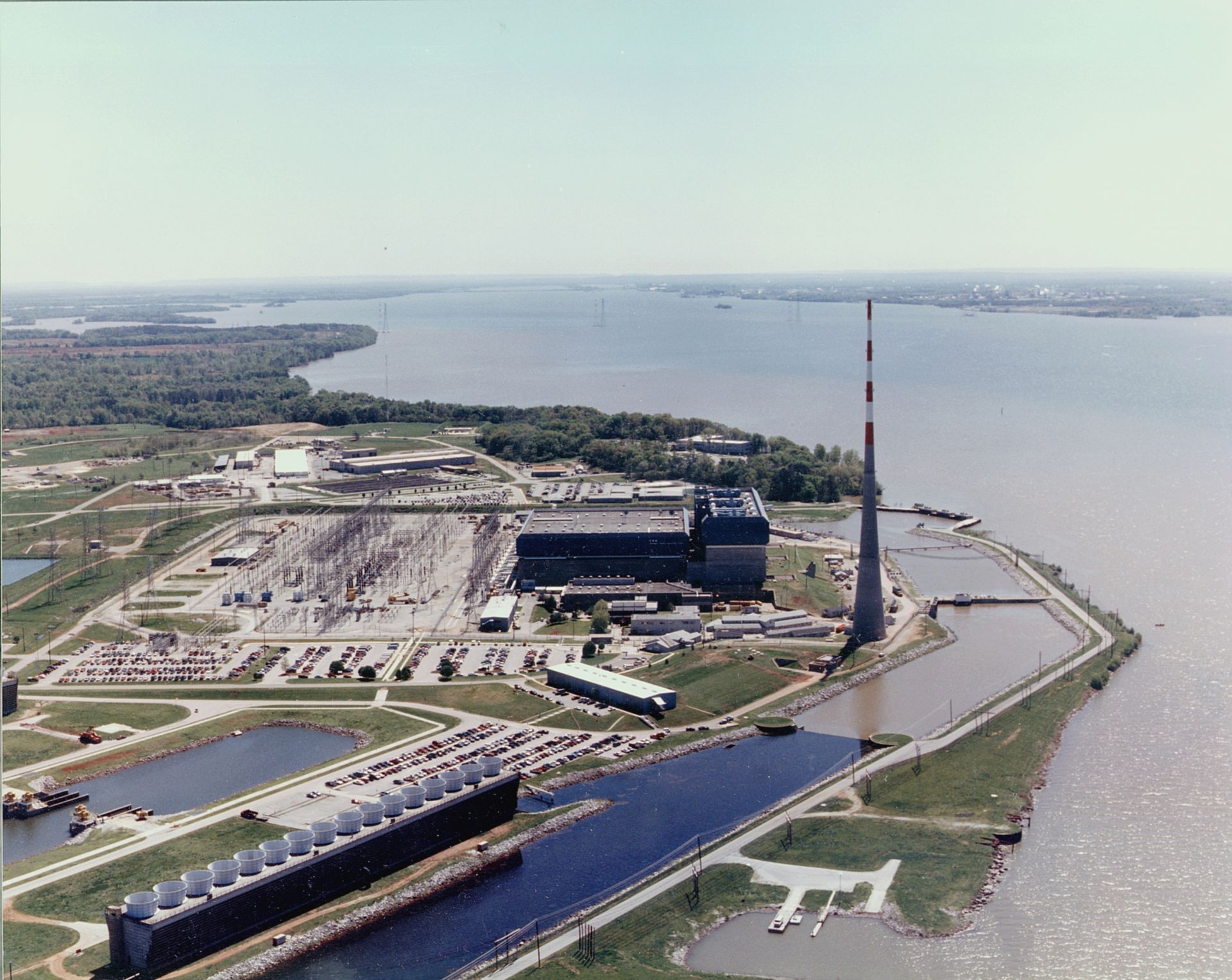
The Browns Ferry nuclear power plant. (Photo: TVA)
The operating licenses for the three boiling water reactors at Browns Ferry nuclear power plant, in Athens, Ala., have each been renewed by the Nuclear Regulatory Commission for an additional 20 years. The reactors, operated by the Tennessee Valley Authority, are now licensed to operate until December 2053 for Unit 1, June 2054 for Unit 2, and July 2056 for Unit 3.
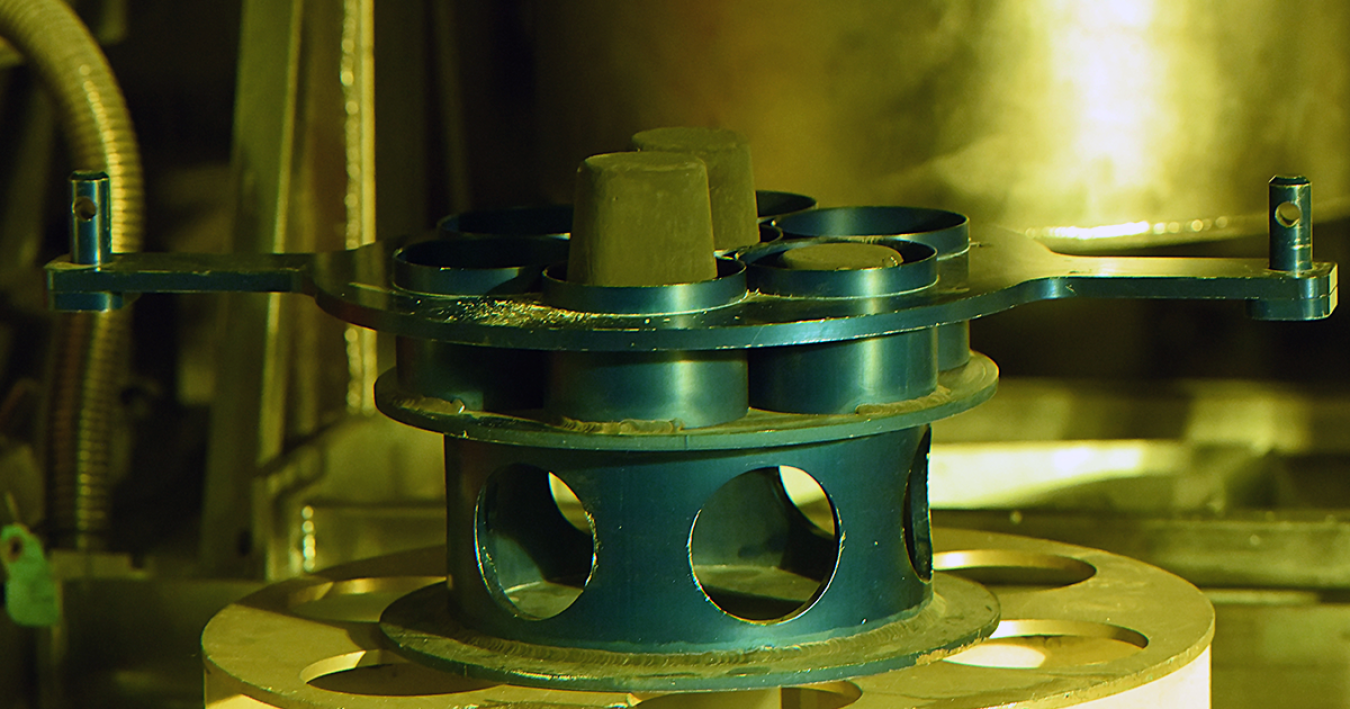
HALEU reguli fabricated from downblended high-enriched uranium recovered from legacy EBR-II fuel at Idaho National Laboratory. (Photo: DOE)
Five companies are the recipients of Department of Energy awards to support the development, modification, and licensing of transportation packages for high-assay low-enriched uranium (HALEU) fuel. HALEU, which is enriched between 5 percent and 20 percent, is the type of fuel required for the operation of many of the small advanced nuclear reactors that are being designed and developed by U.S. companies.
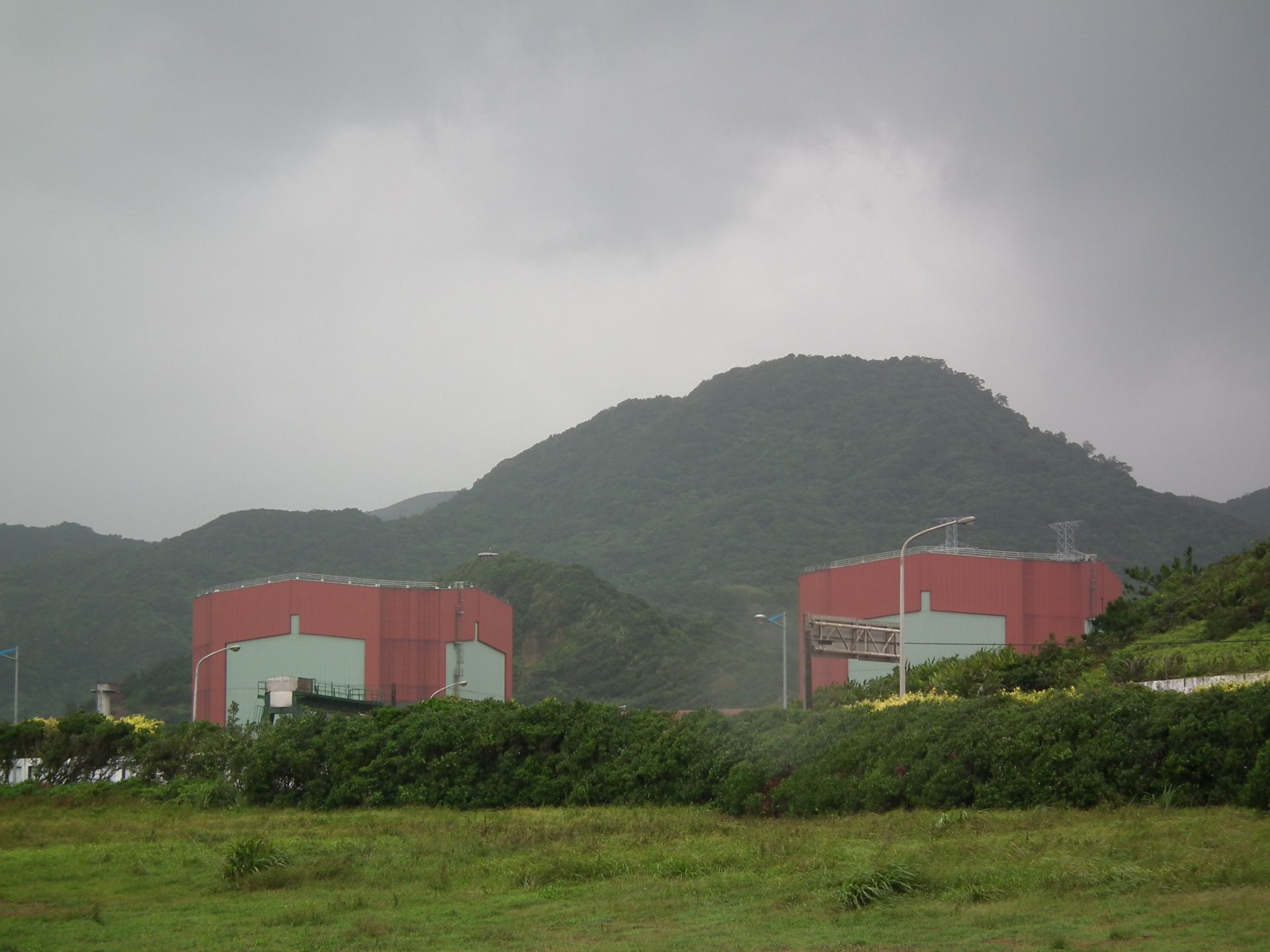
Taiwan’s Kuosheng nuclear power plant. (Photo: Wikimedia Commons)
Holtec International announced that it has been awarded a turnkey supply contract by Taiwan Power Company to establish indoor dry spent nuclear fuel storage facilities at both the closed Chinshan and Kuosheng nuclear power plant sites on the island nation.
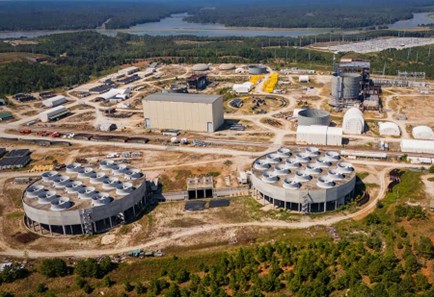
The V.C. Summer site. (Photo: Santee Cooper)
Santee Cooper, South Carolina’s state-owned electric and water utility, recently announced that it has signed a memorandum of understanding with Brookfield Asset Management.
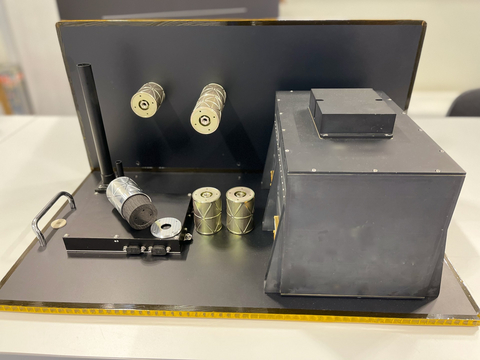
RHUs arranged in a spacecraft structure cutaway. (Photo: Perpetual Atomics)
U.K.-based Perpetual Atomics and U.S.-based QSA Global claim to have achieved a major step forward in processing americium dioxide to fuel radioisotope power systems used in space missions. Using an industrially scalable process, the companies said they have turned americium into stable, large-scale ceramic pellets that can be directly integrated into sealed sources for radioisotope power systems, including radioisotope heater units (RHUs) and radioisotope thermoelectric generators (RTGs).
Rendering of MCRE. (Image: INL)
Idaho National Laboratory has announced the creation of the first batch of enriched uranium chloride fuel salt for the Molten Chloride Reactor Experiment (MCRE). INL said that its fuel production team delivered the first fuel salt batch at the end of September, and it intends to produce four additional batches by March 2026. MCRE will require a total of 72–75 batches of fuel salt for the reactor to go critical.
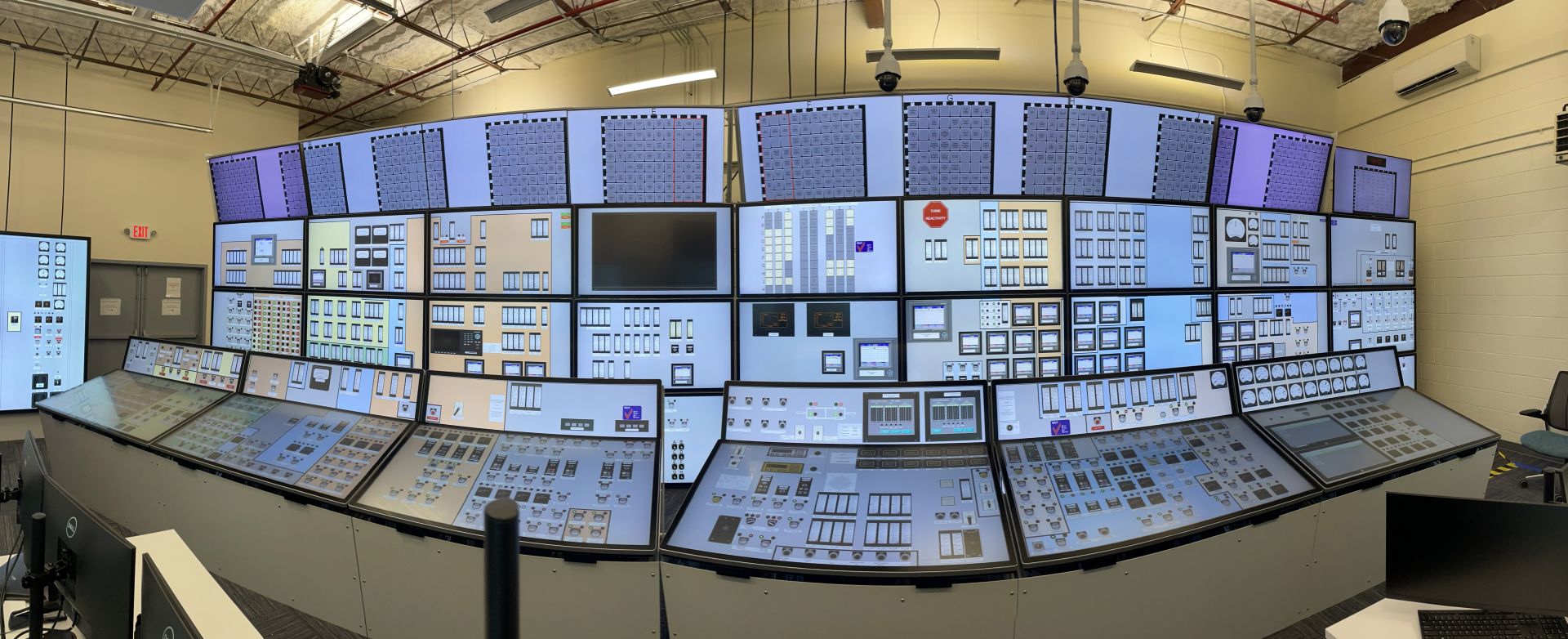
A full-sized glass-top simulator recently installed in Surry’s training building. (Photo: Dominion)
The two reactors at Dominion Energy’s Surry plant are among the oldest in the U.S. nuclear fleet. Yet when the plant celebrated its 50th anniversary in 2023, staff could raise a toast to the future. Surry was one of the first plants to file a subsequent license renewal (SLR) application, and in May 2021, it became official: the plant was licensed to operate for a full 80 years, extending its reactors’ lifespans into 2052 and 2053.
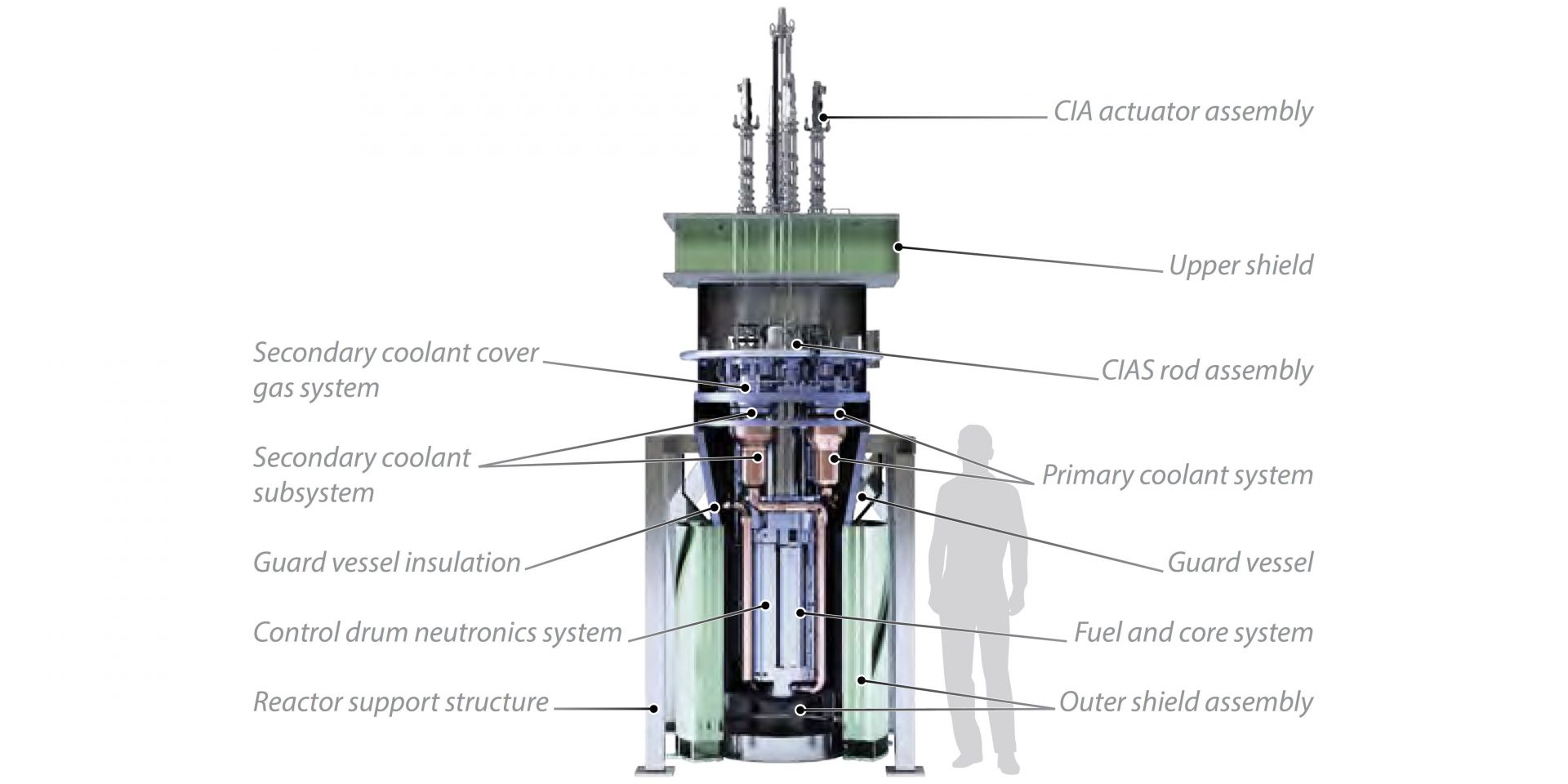
Cutaway view of MARVEL and its subsystems. (Image:INL)
Idaho National Laboratory has selected five teams for its Microreactor Application Research Validation and Evaluation (MARVEL) Project to develop a sodium-potassium–cooled microreactor designed to test microreactor applications, create regulatory processes, and explore electrical and nonelectrical uses.

-3 2x1.jpg)




 A new report from the