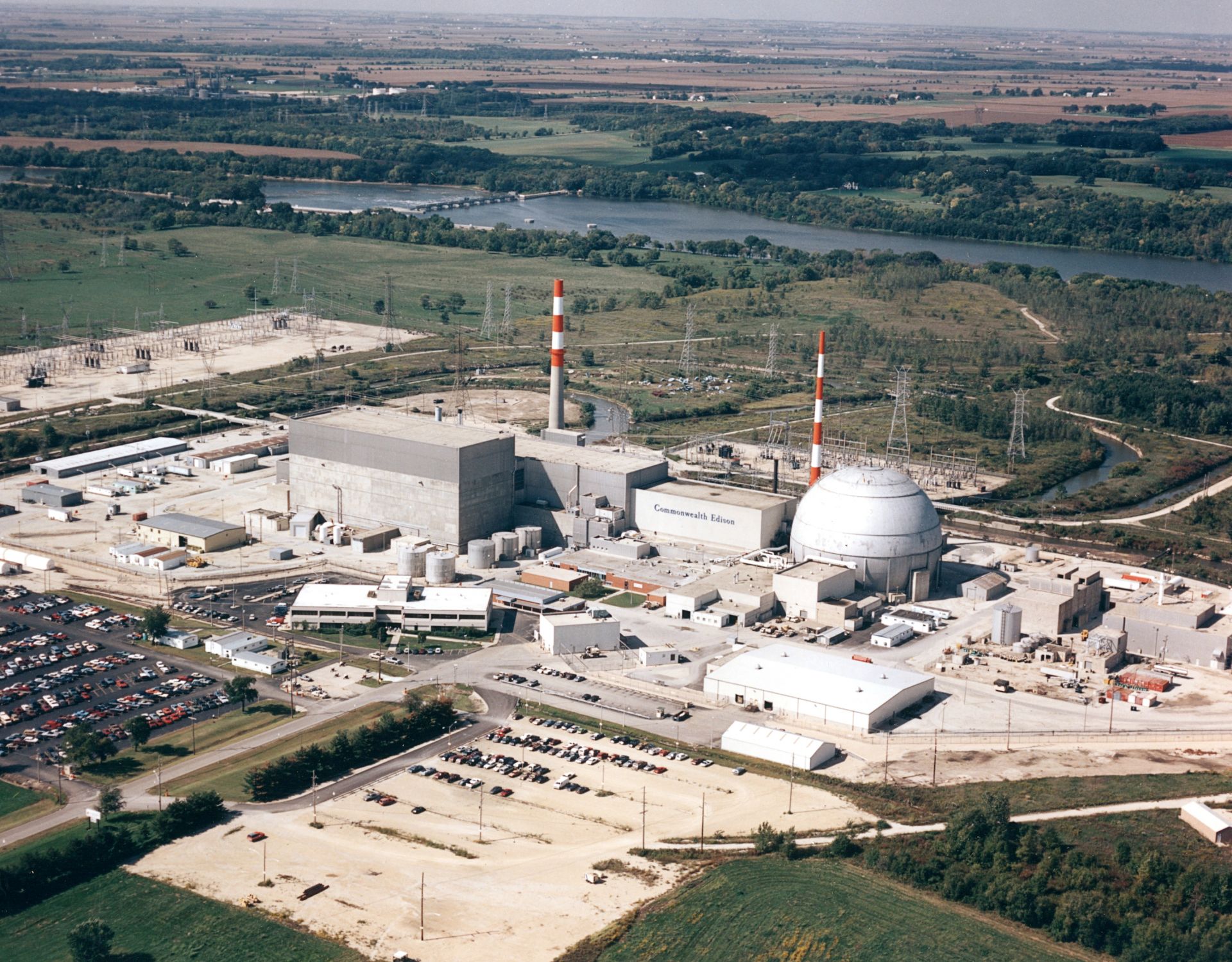
Dresden nuclear power plant, which could see capacity additions per the county’s expression of interest. (Photo: Constellation)
Illinois has received nine responses to a notice of intent (NOI) expressing interest in hosting a new nuclear facility, according to submissions filed with the Illinois Commerce Commission (ICC).
In February, Gov. J.B. Pritzker issued an executive order directing the commission to release two NOIs, one aimed at nuclear power plant developers and another for potential host communities. The second NOI requested information from Illinois communities interested in having a nuclear facility and gave them a deadline of May 25 to respond. Pritzker’s executive order arrived about a month after he lifted the state’s moratorium on new nuclear reactors being built in the state.
Purdue’s PUR-1 research reactor. (Photo: Purdue University)
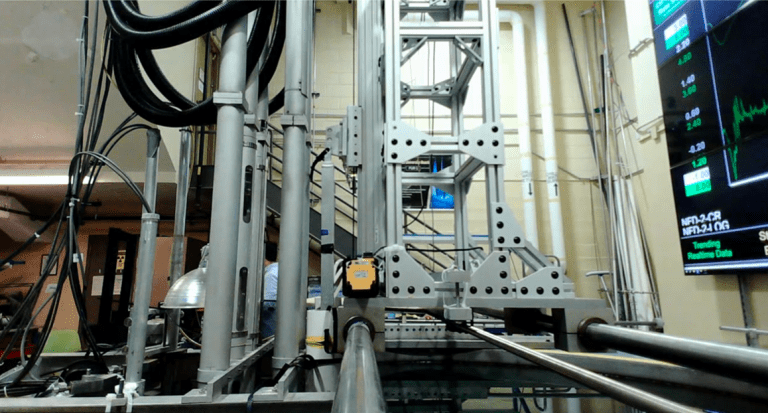
The remote, automatic, real-time adjustment of a research reactor’s power by a geographically distributed control system has been reported by researchers from Idaho National Laboratory, the Grainger College of Engineering at the University of Illinois–Urbana-Champaign, and Purdue University. The investigators first used an automatic adjustment “digital control loop” system to demonstrate remote adjustments of Purdue’s PUR-1 research reactor. They then applied a reinforcement learning model that simulates the interaction of physical forces inside the reactor, making the loop system more autonomous.
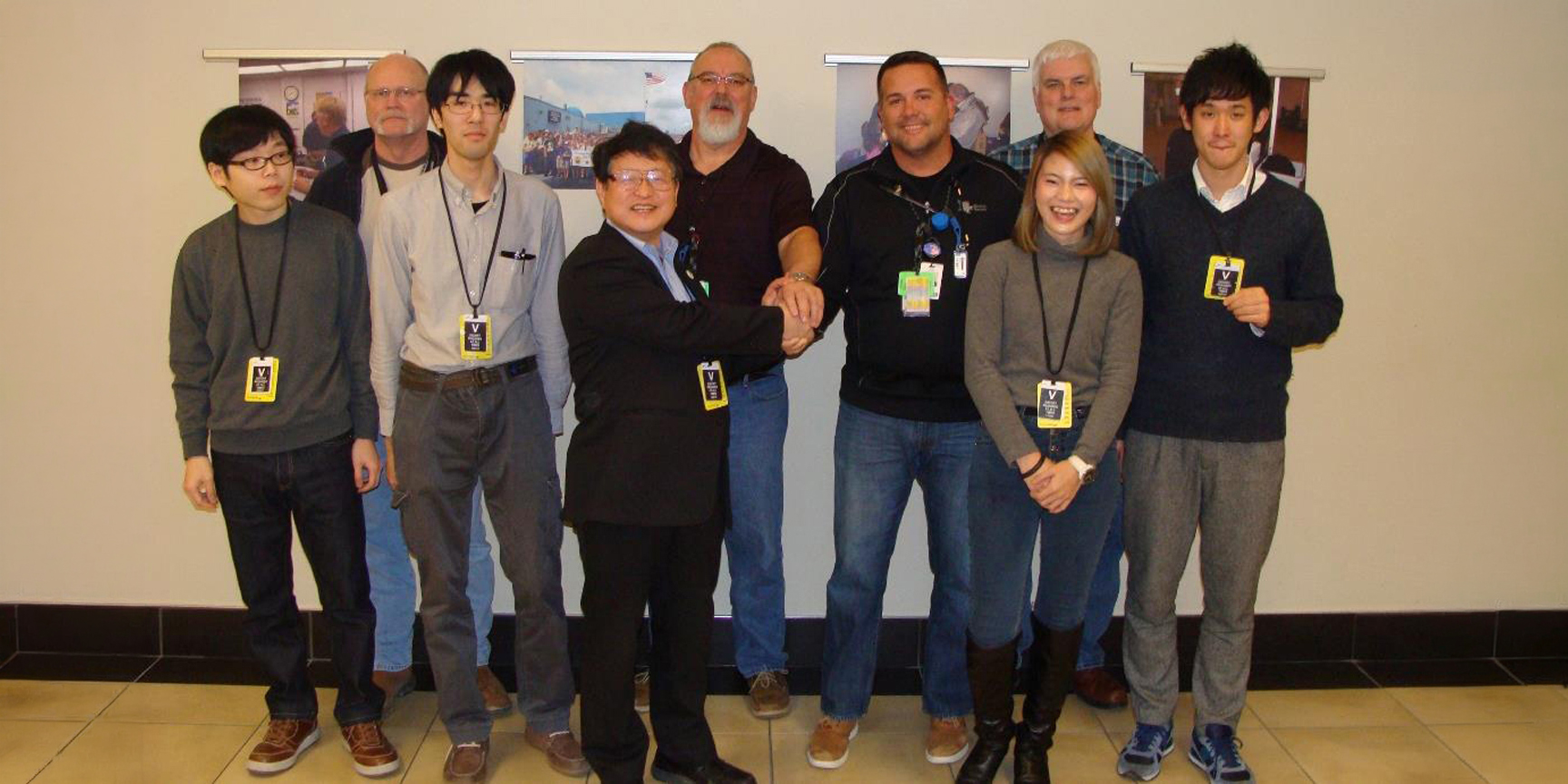
May 27, 2026, 12:26PMUpdated May 27, 2026, 12:23PMNuclear News Super Engineer Project founder and leader Tadashi Narabayashi (fourth from left) and his Super Engineers tour Clinton nuclear power plant in 2017. (Photo: Thanataon Pornphatdetaudom)
Before the Fukushima Daiichi accident in March 2011, nuclear power from 54 reactors provided about 30 percent of Japan’s electricity. In the wake of the disaster, Japan shut down every one of its reactors.
Recently, the country has been restarting its nuclear power plants. Among its current fleet of 33 operable reactors, fewer than half have been restarted. Nuclear power is currently providing about 8.5 percent of Japan’s electricity (with natural gas and coal accounting for more than 60 percent).
The Japanese government’s present energy plan, announced last year, calls for nuclear power to meet 20 percent of the country’s electricity needs by 2040. While the government views nuclear as a crucial asset toward meeting its goal of net zero emissions by 2050, public support for nuclear energy also continues to increase. A 2012 Pew Research poll—conducted one year after the Fukushima Daiichi disaster—indicated that 70 percent of the public opposed nuclear power. However, a 2022 poll by Nikkei Business Publications suggests that now, more than 50 percent of the public supports nuclear power—if safety can be ensured.
Contributing their expertise to these restarts in recent years are young nuclear industry professionals who were trained a decade ago in a mentorship/training program involving U.S. institutions.
This “Super Engineer Project” was sponsored by Japan’s Ministry of Economy, Trade, and Industry and Hokkaido University from 2015 to 2017. METI sponsored the project to improve the Japanese nuclear safety culture by learning from the U.S. safety culture.
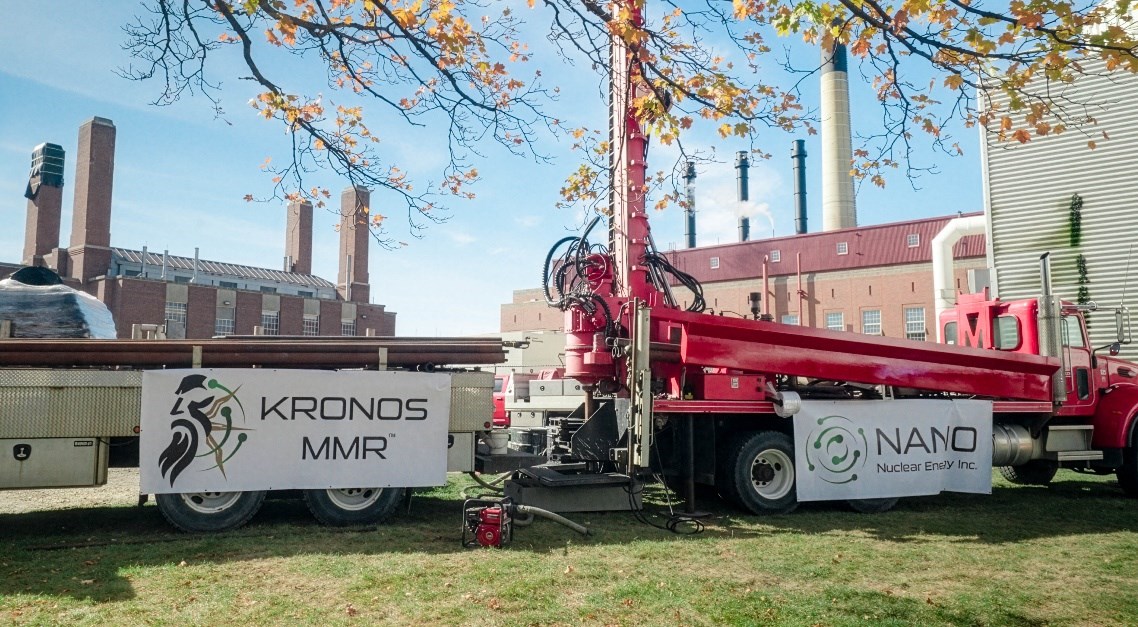
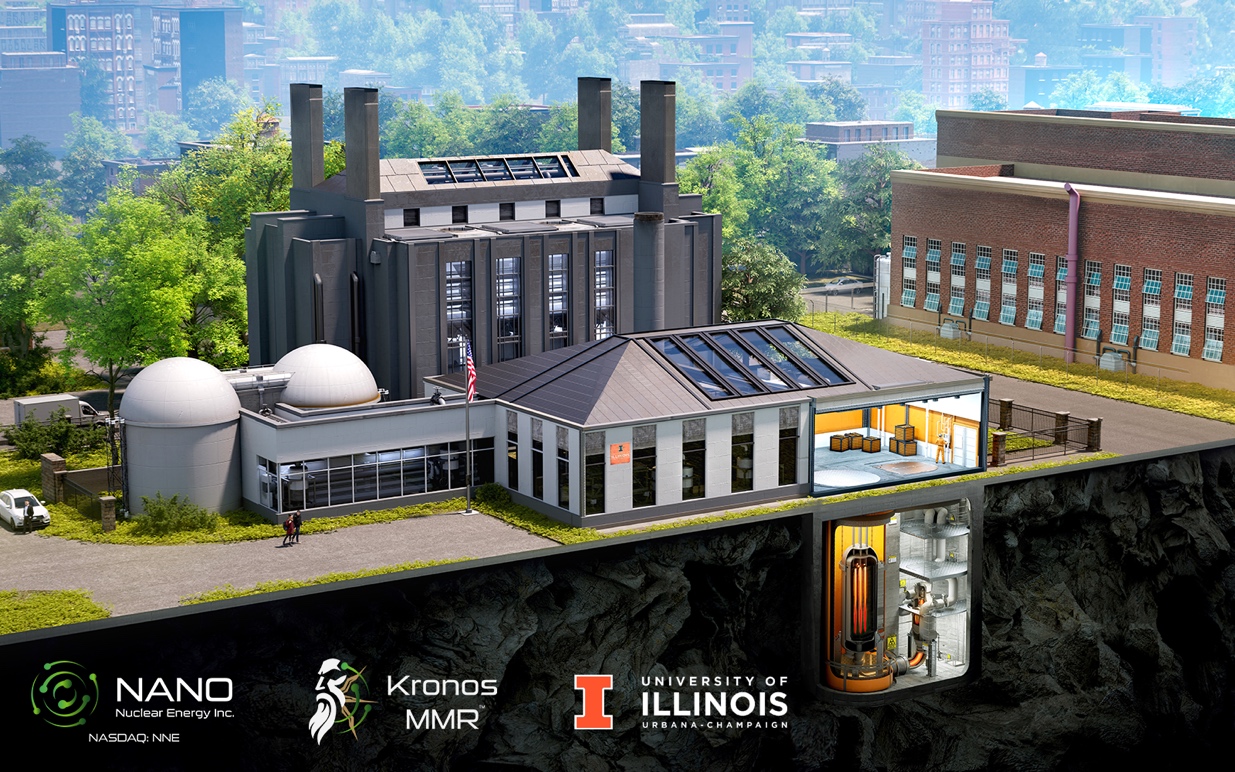
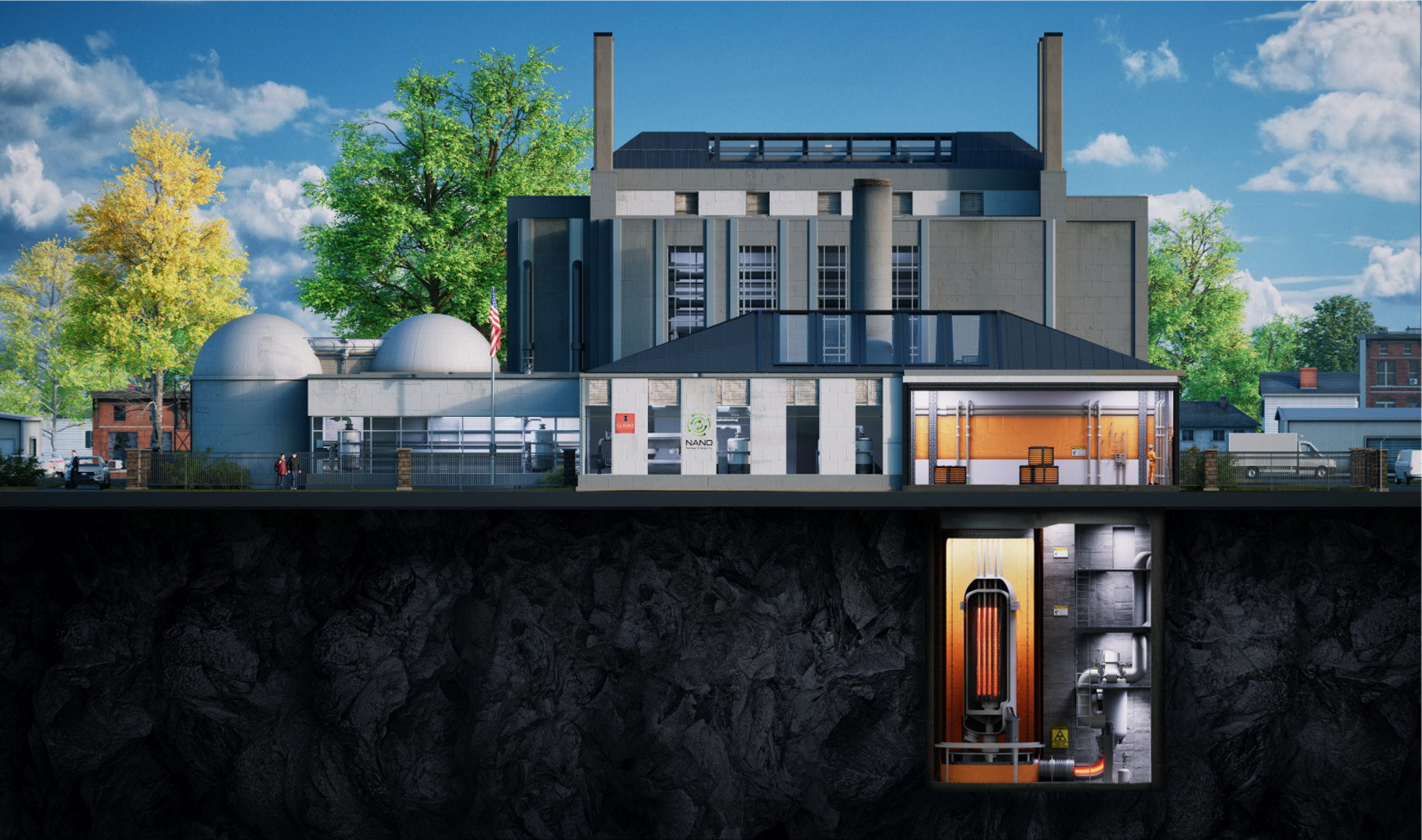
Nano Nuclear Energy has completed site-characterization for its Kronos MMR in partnership with the University of Illinois. (Photo: Nano Nuclear)
The University of Illinois–Urbana-Champaign, in partnership with Nano Nuclear Energy, has submitted a construction permit application to the Nuclear Regulatory Commission for construction of a Kronos micro modular reactor (MMR). This is the first major step in the two-part 10 CFR Part 50 licensing process for the research and test reactor and is the culmination of years of technical refinement and regulatory alignment.
The team chose to engage with the NRC in a preapplication readiness assessment, providing the agency with draft versions of the majority of the CPA’s technical content for feedback, which is expected to ensure a high-quality application.
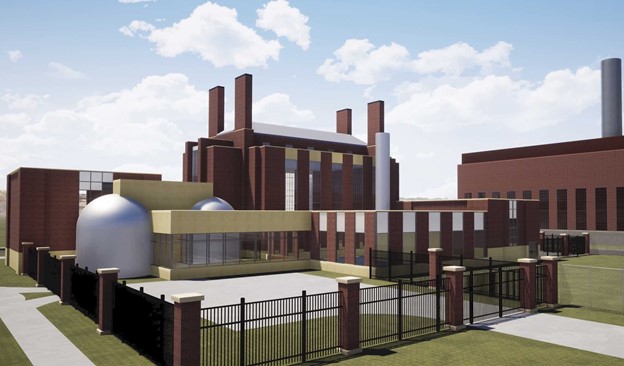
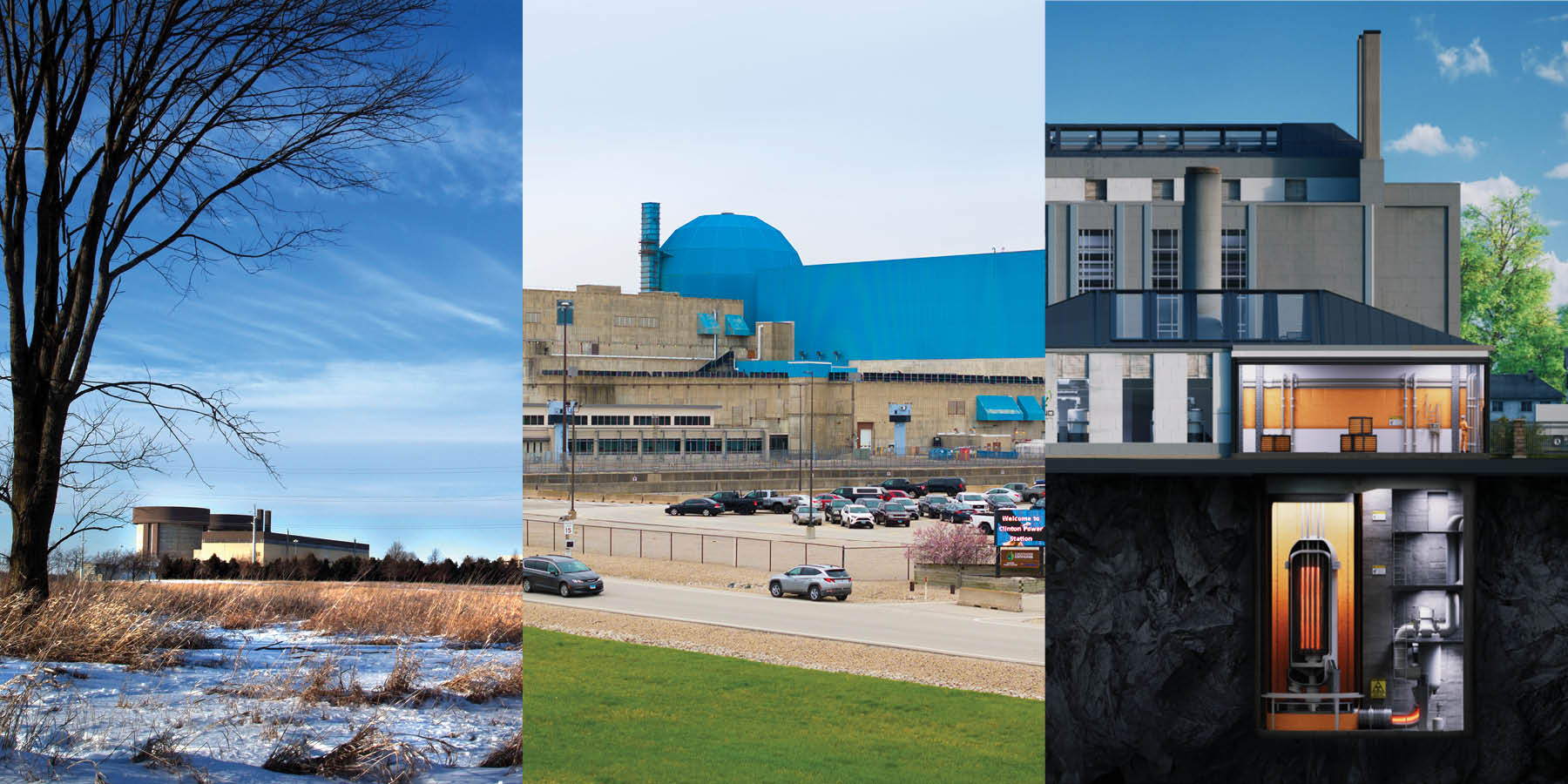
From left: Byron (Photo: Constellation), Clinton (Photo: Constellation), and a rendering of the Kronos reactor planned for the University of Illinois–Urbana-Champaign. (Image: Nano Nuclear)
Nuclear is enjoying a bit of a resurgence. The momentum for reliable energy to support economic development around the country—specifically data centers and AI—remains strong, and strongly in favor of nuclear. And as feature coverage on the states in the January 2026 issue of Nuclear News made abundantly clear, many states now see nuclear as necessary to support rising electricity demand while maintaining a reliable grid and reaching decarbonization goals.
Artist’s concept of the Kronos MMR on the UIUC campus. (Source: Nano Nuclear)
New York City–based Nano Nuclear Energy has signed a memorandum of understanding with the University of Illinois Board of Trustees, on behalf of the University of Illinois–Urbana-Champaign, to collaborate on the development, construction, and operation of the company’s Kronos MMR (micro modular reactor) as an on-campus research reactor. The new MOU represents the latest aspect of Nano Nuclear’s partnership on the Kronos MMR project with the university, which includes state funding for a manufacturing and research center, to be located in the Chicago suburb of Oak Brook.
A rendering of the proposed Kronos MRR at the University of Illinois Urbana-Champaign. Image: NANO Nuclear Energy Inc.
New York City–based advanced nuclear technology developer Nano Nuclear and the Office of Illinois Gov. J.B. Pritzker announced on Tuesday that Nano will receive $6.8 million in state funding to establish its new manufacturing and research and development facility in Illinois.
Concept art of NANO Nuclear’s KRONOS MMR research reactor that UIUC plans to operate on its campus in Champaign, Ill. (Image: NANO Nuclear)
Plans to bring a university research reactor like no other to the campus of the University of Illinois at Urbana-Champaign (UIUC) were punctuated last fall by the news that Ultra Safe Nuclear, the developer of the gas-cooled reactor technology selected for the Illinois Microreactor Project, had declared bankruptcy.
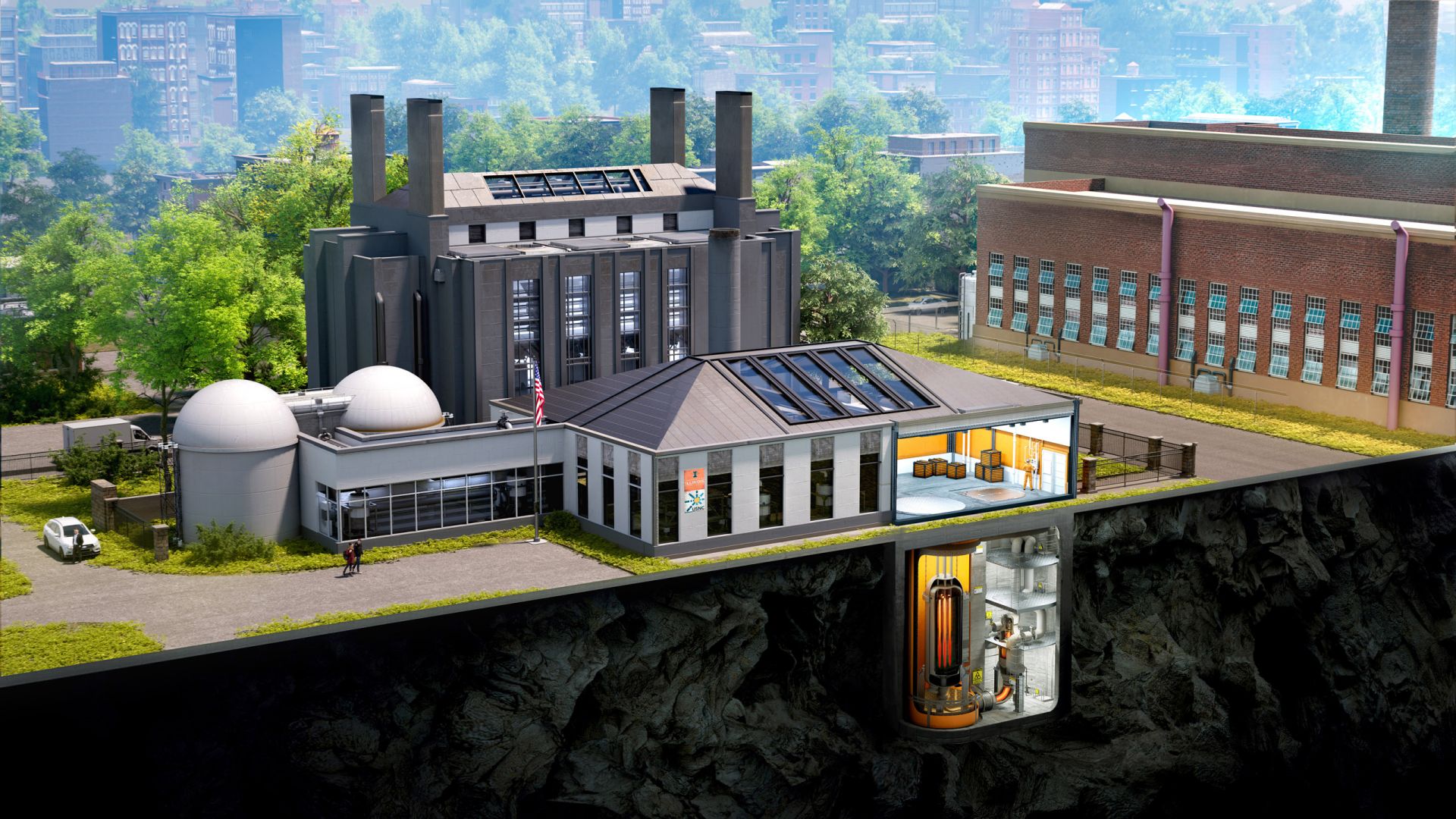
Conceptual art of USNC’s MMR, as proposed for construction on the UIUC campus. (Graphic: USNC)
It’s been almost 35 years since Illinois last added a nuclear power reactor to the grid (Braidwood-2, a pressurized water reactor operated by Constellation, reached commercial operation in October 1988). And it’s been 63 years since a research reactor reached initial criticality at the University of Illinois–Urbana-Champaign (UIUC). The university’s TRIGA Mark II started up in August 1960 and was shut down in 1998. For about 25 years, UIUC—the flagship public university in a state that generates more power from nuclear energy than any other—has lacked an operating research reactor.
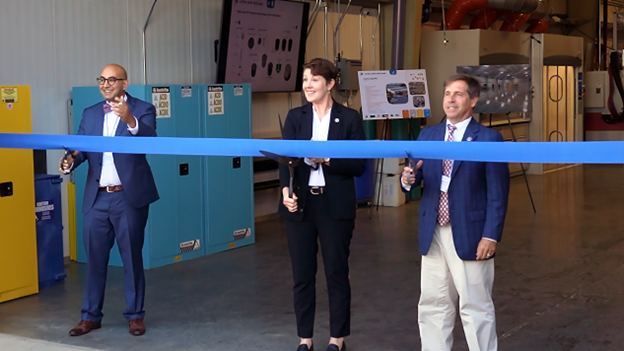
Terrani, Huff, and Fleischmann had the honor of cutting the ribbon to celebrate the opening of the Pilot Fuel Manufacturing facility. (Photo: USNC)
Ultra Safe Nuclear Corporation (USNC) celebrated the opening of its Pilot Fuel Manufacturing (PFM) facility in Oak Ridge, Tenn., on August 18 with a ribbon-cutting ceremony and tour attended by assistant secretary for nuclear energy Kathryn Huff, Tennessee lieutenant governor Randy McNally, U.S. Rep. Chuck Fleischmann (R.), representatives from the offices of Sens. Marsha Blackburn (R.) and Bill Hagerty (R.), and other distinguished guests. The next day, radiological operations began at the privately funded facility, which was designed and built in less than twelve months within an existing industrial building purchased by USNC in 2021.
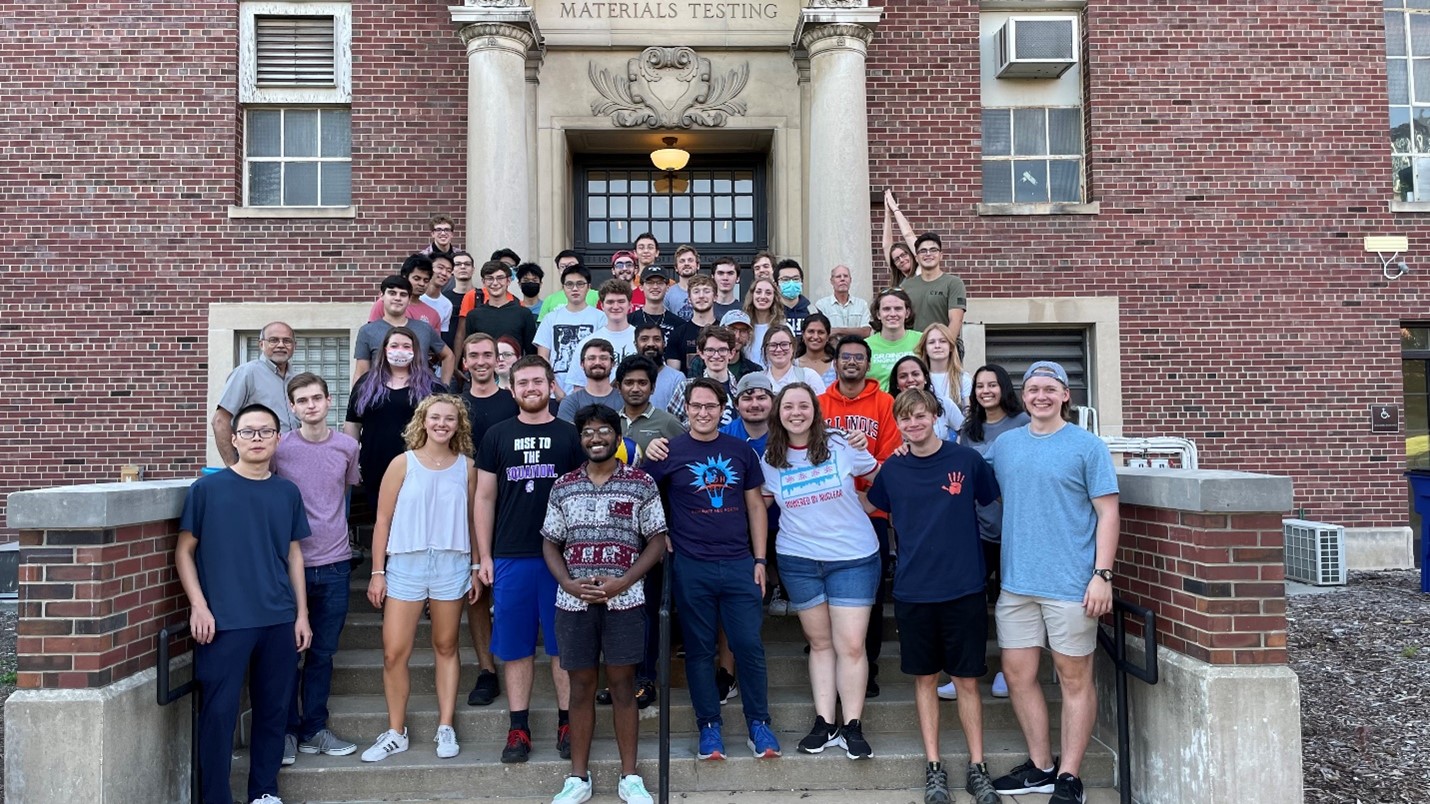
UIUC Student Section members. (Photo: UIUC NPRE)
The University of Illinois at Urbana-Champaign ANS Student Section is preparing to host the 2022 ANS Student Conference, to be held April 14–16 on the university campus. Registration is now open for the first in-person ANS student conference since 2019.
A rendering of Ultra Safe Nuclear Corporation’s micro modular reactor as proposed for construction on the University of Illinois at Urbana-Champaign campus. (Graphic: USNC)
The U.S. state with more nuclear power plants than any other—Illinois—has no operating university research reactors. A team at the University of Illinois at Urbana-Champaign (UIUC) intends to reverse that situation and construct a high-temperature gas-cooled microreactor. If the team's plans go ahead, the first new U.S. university research reactor deployment in about 30 years could also support commercial advanced reactor deployment.

_Page_06_Image_0001 copy 2x1.jpg)
 New York City–based advanced nuclear technology developer Nano Nuclear Energy has been awarded a Direct-to-Phase II Small Business Innovation Research contract for its Kronos micro modular reactor (MMR) by AFWERX, the innovation and venture arm of the U.S. Air Force. The contract calls for AFWERX, with the 11th Civil Engineering Squadron, to explore the feasibility of deploying the Kronos MMR Energy System at Joint Base Anacostia-Bolling (JBAB) in Washington, D.C.