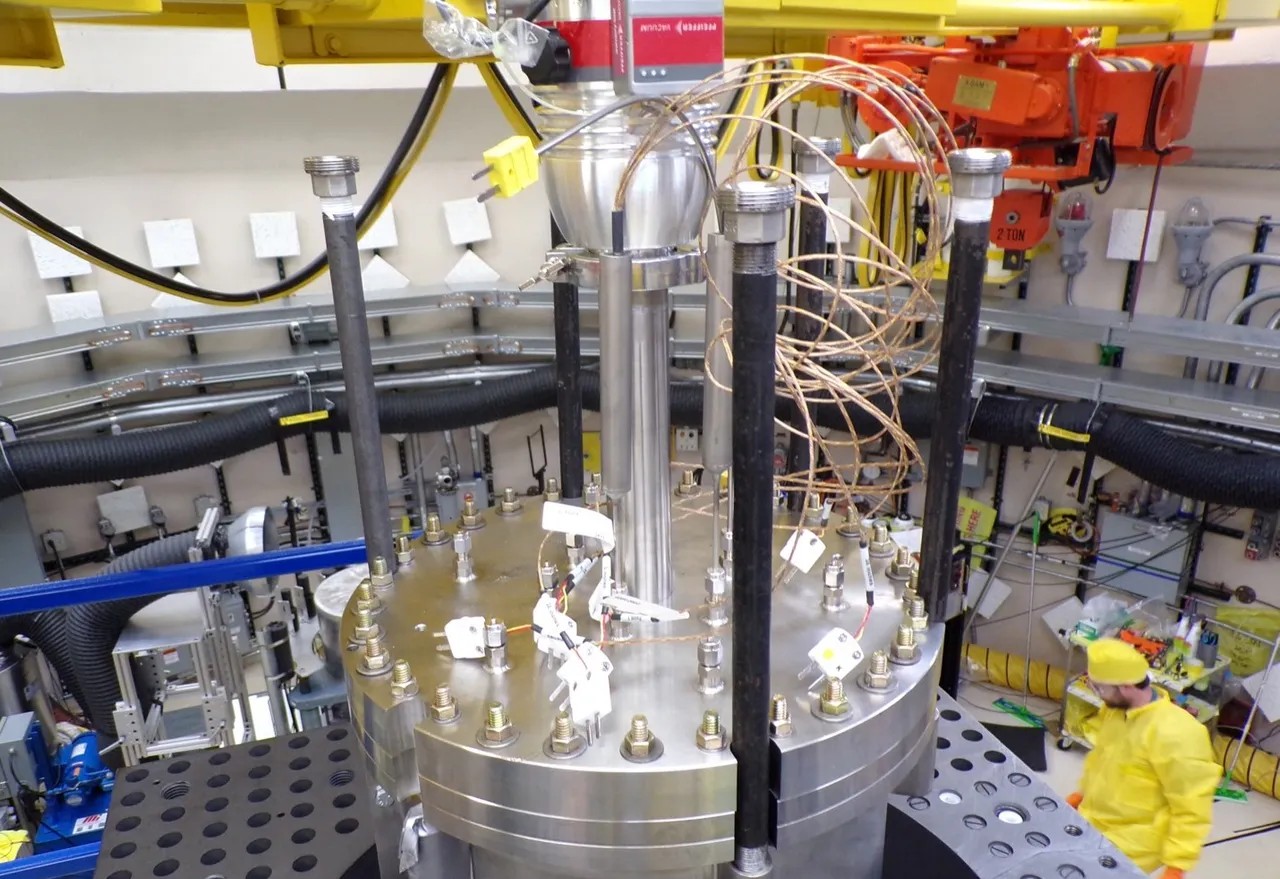
The top flange of the ZiaCore microreactor experiment. (Photo: LANL)
Last week, Los Alamos National Laboratory announced that its ZiaCore microreactor was brought to zero-power criticality at high temperatures in April through May of this year during four weeks of experiments on the Deimos test bed at the National Criticality Experiments Research Center (NCERC).
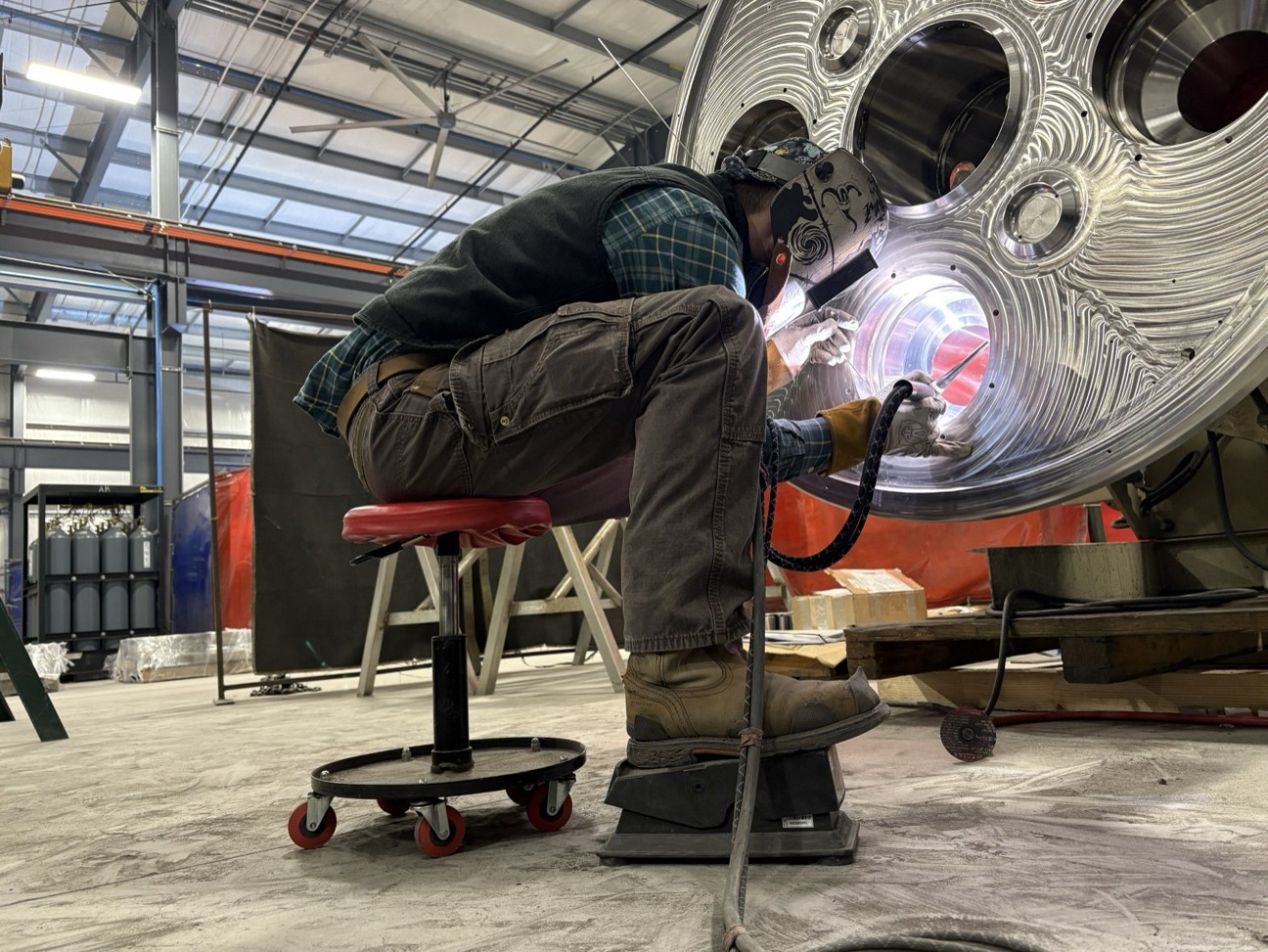
The MARVEL reactor upper plenum getting welded. (Photo: INL)
On June 1 at the American Nuclear Society’s Annual Conference in Denver, Colo., a team from Idaho National Laboratory presented a session titled “Lessons Learned from MARVEL Reactor Fabrication.” The presentation highlighted challenges that arose as they moved from design to manufacturing and assembly, with a focus on reactor part fabrication, Stirling engine implementation, and reactivity control system development.
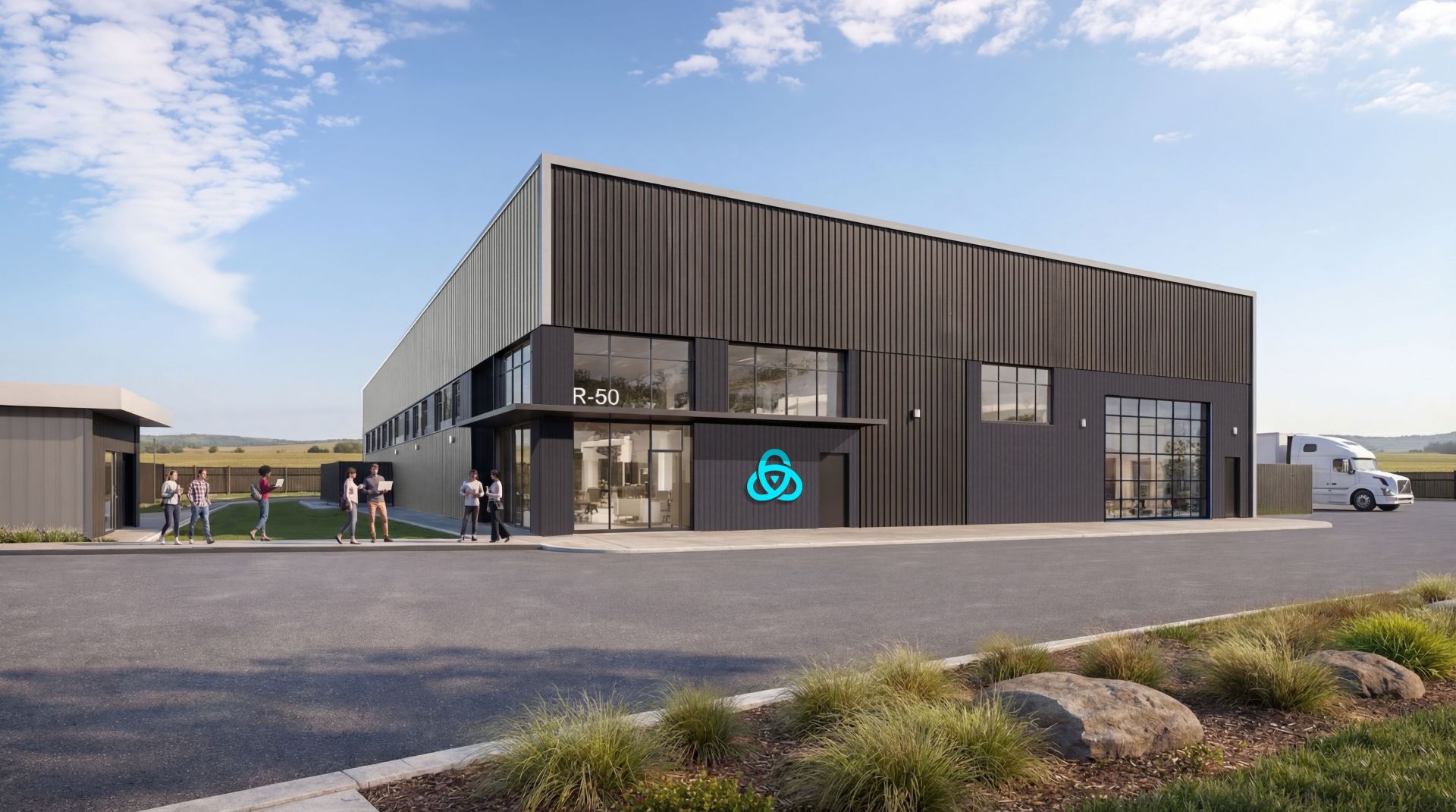
Artist’s concept of Radiant’s R-50 facility in Oak Ridge, Tenn. (Image: Radiant)
The Nuclear Regulatory Commission has accepted Radiant Industries’ 10 CFR Part 70 license application for its R-50 microreactor production facility in Oak Ridge, Tenn., and will launch an expedited review that it is aiming to complete within eight months.
According to NRC documents, the agency expects to complete its review of the license application by December 18, 2026. The timeline is described as “accelerated” in the NRC announcement—about 55 percent faster than the typical 18 months for Part 70 application reviews.
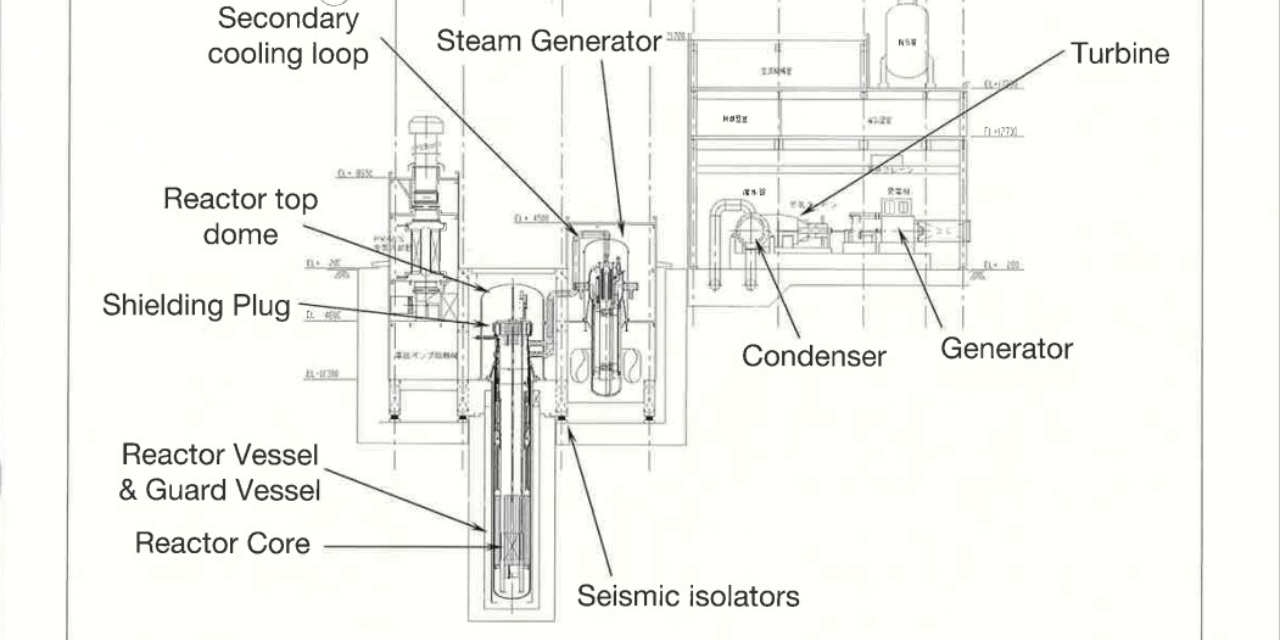
A diagram of Toshiba’s 4S sodium-cooled reactor, as published in Nuclear News in 2005. (Source: NN, Aug. 2005, p. 51)
Today, commercial microreactors are common in the marketplace of nuclear ideas. Dozens of companies are vying for their designs to reach scaled deployment to meet surging energy demand.
However, the term “microreactor” didn’t appear in Nuclear News until 2019, when the Department of Defense popularized it (in a nuclear context) in the early days of what would become Project Pele. Even before then, however, all the way back in 2005, Toshiba was developing the 4S (Super-Safe, Small, and Simple), a 30-MWt, pool-type reactor designed for remote locations with small grids. Once sealed and delivered, the reactor would run for 30 years with no refueling. If the word “microreactor” had been in use then, the 4S would certainly have been categorized as such.
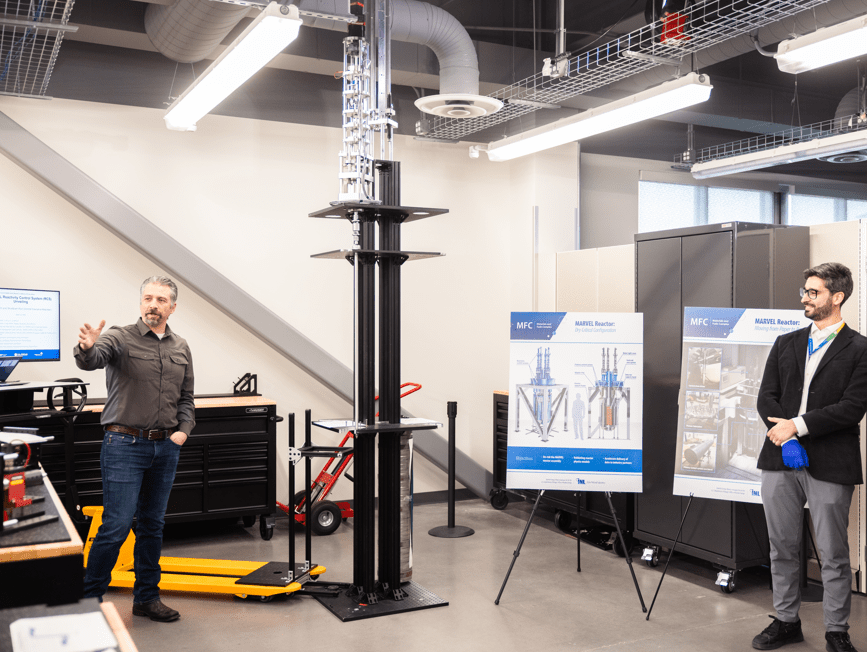
INL researcher Anthony Crawford and INL MARVEL Microreactor Lead Abdalla Abou-Jaoude stand next to the MARVEL reactivity control system during an unveiling ceremony. (Photo: INL)
MARVEL, the Microreactor Applications Research Validation and Evaluation project at Idaho National Laboratory, has had its preliminary documented safety analysis approved by the Department of Energy, marking a milestone in its development and serving as a potential outline for other microreactors in development.
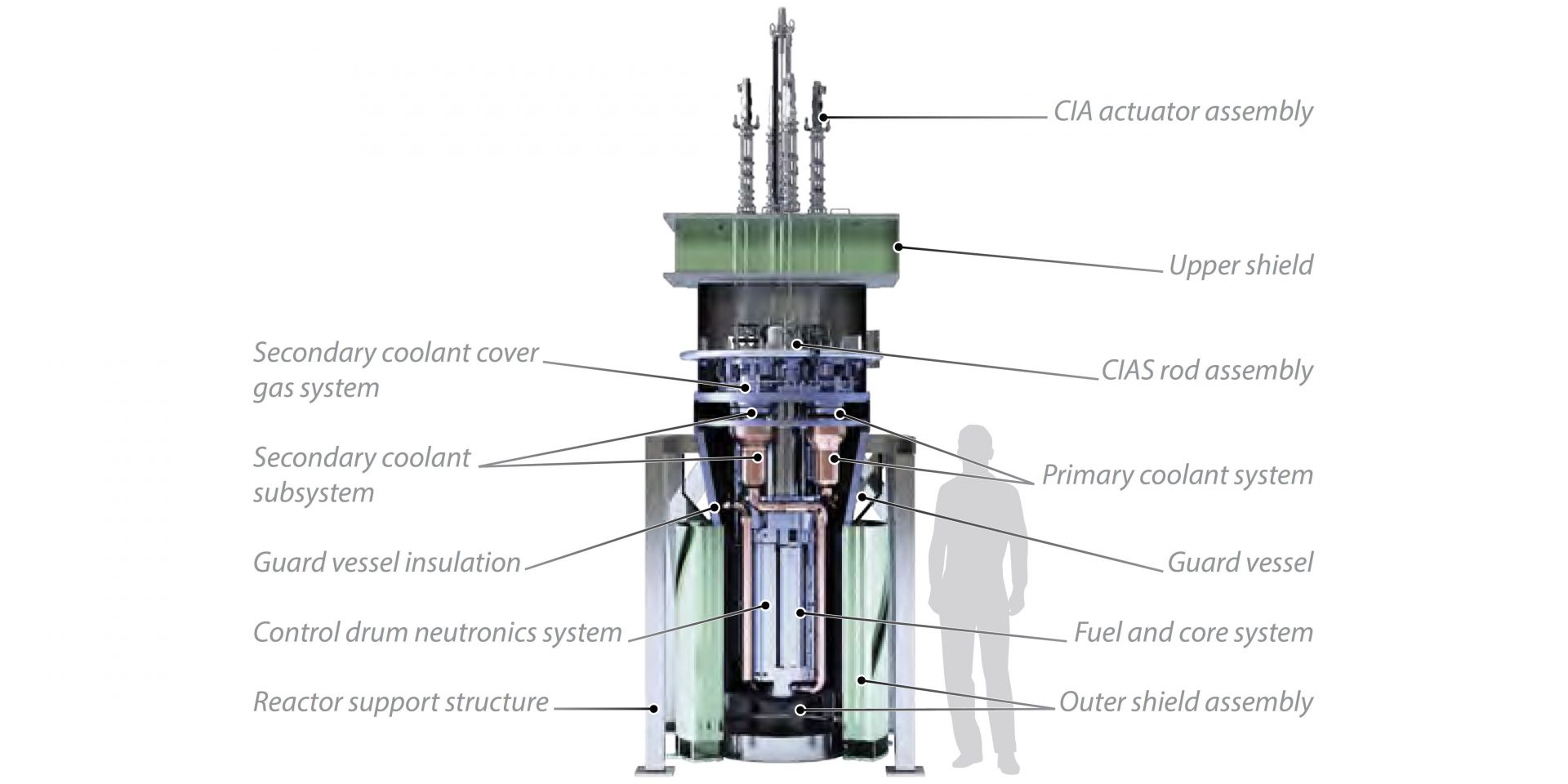
Cutaway view of MARVEL and its subsystems. (Image:INL)
Idaho National Laboratory has selected five teams for its Microreactor Application Research Validation and Evaluation (MARVEL) Project to develop a sodium-potassium–cooled microreactor designed to test microreactor applications, create regulatory processes, and explore electrical and nonelectrical uses.
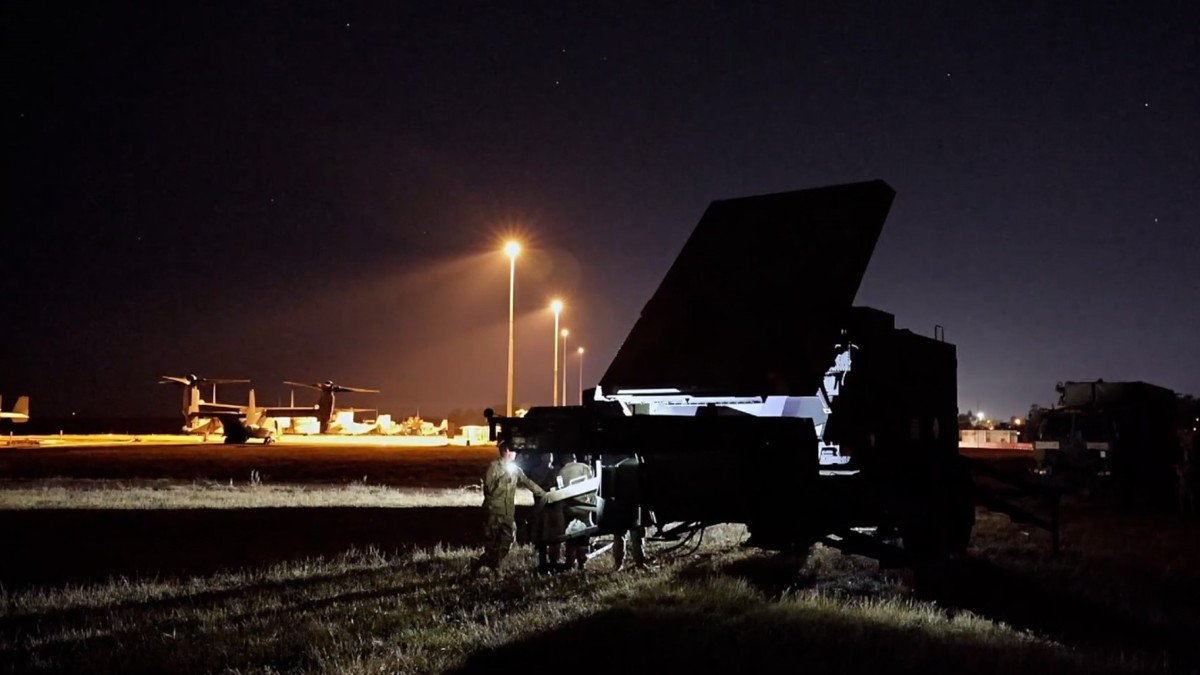
U.S. Army Soldiers from 1st Battalion, 1st Air Defense Artillery Regiment, 38th Air Defense Artillery Brigade place a Patriot radar system under night conditions, July 19, 2025. (Photo: U.S. Army)
As part of the Janus Program, announced in October, the Department of the Army is seeking potential commercial vendors to build microreactor power plants at nine military installations that are under consideration.
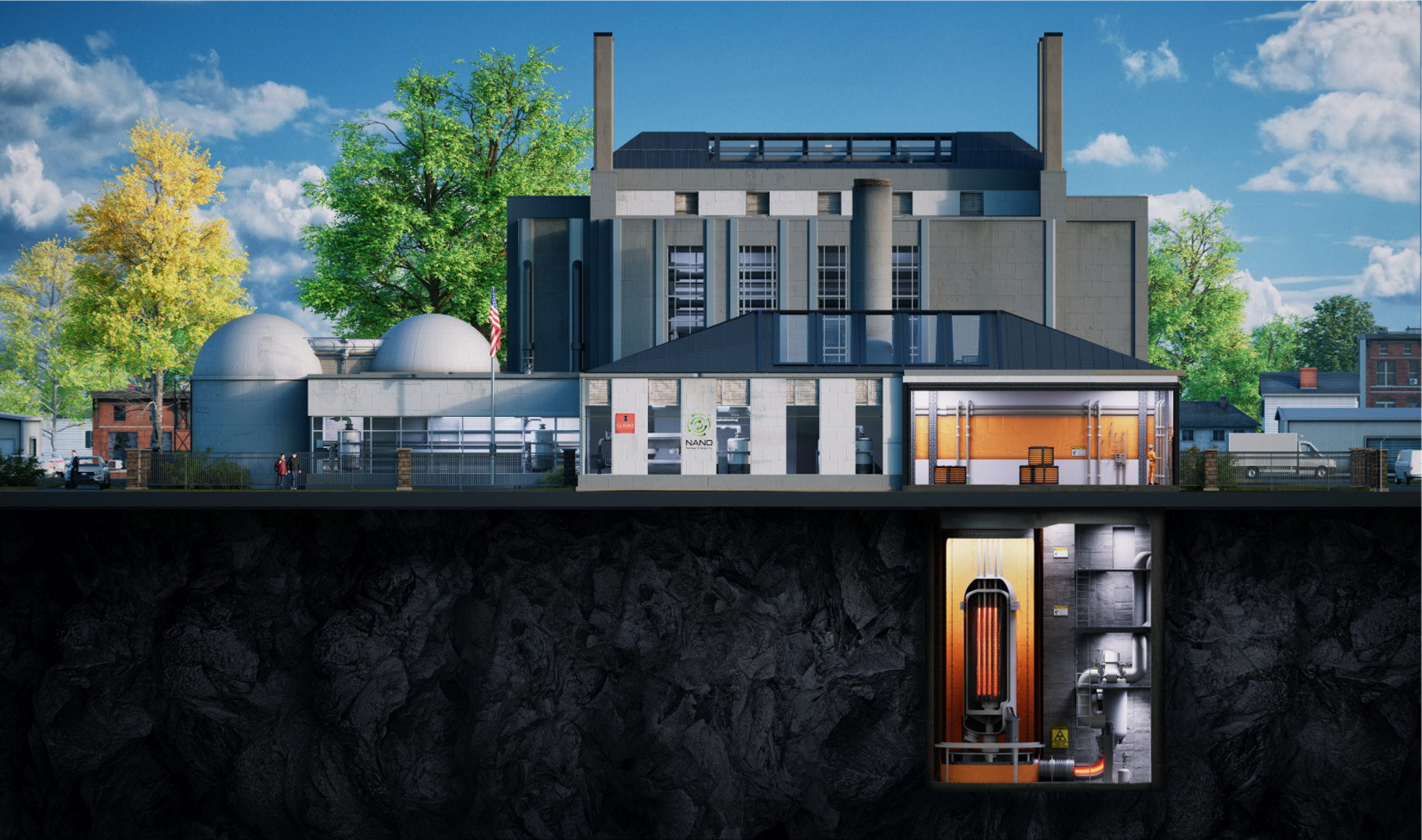
A rendering of the proposed Kronos MRR at the University of Illinois Urbana-Champaign. Image: NANO Nuclear Energy Inc.
New York City–based advanced nuclear technology developer Nano Nuclear and the Office of Illinois Gov. J.B. Pritzker announced on Tuesday that Nano will receive $6.8 million in state funding to establish its new manufacturing and research and development facility in Illinois.
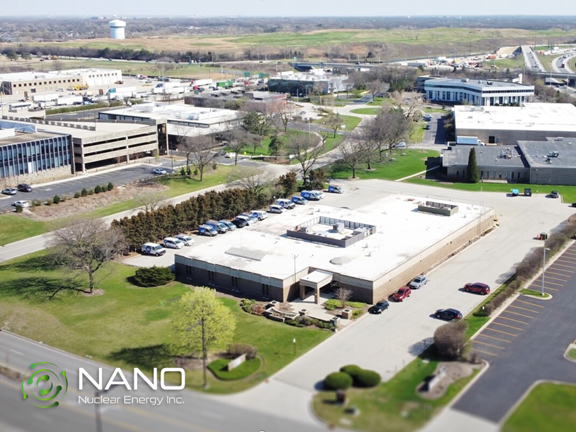
This Oak Brook, Ill., location will be a demonstration and office facility for Nano Nuclear’s Kronos MMR project. (Photo: Nano Nuclear)
Scale model of the Pele transportable microreactor. (Image: BWXT)
Fabrication of the reactor core for the 1.5-MW Project Pele demonstration microreactor has begun, according to BWX Technologies. Pele is being developed at the BWXT Innovation Campus in Lynchburg, Va., for the U.S. Department of Defense’s Strategic Capabilities Office.
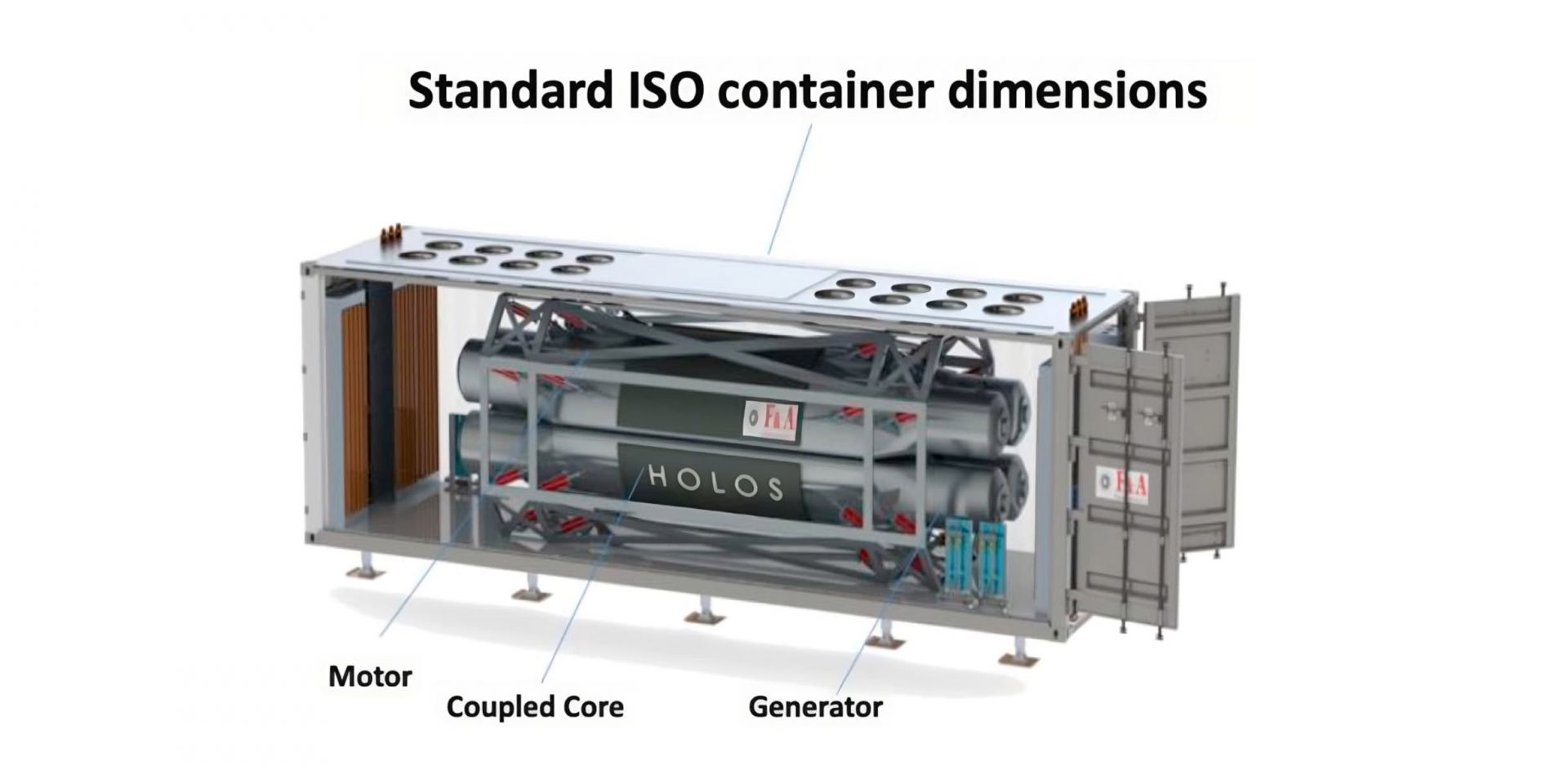
The compact, transportable Holos-Quad microreactor, developed by HolosGen, is shown housed within a standard 40-foot ISO container. (Image: HolosGen)
The University of Michigan’s Department of Nuclear Engineering and Radiological Sciences (NERS) has published a summary of a study on nuclear microreactors and machine learning (ML) that was conducted by researchers from NERS and Idaho National Laboratory. The full paper, “Nuclear Microreactor Transient and Load-Following Control with Deep Reinforcement Learning,” was featured in the July issue of Energy Conversion and Management: X.