A slide from the DOE-FES’s recent presentation to the Fusion Energy Sciences Advisory Committee. (Image: DOE)
The Office of Fusion Energy Sciences (FES) in the Department of Energy’s Office of Science introduced a new plan—"Building Bridges: A Vision for the Office of Fusion Energy Sciences”—during a Fusion Energy Sciences Advisory Committee (FESAC) hearing on December 13, and announced that news December 14. What’s included? A plan for the DOE to “establish the steps needed to help advance fusion energy, including addressing key science and technology gaps in the supply chain and industry.” The vision is less a guiding document than a preview of DOE-FES’s near-term intentions, which include drafting a fusion science and technology road map in 2024 to shape investments for the coming decade.
STARFIRE is the name of an inertial fusion energy hub led by Lawrence Livermore National Laboratory—one of three hubs announced in early December. (Image: LLNL)
The Department of Energy recently announced that it was establishing three inertial fusion energy (IFE) hubs and funding them with a total of $42 million over four years. The leaders of the three hubs selected by competitive peer review—Colorado State University, Lawrence Livermore National Laboratory, and the University of Rochester—all issued press releases touting the attributes and plans of their facilities and their research collaborators on the same day—December 7.
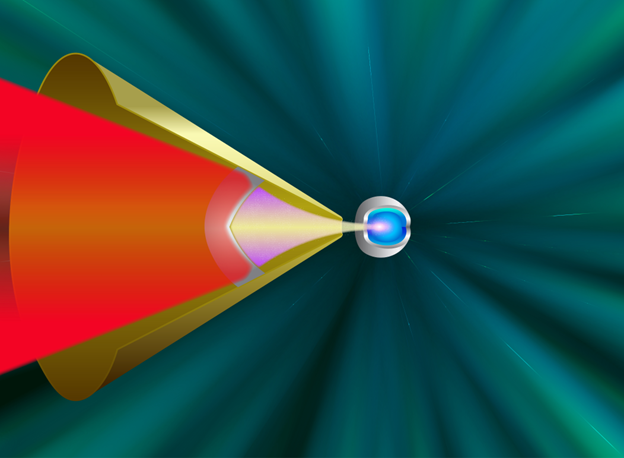
Concept art showing inertial fusion ignition. (Image: Focused Energy)
Focused Energy and Lawrence Livermore National Laboratory have signed a strategic partnership project agreement that will allow LLNL—home of the National Ignition Facility (NIF)—to help the company develop and assess isochoric compression target designs for inertial fusion energy. Focused Energy announced the news on November 7.
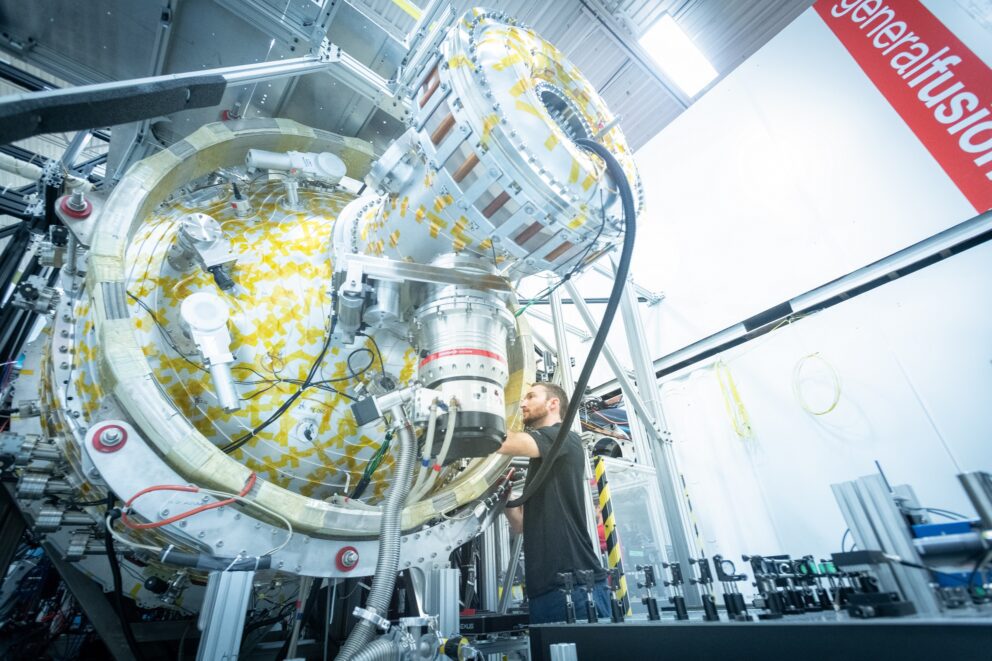
General Fusion’s current plasma injector (PI3) is the 25th in a series of prototypes developed by the company. (Photo: General Fusion)
General Fusion announced on August 9 that it will build a fusion machine called Lawson Machine 26 (LM26) at the company’s new headquarters in the city of Richmond, British Columbia, near Vancouver. The machine is intended to achieve fusion conditions of over 100 million degrees Celsius by 2025 and progress toward scientific breakeven by 2026 to support the company’s vision of commercial fusion energy by the early to mid-2030s.
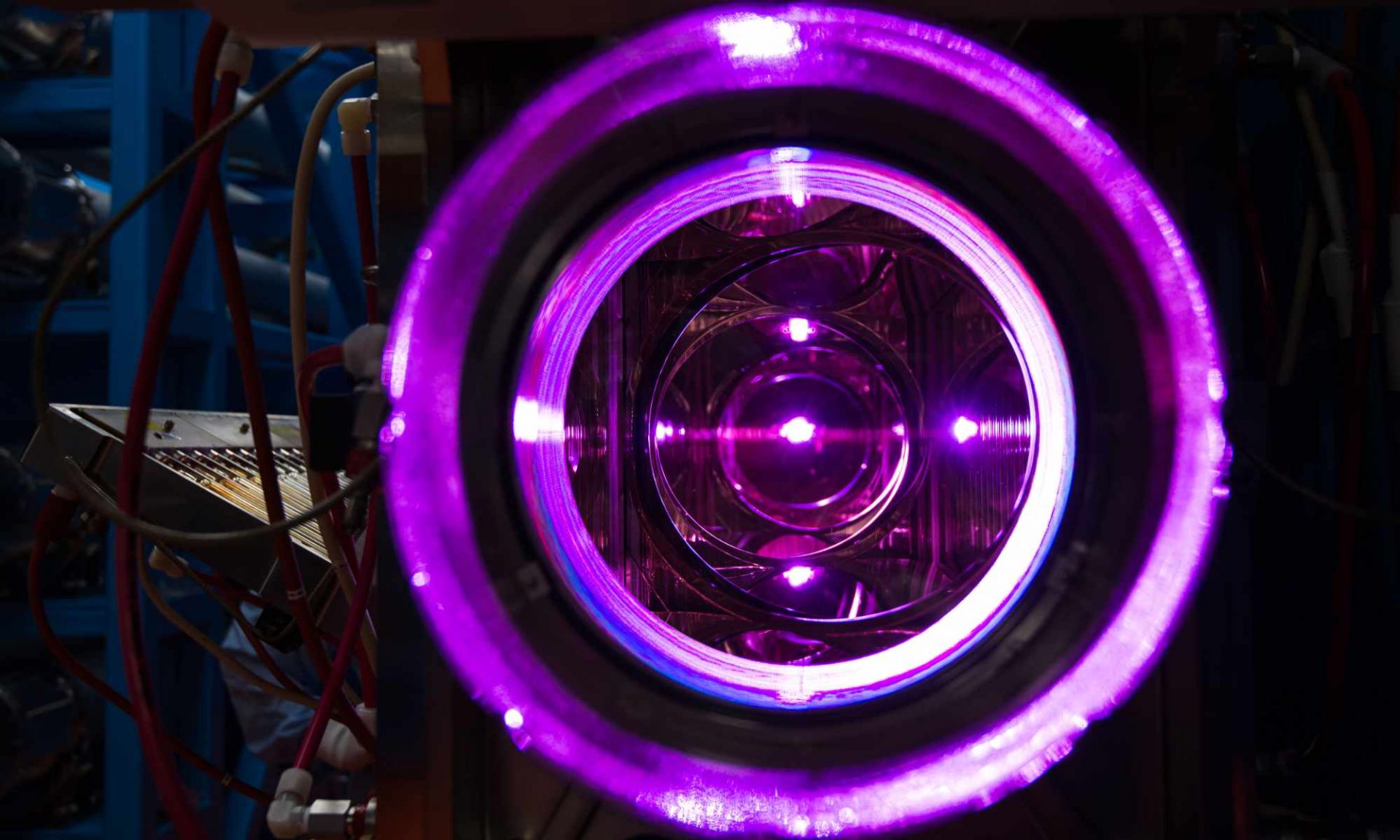
A view through the 20-cm disk amplifiers of the OMEGA laser at the University of Rochester’s Laboratory for Laser Energetics. (Photo: University of Rochester/J. Adam Fenster)
Proponents of inertial fusion energy celebrated in December 2022, when researchers at the National Ignition Facility at Lawrence Livermore National Laboratory achieved fusion ignition by subjecting a carefully crafted diamond cryogenic sphere containing frozen deuterium-tritium fuel to NIF’s laser energy. NIF has yet to repeat the feat, in part because that facility was not designed to produce fusion energy, and ignition requires near-perfect targets. For inertial fusion energy to serve as a reliable power source, it will require swift, reliable, and economic target production.
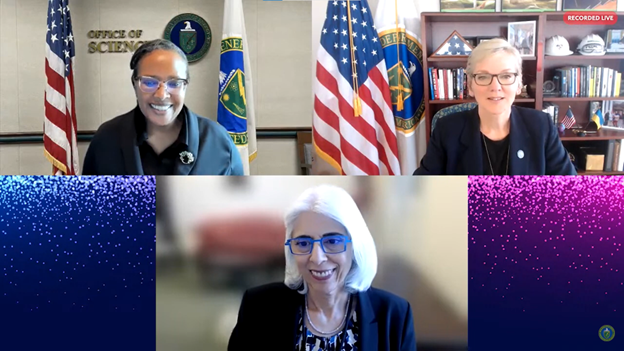
Announcing the funding for commercial fusion energy development were Asmeret Asefaw Berhe (top left), director of the DOE-OS; Jennifer Granholm, secretary of energy (top right); and Arati Prabhakar (bottom), director of the White House Office of Science and Technology Policy and science advisor to the president.
From a crowded field of would-be fusioneers, the Department of Energy has selected eight companies for the public-private Milestone-Based Fusion Development Program to develop fusion pilot plant designs and resolve related scientific and technological challenges within five to 10 years. The DOE announced awards totaling $46 million for an initial 18 months of work on May 31.
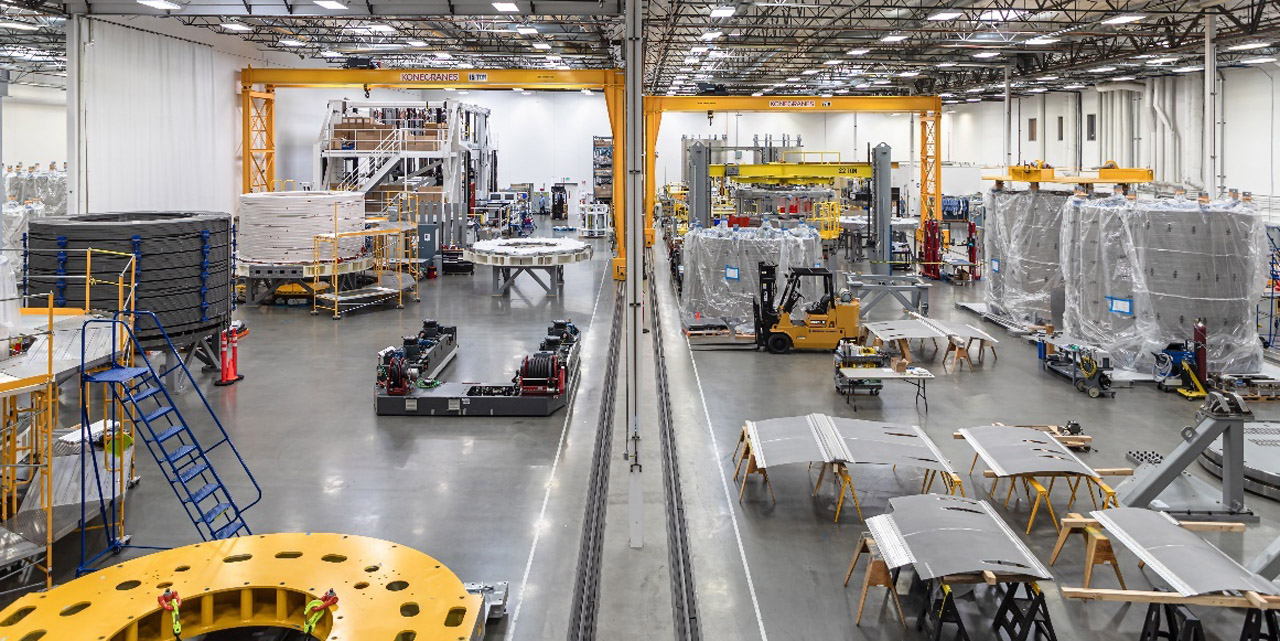
GA’s Magnet Technologies Center. (Photo: GA)
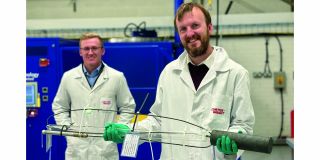
General Atomics (GA) and Tokamak Energy Ltd. are each independently developing magnetic confinement fusion power plant concepts that would use a tokamak and high-temperature superconducting (HTS) magnets to confine and shape a plasma heated to over 100 million degrees Celsius. On May 30, they announced a memorandum of understanding to collaborate on HTS magnet technology for fusion energy and other applications.
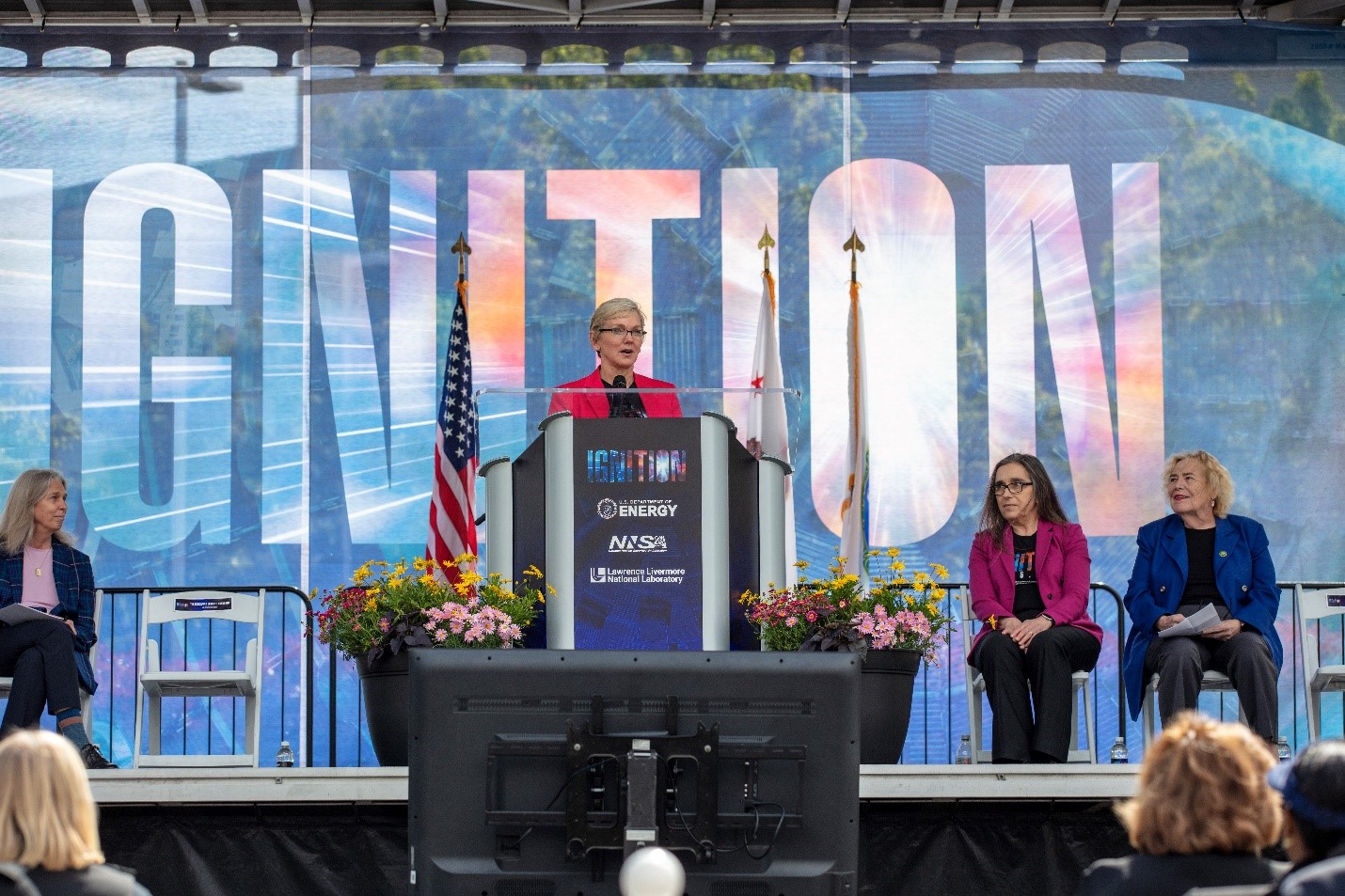
Energy secretary Jennifer Granholm addresses an audience of lab staff, dignitaries, and media at LLNL. (Photo: LLNL)
Lawrence Livermore National Laboratory hosted current and former staff, government officials, and media on May 8 to celebrate the lab’s achievement of fusion ignition at the National Ignition Facility (NIF) on December 5, 2022. Energy secretary Jennifer Granholm and undersecretary for nuclear security and National Nuclear Security Administration administrator Jill Hruby were in attendance, and Granholm took the opportunity to announce funding of up to $45 million to support inertial fusion energy (IFE) research and development. The Department of Energy’s Office of Science (DOE-SC) wants to establish multiple IFE Science and Technology Innovation Hubs (IFE S&T hubs), with total funding for 2023 of up to $9 million for projects lasting up to four years in duration.

-3 2x1.jpg)




.jpg)