Nuclear News

Published since 1959, Nuclear News is recognized worldwide as the flagship trade publication for the nuclear community. News reports cover plant operations, maintenance and security; policy and legislation; international developments; waste management and fuel; and business and contract award news.


The top 10 states of nuclear

January 16, 2026, 3:00PMNuclear NewsNuclear News Staff

The past few years have seen a concerted effort from many U.S. states to encourage nuclear development. The momentum behind nuclear-friendly policies has grown considerably, with many states repealing moratoriums, courting nuclear developers and suppliers, and in some cases creating advisory groups and road maps to push deployment of new nuclear reactors.

Nano Nuclear releases RFI for Loki lunar ambitions

January 16, 2026, 12:38PMNuclear News
Concept art of Nano’s Loki MMR. (Source: Nano Nuclear)

Nuclear power in space is back in the news for the second time this week as microreactor start-up Nano Nuclear has released a request for information to identify organizations that may support the company in the development of its Loki micro modular reactor. The company’s goal is eventual deployment of Loki on the lunar surface.

Argonne model improves nuclear plant maintenance planning

January 16, 2026, 10:24AMNuclear News

Researchers at Argonne National Laboratory have developed a multiphysics simulation modeling tool to predict how feedwater heater (FWH) tubes in a nuclear power plant break down over time. The model, which has the potential to improve maintenance schedules and save operating costs at nuclear facilities, is described in a paper titled “Numerical Analysis with Experimental Validation of Tube Fatigue Failure in Feedwater Heaters,” published in a recent issue of Engineering Failure Analysis.

IAEA, PNNL test new uranium enrichment monitor

January 16, 2026, 7:29AMNuclear News
Research team members at PNNL pose with their UGES prototype, including (from left) James Ely, Riane Stene, Nikhil Deshmukh, Mital Zalavadia, Benjamin McDonald, Grey Batie, and Rodrigo Guerrero. (Photo: Andrea Starr/PNNL)

A uranium enrichment monitor developed by a team at Pacific Northwest National Laboratory will soon be undergoing testing for nonproliferation applications at the International Atomic Energy Agency Centre of Excellence for Safeguards and Non-Proliferation in the United Kingdom. A recent PNNL news article describes how the research team, led by nuclear physicist James Ely, who works within the lab’s National Security Directorate, developed the UF6 gas enrichment sensor (UGES) prototype for treaty verification and other purposes.

Report: New recommendations for nuclear waste

January 15, 2026, 3:00PMNuclear News

Today, a bipartisan group of experts including energy consultant Lake Barrett and former NRC chair Allison Macfarlane have published a report titled The Path Forward for Nuclear Waste in the U.S.

The report recommends a new solution for managing domestic nuclear waste—one that centers around the foundation of an independent corporation led by reactor owners. Responsibility for waste management transport, storage, and disposal would be managed by this corporation rather than the Department of Energy.

INL to host Center for Used Fuel Research

January 15, 2026, 12:35PMNuclear News
Concept illustration of a transportation cask being unloaded at a federal spent fuel storage facility. (Image: DOE)

The Department of Energy’s Office of Nuclear Energy announced the establishment of the Center for Used Fuel Research (CUFR), to be hosted at the Idaho National Laboratory and focused on spent nuclear fuel performance, canister aging, and the fostering of innovation and collaboration.

According to the DOE, the CUFR is designed to be a national and international hub for applied research that supports and maintains compliance and advances public confidence in the safe storage and transportation of both commercial and DOE-managed spent fuel.

Hochul upgrades nuclear vision for N.Y.

January 15, 2026, 9:40AMNuclear News
Gov. Hochul delivers her 2026 State of the State address in Albany, N.Y. (Photo: Darren McGee/Office of Gov. Kathy Hochul)

In June of last year, New York Gov. Kathy Hochul called on the New York Power Authority—the state's public power utility—to add at least 1 GW of new capacity to the electrical grid through the construction of an advanced nuclear power plant in upstate New York to support the state’s decarbonization goals.

It was good news for the nuclear community, to be sure, but in Hochul's State of the State address in Albany earlier this week, she made that objective sound almost unambitious.

Radium sources yield cancer-fighting Ac-225 in IAEA program

January 14, 2026, 3:15PMNuclear News
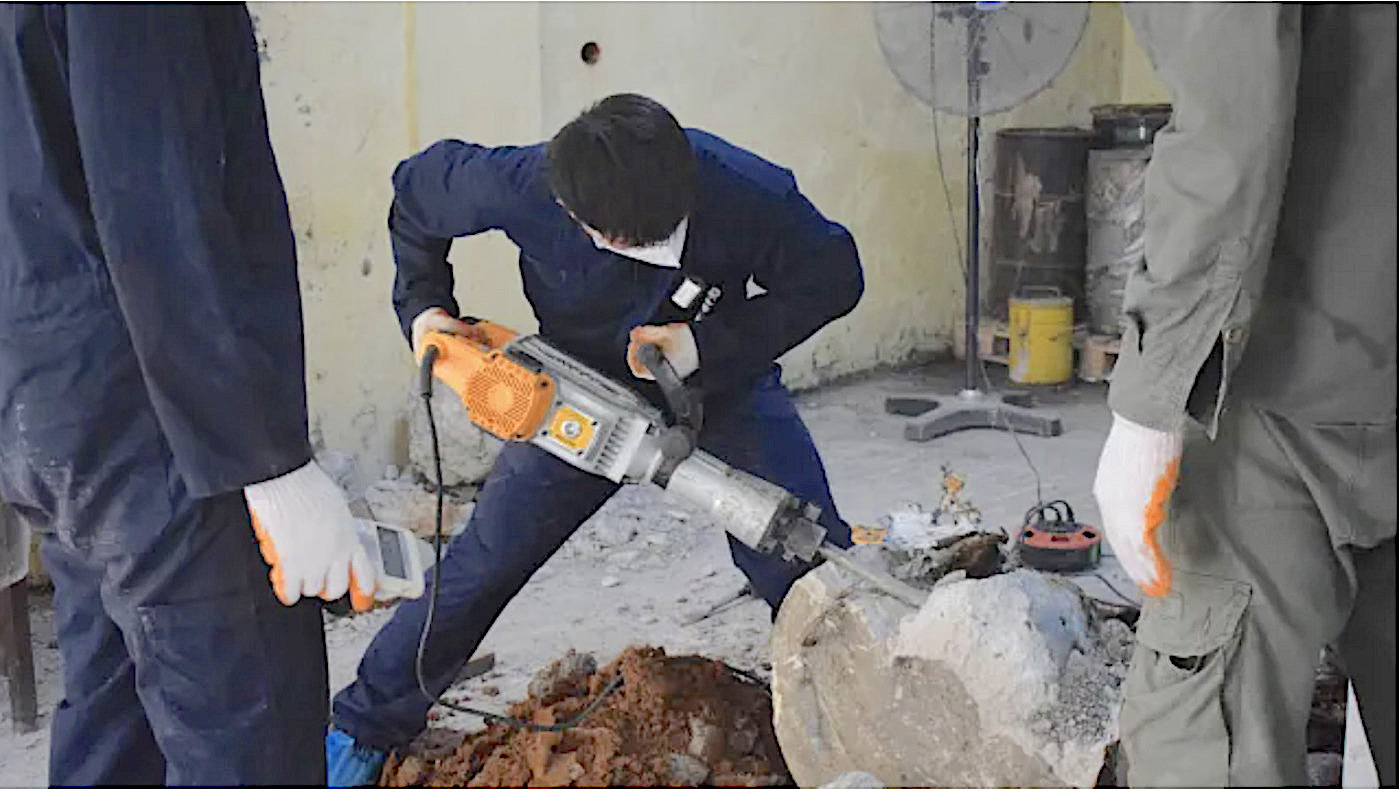
A worker recovers legacy Ra-226 sources that had been conditioned in cement during an IAEA expert mission to the Philippines. (Photo: Philippine Nuclear Research Institute)

The International Atomic Energy Agency has reported that, to date, 14 countries have made 14 transfers of disused radium to be recycled for use in advanced cancer treatments under the agency’s Global Radium-226 Management Initiative. Through this initiative, which was launched in 2021, legacy radium-226 from decades-old medical and industrial sources is used to produce actinium-225 radiopharmaceuticals, which have shown effectiveness in the treatment of patients with breast and prostate cancers and certain other cancers.

Casting a wider net

January 14, 2026, 11:53AMNuclear NewsCraig Piercy

Craig Piercy
cpiercy@ans.org

Recently, a colleague related to me a conversation overheard at an industry forum in which ANS was referred to as a group of “academics” who were of limited use in expanding the workforce needed to deliver a nuclear resurgence.

While not new, this criticism still gets me hypertensive when I hear it. Many still see ANS as a bunch of academics and “labbies” disconnected from the day-to-day commercial nuclear race.

Yet, I also understand the charge is not entirely without foundation. Pop your head into a technical session at an ANS national conference, and you’re bound to hear academics presenting research that, to nontechnical ears, sounds esoteric.

NASA, DOE solidify collaboration on a lunar surface reactor

January 14, 2026, 9:35AMNuclear News
Secretary of Energy Chris Wright (left) and NASA Administrator Jared Isaacman (right) meet at DOE headquarters in Washington, D.C., on January 8. (Photo: NASA/John Kraus)

NASA and the Department of Energy have announced a “renewed commitment” to their mutual goal of supporting research and development for a nuclear fission reactor on the lunar surface to provide power for future missions. The agencies have signed a memorandum of understanding that “solidifies this collaboration and advances President Trump’s vision of American space superiority.”

Holtec submits partial construction permit application for SMRs at Palisades

January 14, 2026, 7:36AMNuclear News
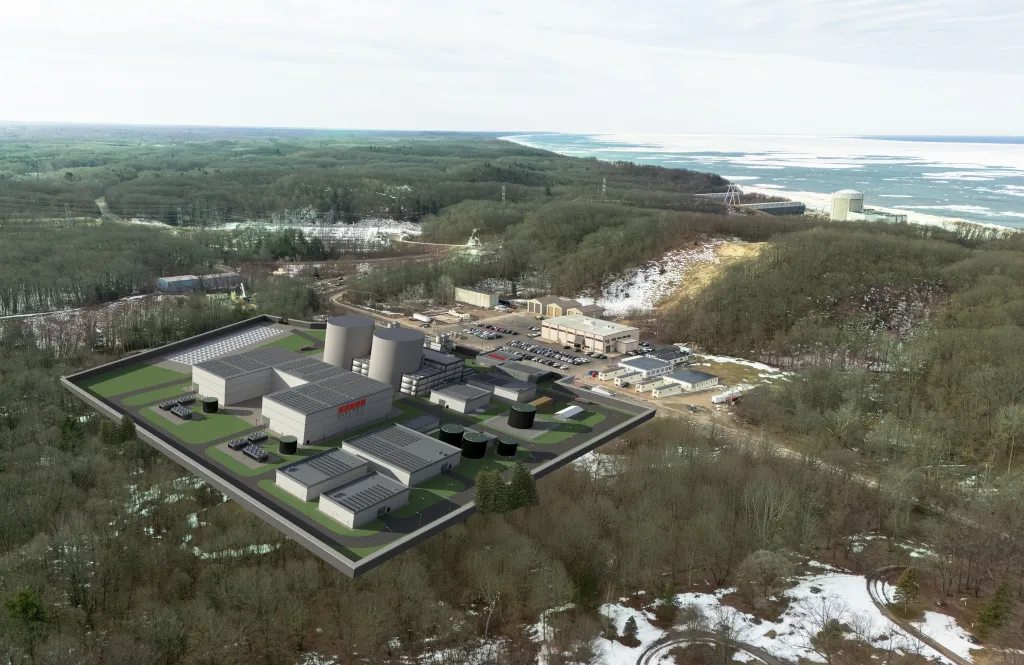
An image of the Palisades site, featuring two SMR-300 units in the foreground. (Image: Holtec)

On New Year’s Eve, Holtec International submitted Part 1 of a construction permit application to the Nuclear Regulatory Commission seeking a limited work authorization (LWA) to begin construction of a two-unit SMR-300 plant at the company’s site in Covert, Mich.

Named Pioneer-1 and -2, the twin 340-MWe pressurized water reactors would join the 777-MWe Palisades PWR that began operating in 1971, shut down in 2022, and is expected to reconnect to the grid—slightly delayed—early this year. According to Holtec’s application documents, Part 2 of its construction permit will be filed no later than mid-2027.

Meta’s new nuclear deals with Oklo and TerraPower: The details

January 13, 2026, 3:00PMNuclear News

Tech giant Meta is making big bets on TerraPower and Oklo. With the former, the hyperscaler could support the deployment of up to eight new reactors. With the latter, it could be as many as sixteen.

For both start-ups, Meta hopes its demand bolsters supply chains, the workforce, and the nuclear industry generally. For itself, the company is aiming to secure more generation to cleanly power its AI ambitions.

The Meta-Vistra deal: A closer look

January 12, 2026, 3:29PMNuclear News
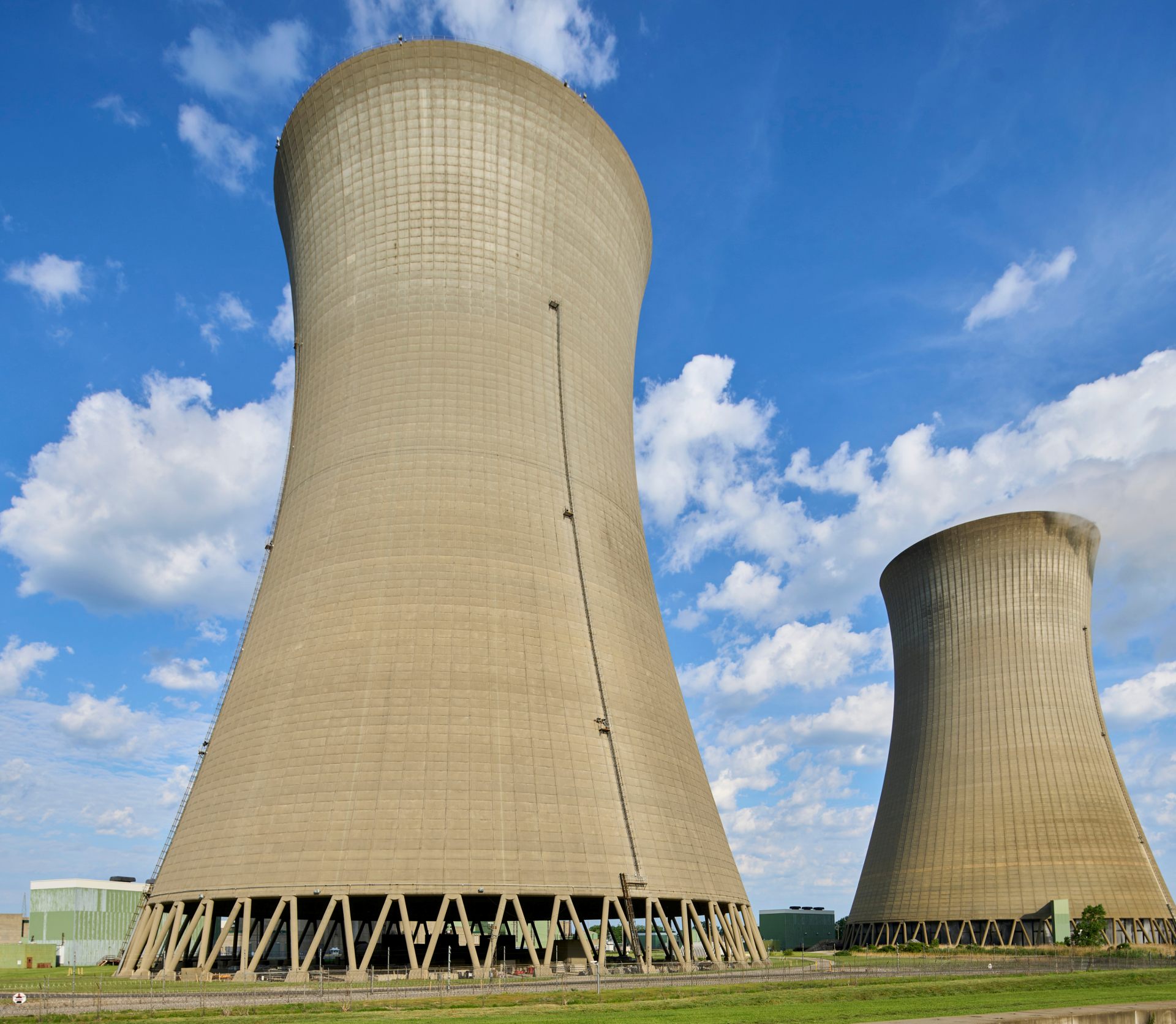
The cooling towers at Vistra's Beaver Valley nuclear power plant. (Photo: Vistra)

With last Friday's announcement regarding its vision for nuclear energy, Meta has entered into 20-year power purchase agreements (PPAs) for more than 2,600 MW of electricity from a combination of three Vistra-owned nuclear plants to support the tech behemoth's planned operations in the PJM region.

Communities and companies answer NYPA’s nuclear solicitations

January 12, 2026, 12:22PMNuclear News

Eight communities and 23 companies, including reactor developers, construction firms, and utilities, have expressed interest in participating in New York state’s plan to develop at least 1 gigawatt of new nuclear power in the upstate area. The communities and companies are responding to solicitations from the New York Power Authority for developers and partners who want to support the agency’s advanced nuclear power projects and are able to provide viable project concepts, as well as for communities to host nuclear facilities and backers that could support such projects.

Meta strikes deals with Vistra, Oklo, TerraPower

January 12, 2026, 10:03AMNuclear News

On January 9, tech giant Meta made waves by announcing three new agreements with Vistra, TerraPower, and Oklo. These deals aim to see Meta supporting both uprates at existing nuclear power plants and the development of new advanced reactor projects, and in total could see the company financing up to 6.6 GW of new and existing energy by 2035. These projects will support the hyperscaler’s ever-growing data center– and AI-driven energy needs.

Where states stand on nuclear

January 12, 2026, 8:19AMNuclear NewsKristy Hartman

Nuclear energy is entering a new era—and policymakers are driving that shift. Governors, energy advisors, legislators, and regulators play a critical role in shaping state policies and regulations that can support the existing nuclear fleet and can accelerate the development, demonstration, and commercial deployment of next-­generation nuclear energy.

2025: The year in nuclear

January 9, 2026, 3:37PMNuclear News

As Nuclear News has done since 2022, we have compiled a review of the nuclear news that filled headlines and sparked conversations in the year just completed. Departing from the chronological format of years past, we open with the most impactful news of 2025: a survey of actions and orders of the Trump administration that are reshaping nuclear research, development, deployment, and commercialization. We then highlight some of the top news in nuclear restarts, new reactor testing programs, the fuel supply chain and broader fuel cycle, and more.

NRC updates: New chair, rule reversal, and EO planning

January 9, 2026, 12:31PMNuclear News

Thursday was a busy news day for the Nuclear Regulatory Commission, with three significant announcements.

In the span of a few hours, the NRC released the news of Ho Nieh’s promotion to chair, the reversal of the plan to sunset its aircraft impact assessment provisions, and new guidance for interagency collaboration.

Illinois lifts moratorium on new large nuclear reactors

January 9, 2026, 9:34AMNuclear News
Illinois Gov. J. B. Pritzker displays the Clean and Reliable Grid Affordability Act during the signing ceremony in Joliet on January 8. (Image: Office of the Governor of Illinois)

New power reactors of any size can be now be sited in the state of Illinois, thanks to legislation signed by Gov. J. B. Pritzker on January 8. The Clean and Reliable Grid Affordability Act (CRGA)—which Pritzker says is designed to lower energy costs for consumers, drive the development of new energy resources in the state, and strengthen the grid—lifts the moratorium on new, large nuclear reactors that Illinois enacted in the late 1980s.

Nuclear power’s new rule book: Managing uncertainty in efficiency, safety, and independence

January 8, 2026, 5:12PMNuclear NewsGeorge Joslin, Arden Rowell, Ha Bui, Justin Valentino, Ziwei Che, Seyed Reihani, and Zahra Mohaghegh
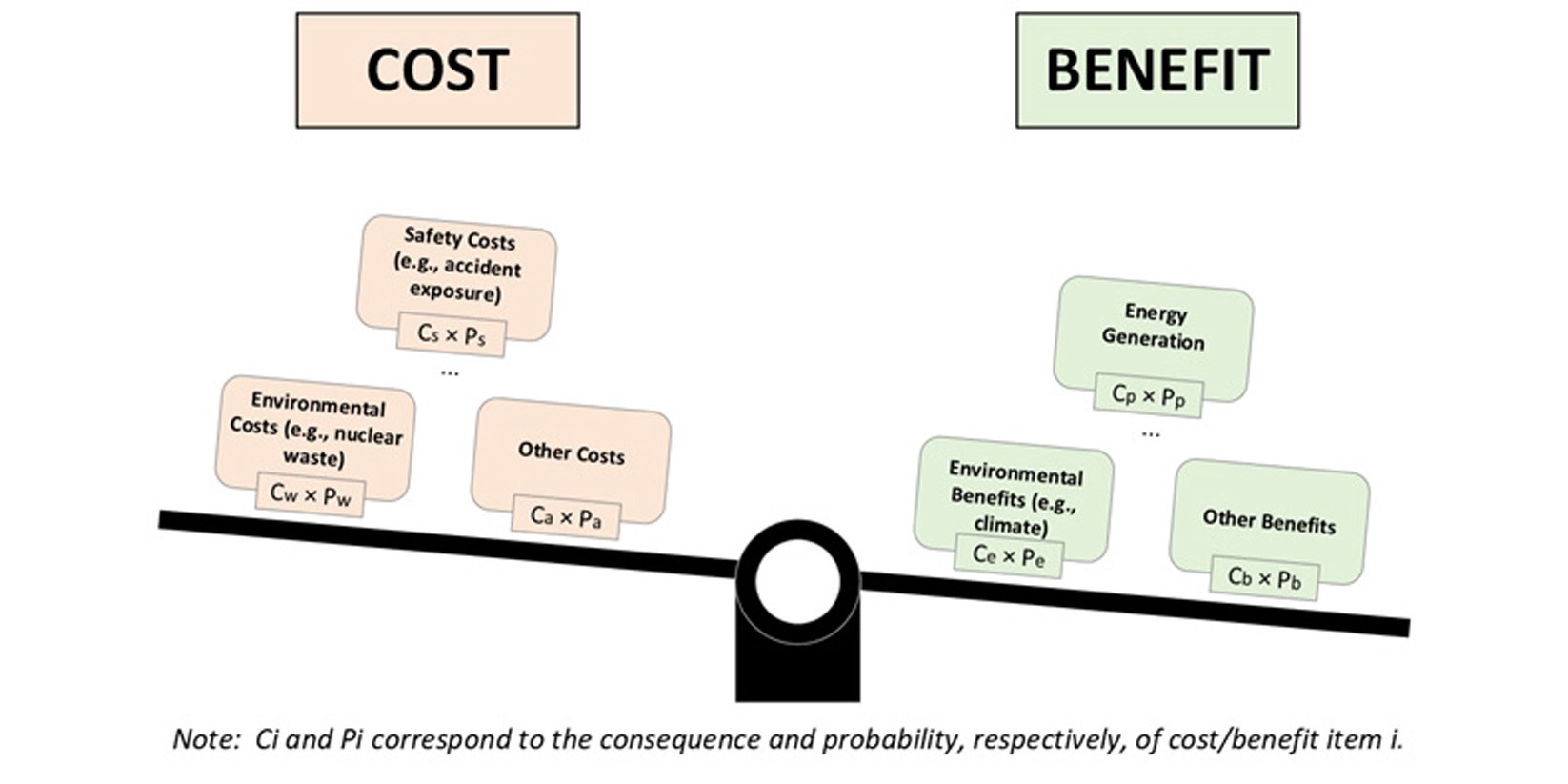
Fig. 1. Example of a cost-benefit analysis for efficient and safe nuclear licensing. This framework illustrates how safety risk, traditionally quantified through PRA, must be combined with other relevant cost and benefit dimensions to meet statutory expectations of efficiency.

The U.S. nuclear industry is standing at its most volatile regulatory moment yet—one that will shape the trajectory and safety of the industry for decades to come. Recent judicial, legislative, and executive actions have converged to rewrite the rules governing the licensing and regulation of nuclear power reactors. Although these changes are intended to promote and accelerate the deployment of new nuclear energy technologies, the collision of multiple legal shifts—occurring simultaneously and intersecting with profound technological uncertainties—is overwhelming the Nuclear Regulatory Commission and threatening to destabilize investor and industry expectations.