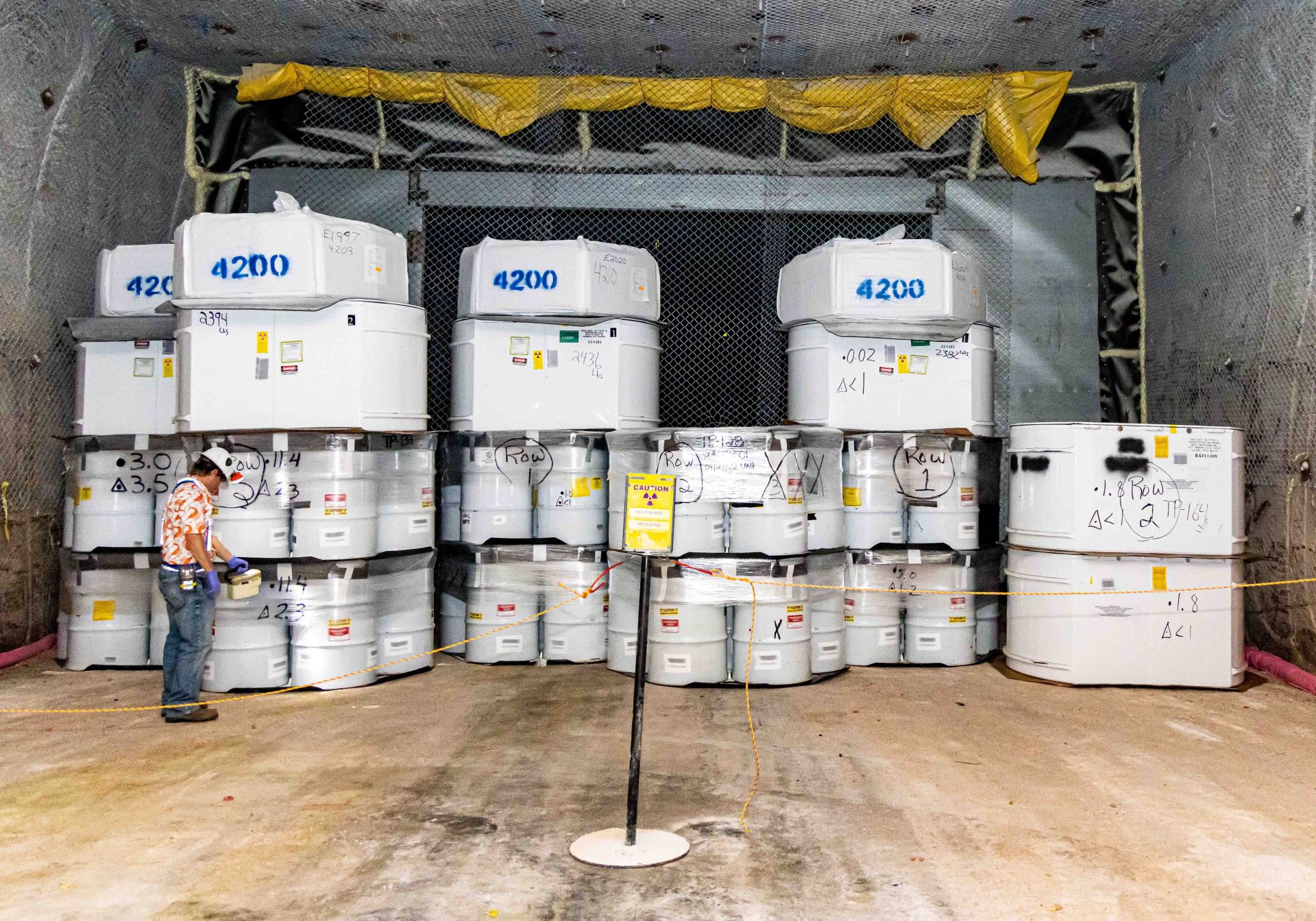
A radiological control technician checks radiation readings on waste containers arriving at WIPP. (Photo: WIPP)
In an amendment to a 1998 record of decision, the Department of Energy is expanding the available space at its Waste Isolation Pilot Plant deep geological repository for defense-related radioactive waste, and is also now planning to accept waste at the facility for 50 more years than previously planned. The amended decision, which was signed on August 18 by Tim Walsh, assistant secretary for Environmental Management, commits the DOE to a WIPP operating horizon extending to about 2083.
Letter to DOE includes recommendations on new and existing regulations for storage, recycling, and disposal of used nuclear fuel.
WASHINGTON, D.C. — The American Nuclear Society (ANS) sent a letter to U.S. Secretary of Energy Chris Wright and the U.S. Department of Energy (DOE) in response to Executive Order 14302, “Reinvigorating the Nuclear Industrial Base.” The letter outlines expert-backed recommendations for establishing an effective national program within the United States to manage the storage, reprocessing, and final disposal of commercial used nuclear fuel once it has been in a reactor from a nuclear power plant. This stage is commonly referred to as the “back end” of the nuclear fuel cycle.
Aggregate is delivered by rail to the U.K.’s Low-Level Waste Repository site. (Photo: NWS)
Nuclear Waste Services (NWS), which manages the disposal of the United Kingdom’s low-level radioactive waste, announced this week that a major milestone has been reached at its Low Level Waste Repository in West Cumbria, England, as work begins on the final capping of legacy disposal trenches and vaults at the site.
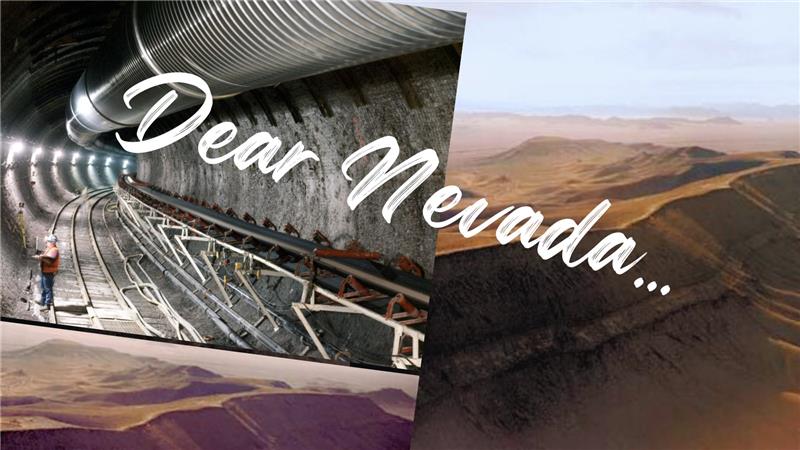
Ontario’s South Bruce area is being considered as a potential host site for a spent fuel repository. (Photo: NWMO)
Canada’s Nuclear Waste Management Organization (NWMO) is shifting the timing for selecting a preferred site for a spent nuclear fuel repository to the fall of 2024, a full year later than previously planned. The NWMO, a nonprofit organization tasked with the safe, long-term management of Canada’s spent fuel in a deep geological repository, said the delay is the result of several provincial lockdowns associated with the COVID-19 pandemic.
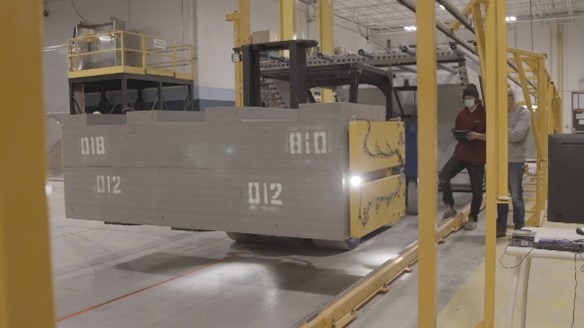
A modified forklift with a customized handling attachment is used to move spent fuel containers and their heavy bentonite clay housings. It can move autonomously or be manually operated remotely from outside the room, as needed. (Photo: NWMO)
Canada’s Nuclear Waste Management Organization (NWMO) has announced that it has successfully completed a full-scale demonstration of the engineered barriers that are designed to contain and isolate Canada’s spent nuclear fuel in a deep geological repository.
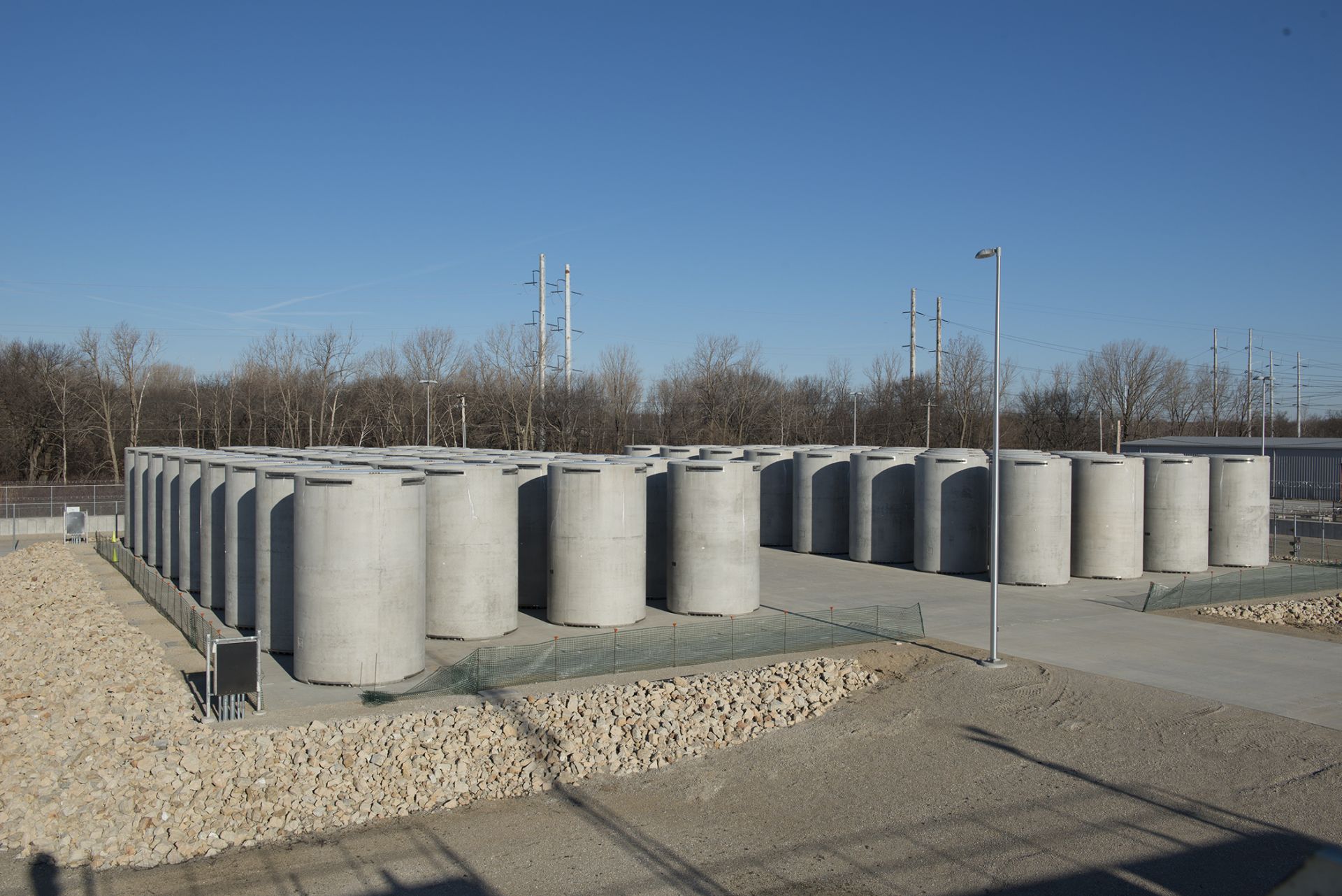
Spent fuel in dry storage at the decommissioned Zion site in Illinois awaits a permanent home. (Photo: EnergySolutions)
The deadline for submitting comments on the Department of Energy’s request for information on using a consent-based approach to siting federal facilities for the interim storage of spent nuclear fuel is Friday, March 4.