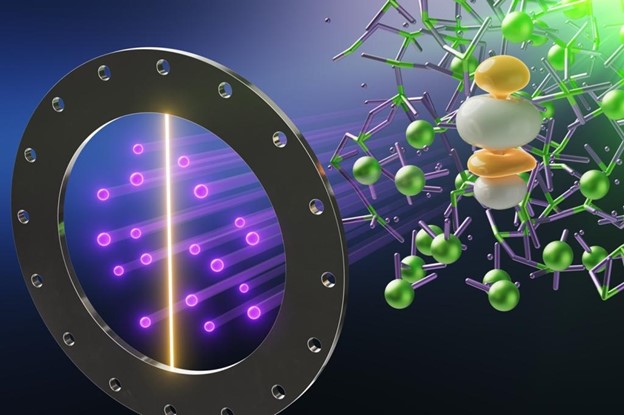
In this illustration of oscillating UCl3 bonds, neutrons produced at the SNS (purple dots) scatter off molten UCl3 (depicted in green), revealing its atomic structure. Yellow and white shapes simulate data and represent the oscillating UCl3 bonds. (Image: Alex Ivanov/ORNL)
New research into the dynamics and structure of high-temperature liquid uranium trichloride (UCl3) salt—a potential fuel for molten salt reactors—has been published in the Journal of the American Chemical Society. A recent news release from Oak Ridge National Laboratory describes how researchers from ORNL, Argonne National Laboratory, and the University of South Carolina used ORNL’s Spallation Neutron Source (SNS) to document the unique chemistry of liquid UCl3 “for the first time.”
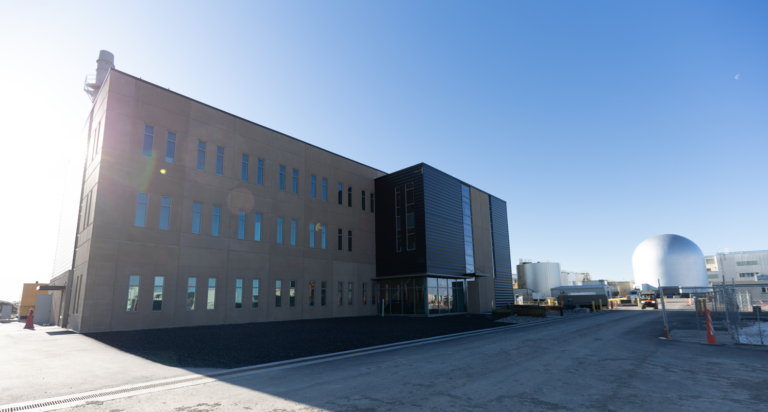
The outside of the Sample Preparation Laboratory at the Materials and Fuels Complex at Idaho National Laboratory. (Photo: INL)
Idaho National Laboratory has completed substantial construction of the first new hot cell facility at the lab site in 49 years—a Sample Preparation Laboratory (SPL) that will accelerate research, development, and qualification of structural nuclear materials for both existing and new nuclear reactors. In an announcement last week of the milestone and the ribbon-cutting ceremony held to mark it, INL said the SPL is expected to be fully operational in 2025.
Understanding how several different metals—such as the contents of PNNL’s space-bound cube—react to radiation in space will help scientists understand the potential impact of radiation on space travelers. (Photo: Eddie Pablo/PNNL)
When a SpaceX rocket lifted off from Kennedy Space Center on September 10 (see video here), sending a crewed commercial mission into low Earth orbit, an experiment designed by Pacific Northwest National Laboratory was onboard. Several high-purity metal samples will orbit Earth and absorb cosmic radiation for five days—including that from the Van Allen radiation belt—to help the lab answer questions about the radiation environment for manned space missions, according to a news release from PNNL.
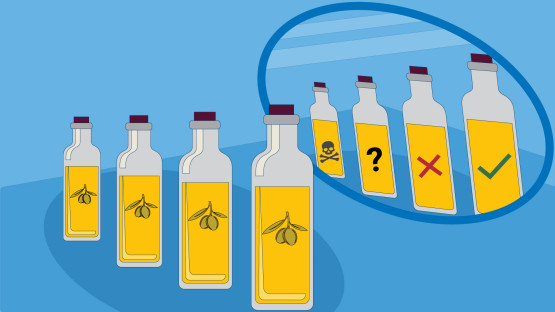
When consumers buy food, they cannot always detect food fraud. (Infographic: Mariia Platonova/IAEA)
The adulterating of food products for financial gain, either through dilution, substitution, mislabeling, or other action, has become a lucrative industry. And because food fraud is designed to avoid detection, gauging its financial impacts can be difficult. Experts estimate that food fraud affects 1 percent of the global food industry at a cost of about $10 billion to $15 billion a year, with some estimates putting the cost as high as $40 billion a year, according to the U.S. Food and Drug Administration.
Matthew Jasica is a member of a small team conducting large-scale experimental testing of reactors and their components at the NSTF. (Photo: Argonne)
A facility at Argonne National Laboratory has been simulating nuclear reactor cooling systems under a wide range of conditions since the 1980s. Its latest task, described by Argonne in an August 13 news release, is testing the performance of passive safety systems for new reactor designs.
Designed as a half-scale model of a real reactor system, Argonne’s Natural Convection Shutdown Heat Removal Test Facility (NSTF) is used for large-scale experimental testing of the performance of passive safety systems, which are designed to remove decay heat using natural forces including gravity and heat convection. Those tests yield benchmarking data qualified to the level of National Quality Assurance-1 (NQA-1) that is shared with vendors and regulators to validate computational models and guide licensing of new reactors and components.
A glass test cell that was fabricated to visualize noble gas behavior in a stagnant molten salt column. (Photo: ORNL)
Transparency is one advantage of certain molten salts that could serve as both a coolant and fuel carrier in an advanced reactor. For scientists studying molten salt chemistry and behavior at the laboratory scale, it helps if the test vessel is transparent too. Now, Oak Ridge National Laboratory has created a custom glass test cell with a 1-liter capacity to observe how gases move within a column of molten salt, the Department of Energy announced August 5.
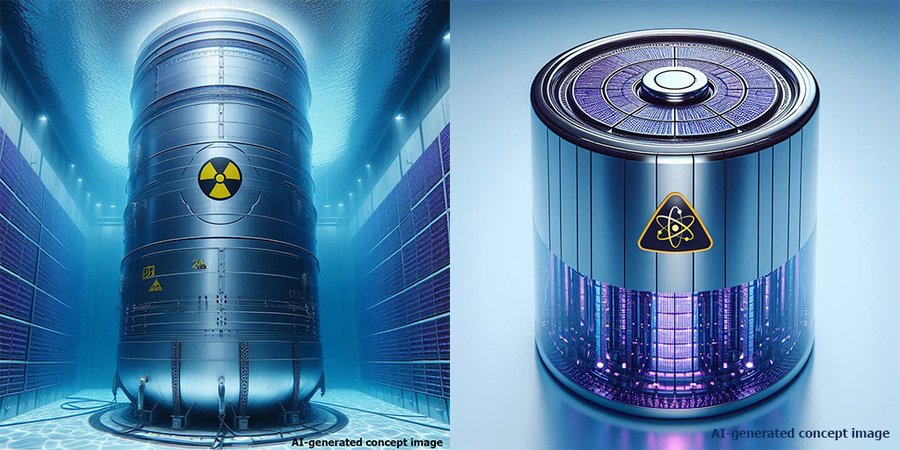
AI-generated concept image. (Image: DARPA)
Nuclear power already has an energy density advantage over other sources of thermal electricity generation. But what if nuclear generation didn’t require a steam turbine? What if the radiation from a reactor was less a problem to be managed and more a source of energy? And what if an energy conversion technology could scale to fit nuclear power systems ranging from miniature batteries to the grid? The Defense Advanced Research Projects Agency (DARPA) Defense Sciences Office (DSO) is asking these types of questions in a request for information on High Power Direct Energy Conversion from Nuclear Power Systems, released August 1.
The ALCF AI Testbed includes the AI systems represented in this collage: Cerebras, Graphcore, Groq, and SambaNova. (Image: Argonne National Laboratory)
Generative artificial intelligence paired with advanced diagnostic tools could detect potential problems in nuclear power plants and deliver a straightforward explanation to operators in real time. That’s the premise of research out of the Department of Energy’s Argonne National Laboratory, and just one example of the DOE’s increasing exploration of AI applications in nuclear science and technology research. Training and restraining novel AI systems take expertise and data, and the DOE has access to both. According to a flurry of reports and announcements in recent months, the DOE is setting out its plans to ensure the United States can use AI to its advantage to enhance energy security and national security.
Scientist Jacklyn Gates at the Berkeley Gas-filled Separator used to separate atoms of element 116, livermorium. (Photo: Marilyn Sargent/Berkeley Lab)
A plutonium target bombarded with a beam of titanium-50 in Lawrence Berkeley National Laboratory’s 88-Inch Cyclotron for 22 days has yielded two atoms of the superheavy element 116, in a proof of concept that gives Berkeley Lab researchers a path to pursue the heaviest element yet—element 120. The result was announced July 23 at the Nuclear Structure 2024 conference; a paper has been submitted to the journal Physical Review Letters and published on arXiv.
The 10 MW core of MURR contributes to the global supply of radioisotopes for medical radiopharmaceuticals and research. (Photo: MURR)
The University of Missouri Research Reactor (MURR) is the latest member of Nuclear Medicine Europe, an industry association for the radiopharmaceutical and molecular imaging industry in Europe, the University of Missouri announced July 17.
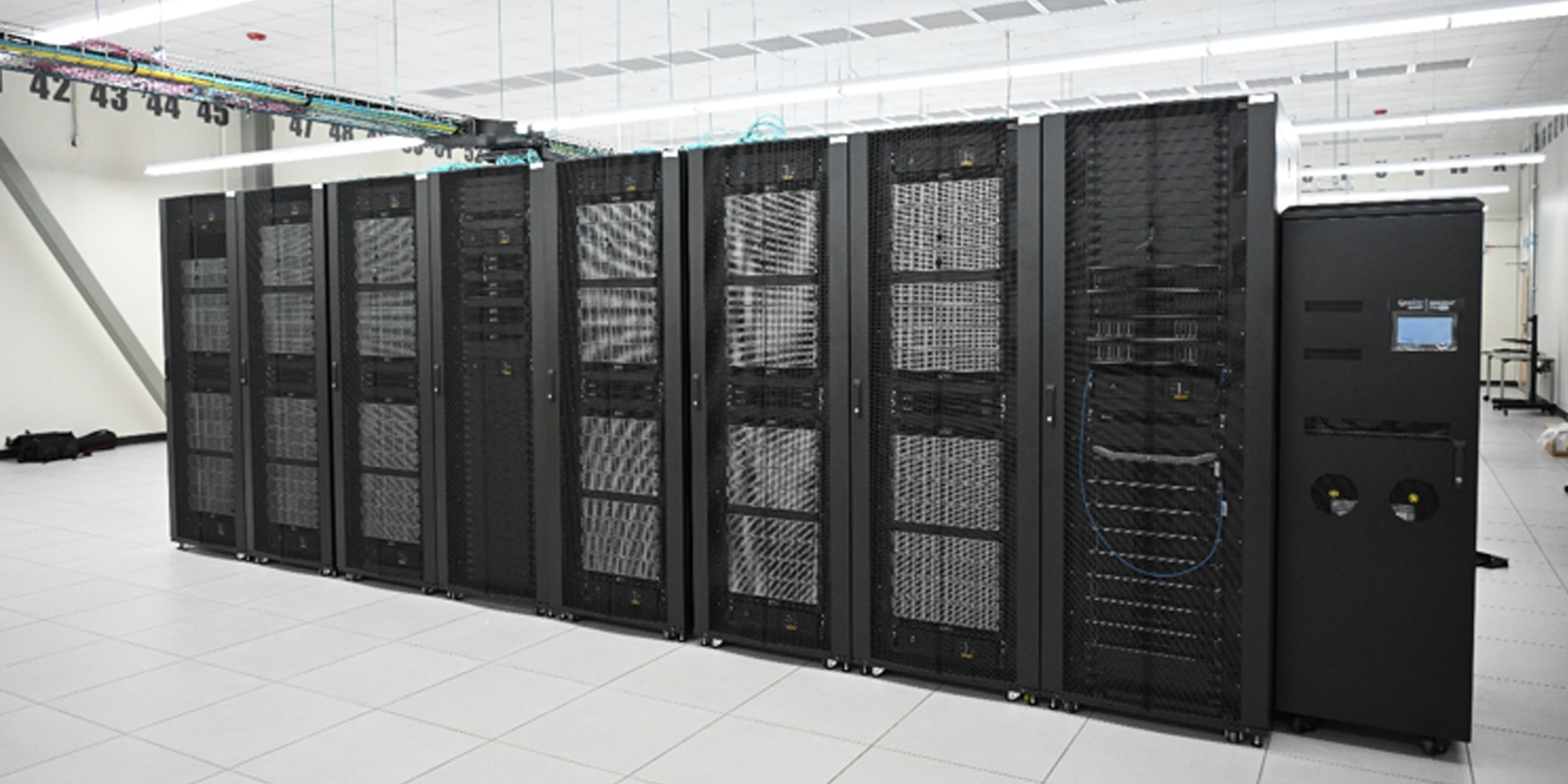
INL’s new Bitterroot supercomputer installed in the Collaborative Computing Center. (Photo: INL)
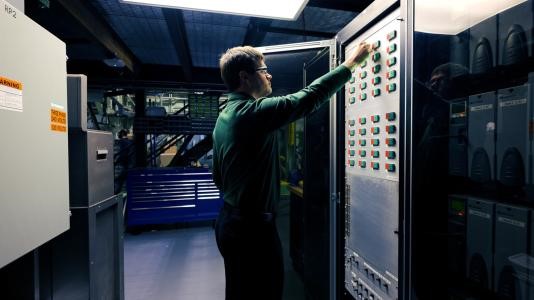
A new supercomputer named Bitterroot started operating in June at Idaho National Laboratory’s Collaborative Computing Center (C3) and is speeding up nuclear energy research by improving access to modeling and simulation tools. Bitterroot arrived at INL in March, and the announced July 15 that the supercomputer was open to users on June 18 after installation and an extensive program of testing.
Researchers take samples of a microorganism that could produce toxins. (Photo: CEAC)
Oceans link all the continents of the world, and fish don’t respect boundary lines. So it’s fitting that a global organization—the International Atomic Energy Agency—is helping nations detect and monitor both plastic pollution and biotoxins in marine algae that can lead to outbreaks of contaminated seafood.
The color-coded scatterplot shows the feasibility of coal-to-nuclear transitions at smaller coal plants (1,000 MWe or less) across the United States, plotted by latitude and longitude. Red and warm colors represent the high feasibility. (Image: Muhammad Rafiul Abdussami, Fastest Path to Zero, University of Michigan)
Comprehensive analysis of 245 operational coal power plants in the United States by a team of researchers at the University of Michigan has scored each site’s advanced reactor hosting feasibility using a broad array of attributes, including socioeconomic factors, safety considerations, proximity to populations, existing nuclear facilities, and transportation networks. The results could help policymakers and utilities make decisions about deploying nuclear reactors at sites with existing transmission lines and a ready workforce.
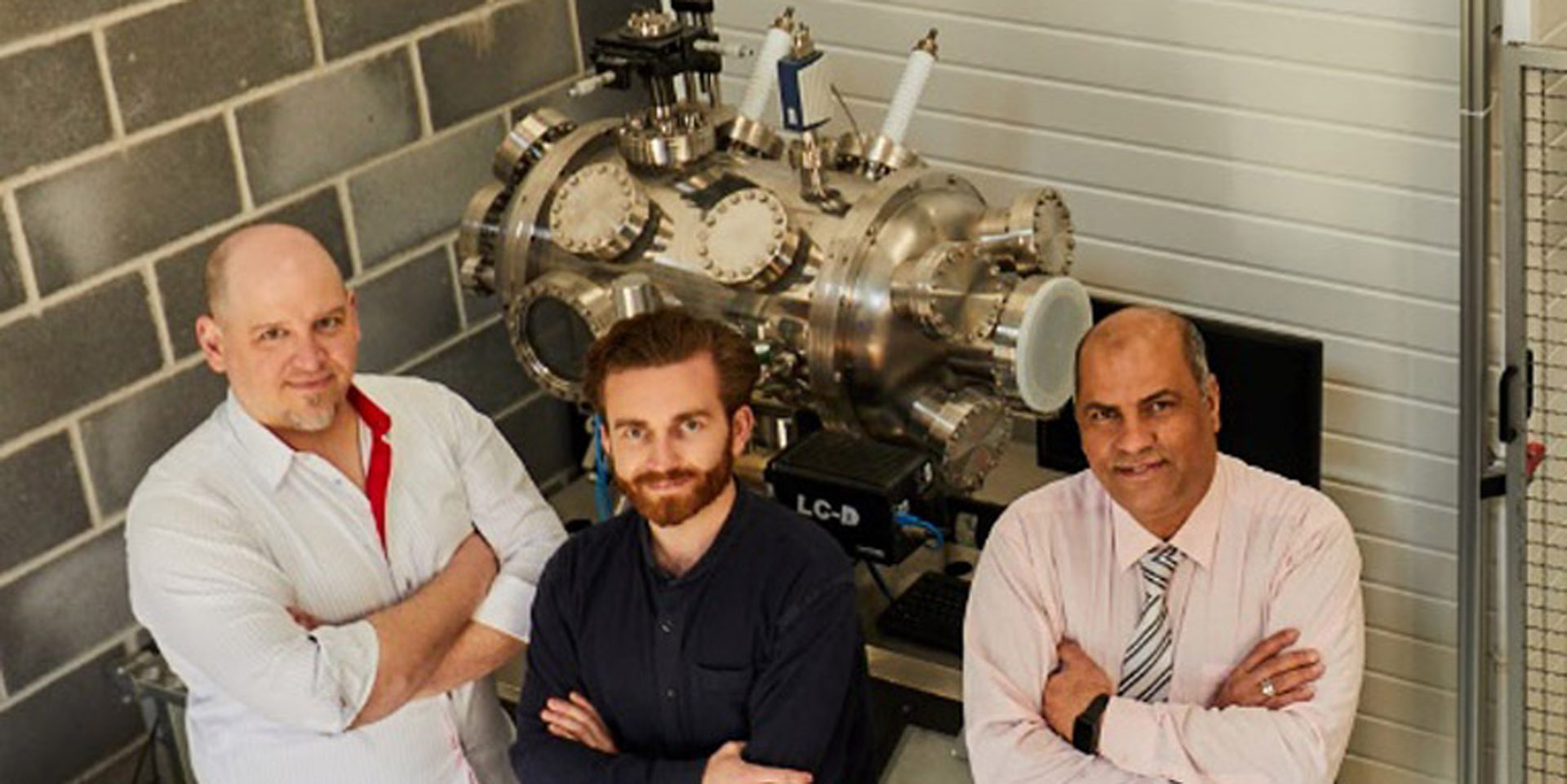
Astral Neutronics CEO Talmon Firestone, Dr. Tom Wallace-Smith, and Dr. Mahmoud Bakr in the Winfrith Laboratory.
Chapman Nuclear, Inc. is a third generation nuclear company focused on power generation, shielding, and construction. For over 70 years, our family has served as champions and good stewards for the nuclear industry while on the cutting edge of innovation.
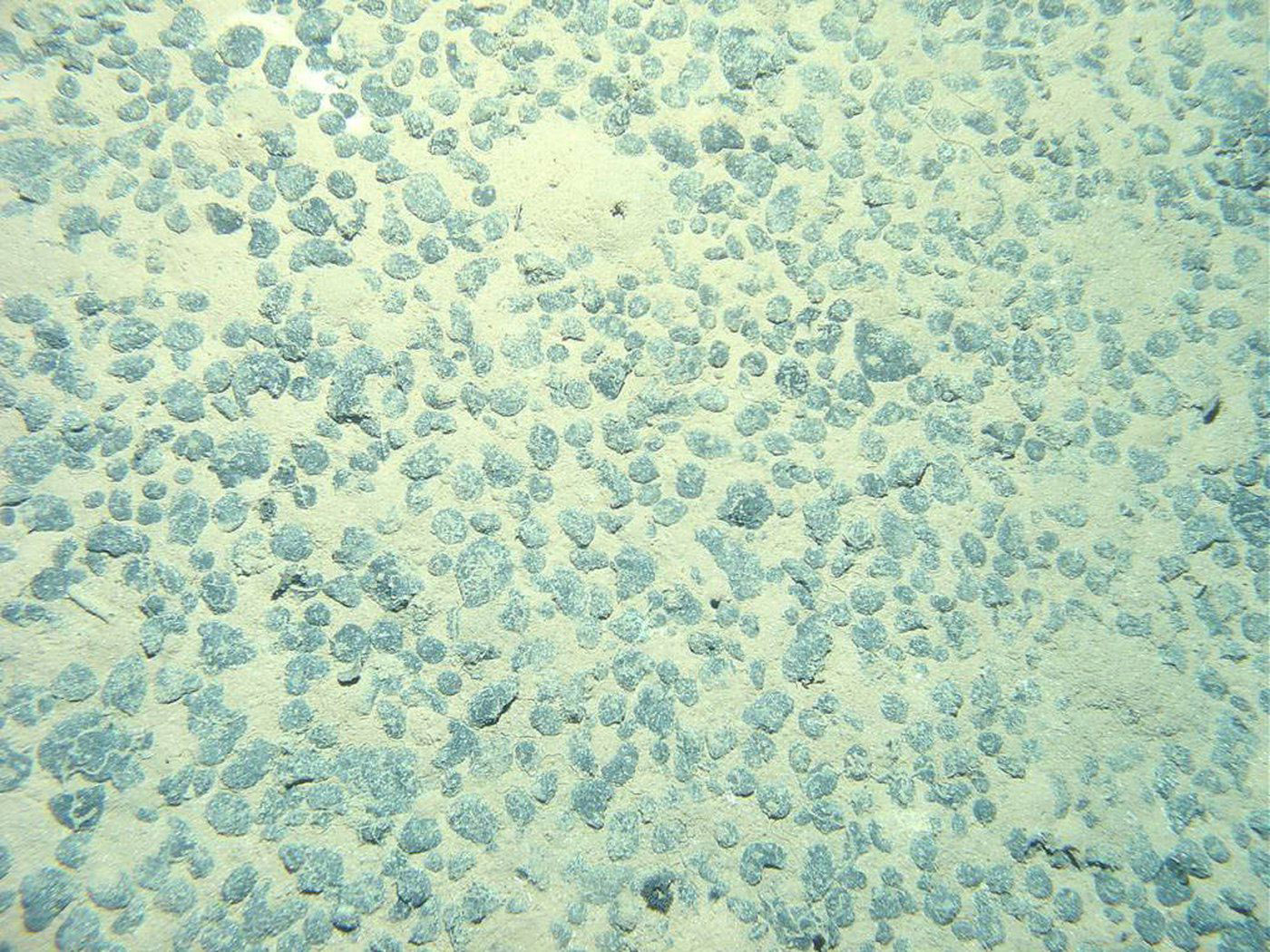
Several-inch-diameter manganese nodules just sit on the ocean floor and can be collected with little to no actual mining, as opposed to severe mining on land. (Photo: Wikimedia Commons)
Regardless of how you power our grid or how you attempt to decarbonize our economy, we will need many various metals to achieve any future, or even to just continue with business as usual. Critical metals like cobalt, lithium, nickel, and neodymium are essential to a low-carbon-energy future if renewables and electric vehicles are to play a large role.1 Even if nuclear provides 100 percent of our power, just operating the grid and electrifying most sectors will take huge amounts of critical metals like copper, notwithstanding the fact that nuclear power requires the least amount of metals and other materials of any energy source.
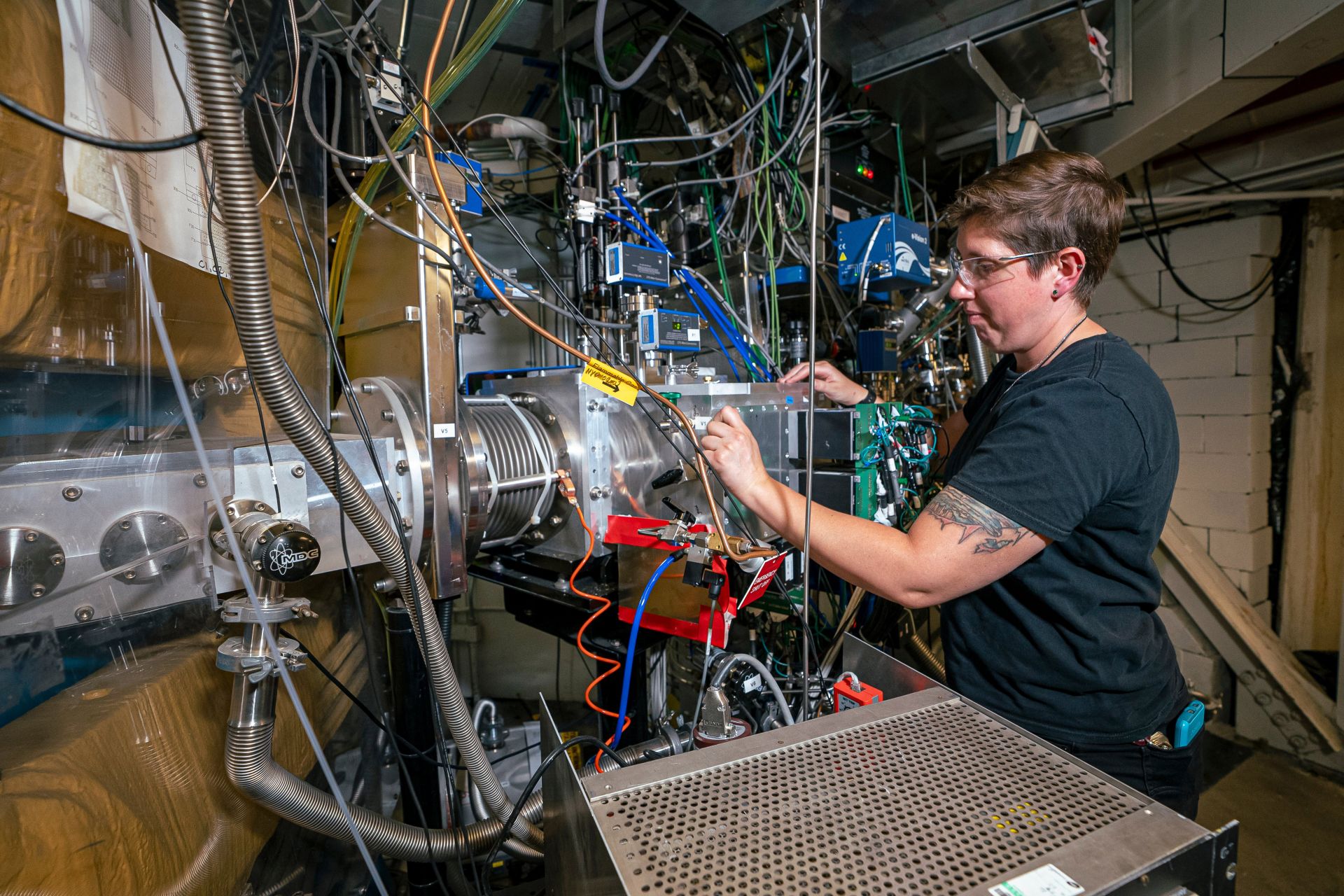
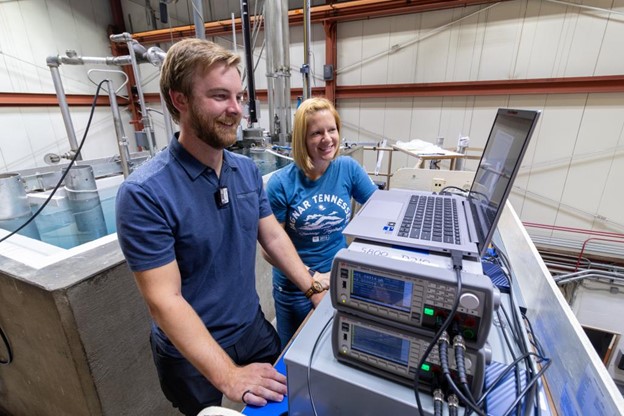
Kyle Reed and Dianne Ezell of ORNL gather data about the performance of a sensor transistor as it is tested against the radiation within the reactor pool behind them at Ohio State University’s Nuclear Reactor Laboratory. (Photo: Michael Huson/The Ohio State University)
Researchers at the Department of Energy’s Oak Ridge National Laboratory want to make the sensors in nuclear power plants more accurate by linking them to electronics that can withstand the intense radiation inside a reactor. Electronics containing transistors made with gallium nitride, a wide-bandgap semiconductor, have been tested in the ionizing radiation environment of space. Now, according to a June 24 article from ORNL, tests carried out in the research reactor at Ohio State University indicate they could withstand neutron bombardment within a nuclear fission reactor.





.png)