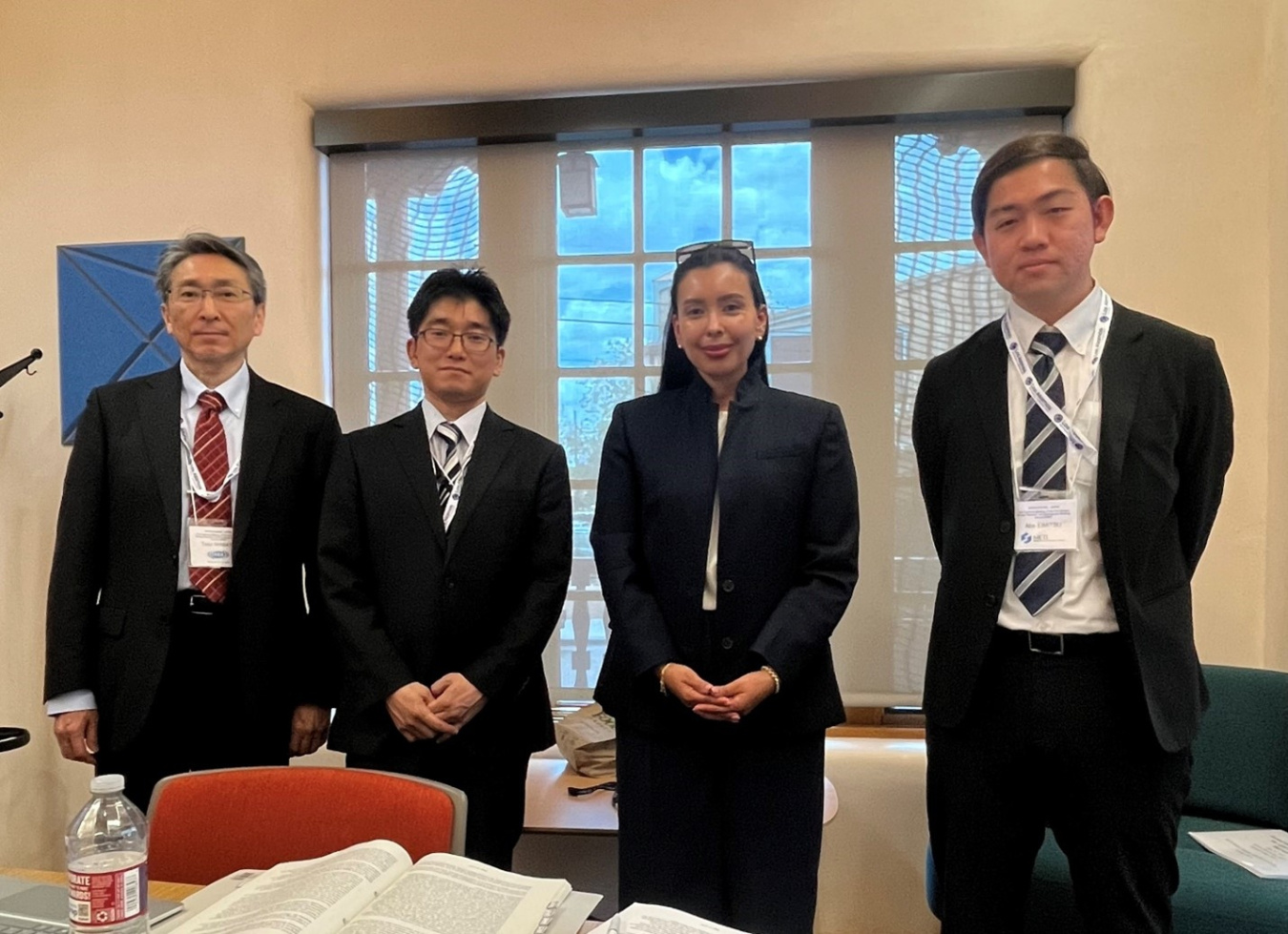
Participants in the 13th U.S.-Japan Technical Meeting of the Civil Nuclear Energy Research and Development Working Group included, from left, officials from the JAEA; the Ministry of Education, Culture, Sports, Science, and Technology; DOE-EM; and the Ministry of Economy, Trade, and Industry. (Photo: DOE)
Officials with the Department of Energy’s Office of Environmental Management discussed spent nuclear fuel recycling and conditioning with counterparts from Japan during the 13th U.S.-Japan Technical Meeting of the Civil Nuclear Energy Research and Development Working Group, held recently in Santa Fe, N.M.
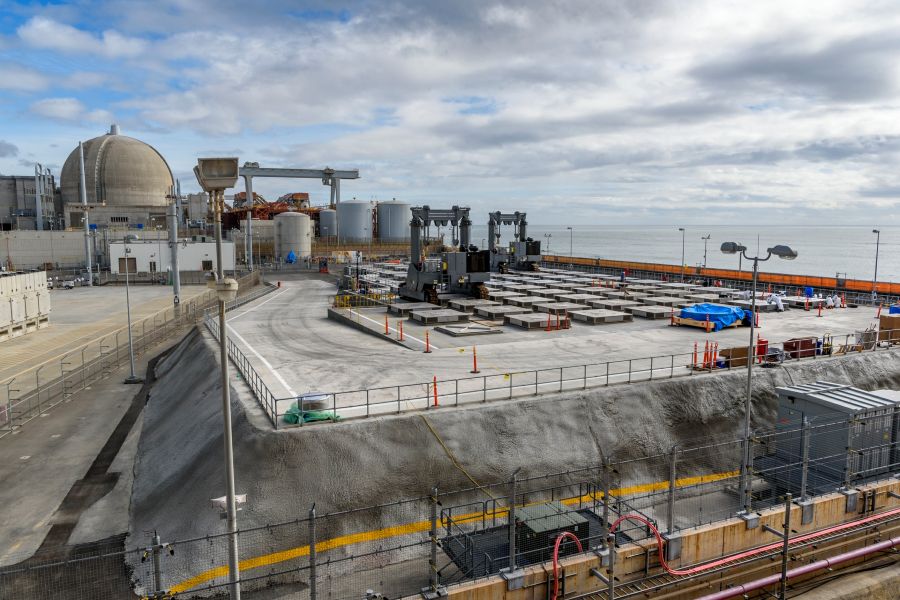
The ISFSI at SONGS. (Photo: Southern California Edison)
Two companies specializing in ultrasonic nondestructive testing and structural health monitoring are to advance to the final phase of a selection process to demonstrate acoustic emission technologies for the automated monitoring of spent nuclear fuel dry storage canisters.
Concept art of Curio’s proposed NuCycle spent nuclear fuel recycling production facility. (Images: Curio)
Washington, D.C.-based Curio announced yesterday that it has submitted a letter of intent to the Nuclear Regulatory Commission to establish a docket for preapplication engagement activities and ultimately the submittal and review of a license application to operate a spent nuclear fuel recycling production facility.
Once a docket is established, Curio will develop a license application to meet all applicable regulations for a nuclear fuel recycling facility under 10 CFR Part 70.
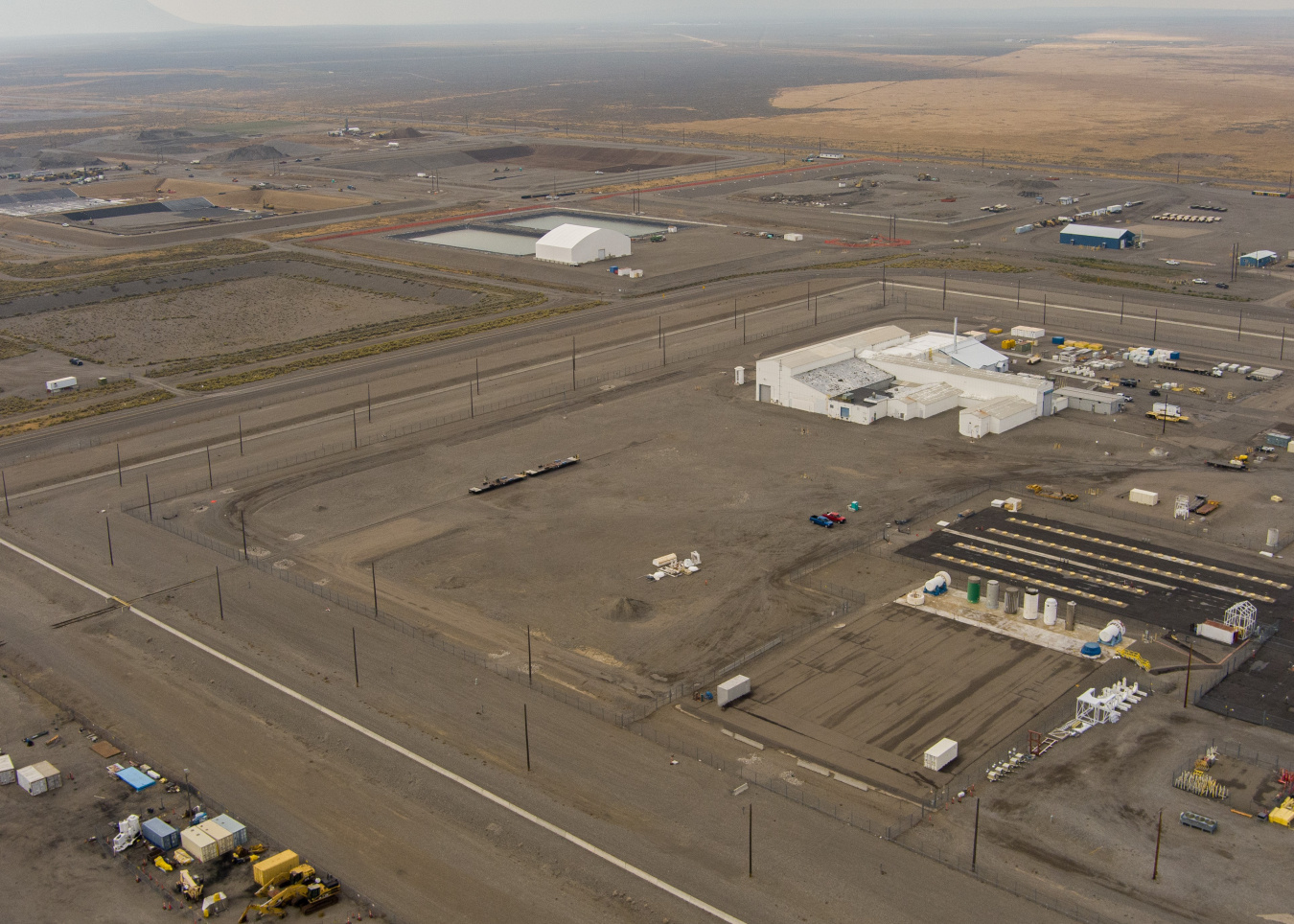
The Idaho Cleanup Project is scheduled to construct an estimated 15,000-square-foot staging facility at INTEC, shown above, to store overpacked spent fuel. (Photo: DOE)
The Department of Energy’s Office of Environmental Management has announced that its Idaho Cleanup Project (ICP) recently received department approval for the conceptual design for a spent nuclear fuel staging facility project at Idaho National Laboratory.
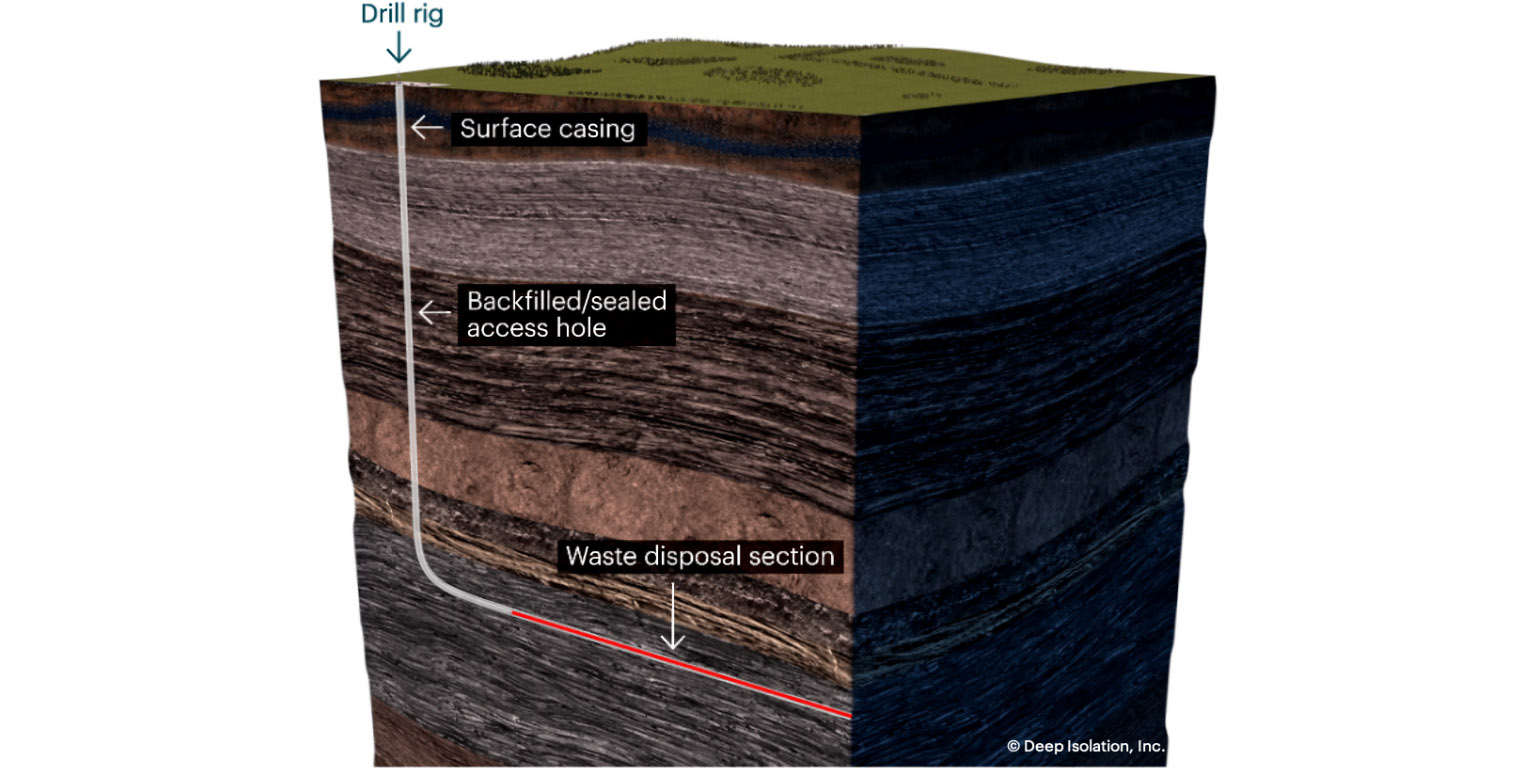
Schematic of a deep horizontal borehole repository for nuclear waste. (Image: Deep Isolation)
Waste disposal technology company Deep Isolation Nuclear has claimed that results of a study it conducted with reactor developer Oklo demonstrate that deep borehole disposal could be an option for disposing of high-level radioactive waste generated from the recycling of advanced reactor fuel.
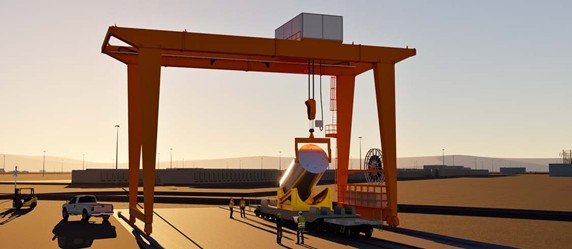
Concept illustration of a transportation cask being unloaded at a federal spent fuel storage facility. (Image: DOE)
The Department of Energy’s Office of Nuclear Energy announced the establishment of the Center for Used Fuel Research (CUFR), to be hosted at the Idaho National Laboratory and focused on spent nuclear fuel performance, canister aging, and the fostering of innovation and collaboration.
According to the DOE, the CUFR is designed to be a national and international hub for applied research that supports and maintains compliance and advances public confidence in the safe storage and transportation of both commercial and DOE-managed spent fuel.
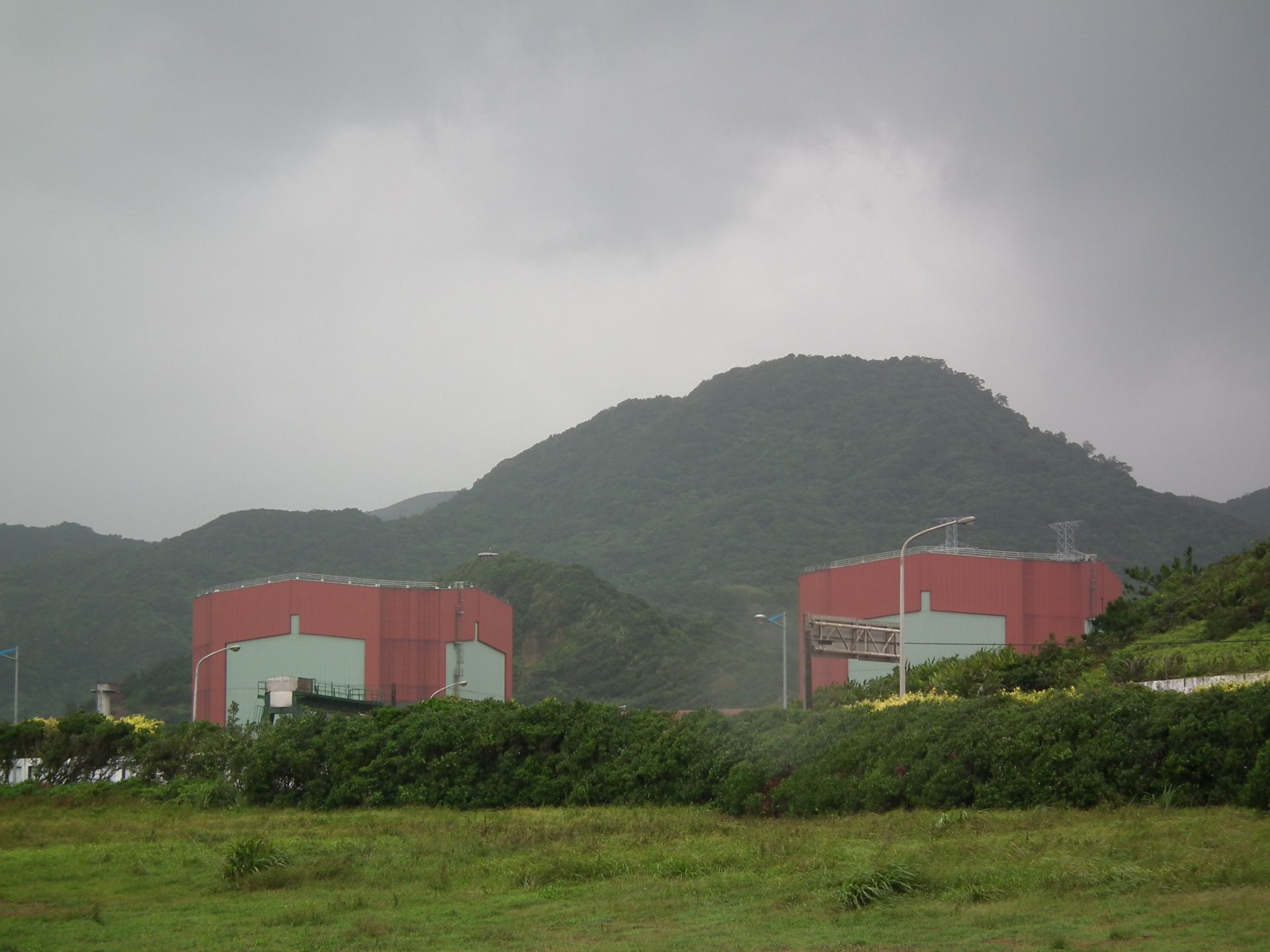
Taiwan’s Kuosheng nuclear power plant. (Photo: Wikimedia Commons)
Holtec International announced that it has been awarded a turnkey supply contract by Taiwan Power Company to establish indoor dry spent nuclear fuel storage facilities at both the closed Chinshan and Kuosheng nuclear power plant sites on the island nation.


 The European Commission has begun an open public consultation and call for evidence to help shape European Union policy on radioactive waste and spent fuel for the decade ahead. The public consultation lasts until June 19, while the call for evidence ends April 24.
 Nuclear technology start-up Project Omega announced that it has been awarded a contract through the Department of Energy’s Advanced Research Projects Agency-Energy (ARPA-E) to advance used nuclear fuel recycling. Project Omega said the award will be used to validate key components of its molten salt electrochemical recycling platform designed to process UNF, recover valuable isotopes, and reduce long-term waste management challenges.