A WTP crew vitrified the first Hanford Site tank waste inside one of two melters in the Low-Activity Waste Facility. Top right, a camera inside the melter’s pour cave shows the vitrified waste being poured into a stainless steel container as well as the hot liquid inside the container. Bottom right, the first two containers filled with vitrified waste in the pour cave prior to being lidded, swabbed to verify their exteriors are free of contamination, and then moved into the export bay. (Photos: DOE)
The Department of Energy has announced that the Hanford Site’s Waste Treatment and Immobilization Plant (WTP) has reached a commissioning milestone, producing more than 20 stainless steel containers of immobilized low-activity radioactive waste.
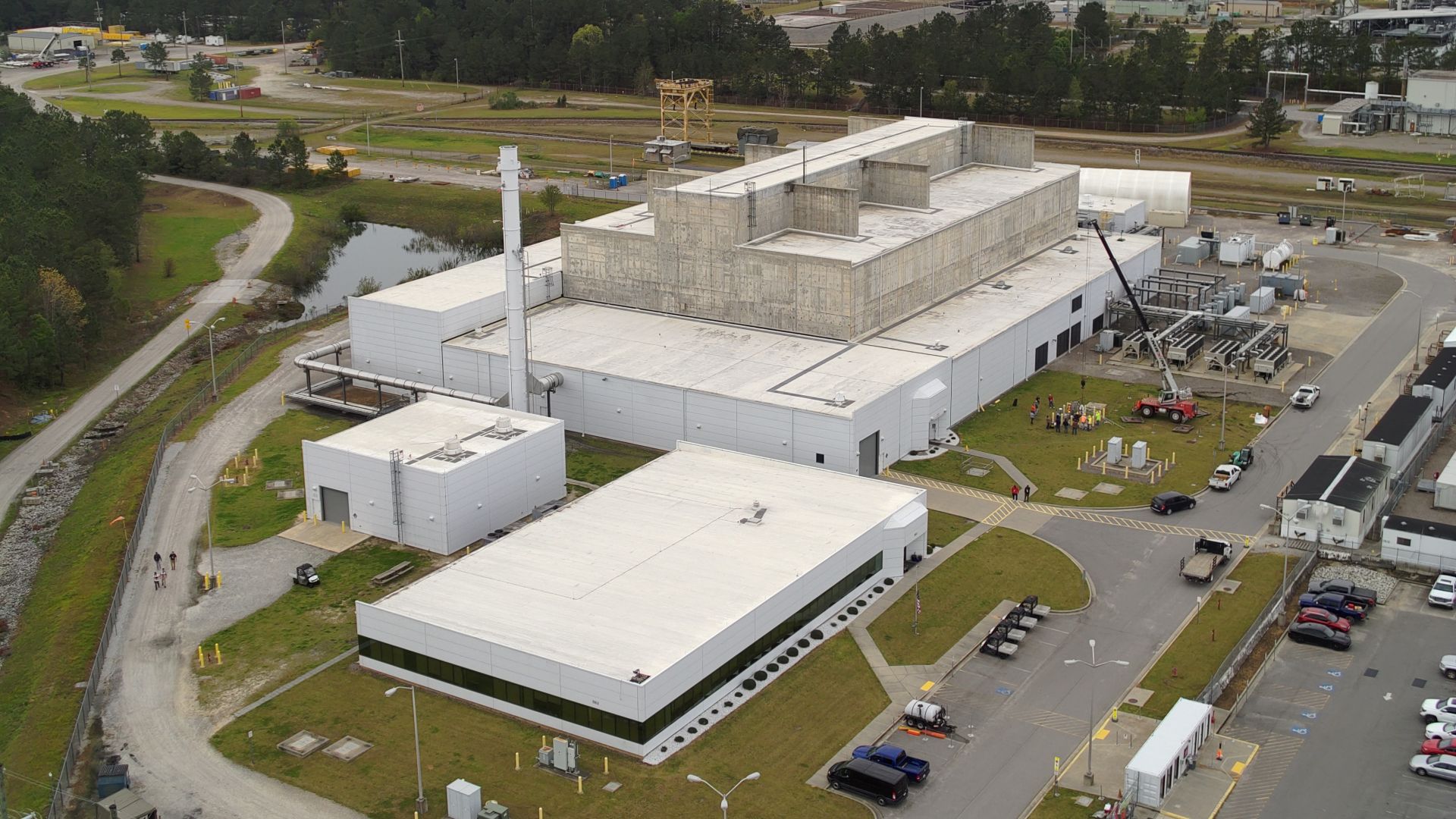
The Salt Waste Processing Facility recently surpassed a production milestone by processing more than 10 million gallons of high-level waste at the Savannah River Site. (Photo: DOE)
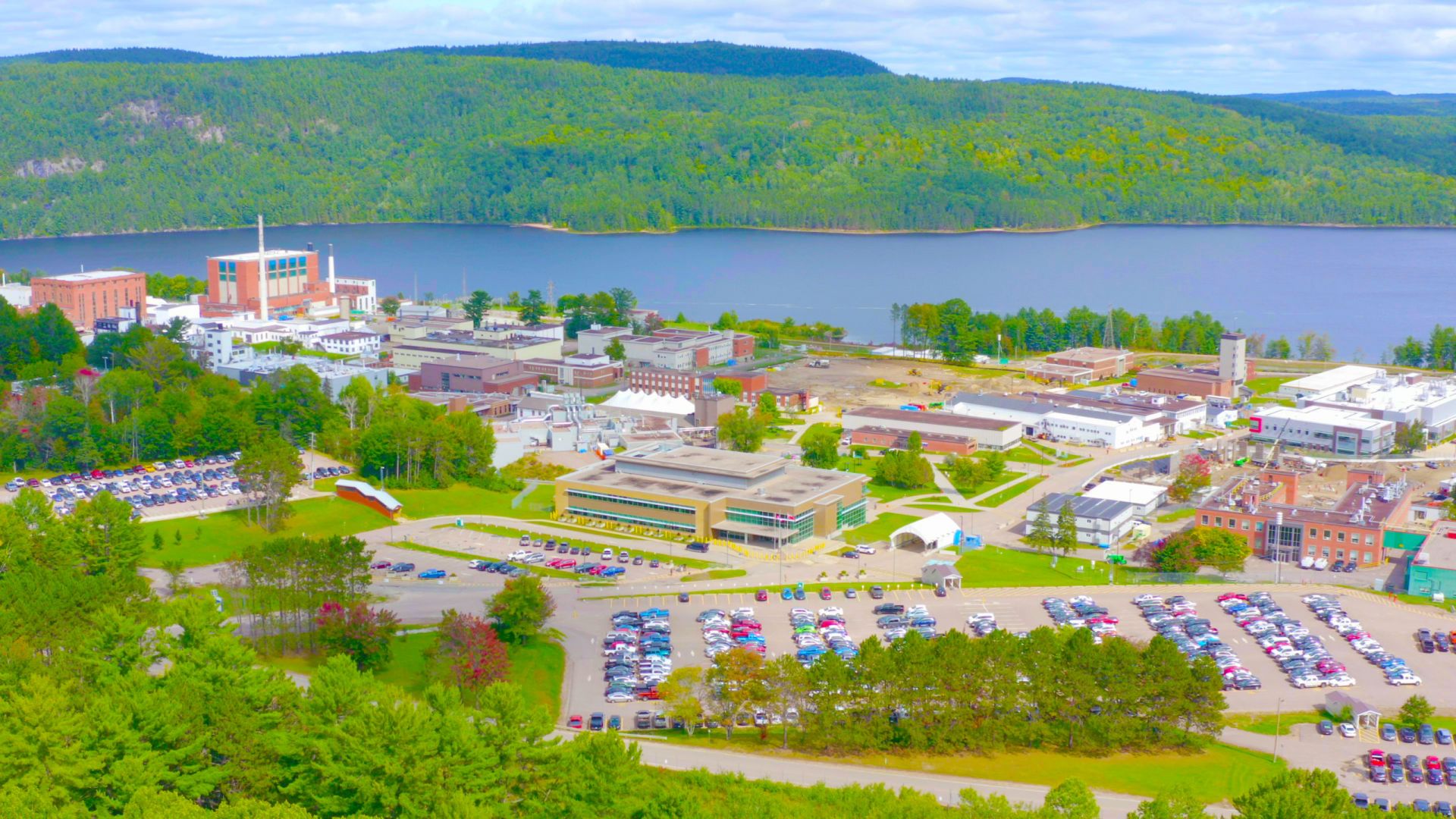
Canadian Nuclear Laboratories (Photo: AECL)
Atomic Energy of Canada Limited (AECL) has published a request for expressions of interest to manage and operate Canadian Nuclear Laboratories (CNL). The request is available on the MERX website.
According to AECL, the objective of the procurement and the resulting contract is to contain or reduce costs and risks for Canadian taxpayers while leveraging CNL’s capabilities and resources for Canadians.
Expressions of interest must be submitted via MERX on or before October 26, 2022.
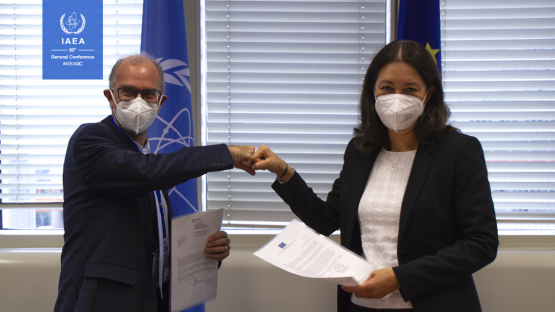
The EU’s Massimo Garribba (left) and the IAEA’s Lydie Evrard met at last week’s 65th IAEA General Conference to extend a 2013 cooperation agreement. (Photo: C./Silva Villareal)
Some of the major achievements of the nuclear safety cooperation agreement between the International Atomic Energy Agency and the European Union (EU) include more than 100 nuclear safety review missions, environmental remediation at former uranium sites in Central Asia, and more effective radioactive waste management in Africa.
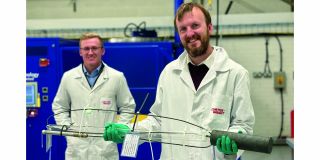
Photo: University of Manchester (U.K.)
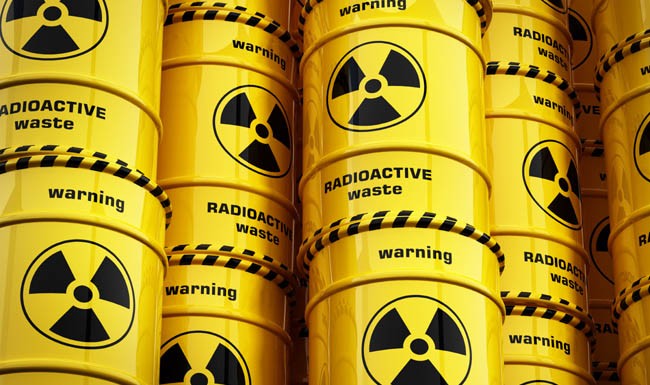
Nuclear waste should not be used as an excuse for trying to shut down nuclear reactors, says radiation safety expert Andrew Karam in his recent article for the American Council on Science and Health titled, “Let’s Talk about Radioactive Waste."

-3 2x1.jpg)