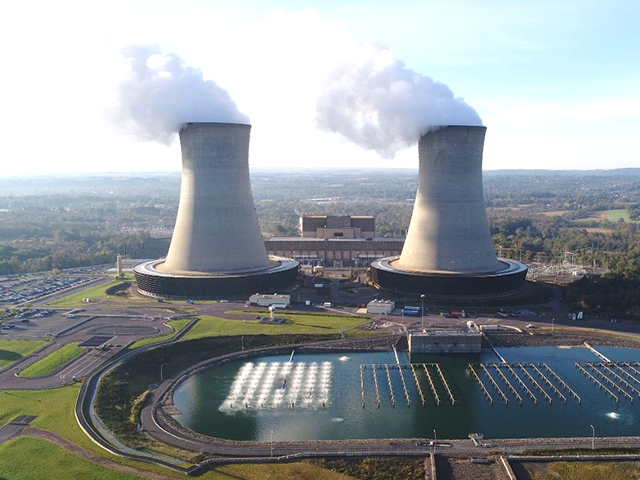
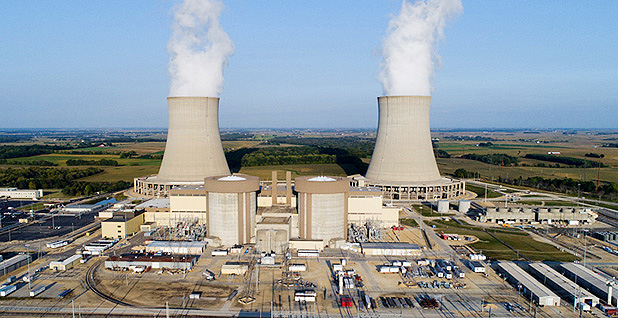
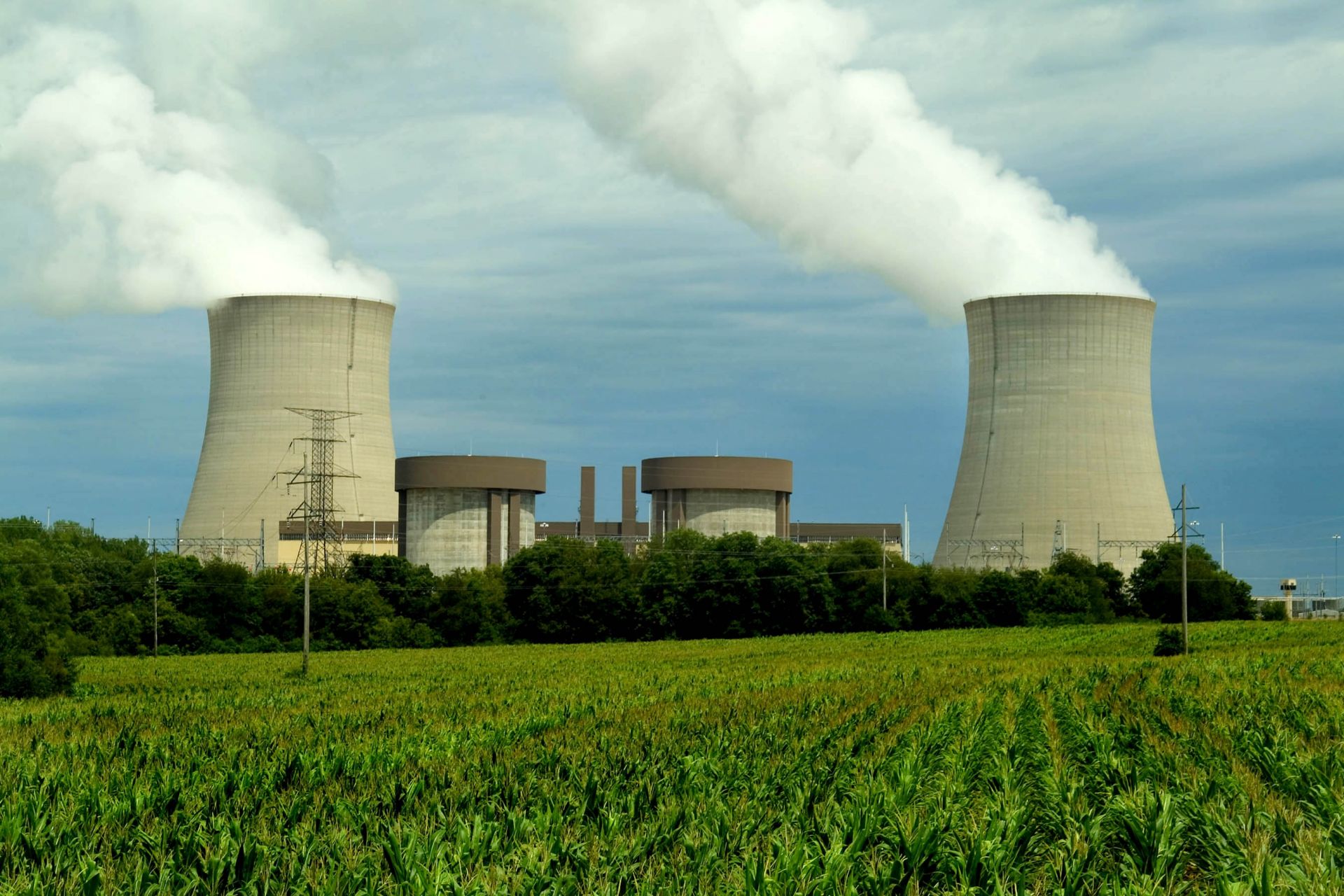
Constellation's Limerick nuclear power plant. (Photo: Constellation Energy)
The Nuclear Regulatory Commission has amended the operating licenses of the two boiling water reactors at Constellation Energy's Limerick nuclear power plant, giving the company the green light to replace the units' analog safety-related instrumentation and controls systems with a state-of-the-art digital system.
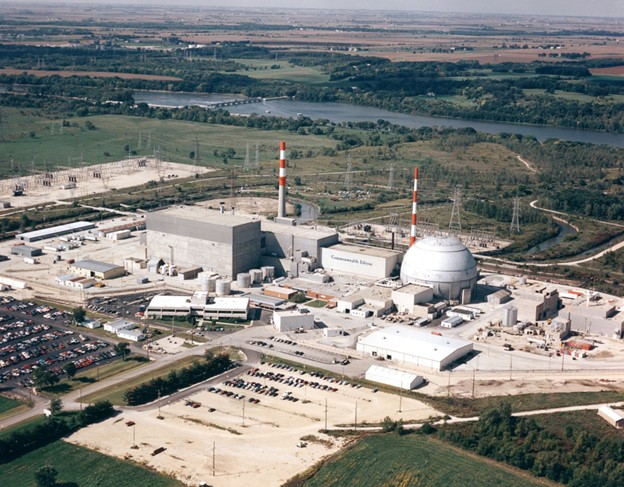
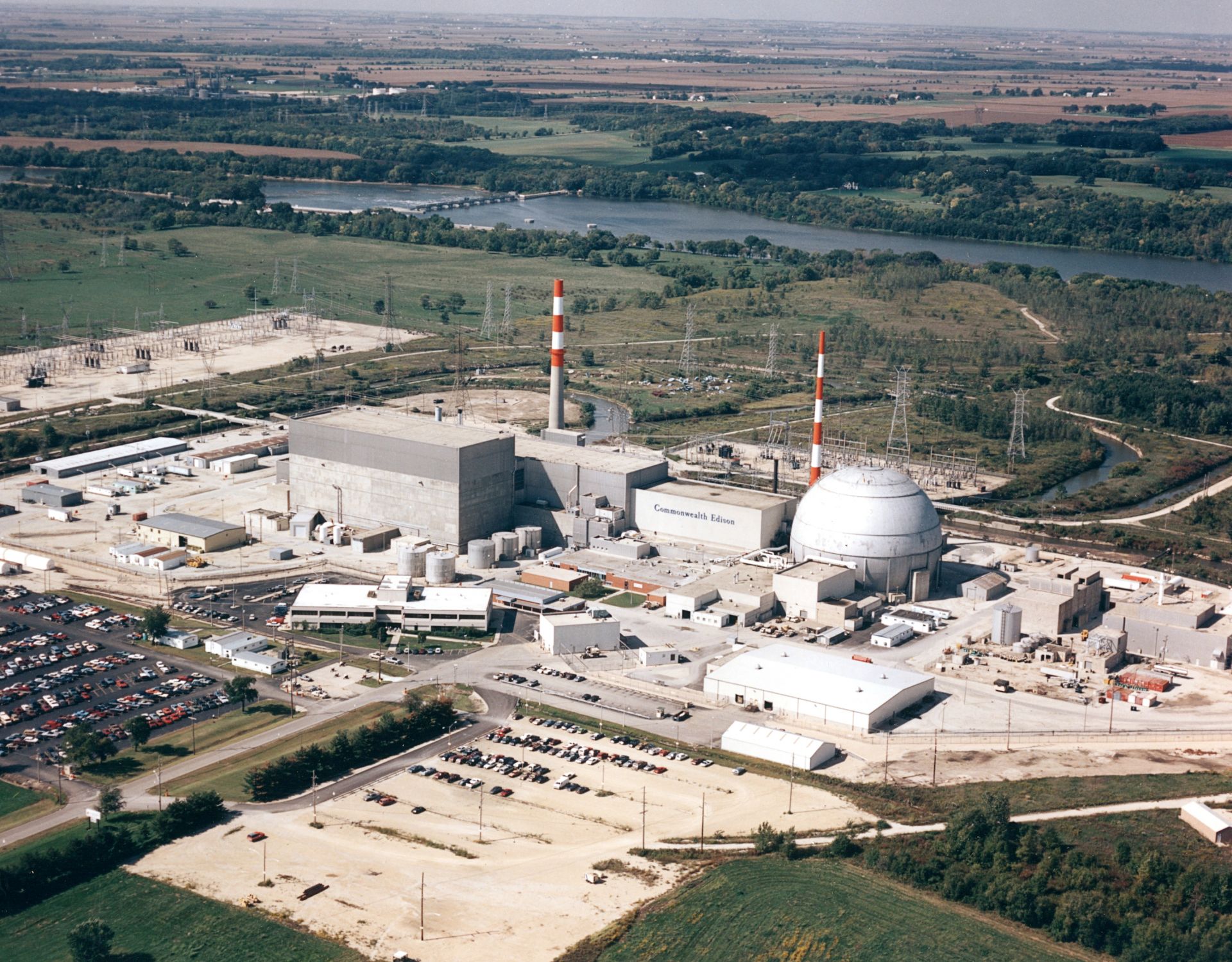
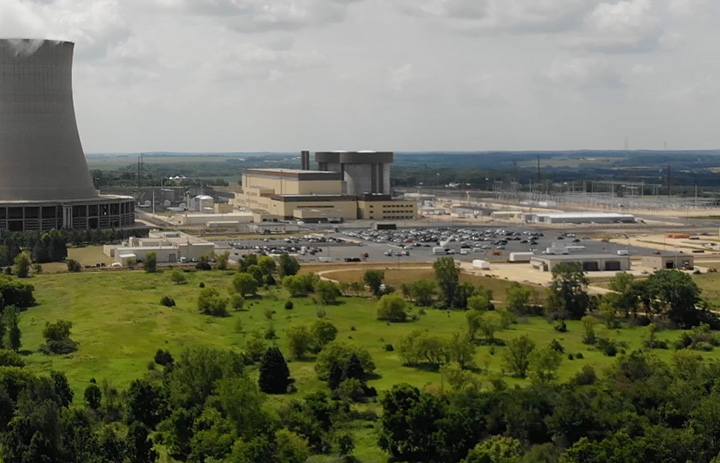
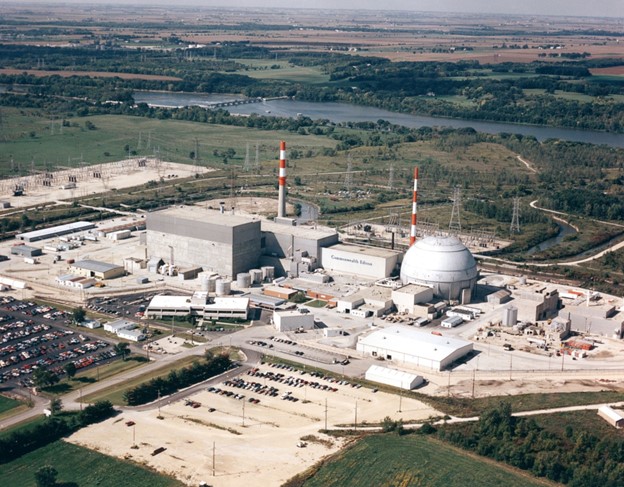
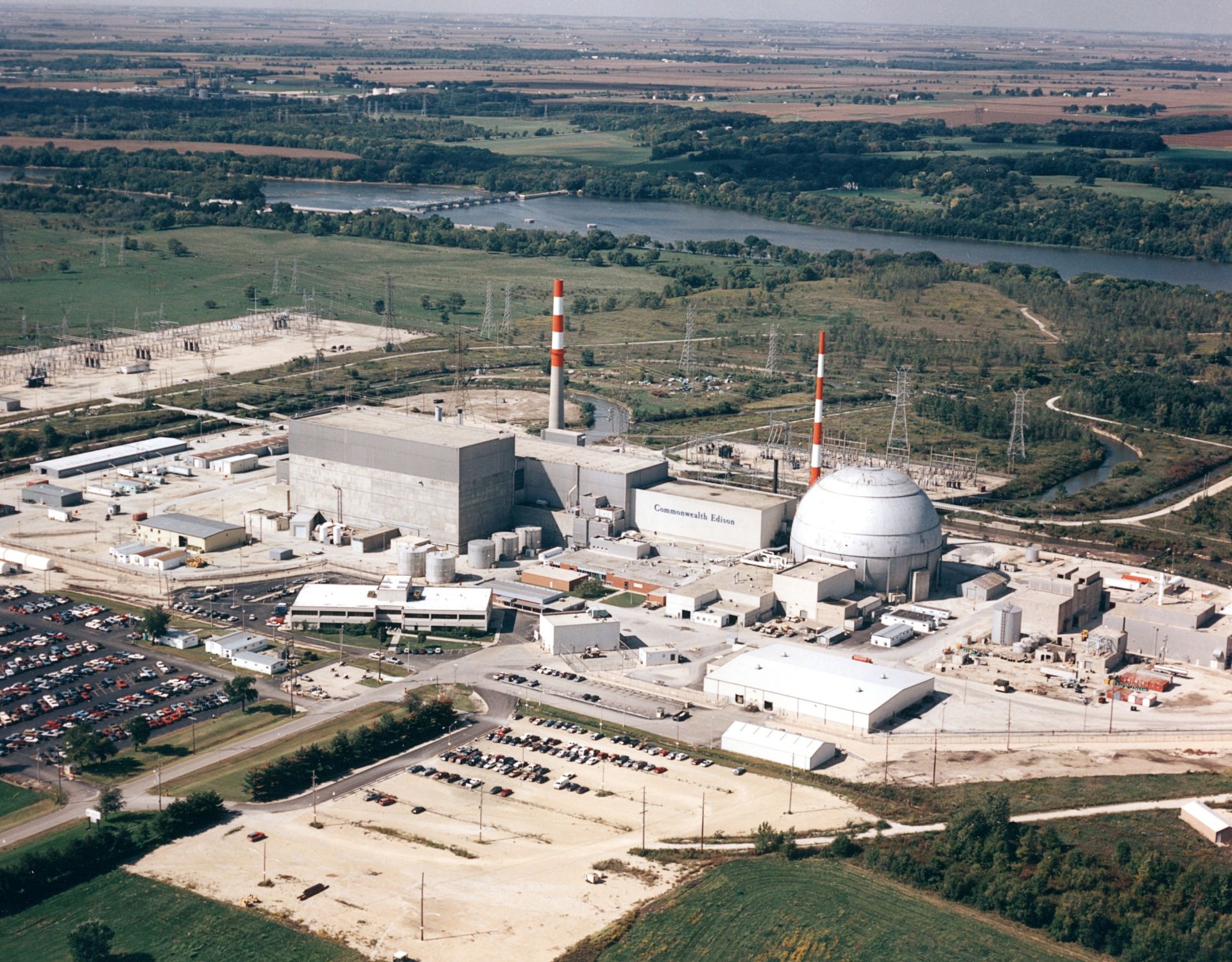
The Dresden nuclear power plant in Grundy County, Illinois. (Photo: Constellation Energy)
Three commercial power reactors across two Illinois nuclear power plants—Constellation’s Clinton and Dresden—have had their licenses renewed for 20 more years by the Nuclear Regulatory Commission.
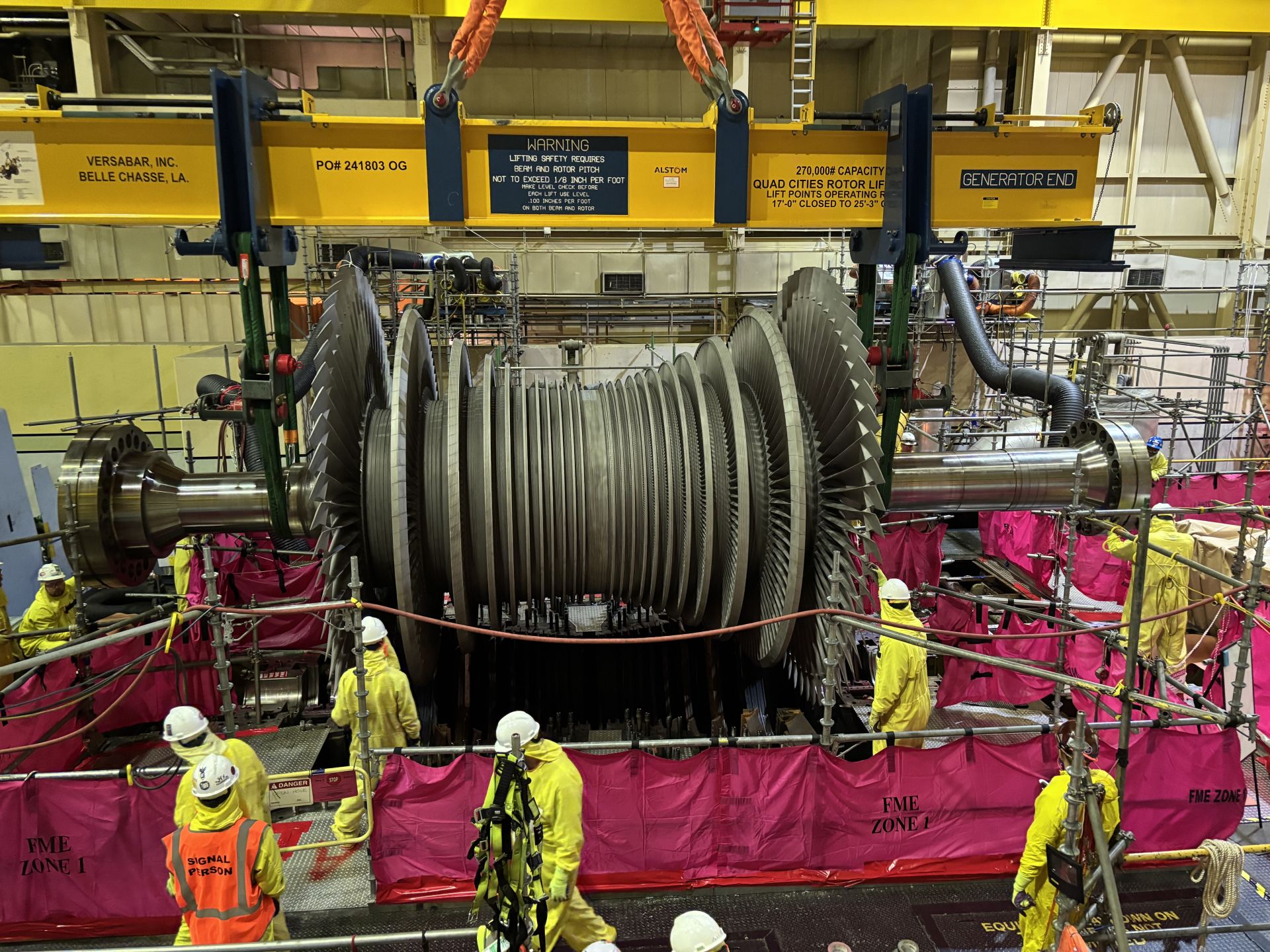
December 12, 2025, 2:59PMNuclear NewsSteve Myers and Bill Campbell A low-pressure turbine inspection in progress at Quad Cities-2 in the spring of 2024. The last-stage blades under inspection are at each end of the turbine rotor. (Photo: Constellation)
When Constellation decided to install replacement Alstom low-pressure turbines at three of its boiling water reactor plants more than 15 years ago, one benefit was knowing the new turbines should operate reliably—and without major inspections—for several years.
The Dresden nuclear power plant. (Photo: Constellation Energy)
The Nuclear Regulatory Commission has found that the environmental impacts of renewing the operating license of the Dresden nuclear power plant outside Chicago, Ill., for an additional 20 years are not great enough to prohibit doing so.
Byron nuclear power plant. (Photo: Constellation)
The Ogle County Board has approved a zoning change that designates 524 acres around the Byron nuclear power plant, located in northern Illinois, as industrial rather than agricultural.
Dresden nuclear power plant. (Photo: Constellation Energy)
The Nuclear Regulatory Commission is hosting several public meetings this month to discuss the Dresden nuclear power plant and its request for subsequent license renewal.
Dresden nuclear power plant. (Photo: Constellation Energy)
Constellation Energy has filed with the Nuclear Regulatory Commission for a subsequent license renewal for its Dresden nuclear power plant in Illinois. The extension would allow Dresden to run through 2051.
The filing begins a comprehensive, multiyear review by the NRC. Unit 2 is currently licensed to operate through 2029 and Unit 3 through 2031. The facility’s license was first renewed by the NRC in 2004.
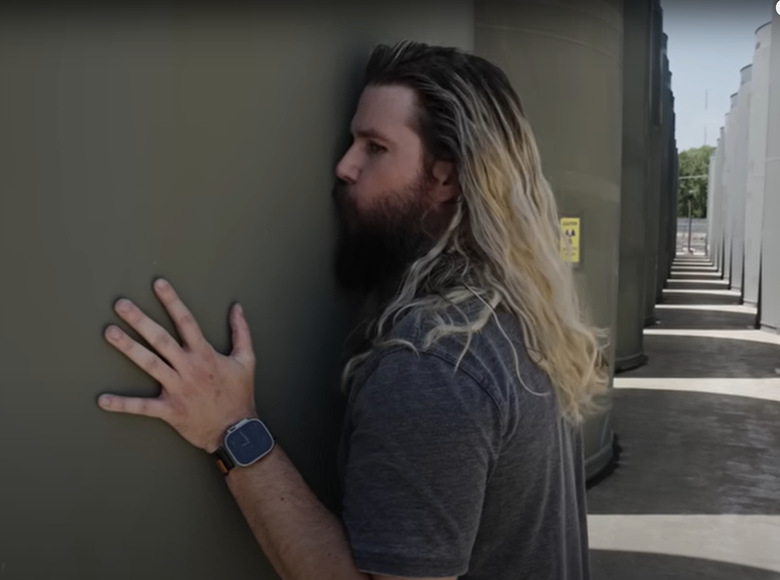
Kyle Hill appreciates a Dresden nuclear waste cask. (Photo: Kyle Hill)
On this holiday that celebrates all things love, here’s a look at the love affair that Kyle Hill has with nuclear energy—even its waste.
The Byron nuclear power plant. (Photo: Constellation Energy)
Constellation Energy has announced an agreement with Commonwealth Edison (ComEd), Illinois’s largest electric utility, to power the latter’s 54 offices and metered facilities with locally produced nuclear energy, 24/7.
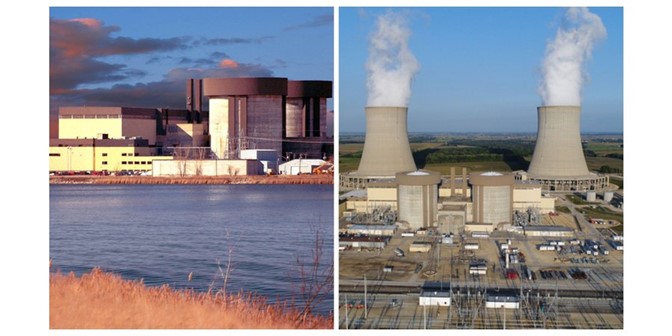
The Braidwood (left) and Byron nuclear power plants. (Photos: Constellation Energy)
Constellation Energy has announced that it intends to invest $800 million in new equipment at the Braidwood and Byron nuclear plants in Illinois to raise their combined output by a total of about 135 MW.
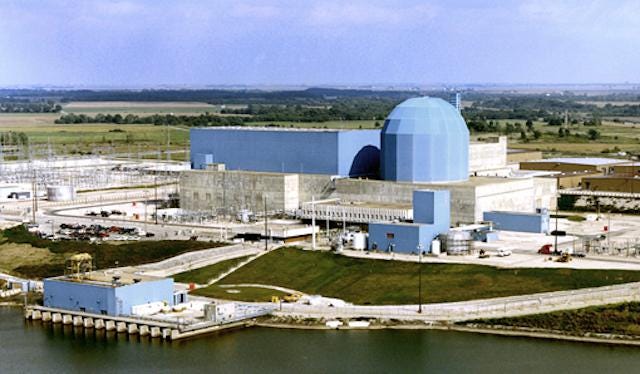
Constellation Energy's Clinton nuclear power plant. (Photo: NRC)
Constellation Energy, owner and operator of the nation’s largest reactor fleet, will ask the Nuclear Regulatory Commission to extend the operating licenses of the Clinton and Dresden reactors by 20 years, the company announced Monday, adding that it expects to file license applications with the agency in 2024.
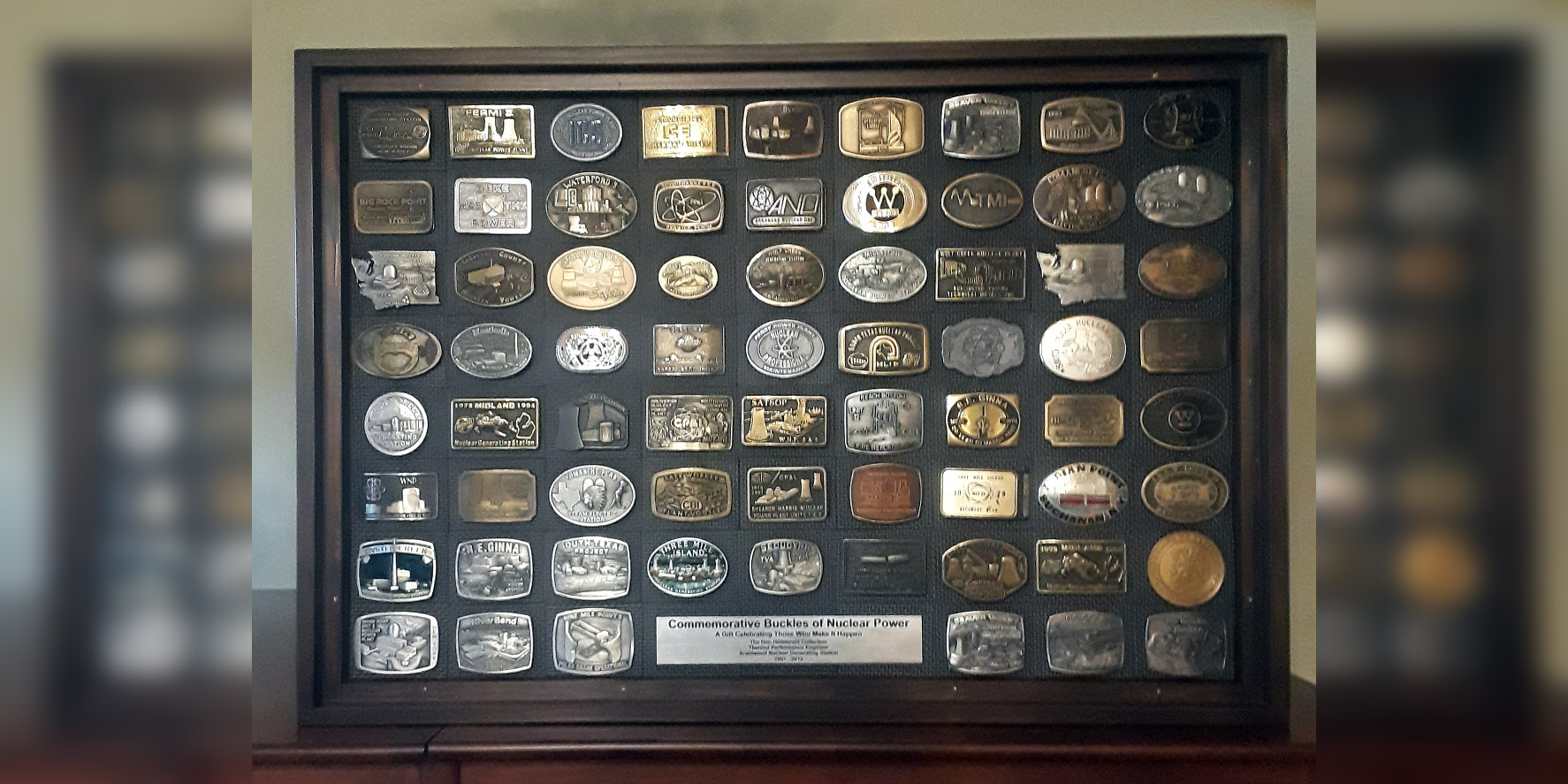
One of two cases that display the impressive belt-buckle collection.
Collecting belt buckles from nearly every nuclear power plant in the U.S. wasn’t the goal for Don Hildebrant when he obtained his first one. Over time, it just turned out that way.
One day years ago, Hildebrant came across a buckle from the nuclear plant where he worked, and it seemed before he knew it, he had collected more than 250 of them—some from plants that were never even completed. “When you look at the collection, you will see an interesting story of where nuclear power has been, and how far it has come,” he said.
The Byron nuclear power plant
In an editorial published recently in the Chicago Tribune, the newspaper’s editorial board states, “As for the U.S., power generation from splitting atoms has declined in recent years, and more reactors are being retired than built. If you’re in Illinois, however, you’re all-in on nuclear energy—for better or worse. Gov. J.B. Pritzker has made sure of that.”
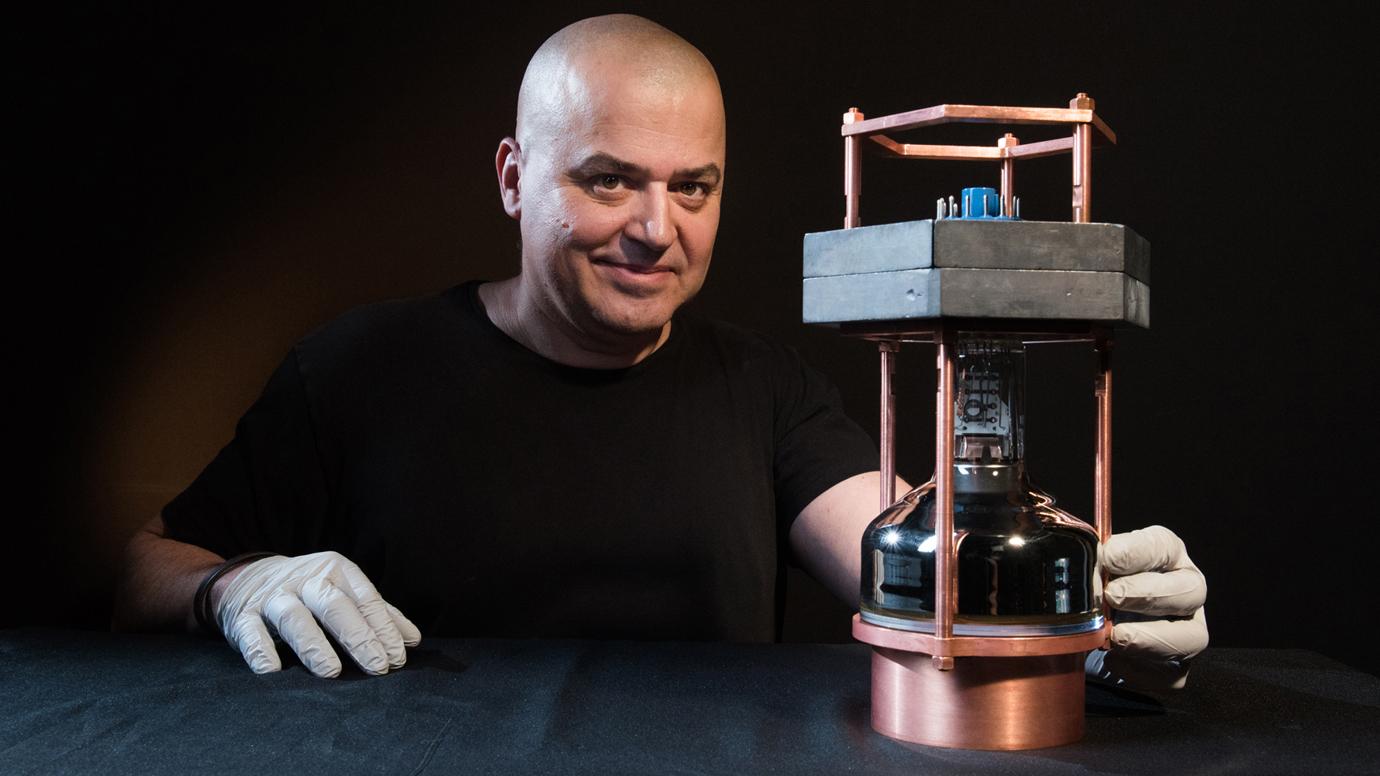
Juan Collar led a team of UChicago physicists who built a lightweight, portable neutrino detector to observe the elusive interactions of the ghostly particles. (Photo: Jean Lachat)
Constellation Energy’s Dresden nuclear power plant in Illinois is helping University of Chicago researchers to detect neutrinos in an effort to advance knowledge of the fundamental laws governing particle and nuclear interactions. The researchers are taking advantage of the large number of neutrinos generated by Dresden’s boiling water reactors to conduct experiments, using what UChicago calls the world’s smallest neutrino detector to track and record the ghostlike particles.
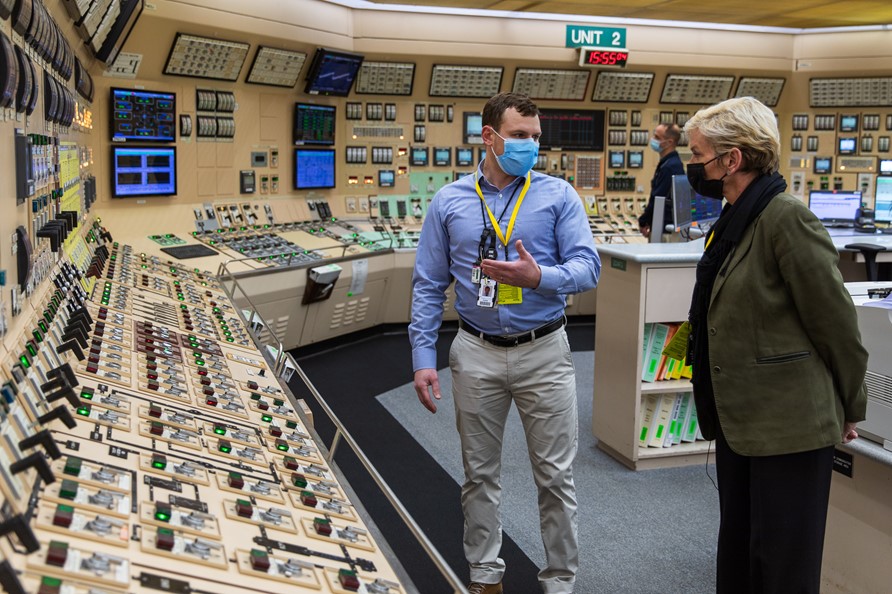
Energy secretary Jennifer Granholm tours the Braidwood control room on December 9. (Photo: Exelon)
Energy secretary Jennifer Granholm toured the Braidwood nuclear plant in Illinois last week as part of a statewide tour to promote the climate provisions in the recently passed trillion-dollar infrastructure law and the Build Back Better Act, over which the Senate continues to haggle.
Workers perform maintenance during Byron’s refueling outage. (Photo: Exelon)
Exelon Generation announced yesterday that it is investing more than $300 million in capital projects at its Byron and Dresden nuclear plants in Illinois over the next five years and filling some 650 vacant positions across the state.
These actions are in response to Illinois Gov. J.B. Pritzker’s recent signing of S.B. 2408, the hard-won legislation that rescued the nuclear facilities from premature retirement.