Climate groups file suit against Diablo Canyon

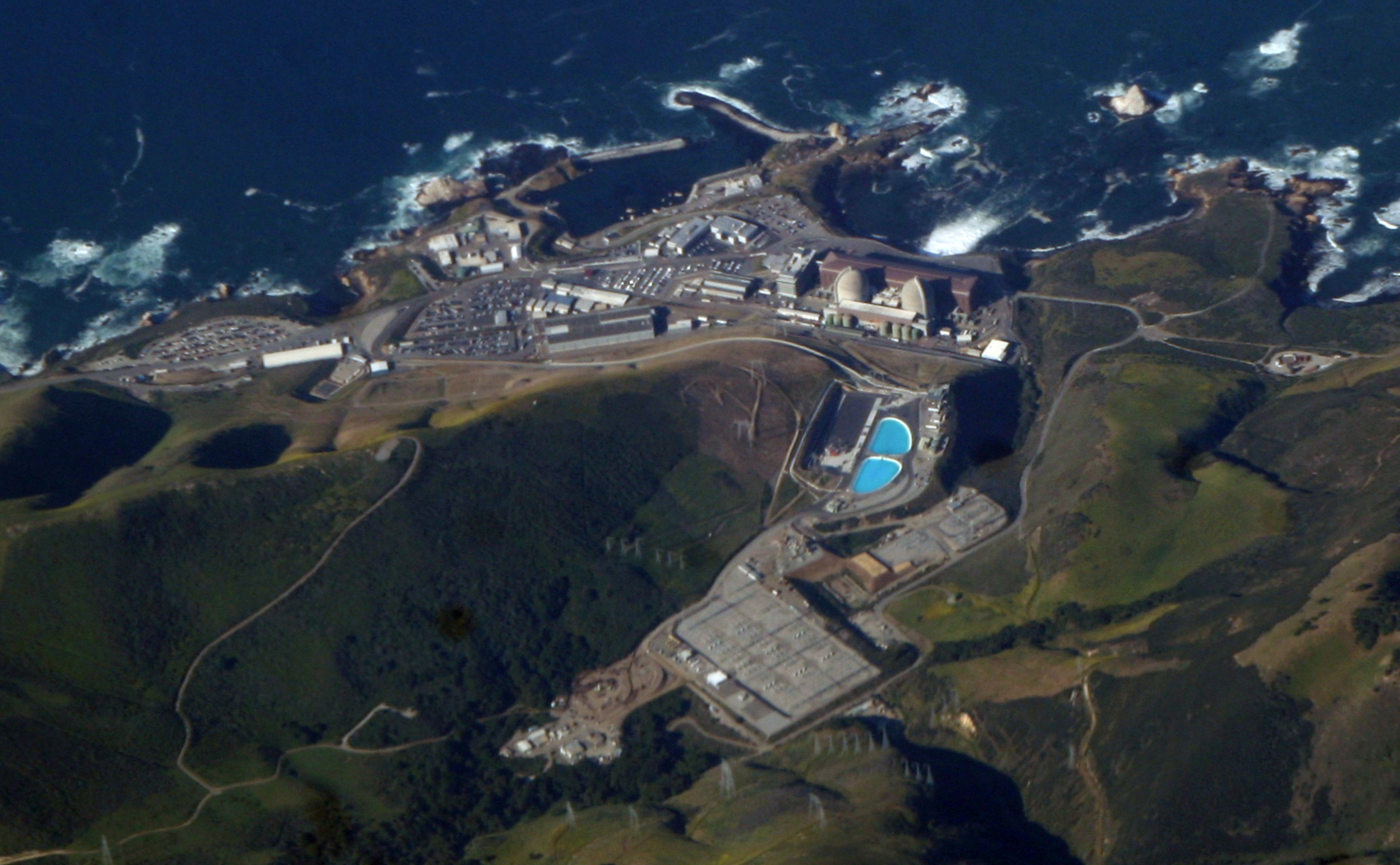
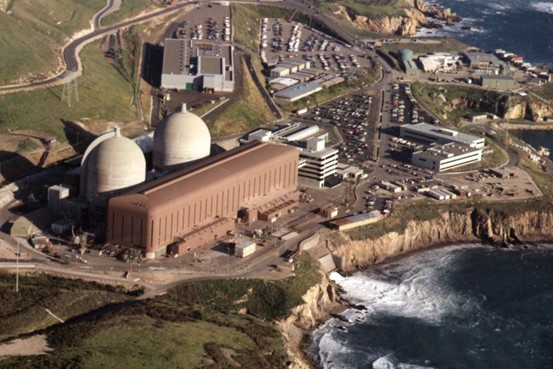
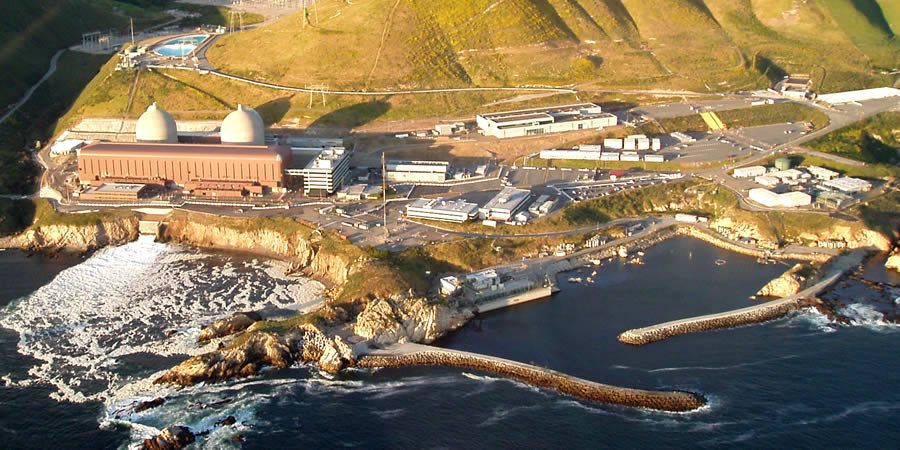
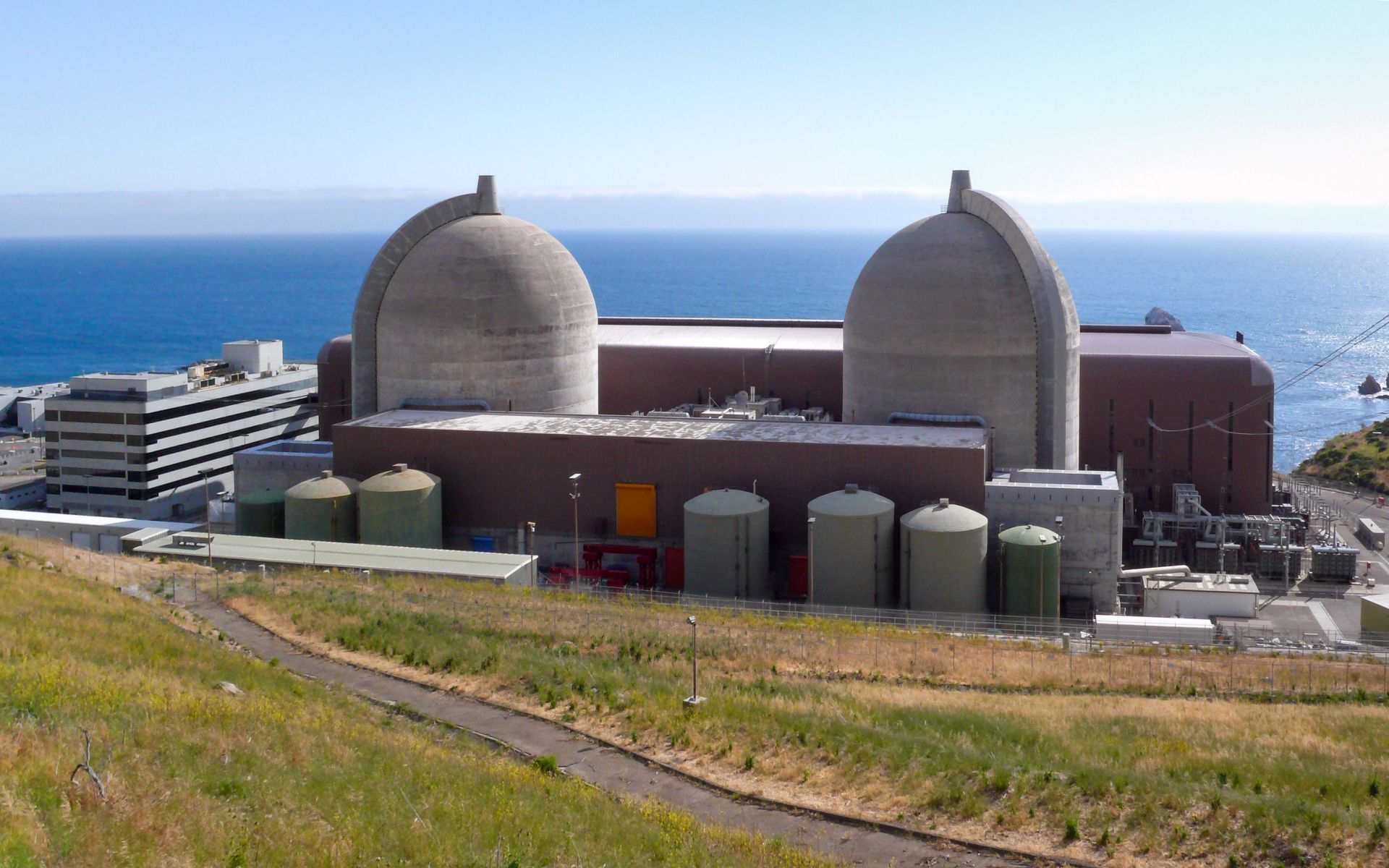
Three climate groups filed a motion for the immediate closure of Diablo Canyon nuclear power plant in California, saying the nuclear plant poses an “unacceptable safety risk.”
Ageing nuclear assets don't have to mean higher maintenance costs. Discover how HVTS® cladding helps extend the life of PWR secondary system components, reduce outage duration, support ALARA principles, and protect against FAC, erosion-corrosion and other degradation mechanisms. Learn more.

Three climate groups filed a motion for the immediate closure of Diablo Canyon nuclear power plant in California, saying the nuclear plant poses an “unacceptable safety risk.”

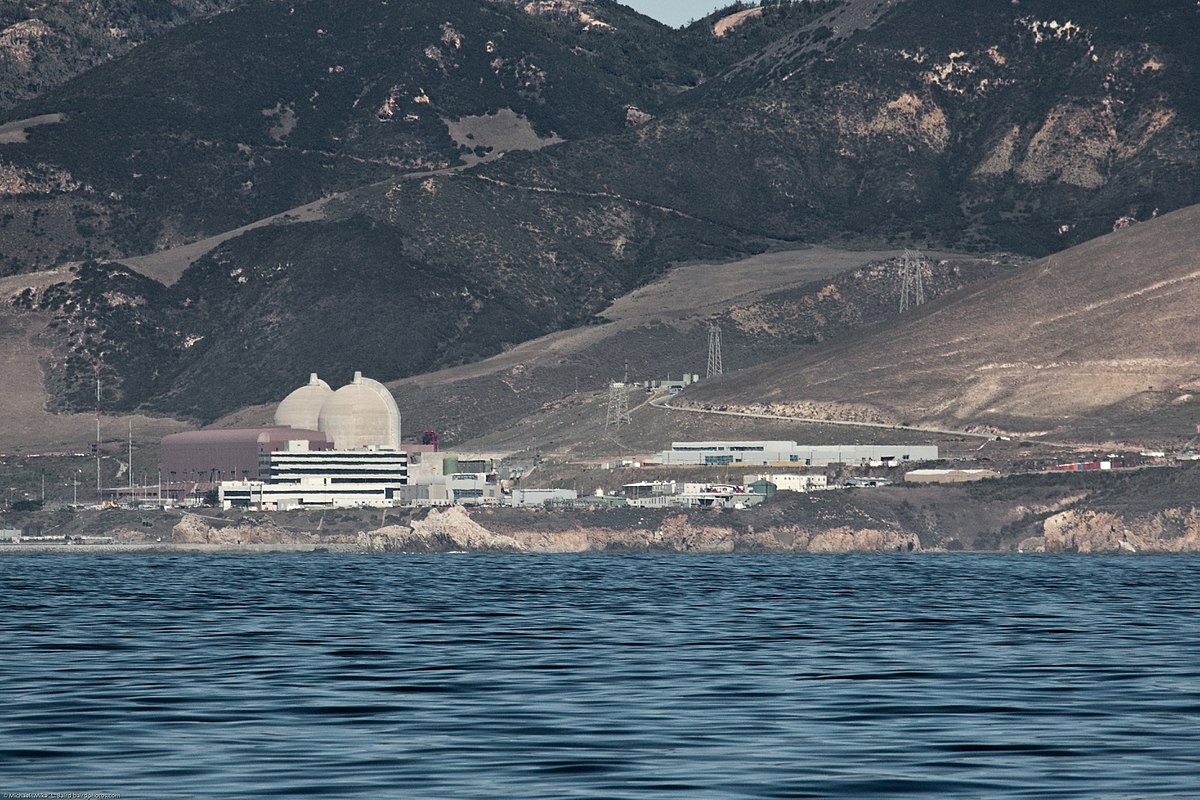
The Nuclear Regulatory Commission has scheduled two meetings in February to discuss the environmental evaluation and review process for the license renewal application of the two-unit Diablo Canyon nuclear power plant in Avila Beach, Calif.

Another calendar year has passed. Before heading too far into 2024, let’s look back at what happened in 2023 in the nuclear community. In today's post, compiled from Nuclear News and Nuclear Newswire are what we feel are the top nuclear news stories from January through March 2023.
Stay tuned for the top stories from the rest of the past year.

The Nuclear Regulatory Commission has accepted for review Pacific Gas and Electric’s formal request to extend Diablo Canyon nuclear power plant’s operating licenses for another 20 years.

The California Public Utilities Commission (CPUC) voted last Thursday to extend the life of Diablo Canyon an additional five years. The decision was the final step in the extension of the state's last remaining nuclear power plant, whose two reactors will now operate until at least 2029 and 2030, respectively, instead of closing in 2024 and 2025.
DOWNERS GROVE, ILLINOIS — Statement from 2023-24 American Nuclear Society (ANS) President Kenneth Petersen on the California Public Utilities Commission's December 14 decision to extend operations of Diablo Canyon Power Plant for an additional five years:
“The American Nuclear Society applauds the decision by the California Public Utilities Commission to extend the operations of Diablo Canyon nuclear power plant through 2030.

A California court has dismissed a lawsuit brought in April by Friends of the Earth (FOE), an inveterate enemy of nuclear power, to derail last year’s state-supported plan to keep the two-unit Diablo Canyon plant running past 2025.

Steven Arndt
president@ans.org
This will be my last column in Nuclear News as president of the American Nuclear Society. Where has the year gone? For me and for all of us in the nuclear community it has been an exciting and productive 12 months. We have cheered the decision to extend Diablo Canyon operations, witnessed fuel loading and—hopefully by the time the June issue of NN is out—the start of commercial operations of Unit 3 at Vogtle, and seen significant strides forward in the licensing and deployment of small modular reactors. Internationally, we have watched the progress in the deployment of new units in the United Arab Emirates and other countries, as well as renewed commitment to nuclear in countries including Japan, South Korea, India, and the United Kingdom. All of this has been a result of both public and private investment in and commitment to nuclear.
Recently, the Inflation Reduction Act and other government actions in the United States have provided opportunities for increased investment in nuclear energy, including production tax credits and investment tax credits.

Officially established on November 15, 2021, with the signing of the $1.2 trillion Infrastructure Investment and Jobs Act—aka the Bipartisan Infrastructure Law, or BIL—the Department of Energy’s Civil Nuclear Credit Program was designed to give owners/operators of commercial U.S. reactors the opportunity to apply for certification and competitively bid on credits to help support the continued operation of economically troubled units. Finally, the federal government, and not just certain farsighted state governments, would recognize nuclear energy for its important grid reliability and decarbonization attributes.

Forty years ago, Nuclear News published an analysis of U.S. nuclear plant operations over the three years that followed the Three Mile Island-2 accident in 1979, scrutinizing capacity factors as a measure of how well a reactor was performing compared to its potential. The purpose: “To call attention to the units that have had the best results, and to explore the question: What have the personnel at these top units been doing right?”

The Nuclear Regulatory Commission announced that an agency licensing board will hold oral arguments in a challenge to Pacific Gas and Electric’s application to renew its license for the Diablo Canyon independent spent fuel storage installation in California.
The arguments, which will be open to the public, will be heard by an NRC Atomic Safety and Licensing Board on May 24 beginning at 1 p.m. eastern time.

Proponents of Diablo Canyon nuclear power plant received the heartening news on March 2 that the Nuclear Regulatory Commission had granted a “timely renewal” exemption to allow the plant to continue operating while its new license renewal application was under review. The exemption came after the NRC denied in January plant owner Pacific Gas & Electric’s request for the agency to resume review of its original license renewal application.

The Nuclear Regulatory Commission has granted Pacific Gas & Electric a “timely renewal” exemption so the Diablo Canyon nuclear power plant can continue operating while its license renewal application is under review, it was announced yesterday. This new decision clears a major regulatory hurdle to extending the operating license of the Units 1 and 2 beyond their original closure dates of 2024 and 2025, respectively.

The U.S. Nuclear Regulatory Commission announced January 24 that it will not resume its review of Pacific Gas & Electric’s withdrawn Diablo Canyon license renewal application. This decision is a new setback in the long-running effort to extend the life of the plant.

The California Public Utilities Commission (CPUC) has voted to open a rulemaking to consider extending the lifetime of the 2,289-MW two-unit Diablo Canyon nuclear power plant. The plant, which turns 50 this year, is the only remaining operational nuclear power facility in California. It generates nearly 10 percent of the state’s electricity needs.

Another calendar year has passed. Before heading too far into 2023, let’s look back at what happened in 2022 for the American Nuclear Society and the nuclear community. In today's post that follows, we have compiled from Nuclear News and Nuclear Newswire what we feel are the top nuclear news stories from July through September 2022.
Stay tuned this week for the top stories from the rest of the past year.
But first:

Holtec International is apparently not ready to give up on the Palisades nuclear power plant just yet. Despite having been denied federal funds last month for a possible reopening of the Covert, Mich., facility, the company this week announced its intention to reapply.

Steven Arndt
president@ans.org
For years the U.S. nuclear industry has done an outstanding job keeping plant availability high while simultaneously continuing to improve safety and economics. With capacity factors averaging more than 90 percent, you would think that no one would shut down an operational nuclear power plant. But that is what we have seen in a number of cases. Fortunately, this now seems to be changing. As I write this column, Diablo Canyon’s new life extension application has just been submitted to the Nuclear Regulatory Commission for review, and the Department of Energy’s program to support continued operation of nuclear power plants is providing hope that current plants will continue to have the opportunity to demonstrate their operational excellence.
How did we get here? When I ask this question—both of myself and the industry as a whole—I envision this as two sides of the same coin. Through the efforts of many we have improved our financial and economic viability, but challenges remain because the full value proposition of nuclear energy has not been realized.

Pacific Gas & Electric’s two-unit Diablo Canyon plant—California’s lone operating nuclear power facility—has been deemed eligible for the initial round of funding from the Civil Nuclear Credit (CNC) Program, the Department of Energy announced yesterday.
The decision was welcomed by a nuclear community disappointed by last Friday’s news that the DOE had rejected Holtec International’s CNC application for the recently closed Palisades nuclear plant in Michigan, despite support for the effort from Gov. Gretchen Whitmer.

Pacific Gas and Electric Company filed a letter with the Nuclear Regulatory Commission yesterday, officially requesting that the agency resume its review of the utility’s license renewal application for Diablo Canyon Units 1 and 2.