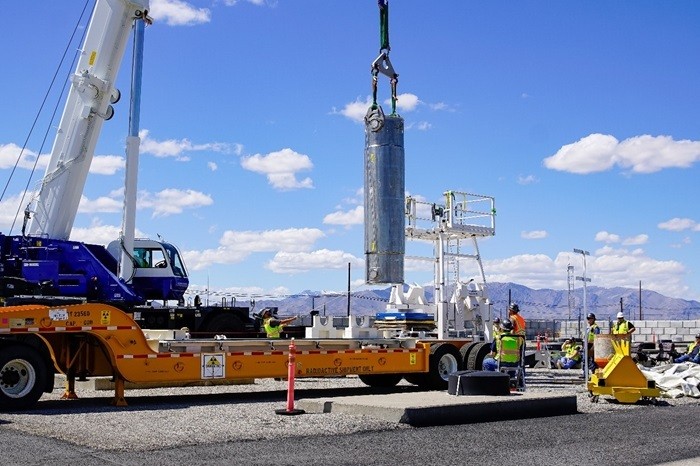
A spent fuel canister is moved at the Idaho National Laboratory site. (Photo: DOE)
Work crews at Idaho National Laboratory have transferred 40 spent nuclear fuel canisters into long-term storage vaults, the Department of Energy’s Office of Environmental Management has reported.
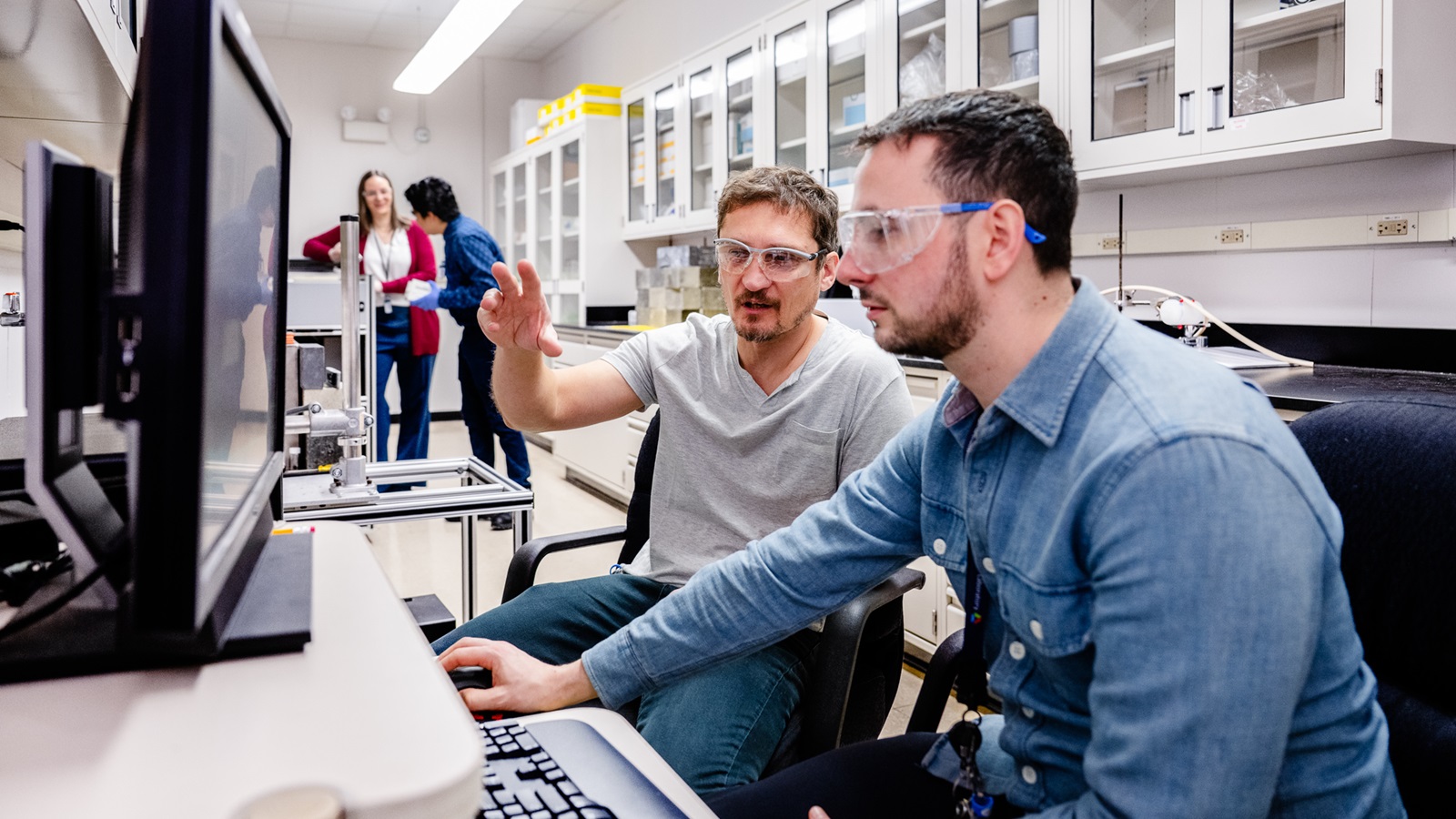
Argonne’s Peter Tkac (left) and David Bettinardi analyze results from lab experiments designed to isolate desirable products from spent nuclear fuel. (Photo: ANL)
The Department of Energy’s Argonne National Laboratory will collaborate with Wisconsin-based fusion technology company Shine to design new chemical processes for separating valuable materials from used nuclear fuel.
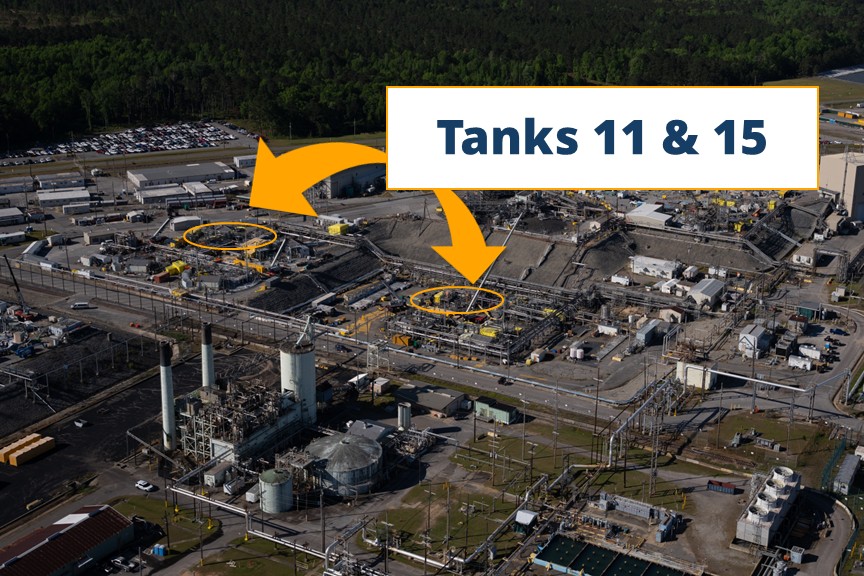
The DOE and liquid waste contractor Savannah River Mission Completion completed waste removal at the H Tank Farm at the Savannah River Site. (Photo: DOE)
The Department of Energy announced that waste from two more tanks at its Savannah River Site has been removed ahead of schedule. The tanks—numbers 11 and 15—are the fourth and fifth waste containers in 12 months to meet the milestone of preliminary cease waste removal (PCWR) regulatory approval, 7 and 19 months ahead of schedule, respectively, according to the DOE.
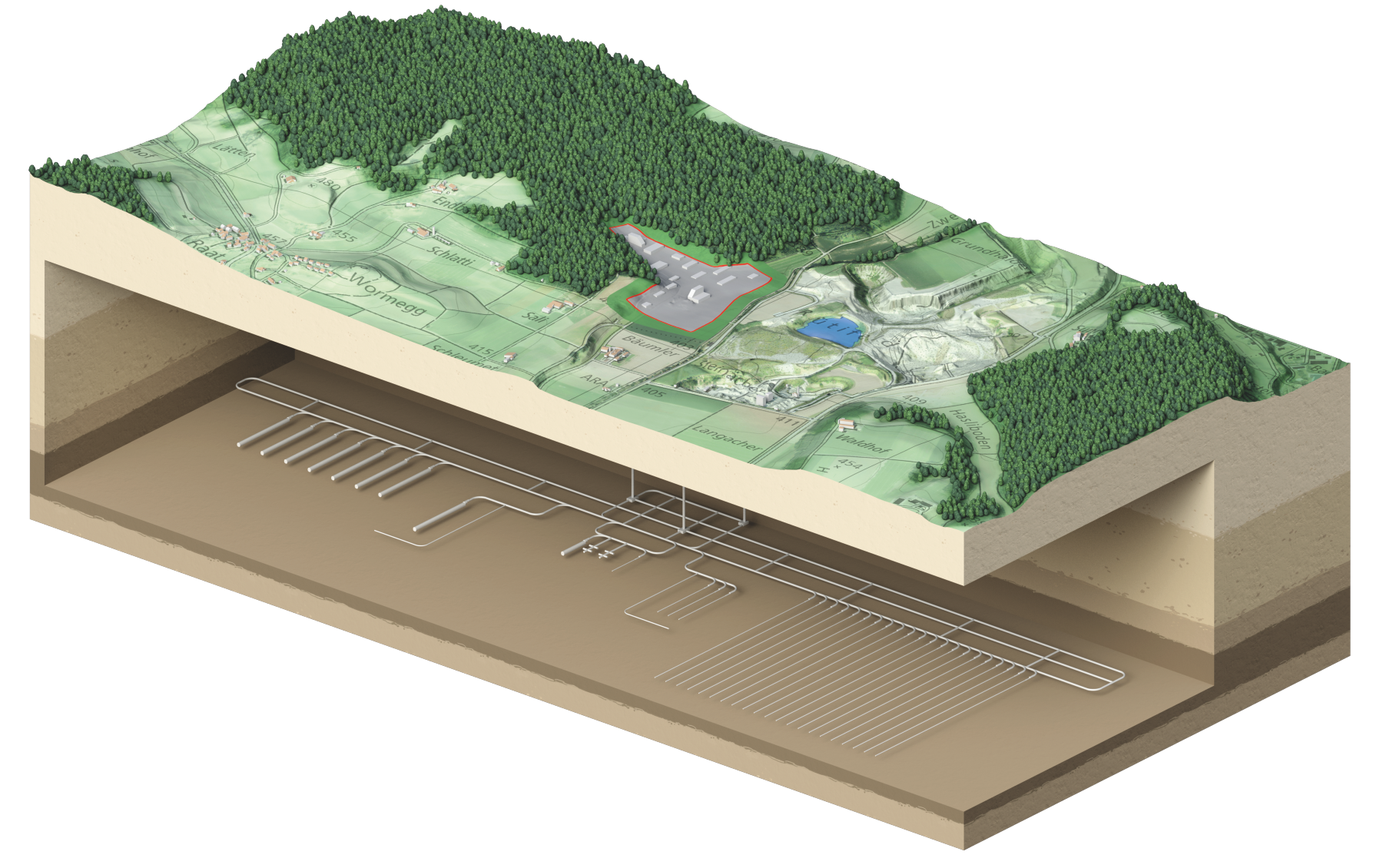
A rendering of Switzerland’s proposed deep geologic repository. (Image: Nagra)
Nagra, Switzerland’s national cooperative for the disposal of radioactive waste, has published its general license applications for a deep geologic repository and separate spent fuel encapsulation plant, making the documents publicly available on a digital platform.
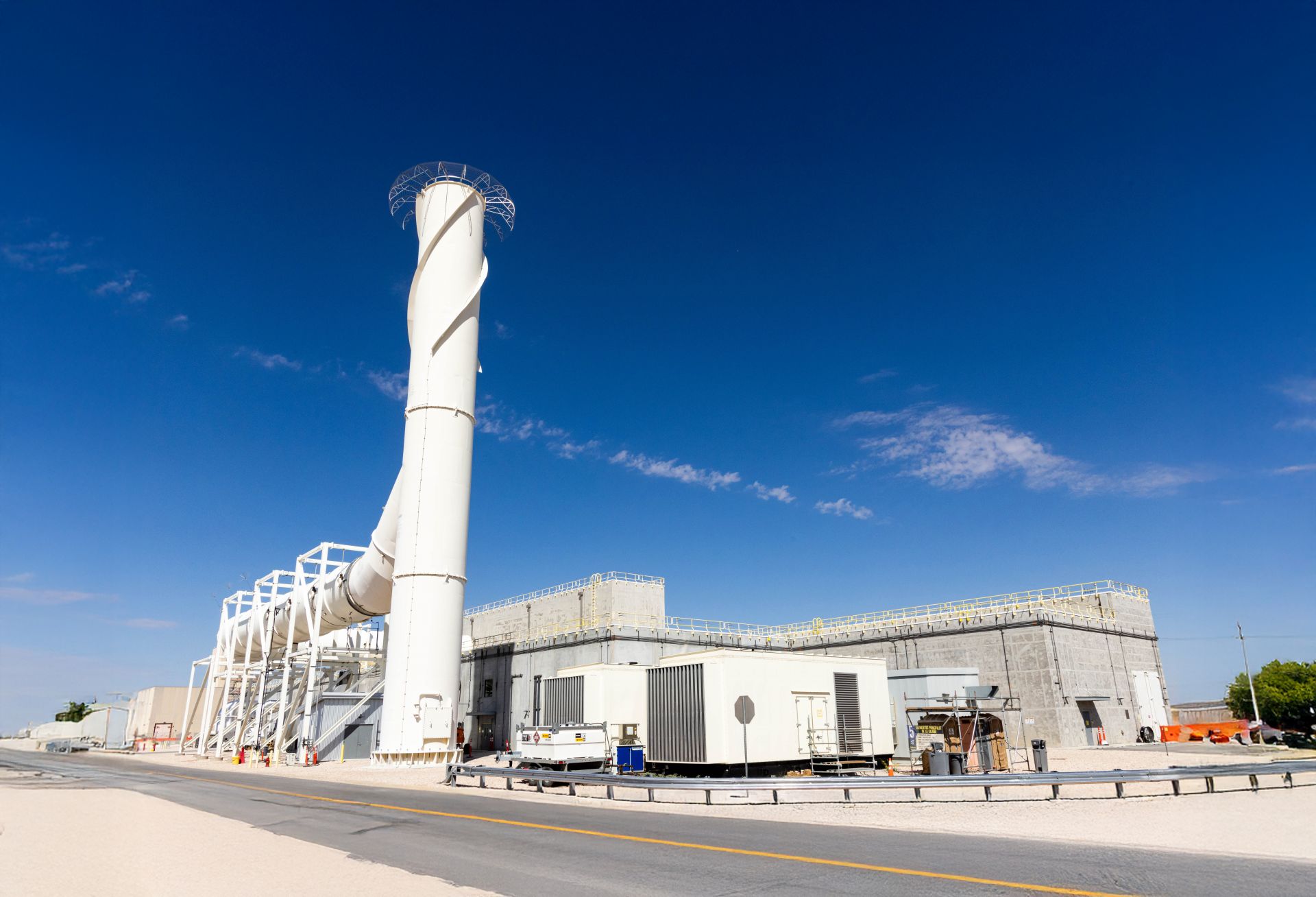
WIPP completed the commissioning of a large-scale ventilation system, known as the Safety Significant Confinement Ventilation System, this spring. The system will restore full ventilation to the underground repository. (Photo: DOE)
This spring, the Department of Energy’s Office of Environmental Management announced that it had achieved a major milestone by completing commissioning of the Safety Significant Confinement Ventilation System (SSCVS) facility—a new, state-of-the-art, large-scale ventilation system at the Waste Isolation Pilot Plant, the DOE’s geologic repository for defense-related transuranic (TRU) waste in New Mexico.
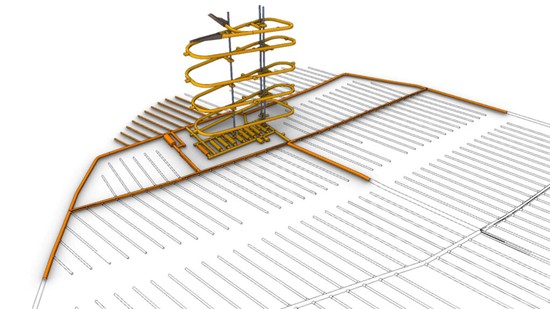
Early construction work on the Forsmark repository includes an access tunnel, three vertical shafts for ventilation and a lift, a central area and main tunnels, and transport tunnels to the first repository areas. (Image: SKB)
The Swedish Nuclear Fuel and Waste Management Company (Svensk Kärnbränslehantering AB, or SKB) has signed a collaboration agreement with the multinational construction company Implenia to build the first underground section of a deep repository for radioactive waste near Sweden’s Forsmark nuclear power plant.
Hanford contractor teams rehearse procedures for the first transfer of waste from one of the site’s underground tanks to the WTP later this summer. (Photo: DOE)
The Department of Energy’s Office of Environmental Management said that crews at its Hanford Site in Washington state are preparing for the site’s first-ever transfer of radioactive waste from one of its large underground tanks, Tank AP-106, to the Waste Treatment and Immobilization Plant (WTP).
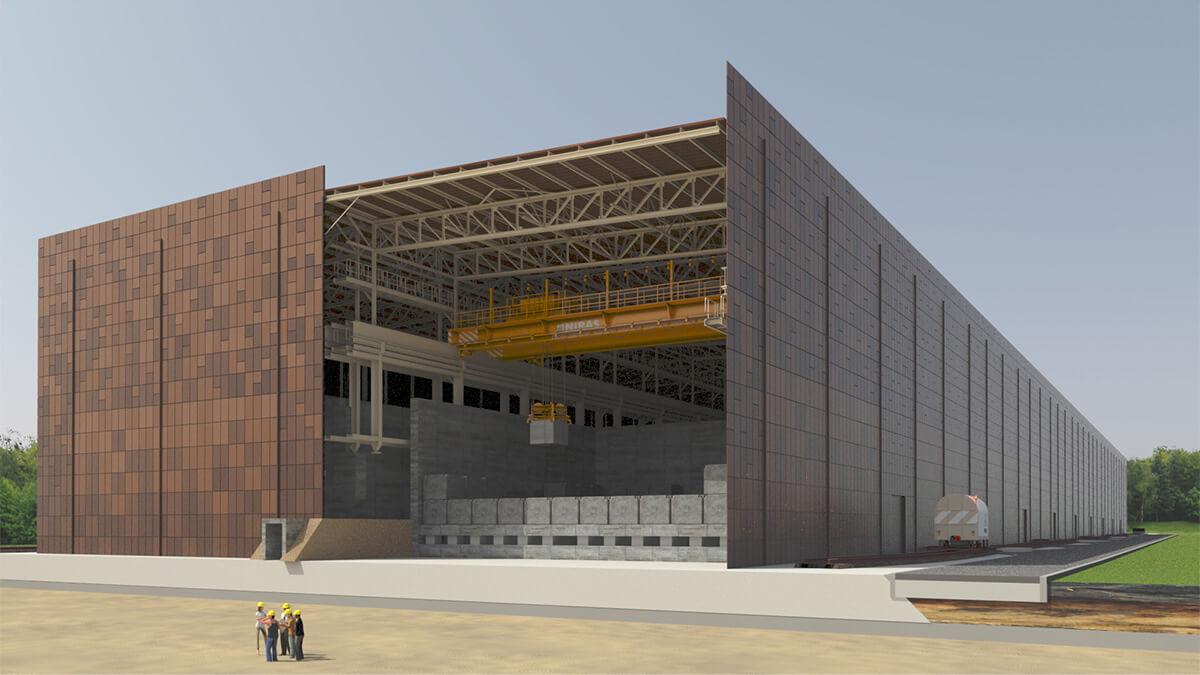
Belgium will construct a surface disposal facility for low- and intermediate-level short-lived waste in Dessel. (Image: ONDRAF/NIRAS)
Brussels-based construction group Besix announced that is has been chosen by the Belgian agency for radioactive waste management ONDRAF/NIRAS for construction of the country’s surface disposal facility for low- and intermediate-level short-lived nuclear waste in Dessel.
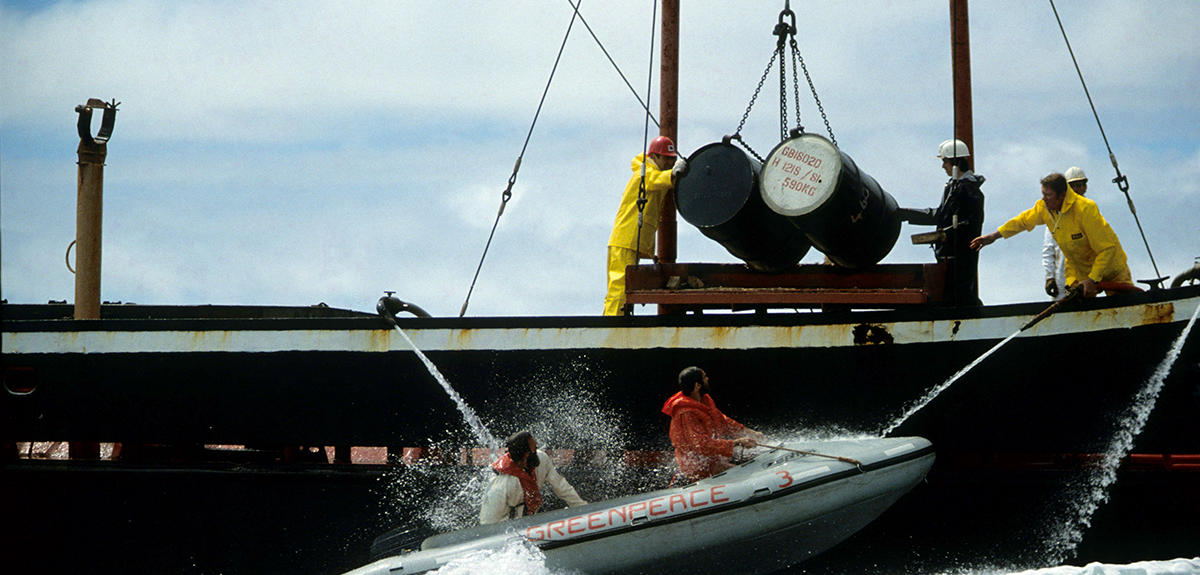
Greenpeace protest the dumping of barrels in the early 1980s. (Photo: Greenpeace/Pierre Gleizes)
A scientific mission led by the French National Centre for Scientific Research (CNRS) set sail this past weekend in the Northeast Atlantic to investigate the long-term impacts of radioactive waste dumped at sea between the 1950s and 1990s.
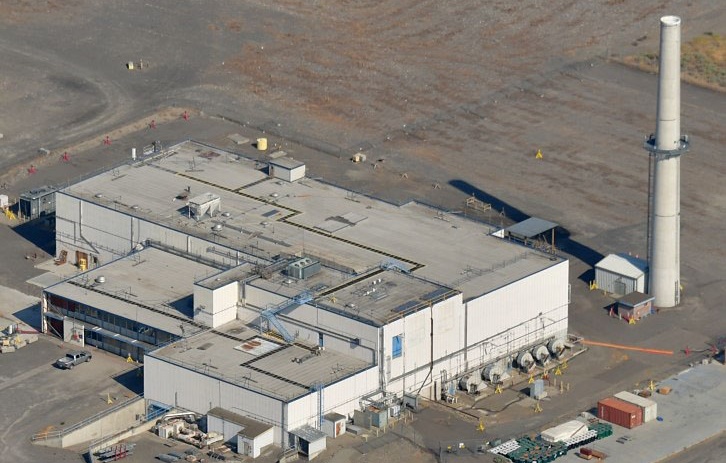
Hanford’s 324 Building, circa 2015. (Photo: DOE)
Working with the Environmental Protection Agency, the Department of Energy has revised its planned approach to remediating contaminated soil underneath the Chemical Materials Engineering Laboratory (commonly known as the 324 Building) at the Hanford Site in Washington state. The soil, which has been designated the 300-296 waste site, became contaminated as the result of a spill of highly radioactive material in the mid-1980s.
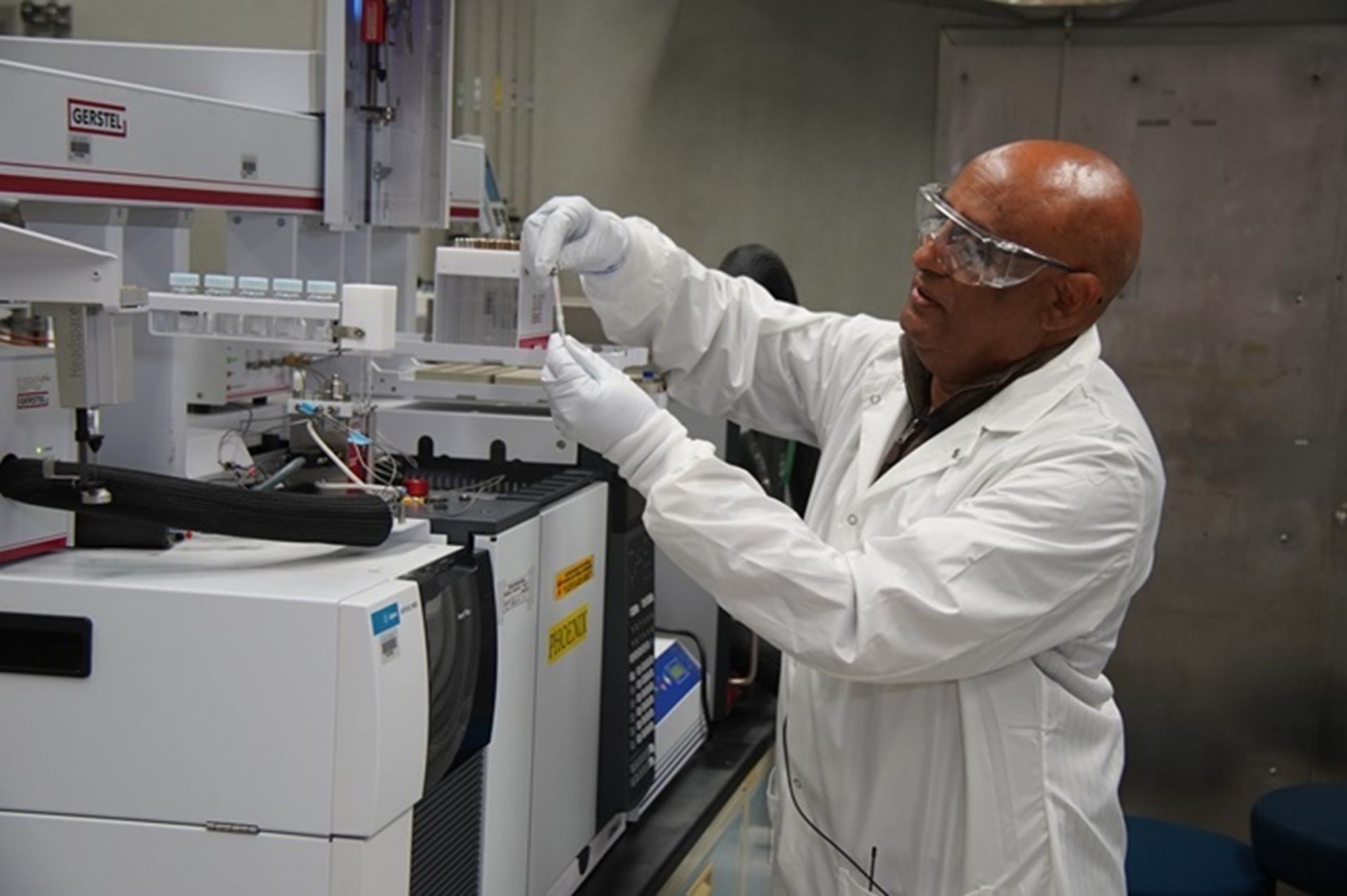
Solomon Bairai of Navarro-ATL prepares a Twister Stir Bar sample for analysis at the Hanford Site's 222-S Laboratory. (Photo: DOE)
A new method has received Washington state’s approval for use at the 222-S Laboratory at the Department of Energy’s Hanford Site, improving how experts analyze tank waste and providing more precise data to support safe and efficient cleanup.
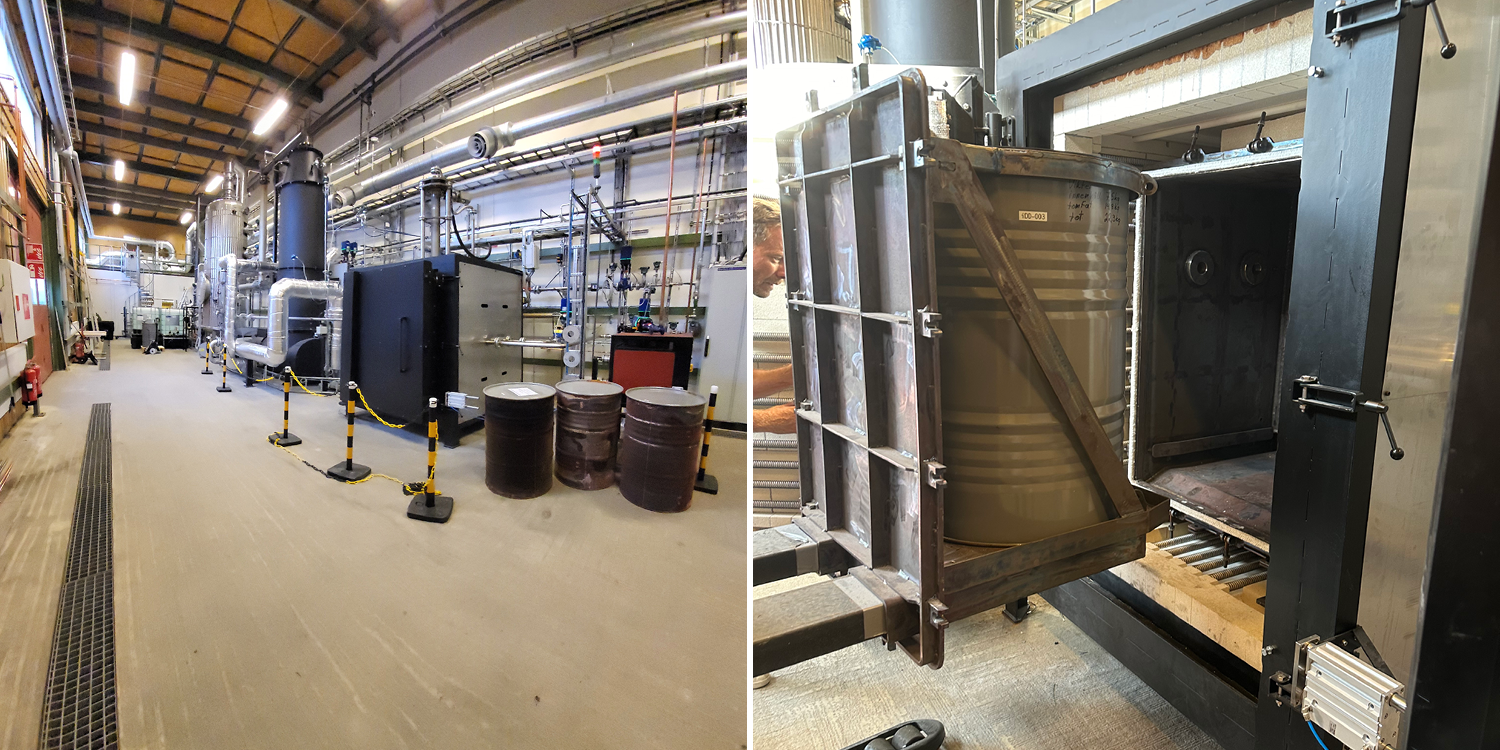
Figure 1. inDRUM Demonstration facility at Studsvik for simulated waste (left) and a drum being loaded into the container treatment unit (right)
Studsvik AB has completed construction of the new inDRUM Demonstration Facility outside of Nykoping, Sweden. We can now demonstrate how the inDRUM technology will process a wide range of problematic and legacy wastes through the removal of all liquids, organics and other materials, resulting in a stable and reduced volume product that can be disposed of in a suitable repository.
The NWMO has launched a two-year engagement process as it begins plans for a second deep geological repository to manage radioactive waste in Canada. (Photo: NWMO)
The Nuclear Waste Management Organization, which is mandated by law to develop an approach for the long-term care of Canada’s spent nuclear fuel, has begun collecting feedback from Canadians and Indigenous people to help refine its process for selecting a second deep geologic repository site.
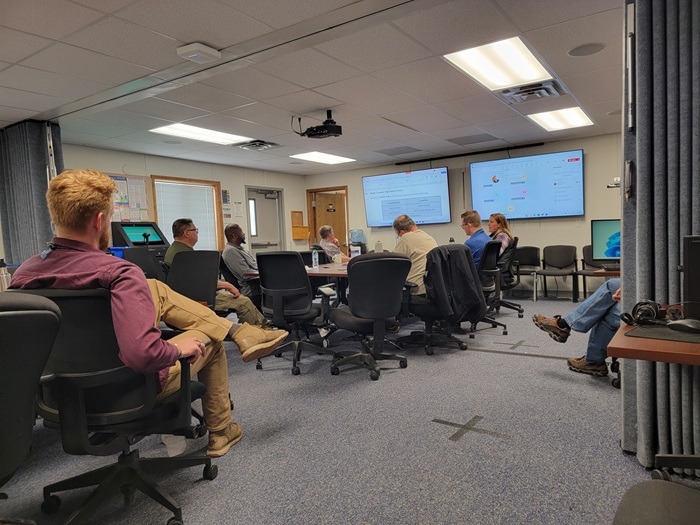
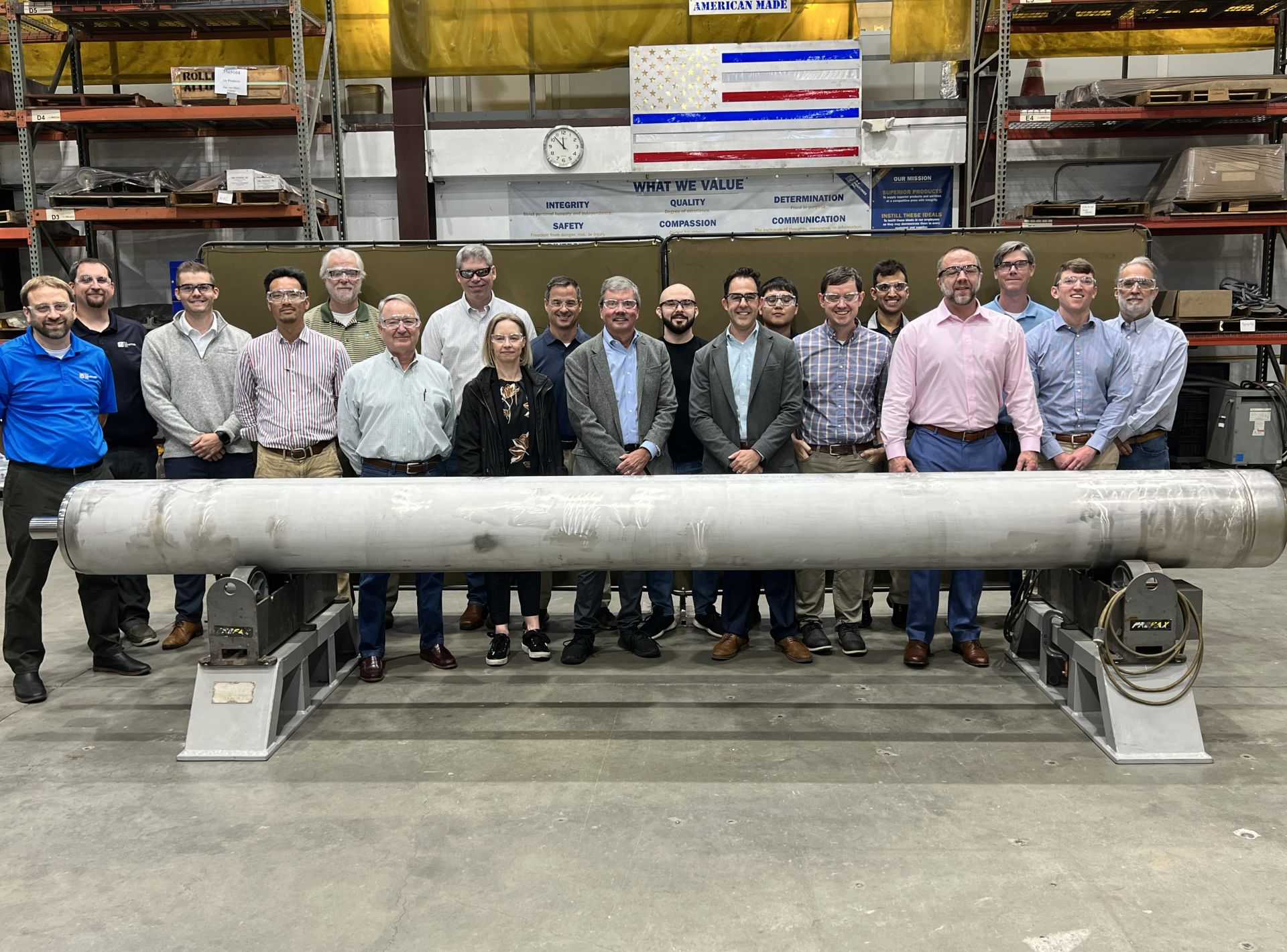
Technical advisory committee members in front of a full-scale universal nuclear waste canister prototype developed through ARPA-E’s UPWARDS program. (Photos: Deep Isolation)
At COP28, held in Dubai in 2023, a clear consensus emerged: Nuclear energy must be a cornerstone of the global clean energy transition. With electricity demand projected to soar as we decarbonize not just power but also industry, transport, and heat, the case for new nuclear is compelling. More than 20 countries committed to tripling global nuclear capacity by 2050. In the United States alone, the Department of Energy forecasts that the country’s current nuclear capacity could more than triple, adding 200 GW of new nuclear to the existing 95 GW by mid-century.



 rotated.jpg)