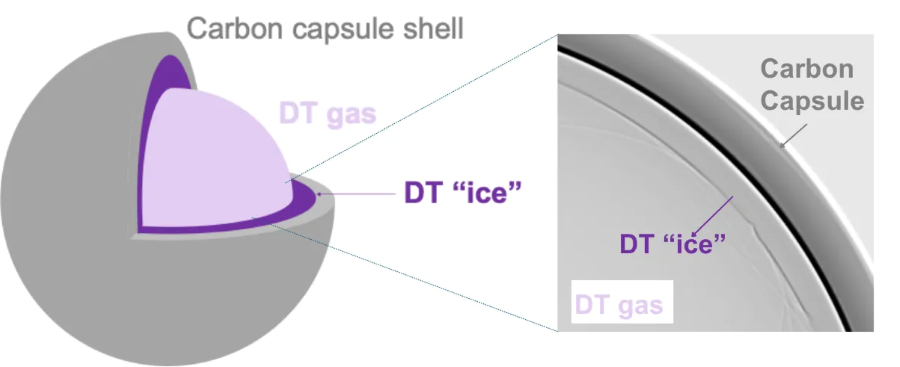
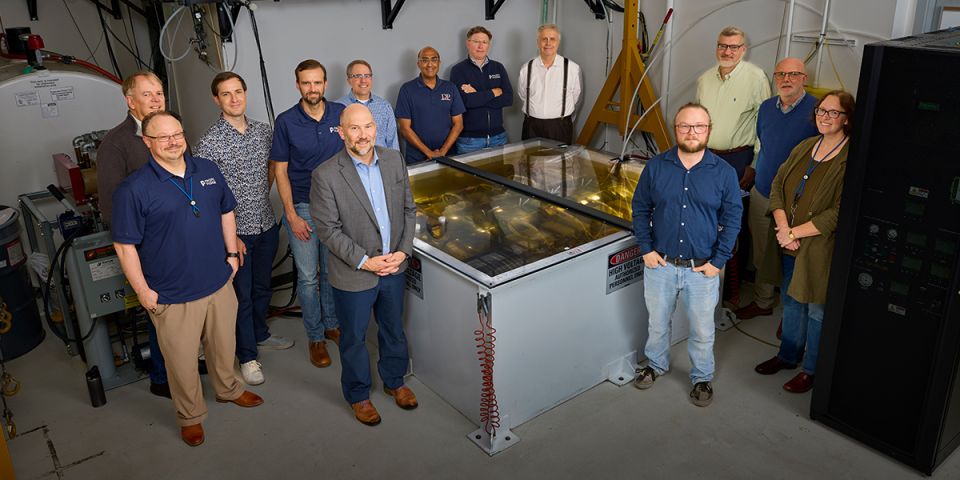
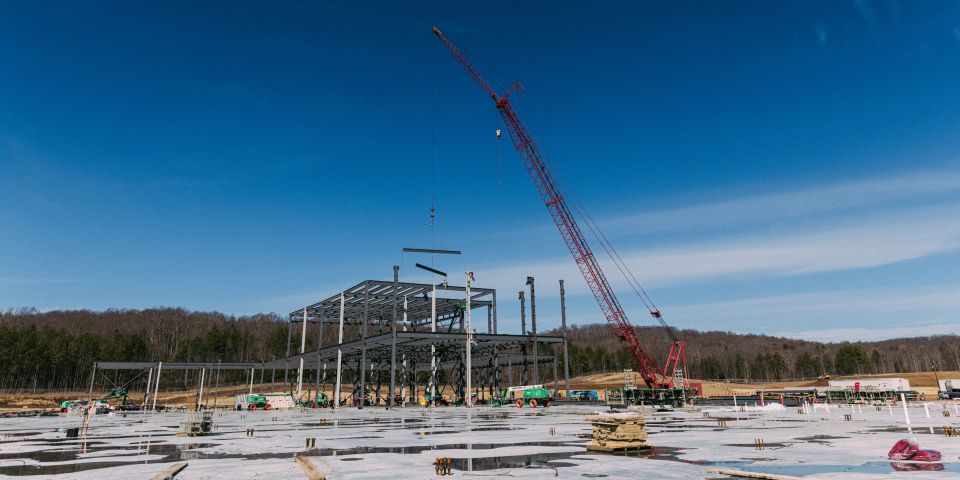
An ICF target: Inertia is closely following the inertial confinement fusion methods that have been demonstrated at LLNL’s National Ignition Facility, including the design of its fuel pellets, which include D-T gas enclosed by a thin layer of frozen D-T coating the inside of a tiny carbon sphere.
At NIF, the surfaces of the 2-mm fuel capsules must be very smooth; small defects can cause instabilities that can disrupt or prevent implosion. According to Inertia, NIF’s fuel production process can take up to a week and multiple attempts with manual intervention, which would not be sustainable at a fusion pilot plant. Inertia said it plans to inject fuel several hundred times per minute.
Inertia said the team’s process takes two to three hours to produce a D-T layer within design tolerances, as verified using the same LLNL codes used to design ignition.
“The quality of these rapid ice layers are comparable in many ways to the NIF layers that take much longer to grow. And Inertia’s target design, using a much thicker ice layer than NIF, is more robust to ice defects. The defect dampens proportional to the ice thickness, so a groove that would be problematic on NIF is acceptable at Inertia’s scale,” said Chris Weber, an inertial confinement physicist and capsule modeling team lead at LLNL.
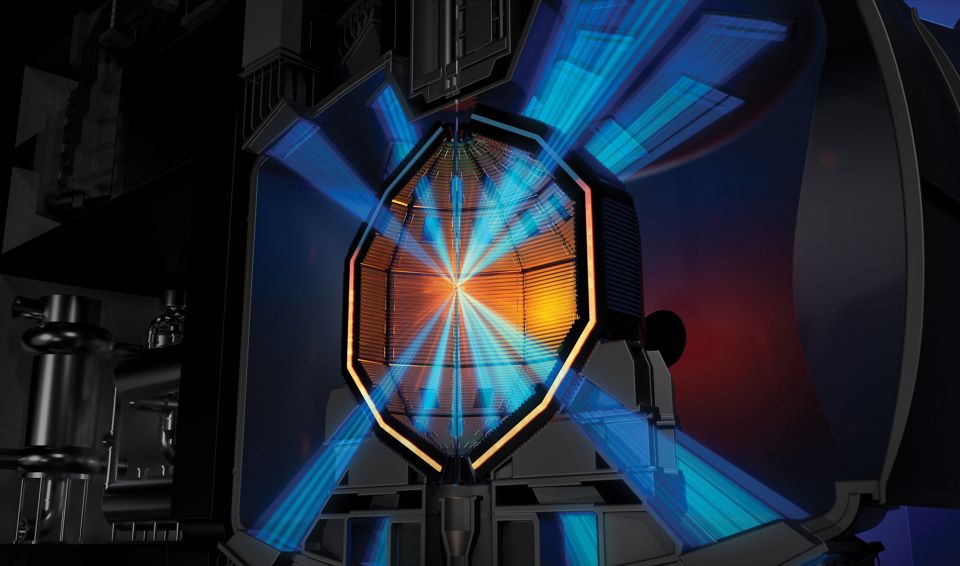
Inertia’s design also has the benefit of a much more energetic laser—10 MJ, compared with NIF’s 2 MJ—which will allow for a higher tolerance to imperfections and should allow the company to drive the manufacturing time down to less than an hour, Inertia said.
“This is the most thorough examination of D-T ice layering that I am aware of examining the various key practical parameters involved to determine the quality of the layer versus time required to layer demonstrating that it is consistent with [inertial fusion energy] needs on both accounts,” said Abbas Nikroo, deputy director for physics integration at NIF.
Work to be done: Inertia still has several challenges to overcome as it works toward a fusion pilot plant, including for its fuel manufacturing process. According to its road map to commercialization, the company plans to industrialize the manufacturing process for the fuel’s carbon shells, make economical versions of the thin films that hold fusion targets in place, and demonstrate automated batch assembly of its targets.
In April, LLNL and Inertia signed an agreement covering the research, development, and prototyping of several systems that are critical to the company’s planned fusion pilot plant, and according to a July article in the Independent, the company fully funds the jobs of “50 or so people” working at LLNL.
Inertia’s chief scientist and cofounder, Annie Kritcher, was on the team that first achieved ignition at NIF in 2022.
“This milestone achievement for commercial target fueling in these very early days for the company would not have been possible without our close collaboration with LLNL, awarded through both our Target Fabrication and Physics Design Strategic Partnership Projects,” said Kritcher. “Working with the leading specialists in target manufacturing, a new fast fueling method has been developed that enables moving from NIF to commercial fusion energy production. Verification of the impact of this fueling process on Inertia’s design was enabled through our physics design SPP.”