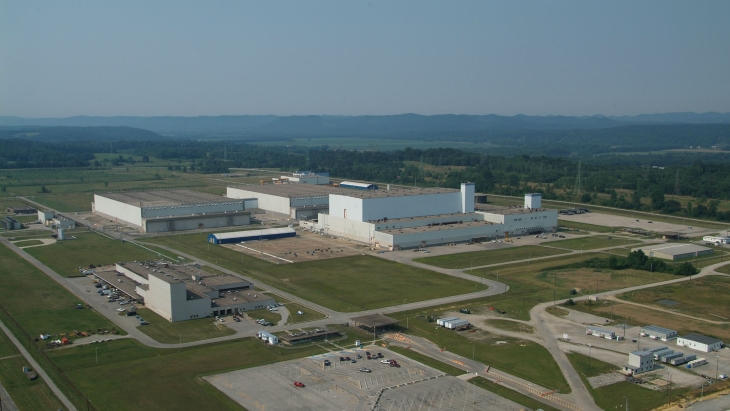
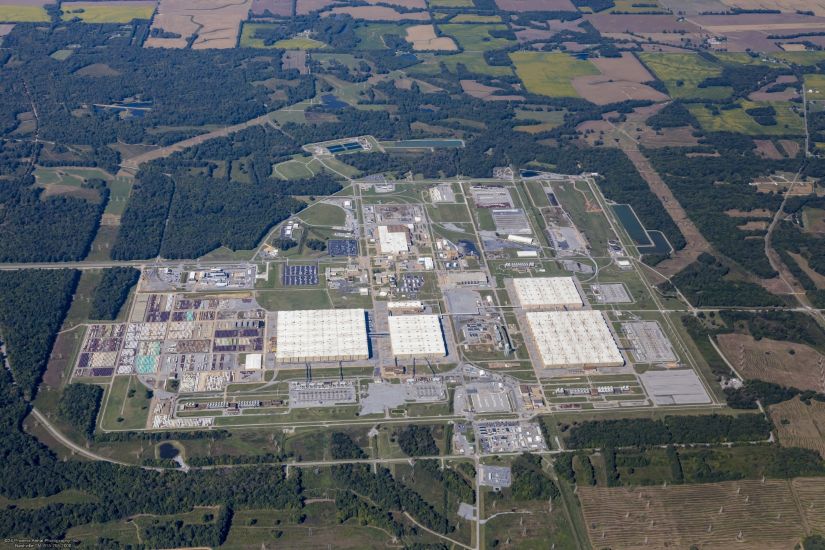
The site of the former Paducah Gaseous Diffusion Plant in Paducah, Ky. (Photo: Greater Paducah Economic Development)
The governments of Kentucky and McCracken County have granted preliminary approval to Global Laser Enrichment for a comprehensive incentive package to support the development of the North Carolina–based company’s planned Paducah Laser Enrichment Facility in the western part of the state. The performance-based incentive package would provide as much as $98.9 million in tax incentives and other economic incentives—provided that GLE reaches the required thresholds in investments and job creation.
In addition, the Nuclear Regulatory Commission, in cooperation with the U.S. Army Corps of Engineers, has completed a draft environmental impact statement (EIS) in response to GLE’s application to construct and operate the PLEF. Members of the public can submit comments on the draft EIS by May 11 for consideration by the NRC.
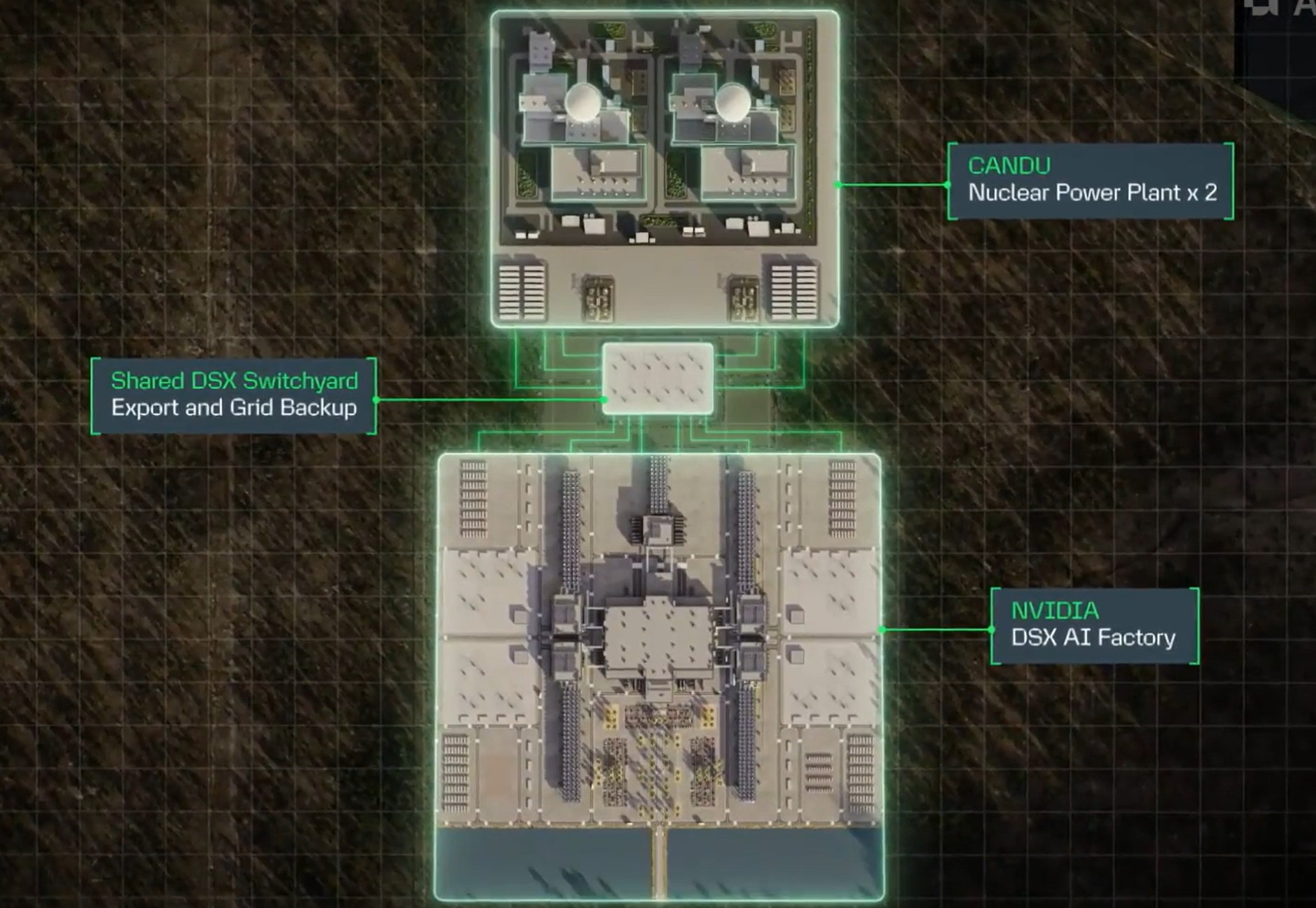
A depiction of the Candu-powered AI factory envisioned by AtkinsRéalis and Nvidia. (Image: AtkinsRéalis)
The nuclear space is full of companies eager to power new AI development. At the same time, many AI companies want to provide services to the nuclear industry. It should come as no surprise, then, that two new partnerships have recently been announced that further bridge the AI and nuclear sectors.
AtkinsRéalis has announced a partnership with Nvidia that aims to leverage Nvidia’s technologies to deploy “nuclear-powered, large-scale AI factories.” Centrus Energy has announced a partnership with Palantir Technologies to use Palantir’s software in support of Centrus’s plans to expand enrichment capacity.
From left, Matthew Mueller, vice president of ABS Regional Business Development; Hak-mu Shim, HD HSHI executive vice president; and Byung-hun Kwon, HD KSOE executive vice president, pose at the signing ceremony for the joint development project at the HD Hyundai Global R&D Center in Seongnam, South Korea.
The American Bureau of Shipping has joined a joint development project with the HD Hyundai divisions of Korea Shipbuilding & Offshore Engineering (HD KSOE) and HD Hyundai Samho Heavy Industries (HD HSHI) to advance the conceptual design and assess the technical feasibility of a nuclear-powered electric propulsion system for large container ships.
The project, “Conceptual Design of a Nuclear-Powered Electric Propulsion System,” will focus on developing the basic design, electrical component specifications, and arrangement plans of a nuclear propulsion system for a 16,000-TEU ship (that is, a massive vessel designed to carry 16,000 20-foot-equivalent units). It would be the first nuclear-powered commercial container vessel.
Centrus’s American Centrifuge Plant, in Piketon, Ohio. (Photo: Centrus Energy)
A newly announced potential joint venture between reactor and fuel-recycling developer Oklo and uranium enricher Centrus Energy could be coming to Ohio. The two companies have agreed to pursue discussions on jointly establishing deconversion services for high-assay low-enriched uranium and other fuel-cycle technologies at Centrus’s uranium enrichment plant in Piketon, Ohio, which is adjacent to Oklo's proposed 1.2-GW power campus. That campus, which has been targeted to be on line by 2030, will use Oklo’s Aurora Powerhouse microreactor to support data centers for Meta.
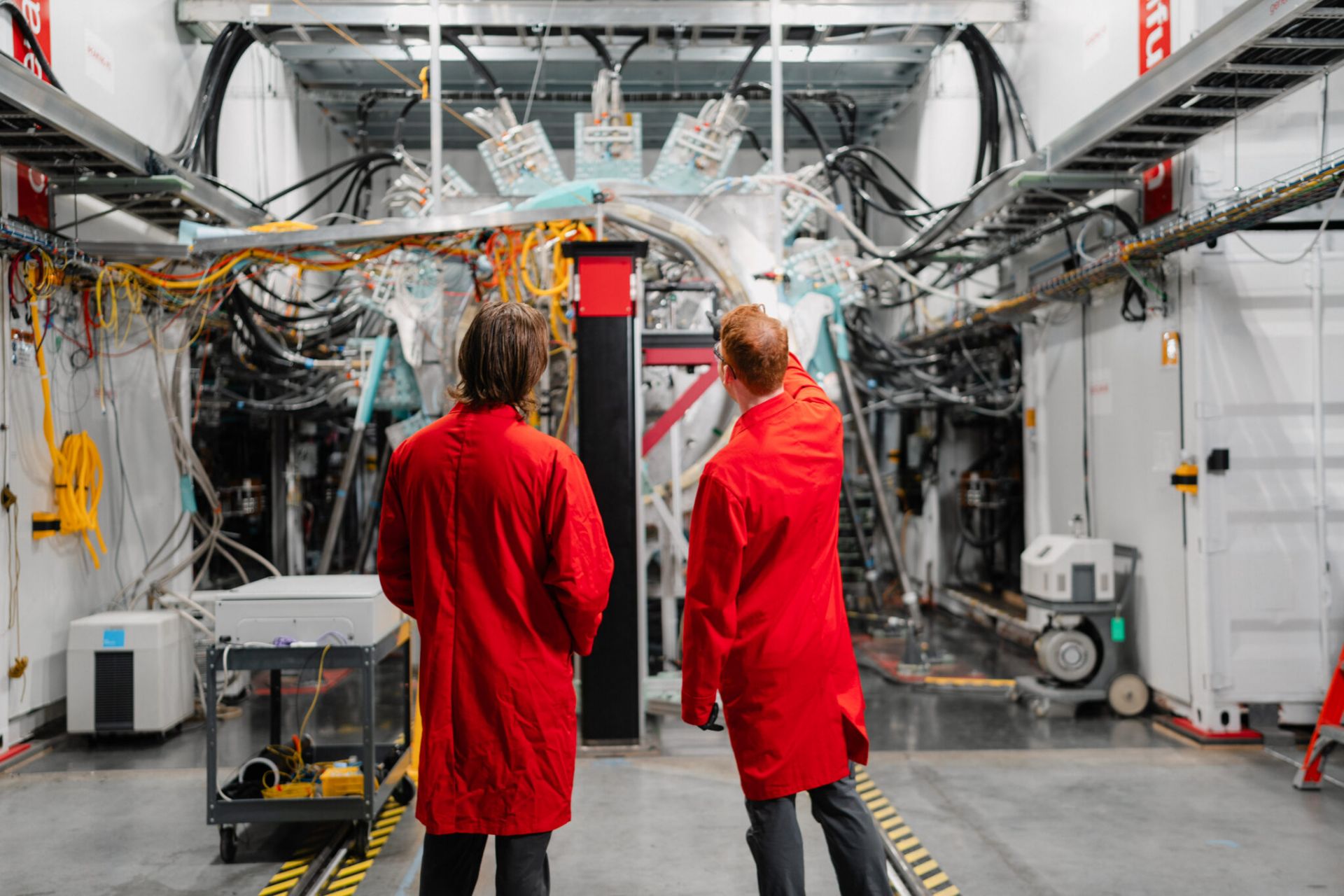
General Fusion’s LM26 demonstration device. (Photo: General Fusion)
General Fusion has entered into a definitive business combination agreement with Spring Valley Acquisition Corp. (SVAC) that would make General Fusion the first publicly traded pure-play fusion firm, the company announced on January 22. The business combination is projected to be completed in mid-2026.
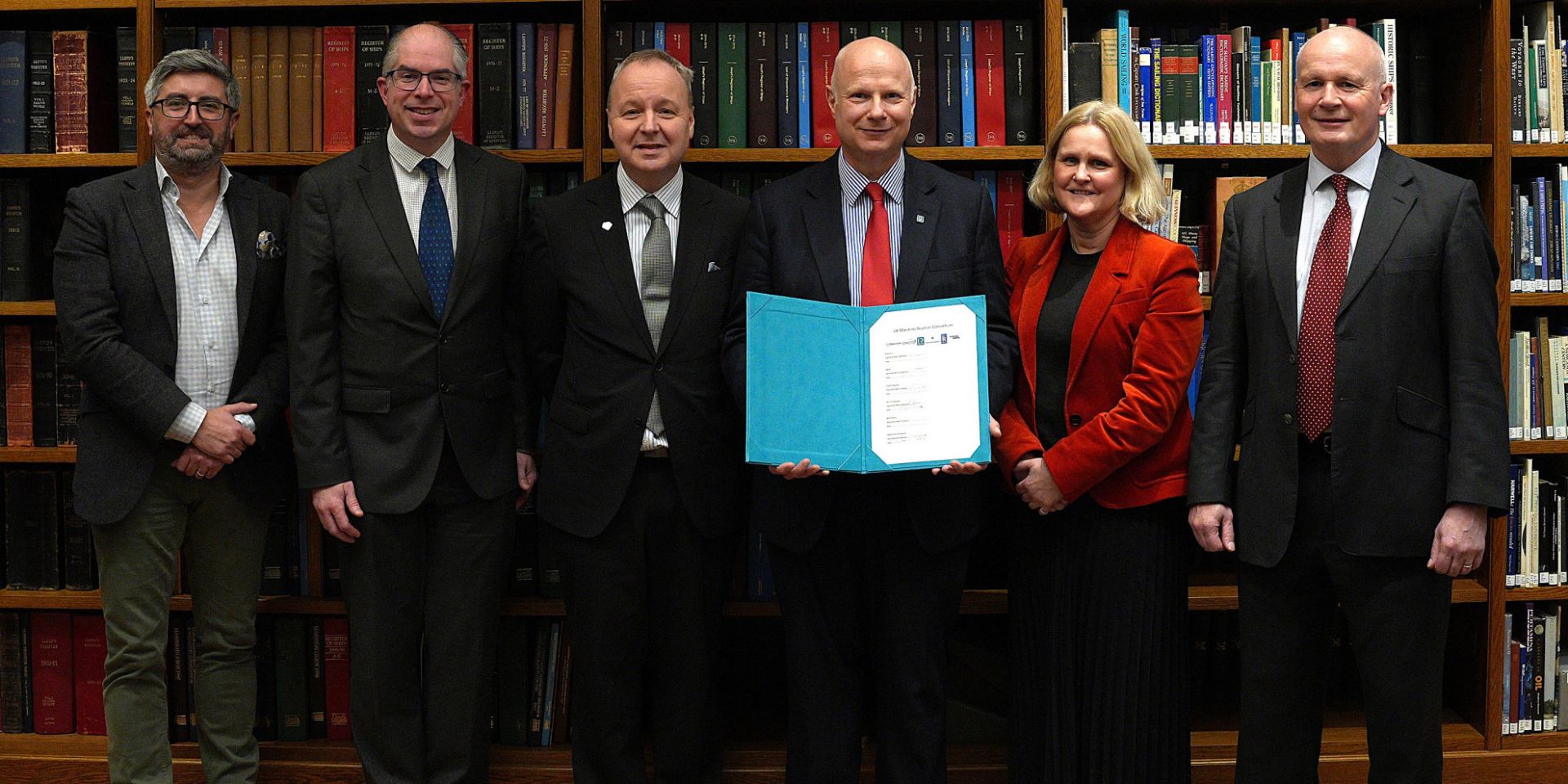
Representatives of the founding members of the Maritime Nuclear Consortium. From left, Nick Tomkinson, Global Nuclear Security Partners; Simon Williams, Rolls-Royce; Blair Jamieson, Babcock International Group; Mark Tipping, Lloyd’s Register; Kirsti Massie, Stephenson Harwood; and Mike Salthouse, NorthStandard. (Photo: Lloyd’s Register)
London-based professional services organization and maritime classification society Lloyd’s Register has brought together a group of experts from the U.K. nuclear, maritime, insurance, and regulatory sectors with the primary goal of establishing international standards “for safe, secure, and commercially viable nuclear-powered ships.”
This Maritime Nuclear Consortium includes Lloyd’s Register as the group’s lead, safety administrator, and secretariat; Rolls-Royce, specializing in advanced reactor design; Babcock International Group (ship design, construction, and support); Global Nuclear Security Partners (security and safeguards); Stephenson Harwood (legal and regulatory issues); and NorthStandard (insurance).
Concept art of the SPARC digital twin. (Image: CFS)
Commonwealth Fusion Systems, a fusion firm headquartered in Devens, Mass., is collaborating with California-based computing infrastructure company NVIDIA and Germany-based technology conglomerate Siemens to develop a digital twin of its SPARC fusion machine. The cooperative work among the companies will focus on applying artificial intelligence and data- and project-management tools as the SPARC digital twin is developed.

 Here is a recap of recent industry happenings:


.jpg)