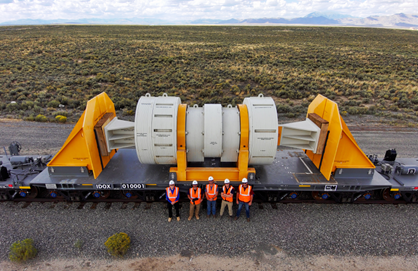
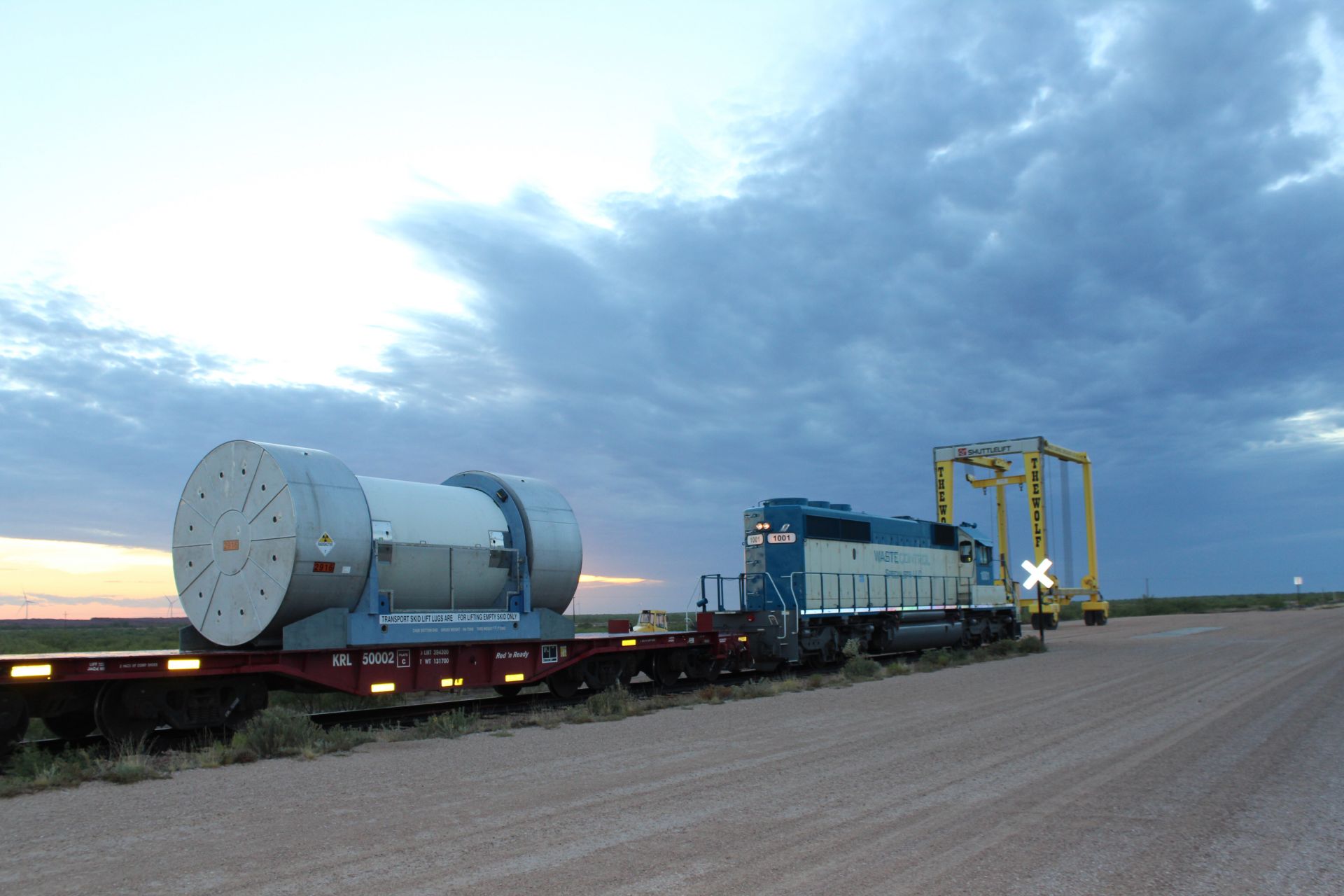
April 7, 2026, 9:27AMRadwaste SolutionsSven Bader, Brad Crotts, Michael Smith, Don McGee, and John McEntire An Orano MP197HB transport cask loaded onto a railcar.
With the significant advances in additive manufacturing (AM), otherwise known as 3D printing, Orano Federal Services and the University of North Carolina at Charlotte recently re-examined the capabilities to print impact limiters for transportation casks used to ship spent nuclear fuel. Impact limiters protect transportation casks (sometimes also referred to as transportation overpacks) and their contents during an accident. Impact limiter designs must withstand testing based on a certain significance level of hypothetical accidents, including drops, crushing, fires, and immersion in water.
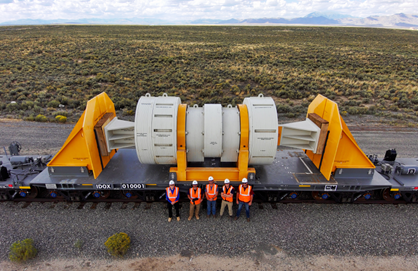
The Atlas railcar carries a test load simulating a shipment of spent nuclear fuel. (Photo: DOE)
The Department of Energy’s Office of Nuclear Energy announced last week that the Association of American Railroads has certified its Atlas railcar system to operate on all major freight railroads in the United States.
Watch a video of the Atlas railcar development here.
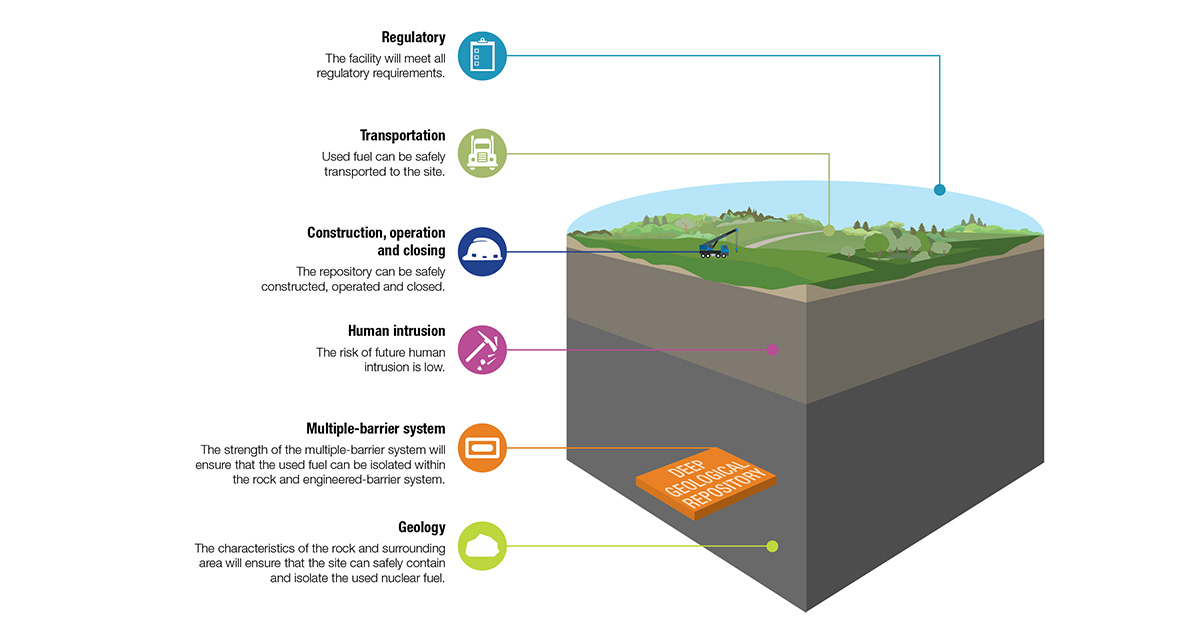
An illustration of a planned deep geologic repository for Canada’s spent nuclear fuel. (Image: NWMO)
Canada’s Nuclear Waste Management Organization, a not-for-profit organization responsible for the long-term management of the country’s intermediate- and high-level radioactive waste, is set to select a site for a deep geologic repository by the end of the year.
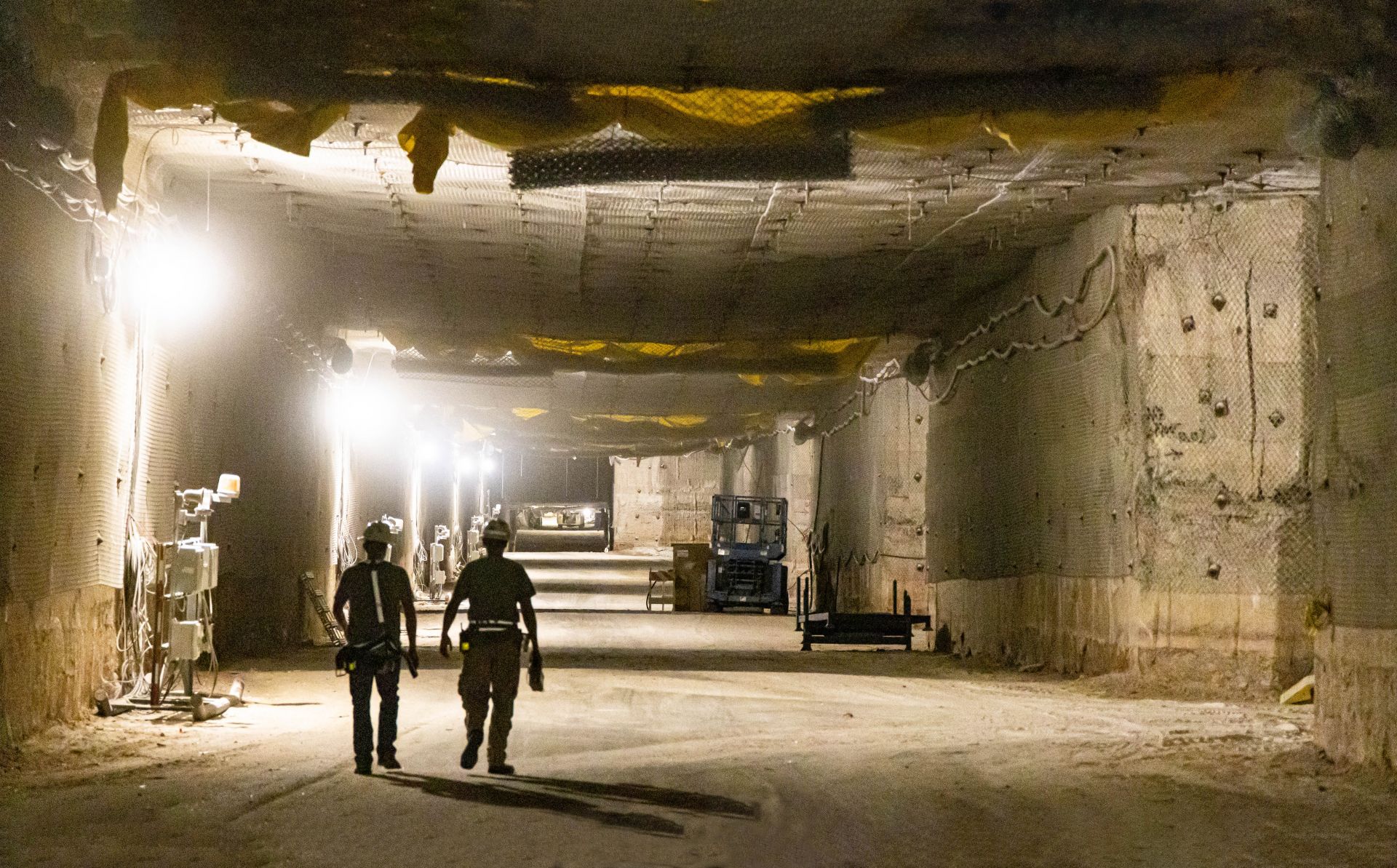
Workers walk down an underground passageway at the Waste Isolation Pilot Plant transuranic waste repository in New Mexico. (Photo: DOE)
The American Nuclear Society coordinated an effort with eight nongovernmental organizations in asking Congress to update the Environmental Protection Agency’s generic standards for the safe, permanent disposal of spent nuclear fuel (SNF) and high-level radioactive waste.
The Atlas railcar carries a test load simulating a shipment of spent nuclear fuel. (Photo: DOE)
The Department of Energy’s Office of Nuclear Energy has wrapped up testing of its Atlas railcar, successfully completing a round-trip journey from Pueblo, Colo., to Scoville, Idaho. Built to safety standards set by the Association of American Railroads (AAR), the 12-axle railcar is designed to transport large containers of spent nuclear fuel and high-level radioactive waste.
Using GeoMelt ICV technology to treat and immobilize problematic low-level wastes at INL and WCS.
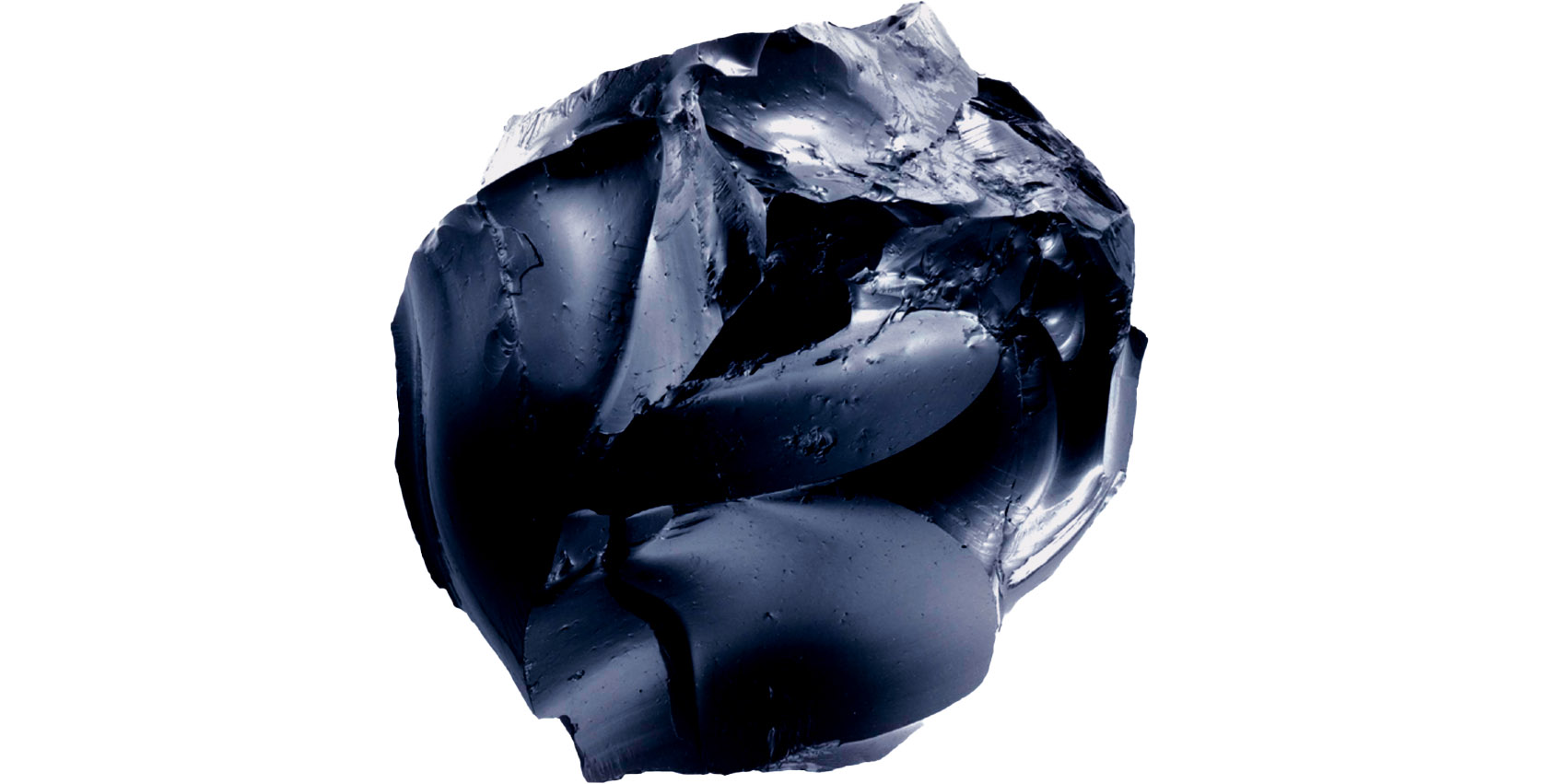
A sample of GeoMelt glass. (Photos: Veolia)
When it comes to managing nuclear waste, technology is transforming the way some of the most problematic waste is handled. The idea to transform nuclear waste into glass was developed back in the 1970s as a way to lock away the waste’s radioactive elements and prevent them from escaping. For more than 40 years, vitrification has been used for the immobilization of high-level radioactive waste in many countries around the world, including the United States.
Two workers walk down an underground passageway at the Waste Isolation Pilot Plant transuranic waste repository in New Mexico. (Photo: DOE)
While still lacking a deep geological repository for the permanent disposal of its commercial used nuclear fuel and high-level radioactive waste, the United States does have regulatory standards for geological nuclear waste disposal.
Having been written nearly 40 years ago, however, those standards are outmoded and lack transparency, according to a special committee of the American Nuclear Society, which has released draft recommendations on revising public health and safety standards for future geological repository projects in the United States.
Sandia National Laboratories researchers Melissa Mills, left, and Kristopher Kuhlman peer through a WIPP salt sample.
Last fall, scientists from Sandia, Los Alamos, and Lawrence Berkeley national laboratories began the third phase of a years-long experiment to understand how salt and very salty water behave near hot nuclear waste containers in a salt-bed repository. Initiated in 2017, the Brine Availability Test in Salt (BATS) project is part of a spent nuclear fuel research campaign within the Department of Energy’s Office of Nuclear Energy (DOE-NE).
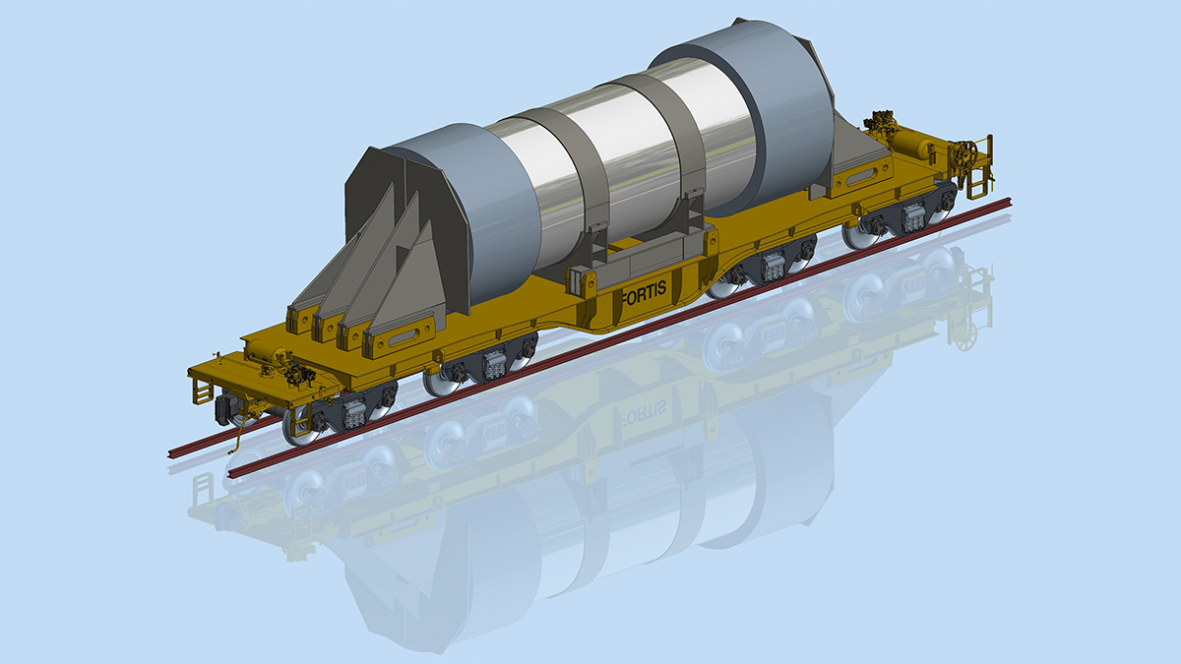
Graphical rendering of Fortis railcar design with spent nuclear fuel cask. (Image: DOE)
The Department of Energy has issued a request for proposals for the fabrication and testing of a prototype eight-axle railcar to carry the nation’s spent nuclear fuel and high-level radioactive waste. The heavy-duty, flat-deck railcar design known as “Fortis” received approval from the Association of American Railroads (AAR) in January 2021 to proceed to building and testing.
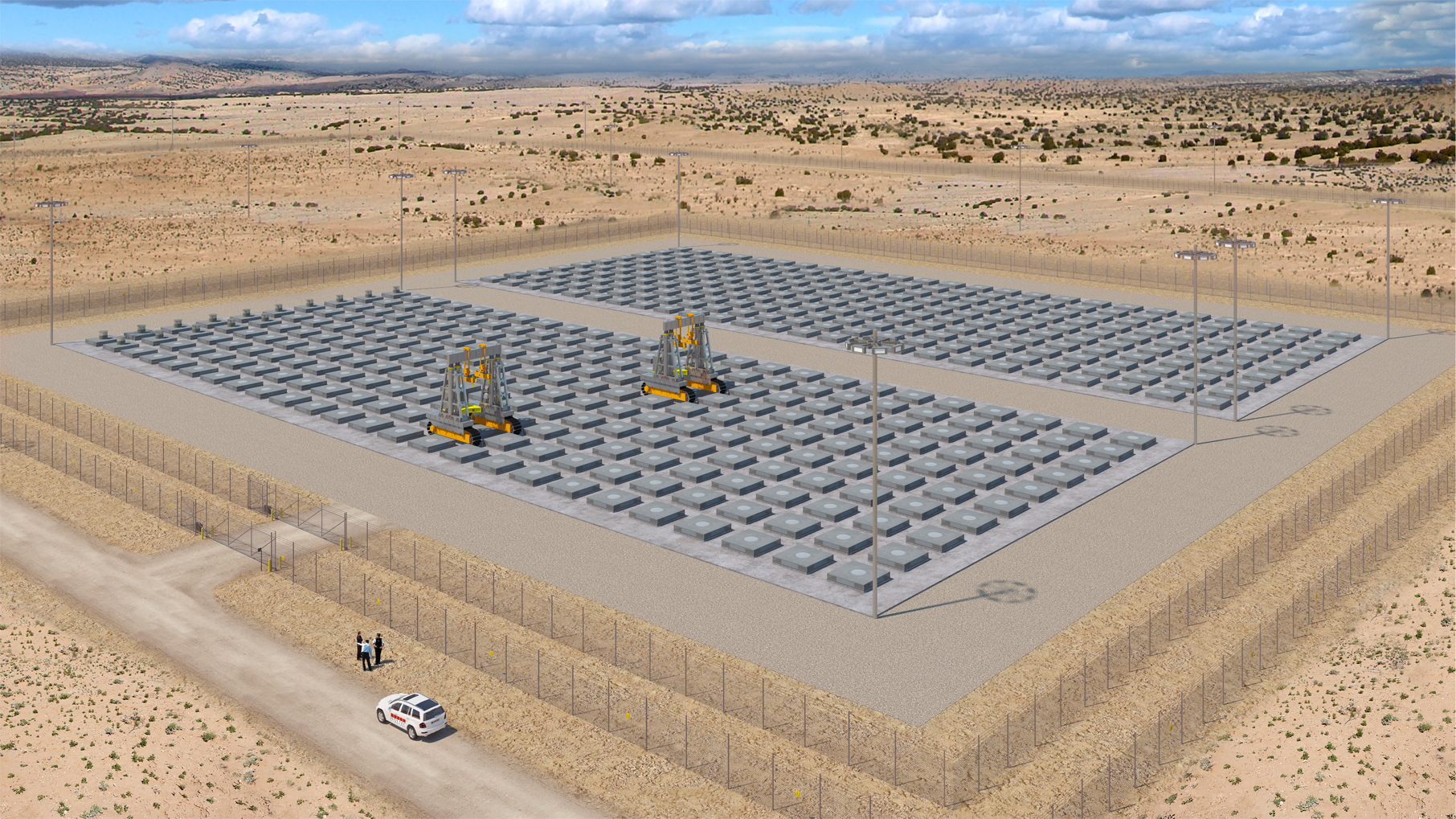
An artist's rendering of the HI-STORE facility (Image: Holtec)
The Nuclear Regulatory Commission plans to complete its safety review of Holtec International’s proposed HI-STORE consolidated interim storage facility by January 2022. A final licensing decision on the facility will be made in conjunction with the release of the agency’s final safety evaluation report, the NRC said in a July 2 letter to Holtec.


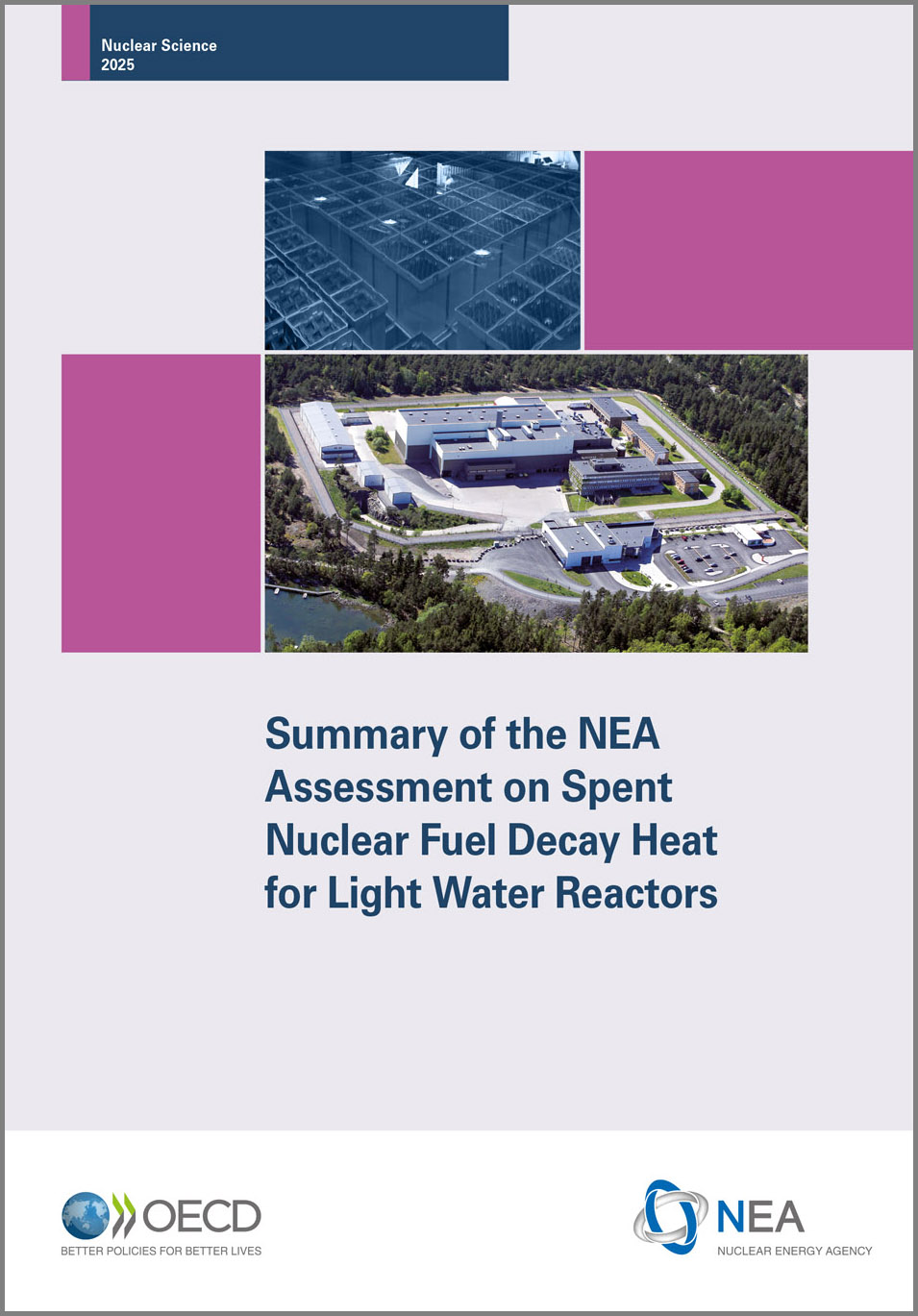 The OECD Nuclear Energy Agency has issued a report calling for more-detailed information on tracking the decay heat of spent nuclear fuel from light water reactors. According to the NEA, the report highlights the increasing importance of accurate decay heat estimations due to evolving fuel characteristics, including higher initial fuel enrichment, increased burn-up rates, and extended reactor cycle lengths.