Energy subcommittee discusses nuclear reform bills, draft legislation

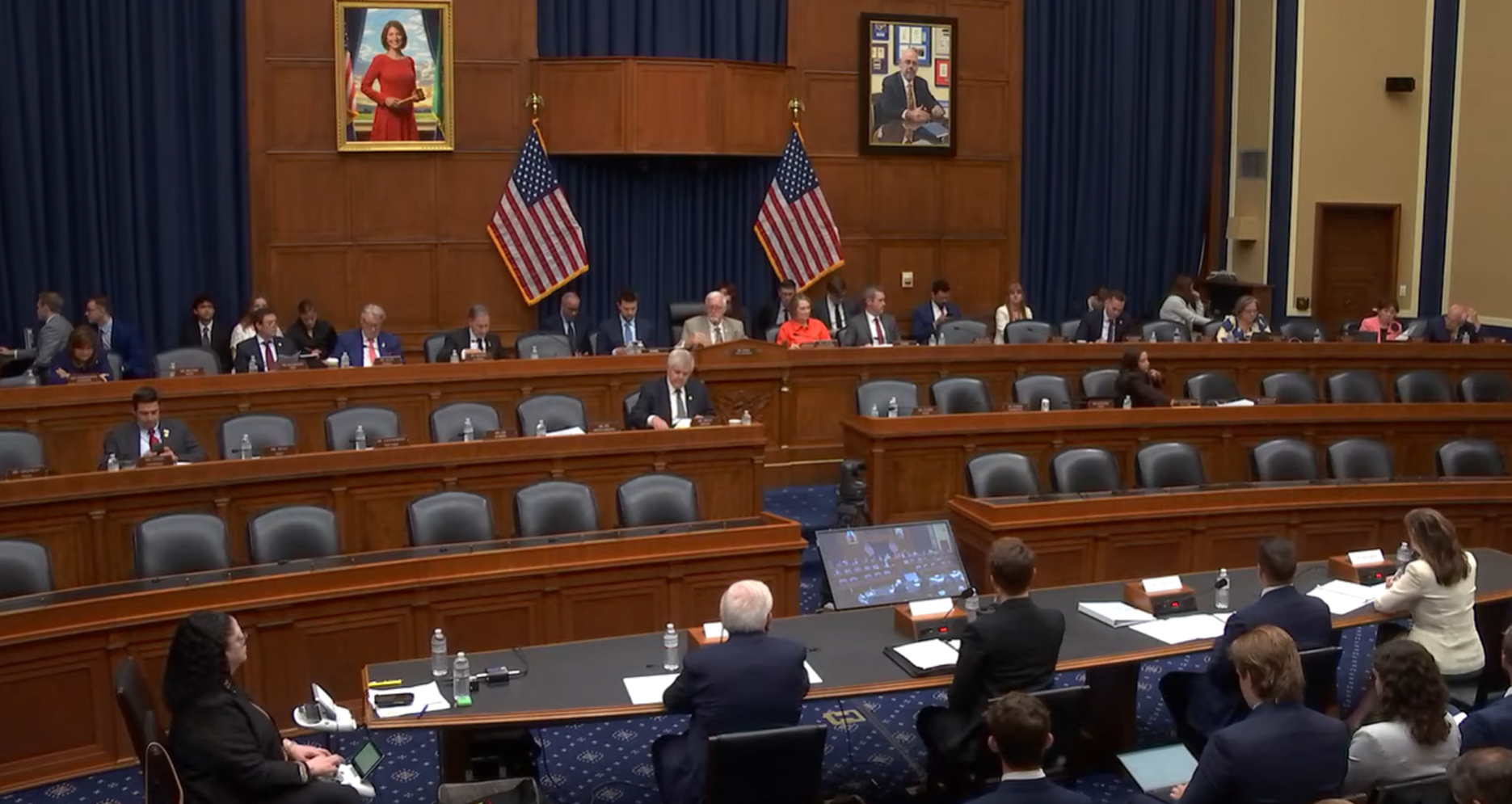
The U.S. House Energy and Commerce Committee’s Subcommittee on Energy turned its attention to nuclear permitting reform at a June 9 hearing—looking at a total of six proposals.
HSB Global Inspection and Engineering Services – We provide specialized inspection and certification services for boilers, pressure vessels, nuclear components, and power plants worldwide. Wherever your business takes you, we’re at your side. Global reach. Local presence.

The U.S. House Energy and Commerce Committee’s Subcommittee on Energy turned its attention to nuclear permitting reform at a June 9 hearing—looking at a total of six proposals.

After hours of squabbling between left-wing and centrist Democrats, the $1.2 trillion bipartisan infrastructure bill (H.R. 3684)—one of the two main pillars of President Biden’s domestic agenda—passed the House of Representatives late Friday night and has been sent to the White House for signing. The final tally was 228–206, with 13 Republicans joining most Democrats in casting their votes in favor of the legislation.

Chirica
The Nuclear Energy Institute and the Romanian Atomic Forum (Romatom) have signed a memorandum of understanding for cooperation in civil applications of nuclear energy, according to Romatom on October 14.
The MOU was signed less than a week after the United States and Romania initialed a draft intergovernmental agreement for cooperation on the construction of two additional reactors at Romania’s Cernavoda nuclear power plant and the refurbishment of Unit 1. Cernavoda currently houses two operating reactors—Units 1 and 2, twin 650-MWe CANDU-6 pressurized heavy-water reactors.
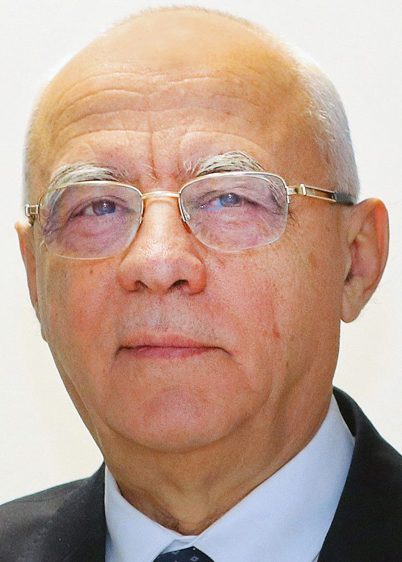
Maria Korsnick, NEI’s president and chief executive officer, and Teodor Chirica, Romatom’s honorary president, signed the MOU during a webinar on investment opportunities and the capabilities of the U.S. and Romanian nuclear industries. Also in attendance were Tommy Joyce, the U.S. Department of Energy’s deputy assistant secretary for global energy security and multilateral engagement, and Dan Dragan, secretary of state in the Romanian Ministry of Energy, Economy, and Business Environment.
Despite high-profile calls to repeal the scandal-tainted Ohio Clean Air Program Act (H.B. 6) and recent legislation crafted toward that end in both the Ohio House and Senate (66 of 99 House members have reportedly co-sponsored Democratic or Republican bills to repeal H.B. 6), the policy behind the measure continues to garner support.
As reported here on August 26, the six commissioners from Ohio’s Lake and Ottawa counties—home to Davis-Besse and Perry, the two nuclear plants saved from early closure by H.B. 6—have made clear their opposition to an immediate repeal of the act.
The U.S. International Development Finance Corporation (DFC) has lifted its ban on financing nuclear power projects abroad. Last month, the DFC proposed the change to its Environmental and Social Policy and Procedures, which had specifically prohibited it from offering such support.
The change, announced by the DFC on July 23, also implements a key recommendation made in an April 2020 report issued by the U.S. Nuclear Fuel Working Group, an interagency initiative to review and modernize U.S. nuclear energy policy.
A team from Arizona Public Service’s (APS) Palo Verde nuclear plant, in Wintersburg, Ariz., has won the Nuclear Energy Institute’s “Best of the Best” Top Innovative Practice (TIP) Award for developing in-house software applications that use machine learning to automate such time-consuming tasks as screening reports or searching maintenance logs. The award was announced July 9 during NEI’s first-ever virtual TIP Awards presentation.