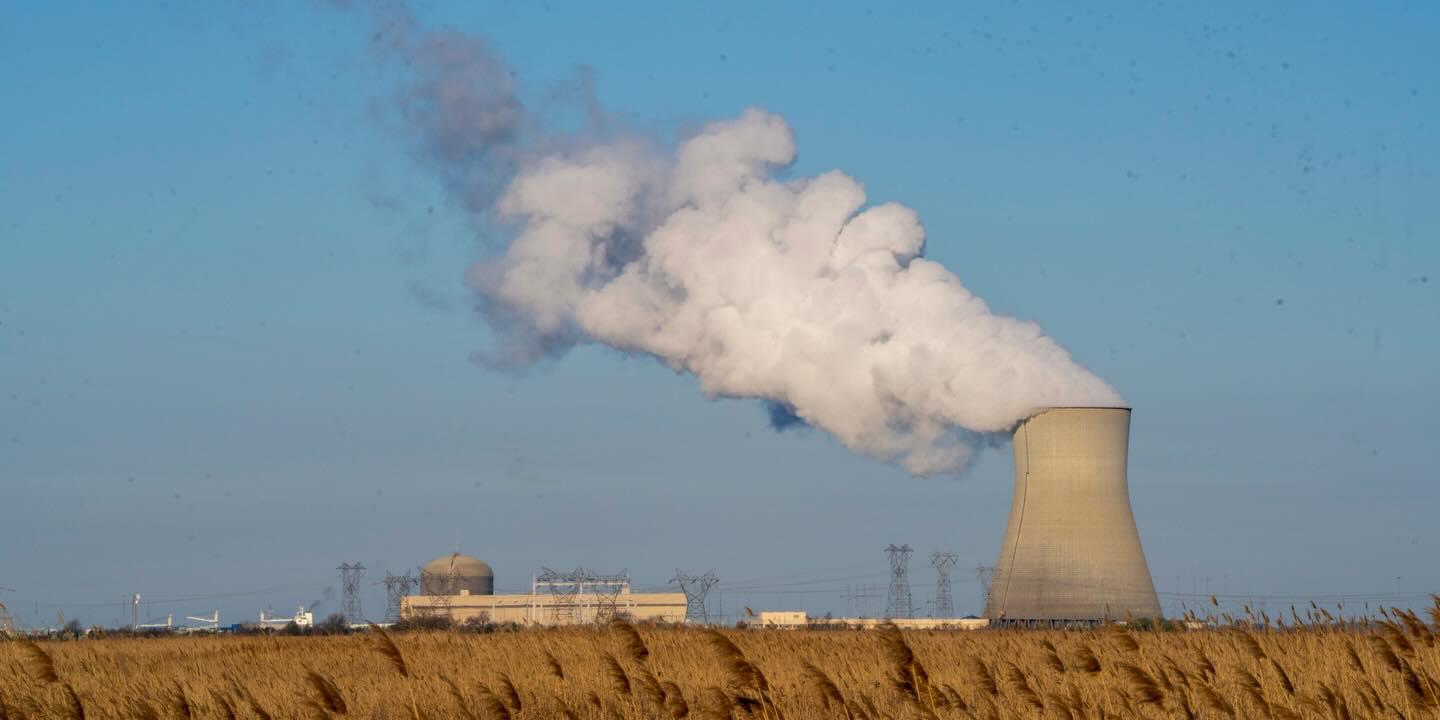
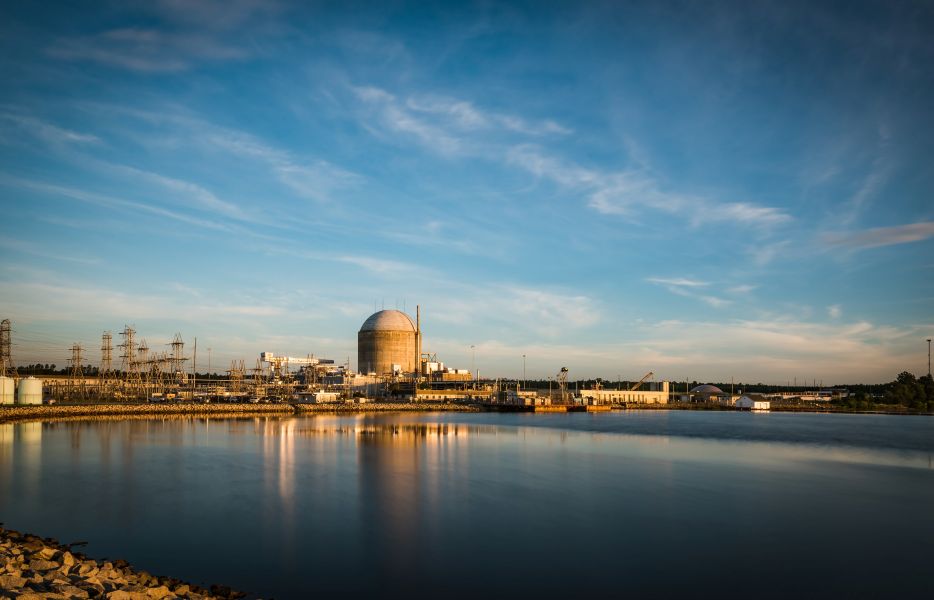
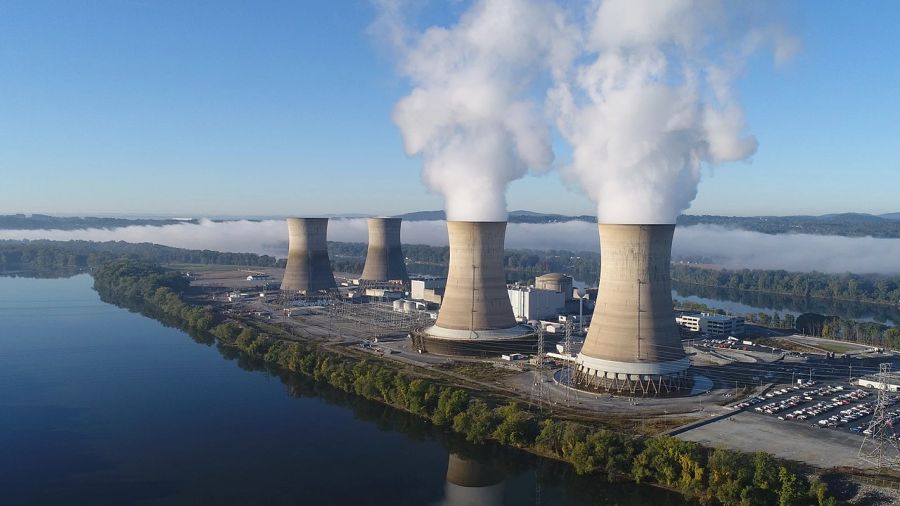
Cooling towers at the Hope Creek/Salem site. (Photo: Gov. Mikie Sherrill’s Office)
New Jersey’s two nuclear power plants, Hope Creek and Salem, may be joined by other nuclear facilities after lawmakers lifted the state’s de facto moratorium on new nuclear construction.
Gov. Mikie Sherrill said state officials are eyeing sites for potential nuclear facilities. Executives at PSEG Nuclear—the operators of Hope Creek and Salem—welcome the news of the growing momentum for nuclear power in the state but cautioned it will take more than lifting a moratorium to make this feasible.
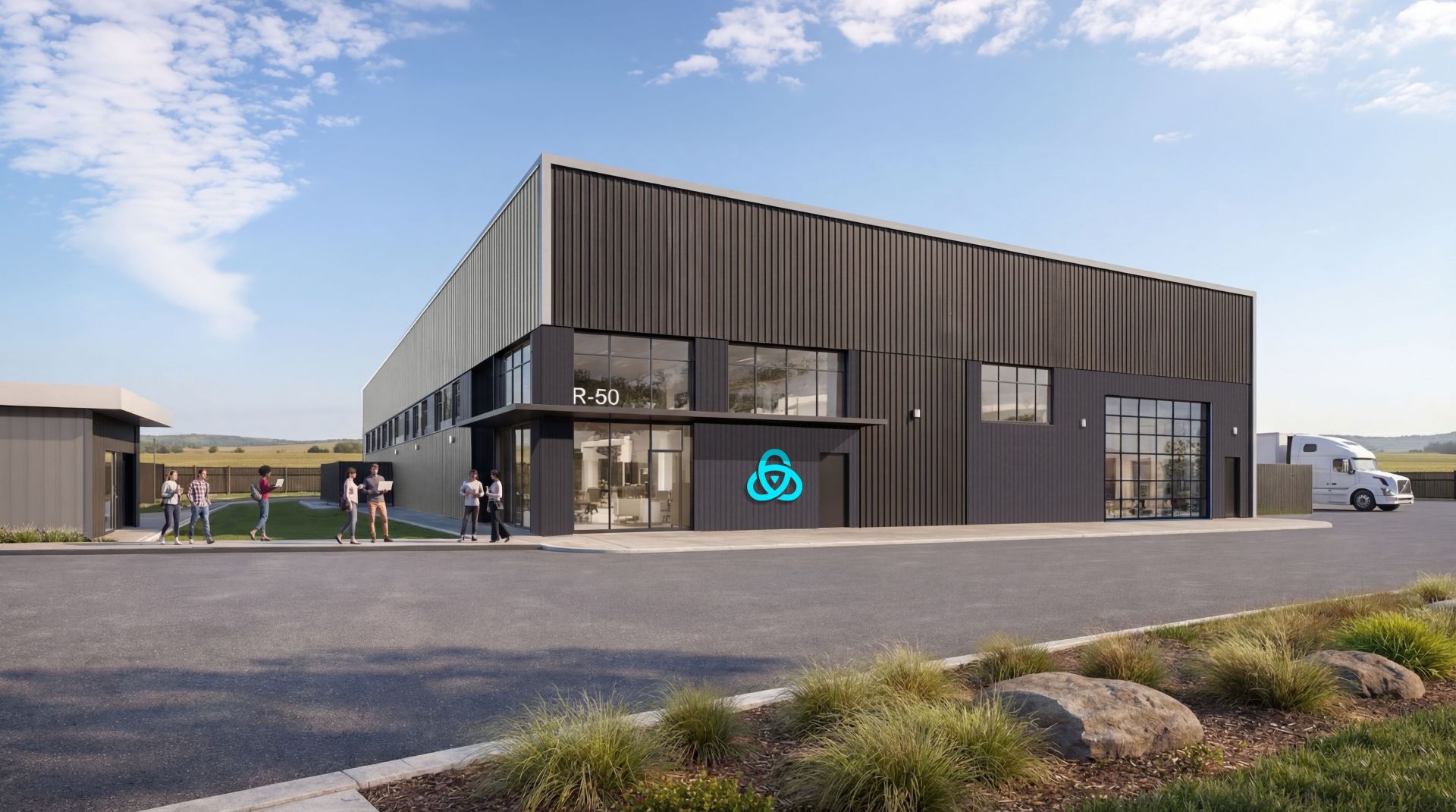
Artist’s concept of Radiant’s R-50 facility in Oak Ridge, Tenn. (Image: Radiant)
The Nuclear Regulatory Commission has accepted Radiant Industries’ 10 CFR Part 70 license application for its R-50 microreactor production facility in Oak Ridge, Tenn., and will launch an expedited review that it is aiming to complete within eight months.
According to NRC documents, the agency expects to complete its review of the license application by December 18, 2026. The timeline is described as “accelerated” in the NRC announcement—about 55 percent faster than the typical 18 months for Part 70 application reviews.
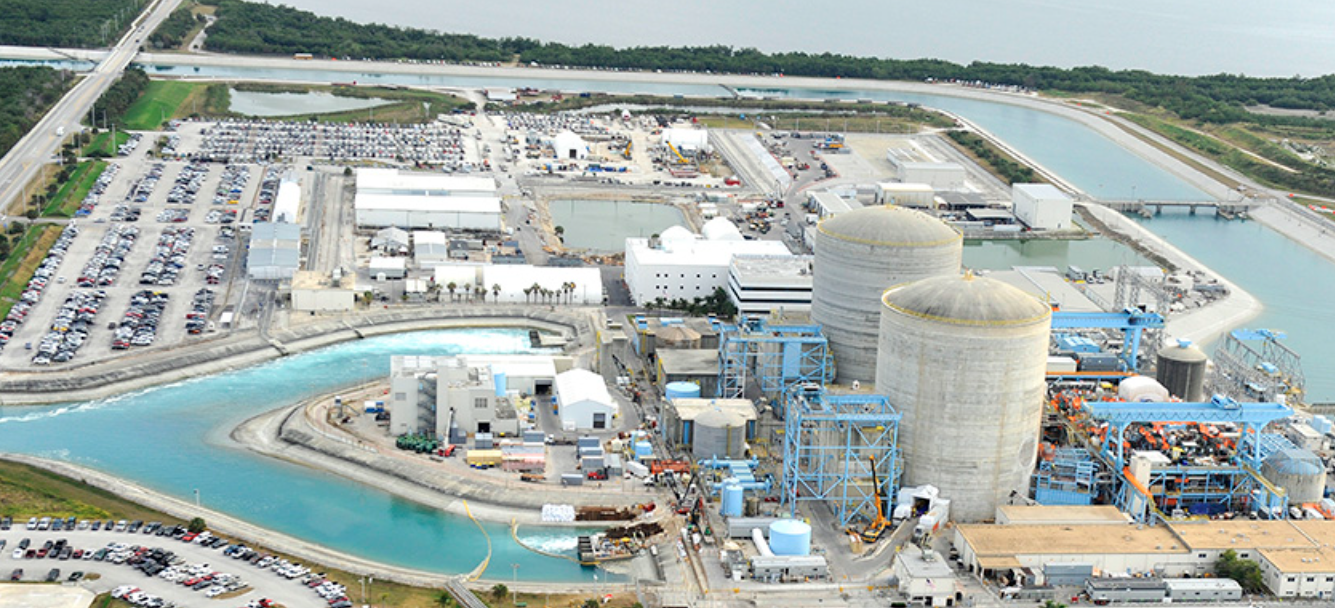
St. Lucie nuclear power plant. (Photo: FPL)
The Nuclear Regulatory Commission has approved subsequent license renewals for St. Lucie Units 1 and 2, extending the operating licenses for the pressurized water reactors by another 20 years.
Tuesday’s approval means that the 1,062-MWe Unit 1 and 1,074-MWe Unit 2 can now operate until March 1, 2056, and April 6, 2063, respectively. Unit 1 commenced operations in 1976 and Unit 2 in 1983. With the original 40-year operating licenses and first 20-year renewals, these second 20-year renewals bring the reactors’ lifespan to 80 years.
Robinson nuclear power plant in Hartsville, S.C. (Photo: Duke Energy)
The Nuclear Regulatory Commission has renewed the Robinson nuclear power plant’s operating license in record time, the agency announced last week.
The subsequent license renewal process for the Hartsville, S.C., facility was completed within 12 months, according to the NRC. The process has typically taken 18 months. This was the first license renewal review conducted under the directive of Executive Order 14300 to streamline processes like renewing operating licenses.
Duane Arnold nuclear power plant. (Photo: NextEra Energy)
The communities in and around Duane Arnold had a chance on Tuesday evening to hear from Nuclear Regulatory Commission officials on the progress to restart Iowa’s only nuclear power plant in early 2029.
Licensing, inspections and assessments, the noticing process, and the role of the restart panel were among the topics discussed at the public meeting, which was held in Cedar Rapids, Ia., with an option for virtual attendance.
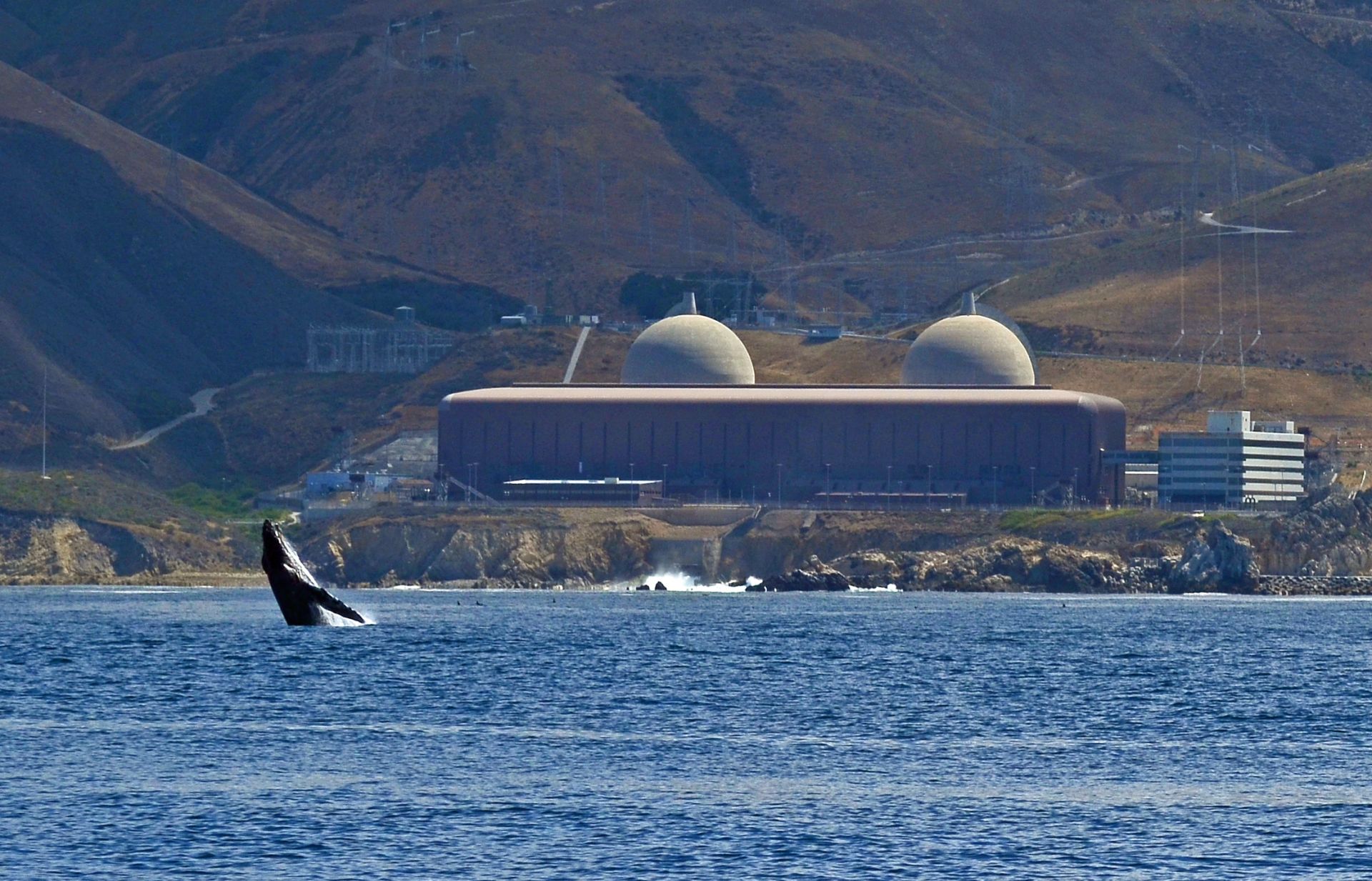
Diablo Canyon nuclear power plant in California. (Photo: PG&E)
The Nuclear Regulatory Commission has approved Pacific Gas & Electric’s application to extend the operating licenses for Diablo Canyon nuclear power plant’s two pressurized water reactors by another 20 years.
Thursday’s approval means Diablo Canyon-1 and -2 can now operate until November 2, 2044, and August 26, 2045, respectively, if California lawmakers agree. A 2022 state law requires the California Legislature to approve any extension of operations at Diablo Canyon that goes beyond 2030.
Three Mile Island nuclear power plant before its shutdown in 2019. (Photo: Constellation Energy)
When the former Three Mile Island-1 restarts in 2027 as the Crane Clean Energy Center, it will not face a delay of several years before it can be reconnected to the grid, Constellation CEO Joseph Dominguez said this week.
Among the items that emerged on Constellation and the Crane restart in Middletown, Pa., during last week’s CERAWeek energy conference was a Reuters report on an analysis from electric grid provider PJM suggesting the plant may not be connected to the grid until 2031.
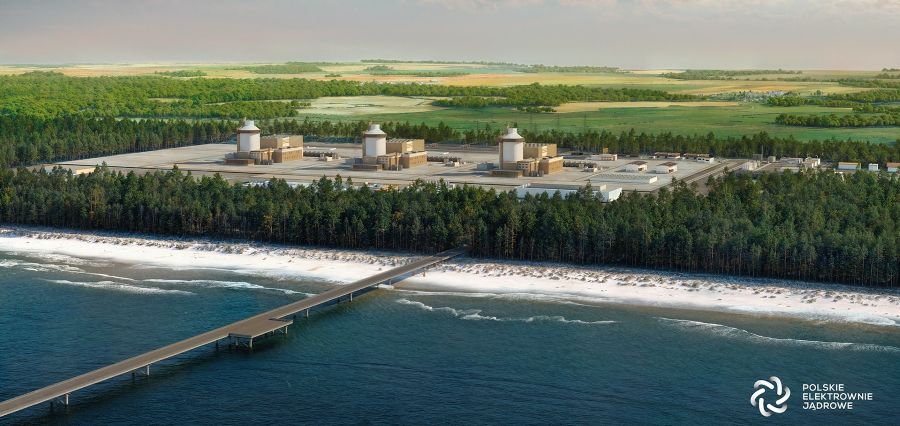
Concept art showing the planned nuclear power plant at Lubiatowo-Kopalino. (Image: PEJ)
Polskie Elektrownie Jądrowe, Poland’s state-owned utility, has formally submitted an application for a construction license to build a nuclear power plant at the Lubiatowo-Kopalino site in Pomerania. The country’s first nuclear power plant will consist of three Westinghouse AP1000 units with a total installed capacity of 3,750 MWe. The construction and engineering contractor for the project is a U.S.-based consortium of Westinghouse and Bechtel.
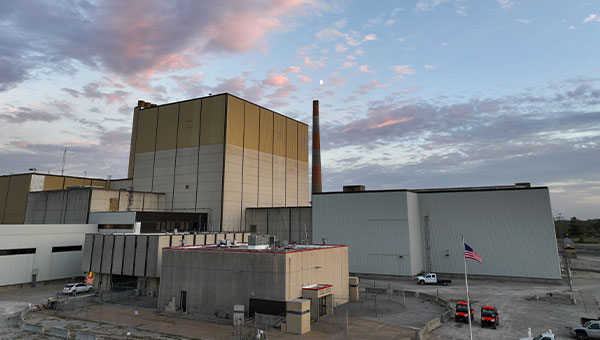
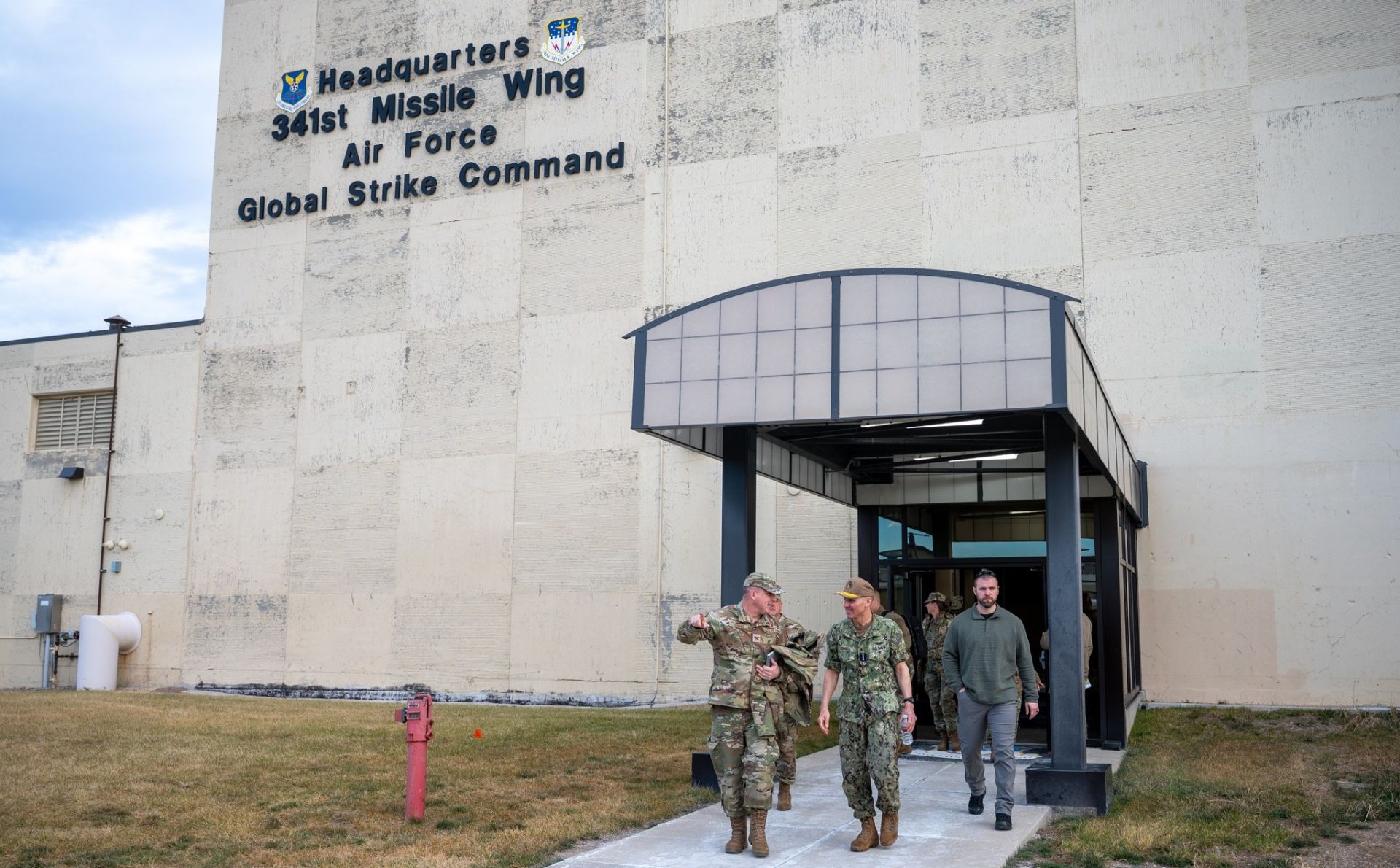
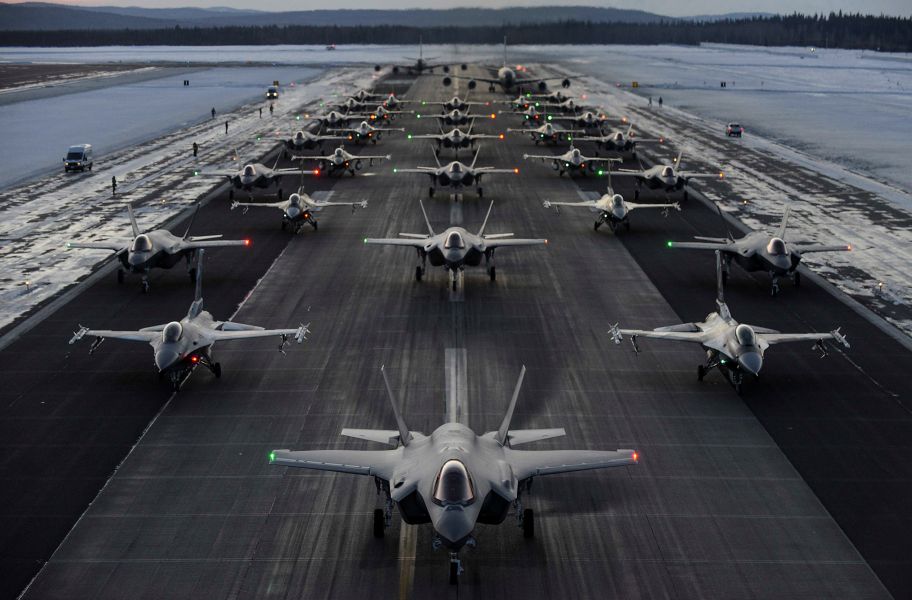
More than 30 aircraft perform an “elephant walk” at Eielson Air Force Base in Alaska. (Photo: Eielson Air Force Base)
The U.S. Air Force wants to hear from companies that could be interested in deploying small nuclear reactors at its bases.
The request for information posted Wednesday intends to assist the federal government in identifying potential developers and “understanding the company’s capability to design, license, fuel, construct, and deploy Small, Micro, or Modular Reactor (SMR) technologies in compliance with applicable regulatory, safety, environmental, and security requirements.”
An image from a Microsoft video on the company’s “AI for nuclear” collaboration with Nvidia. (Image: Microsoft)
Microsoft and Nvidia have formed an “AI for nuclear” partnership intended to streamline the permitting, design, and operations of nuclear power plant facilities, and highlighted the collaboration at CERAWeek 2026 in Houston earlier this week.
Microsoft said in an announcement that the collaboration will build a “connected, AI-powered foundation” of AI tools that energy developers will be able to use to make work “repeatable, traceable, secure, and predictable,” all the while reducing work timelines and maintaining safety.
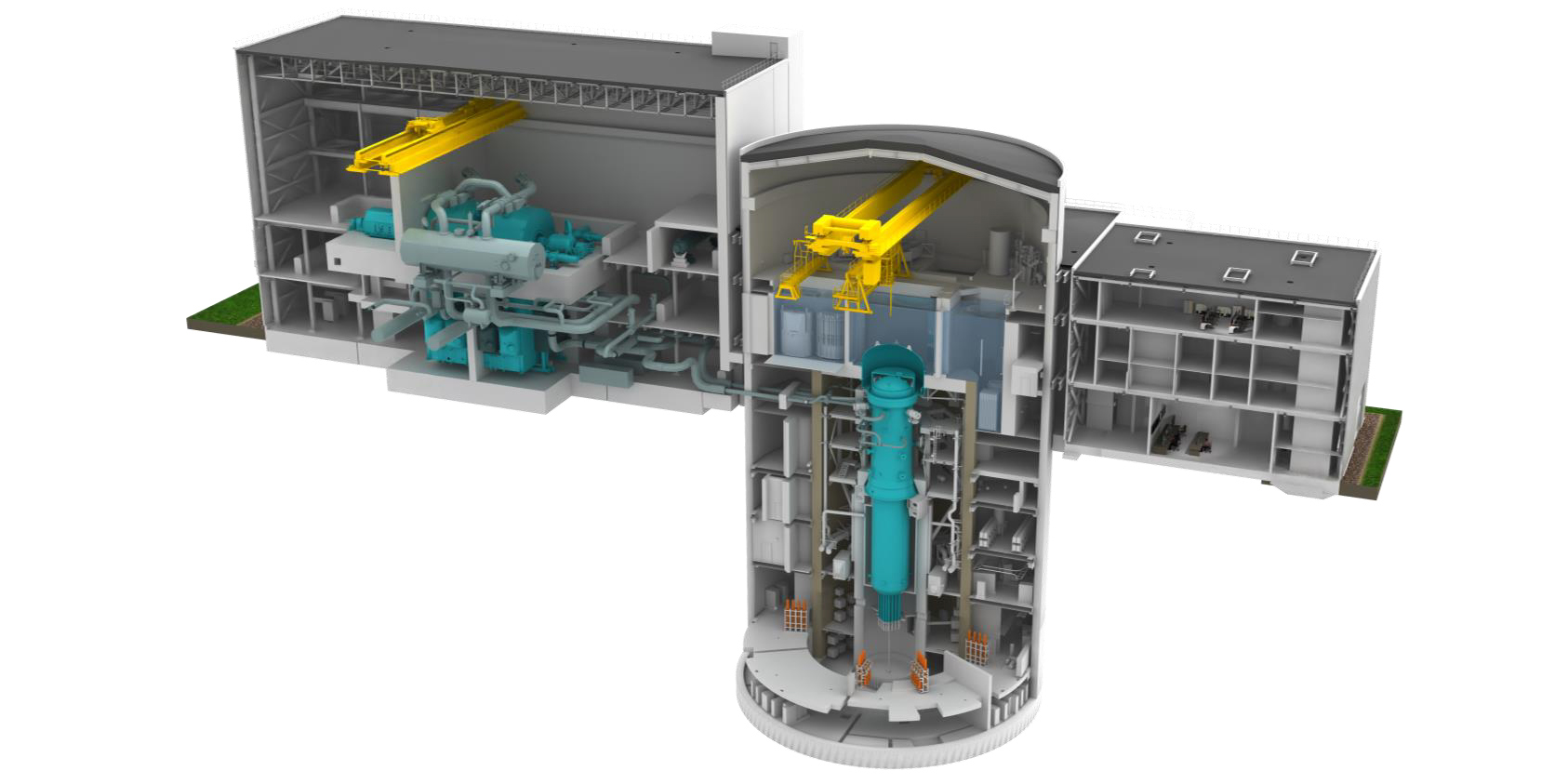
A cutaway of the BWRX-300 SMR design. (Image: GVH)
Coinciding with the March 19 White House meeting between President Trump and Japanese Prime Minister Takaichi Sanae, the Department of Commerce announced three new energy deals as part of a Japan-U.S. Strategic Investment initiative. Two of the deals involve the construction of natural gas generation facilities. The third, with an estimated value of as much as $40 billion, involves the construction of GE Vernova Hitachi (GVH) BWRX-300 small modular reactors in Tennessee and Alabama.