
Nuclear power: Are we too anxious about the risks of radiation?
September 30, 2020, 11:59AMANS Nuclear Cafe
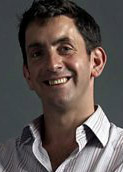
Rowlatt
Following U.K. Prime Minister Boris Johnson’s recent restatement of the United Kingdom’s commitment to nuclear power, BBC News chief environment correspondent, Justin Rowlatt, wrote an article aimed at separating fact from fiction regarding the safety and benefits of nuclear energy.
Among his points, Rowlatt defended the use of nuclear power to combat climate change, examined the data behind deaths from radiation exposure directly caused by the Chernobyl and Fukushima accidents, and explained that exposure to low levels of radiation is not a major health risk.
Tags:
Share:
 Radiation has benefited mankind in many ways, including its use as an energy source and an indispensable tool in medicine. Since the turn of the 20th century, society has sought ways to harness its potential, while at the same time recognizing that radiological exposures need to be carefully controlled. Out of these efforts, and the work of many dedicated professionals, the principles of justification, optimization, and limitation have emerged as guiding concepts.
 ANS Executive Director/CEO Craig Piercy was a recent guest on the
  The latest season of
  ANS member Dr. Christopher Morrison was a recent guest on
 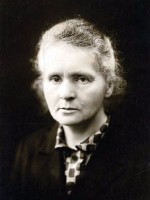 The start of Marie Curie's story isn't like most of the other scientists that had made a name for themselves throughout history, mostly because she was a grown woman by the start of the 20th century. But she was the first woman to do a lot of things, including getting a Ph.D. from a university in France, and winning a Nobel Prize. She was also the first person ever to win a Nobel Prize in two different fields of science. To say she pushed the societal and scientific boundaries of her era is an understatement.
 In January, the U.S. Environmental Protection Agency