A fitting situation for first ITER subassembly
September 1, 2021, 7:00AMNuclear News
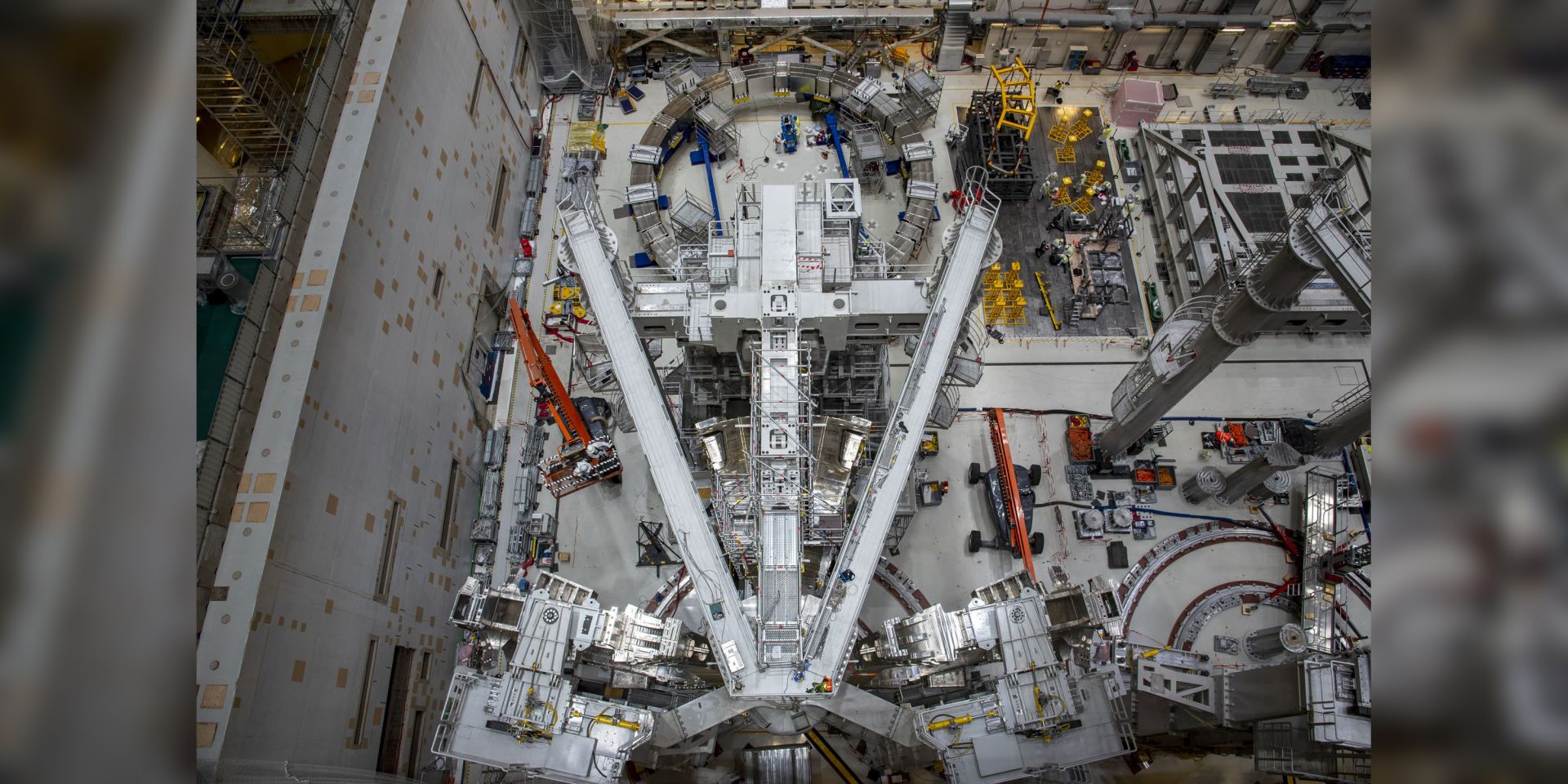
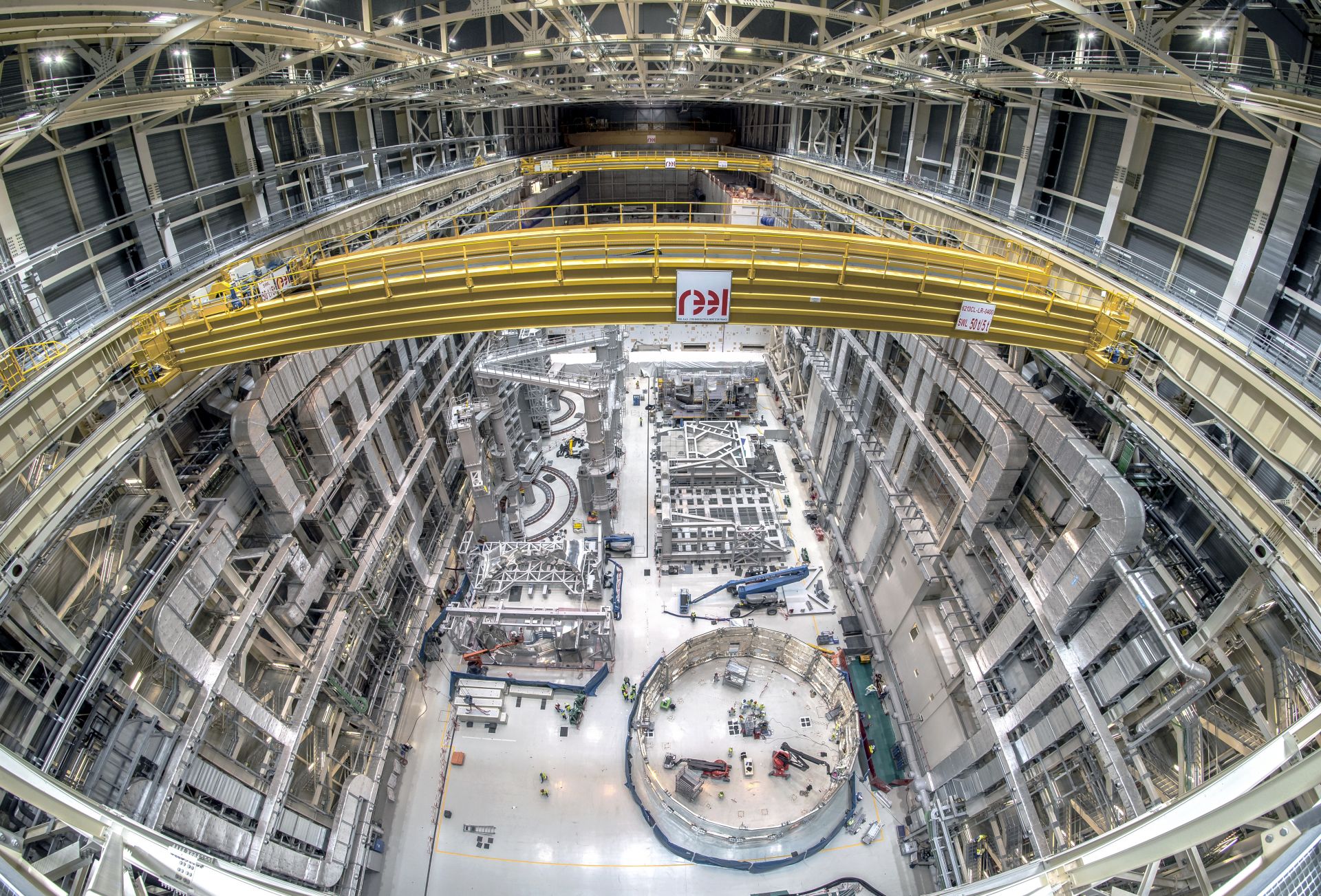
Taken from above, this photo of the subassembly tool shows the complex system of alignment units used to slowly swing two toroidal field coils (bottom left and right) into position around the vacuum vessel sector. In the background, poloidal field coil #5 sits on the floor of the Assembly Hall, awaiting installation in the assembly pit in mid-September. (Photo: ITER)
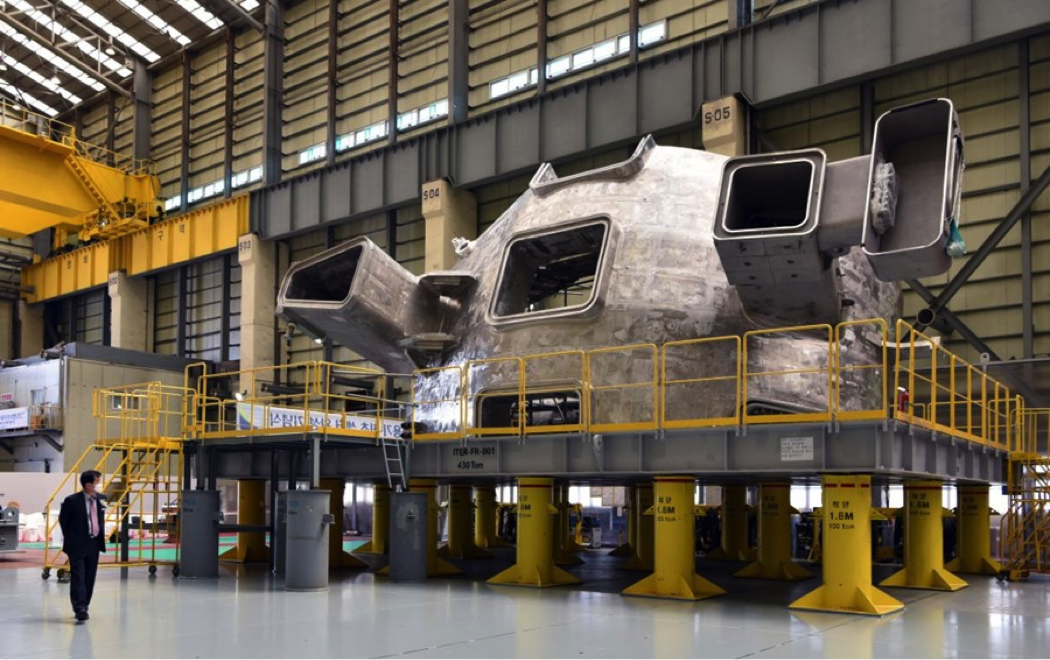
Inside the ITER Assembly Hall, aided by a 20-meter-tall sector subassembly tool known as SSAT-2, the first of nine 40-degree wedge-shaped subassemblies that will make up the device’s tokamak is taking shape. On August 30, the ITER Organization announced that all the components of the first subassembly were in place on the SSAT-2. After the wings of the subassembly tool slowly close, locking two vertical coils in place around the outside of a vacuum vessel section that is already wrapped in thermal shielding, the completed subassembly will be ready for positioning in the ITER assembly pit in late October.
To continue reading, log in or create a free account!
Tags:
Share:

 Coordinated federal and private industry investments made now could yield an operational fusion pilot plant in the 2035–2040 time frame, according to