The 12-page report, titled “Nuclear Waste: DOE’s Plans to Complete Cleanup and Transfer of Moab Mill Site,” features details of the progress that has been made since the beginning of cleanup operations in 2002. It also discusses DOE plans to transfer ownership of much the site to the local community following the expected completion of the project by 2029.
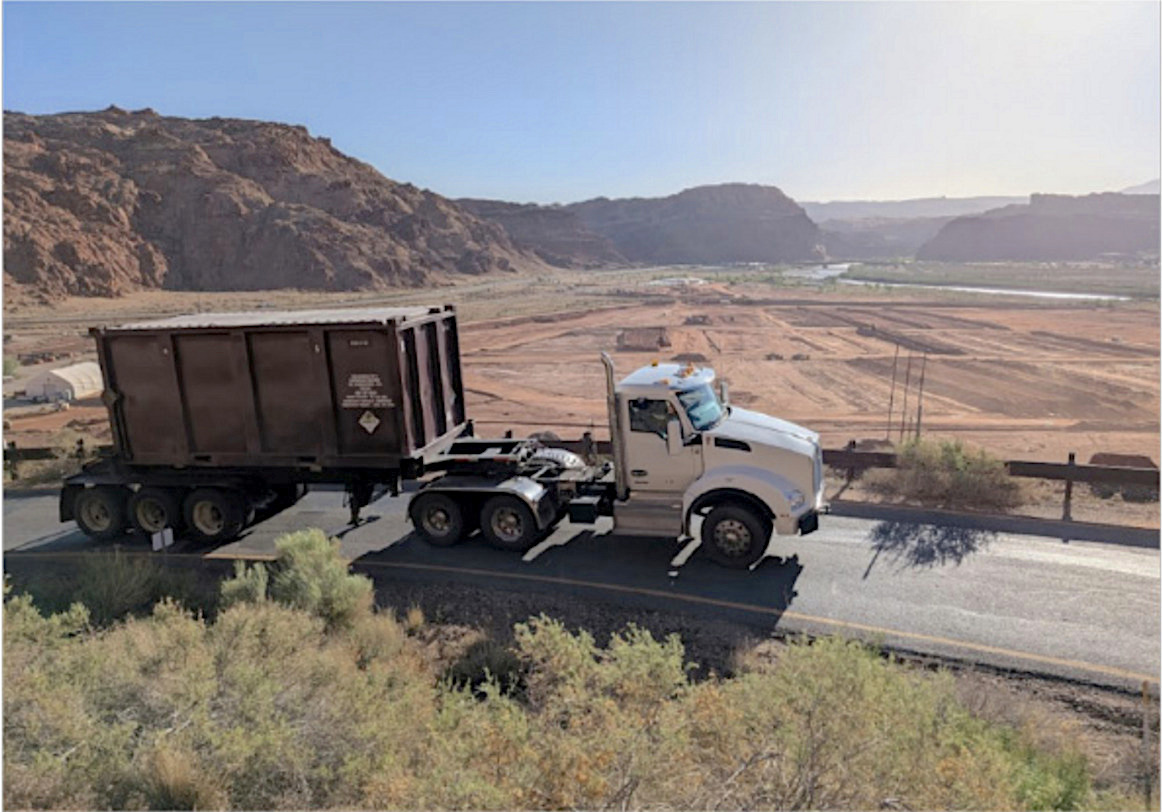
Disposal details: The GAO states that the remediation project has cost approximately $970 million so far and is expected to top $1.16 billion by the time it is completed. The waste that has been removed as part of the project consists of uranium mill tailings and other contaminated materials, such as former mill buildings and equipment that had been dismantled and buried in the pile of tailings.
EM has moved these materials via railway to a nearby engineered disposal site, near Crescent Junction, Utah. According to the report, this disposal site, on which excavation and construction began in 2008, is “designed to control residual radioactive material for 1,000 years, to the extent reasonably achievable, and, in any case, for at least 200 years.”
Groundwater remediation: In addition to the tailings disposal, EM is taking efforts to remediate contaminated groundwater, which threatens the nearby Colorado River. The report states that since 2003, EM has removed about 1 million pounds of ammonia and over 5,000 pounds of uranium from the groundwater through an interim extraction system.
The cleanup work that remains to be done at the Moab Mill Site includes removing the remaining tailings and developing and implementing a final groundwater remedy. EM “expects to complete the final groundwater remedy design and submit it to [the Nuclear Regulatory Commission] for their concurrence in 2027,” according to the GAO report, which adds that groundwater remediation and monitoring at the site may continue for decades.
As well, a surface water diversion system has been installed at the Moab Mill Site to help protect endangered fish species in the Colorado River.
Restoration and transfer: Besides the previously mentioned work, the DOE will complete certain site restoration activities, including realignment of the Moab Wash—a stream that runs through the site and joins the Colorado River—and regrading and revegetation. EM expects to complete this site restoration work by 2029.
After cleanup is finished, ownership of most of the Moab Mill Site may be transferred to the community of Grand County, Utah, though the report notes that the DOE has not yet made a final decision on this transfer. Nevertheless, the agency’s Office of Legacy Management (LM) plans to retain ownership and management responsibility of “a limited portion of the mill site and all of the disposal site.” The GAO emphasizes that if most of the mill site is transferred to the county, “DOE prefers that the community decide the site’s future use,” pointing out that “community stakeholders have proposed a plan that would include various recreational uses.”
EM and LM are coordinating on the future transfer of the sites for long-term federal management through formal agreements and an integrated project team. However, according to the report, they have not yet developed a plan for the transition. The report notes that “final decisions on allowable future land use at the Moab Mill Site can be made only after the success of surface and groundwater remediation is determined.”