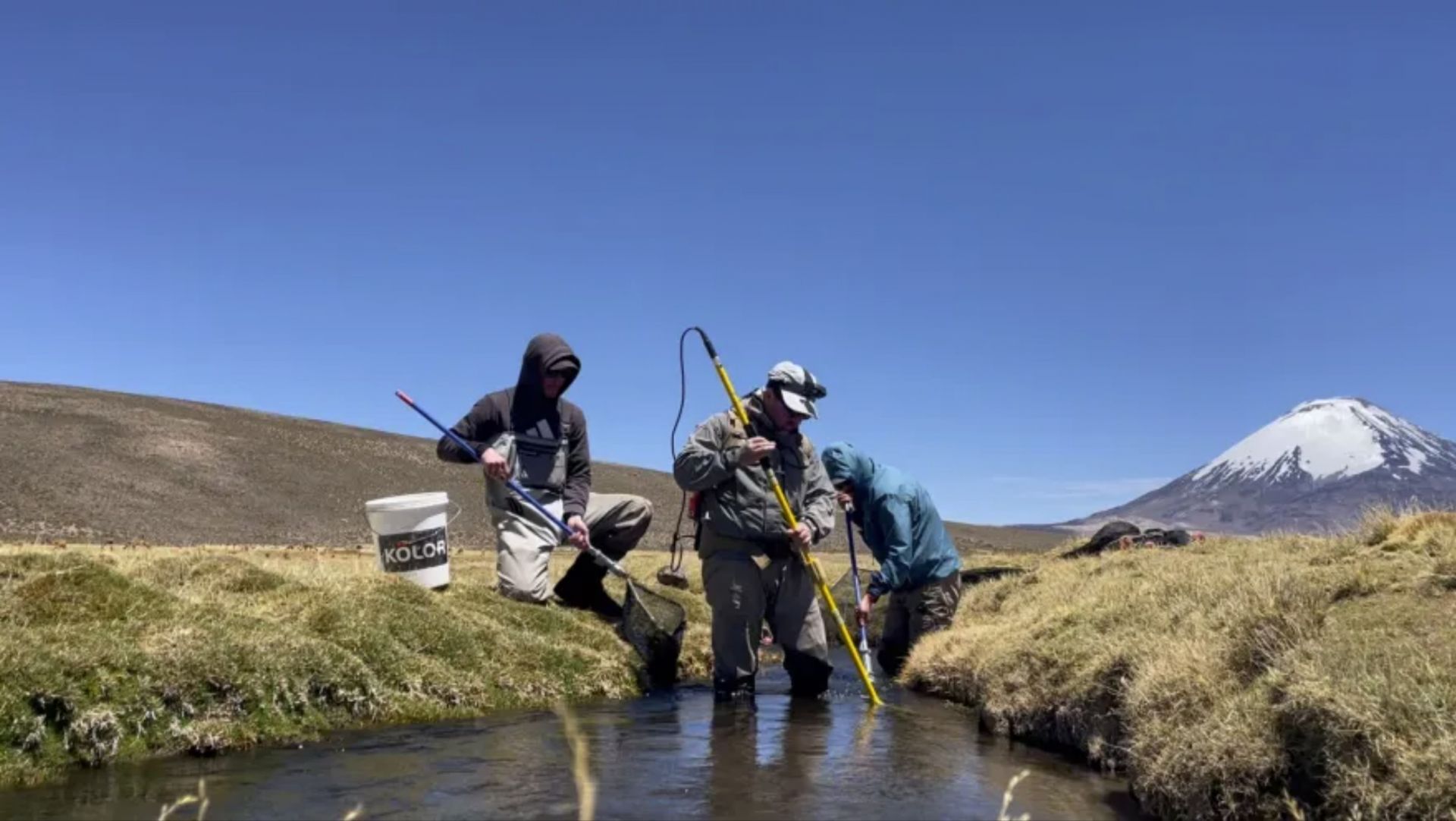
Details: Farmers who breed rainbow trout in Argentina, Brazil, Chile, Ecuador, Mexico, Panama, Peru, Uruguay, and Venezuela face a serious threat in IPNV, which can cause mortality rates in the highly valued fish of between 50 and 90 percent. Early detection and prevention of this infectious disease has previously been challenging. However, nuclear-based techniques including advanced DNA analysis, genetic sequencing, and molecular diagnostics are leading to a better understanding of exactly how the virus affects the fish.
The project stems from the Agreement on Cooperation for the Promotion of Nuclear Science and Technology in Latin America and the Caribbean (ARCAL), with support from the Joint Food and Agriculture Organization (FAO)/IAEA Centre of Nuclear Techniques in Food and Agriculture.
Genetic resistance: One of the key pieces of knowledge that has been gained involves the identification of molecular markers that are associated with genetic resistance to IPNV in rainbow trout populations. Using this technique, farmers can selectively breed fish that are resistant to the disease. The result, over time, should be hardier, more resilient trout populations.
According to Carla Bravo de Rueda, an FAO/IAEA scientist involved with the project, “Evidence shows that selection based on this marker can improve survival by approximately 1.2 percent under a conservative scenario. Because trout reach market size after just a few years, these 1.2-percent gains from each generation accumulate quickly—adding many tonnes of extra fish that farmers can sell.”
As Jose Manuel Yanez Lopez, dean of veterinary and animal sciences at the University of Chile, explains, “This project has improved rainbow trout breeding by using advanced genetic analysis to identify and confirm traits linked to resistance to IPNV. These advances pave the way for more precise marker-assisted selection strategies, helping to improve survival rates, enhance breeding efficiency, and strengthen the genetic resilience of aquaculture stocks.”
Regional network: The IAEA sums up the benefits of this technical cooperation project by noting that rainbow trout farmers in the region “are now better equipped to detect and respond to this disease, while stronger collaboration between laboratories, authorities, and producers has created a regional network that supports continuous innovation knowledge exchange and resilience in the aquaculture sector.”