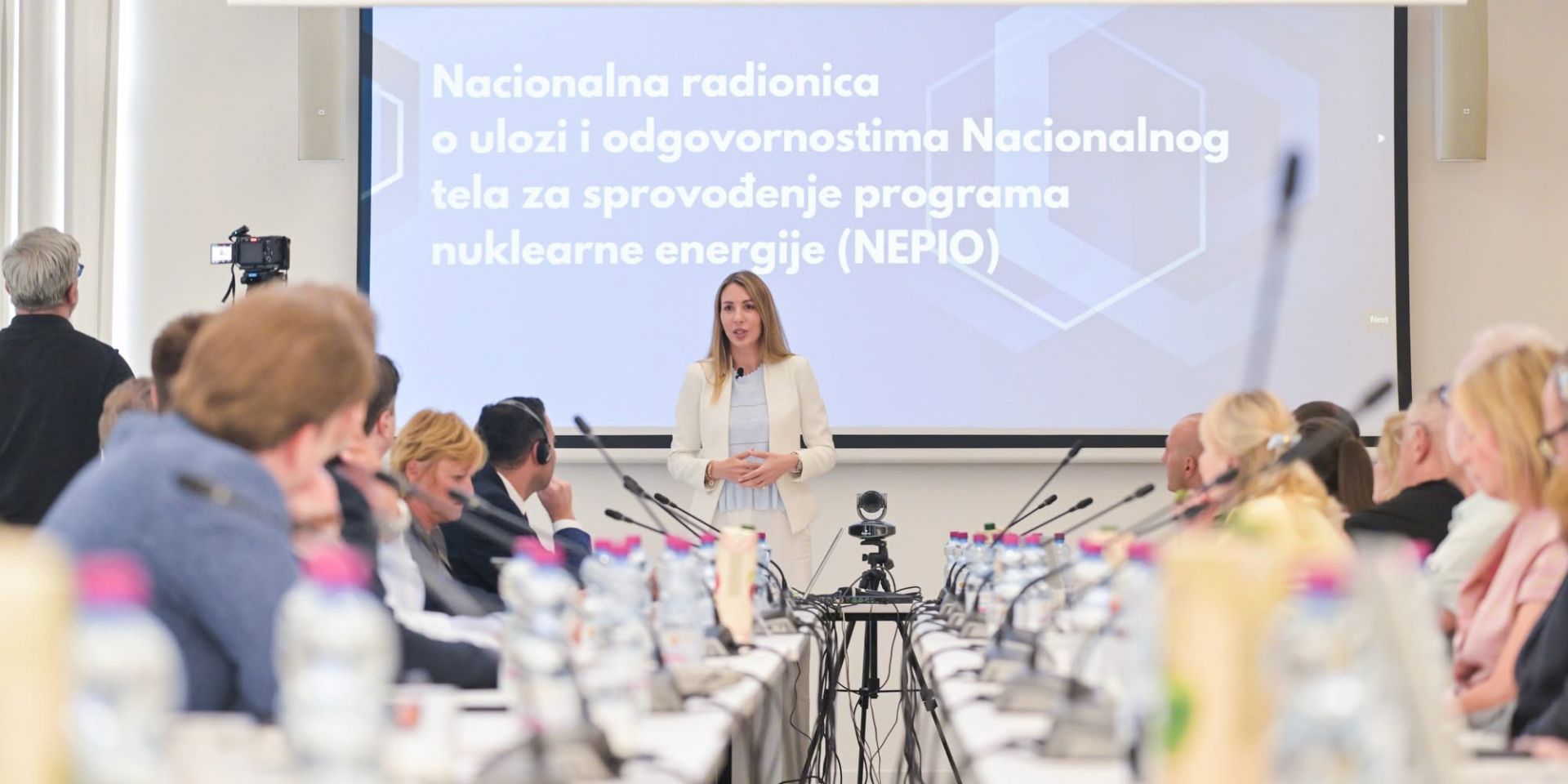
Minister of Mining and Energy Dubravka Đedović Handanović. (Image: Ministry of Mining and Energy)
Serbia reached a significant milestone in 2024 when its National Assembly overturned a moratorium on nuclear power plants that had been in place for 35 years, a ban imposed when the country was part of the former Yugoslavia.
Fast forward to 2026 and the European country’s nuclear energy ambitions have become clearer. On July 13, Serbia’s Ministry of Mining and Energy held a four-day workshop outlining the country’s plans to kickstart a nuclear program.
Serbia’s path to nuclear: The first phase of the nuclear program should be ready by the middle of next year, Minister of Mining and Energy Dubravka Đedović Handanović said during the opening of the workshop, which was supported by the International Atomic Energy Agency and the Directorate for Radiation and Nuclear Safety and Security of Serbia (SRBATOM). This initial phase will involve the gathering of information needed to determine the development of the program, she said.
By 2032, Serbia’s nuclear program should be ready to select nuclear technology and designs, pending institutional, regulatory, and professional checkpoints. The goal is to start construction by 2035, Đedović said.
“It seems that we are far from that date, but there is a lot of work ahead of us, which is why we must not waste time,” she said in a press release regarding the workshop. “We have great ambitions, and without them there are no results. I am convinced that we have a generational opportunity that we must not miss in order to leave behind something that is of capital value and that gives Serbia the opportunity to develop and be more energy secure.”
Serbia will develop its nuclear program gradually and responsibly, following the standards set forth by the IAEA, Đedović added. This includes addressing topics like regulatory and legislative frameworks, environmental protection, human resources, capacity building, and supply chains. A preliminary study conducted by the ministry and the French utility Électricité de France (EDF) on the viability of nuclear energy in Serbia has already been conducted to answer questions on those topics. During the workshop, Đedović announced that EDF will prepare four more studies as part of the first phase and follow those up with 14 more.
The minister said the workshop marks the beginning of ongoing cooperation between Serbia and the IAEA as the country develops a national nuclear energy program.
Yugoslavia’s nuclear footprint: The Krško nuclear power plant in eastern Slovenia, near the border with Croatia and around 200 miles west of Serbia, is the only nuclear power plant in what was formerly Yugoslavia. The plant houses one 696-MWe two-loop pressurized water reactor, supplied by Westinghouse. Commercial operation began in January 1983. There have been discussions of adding a second PWR at the site, with a public referendum and an investment decision expected to be reached by the end of 2029.