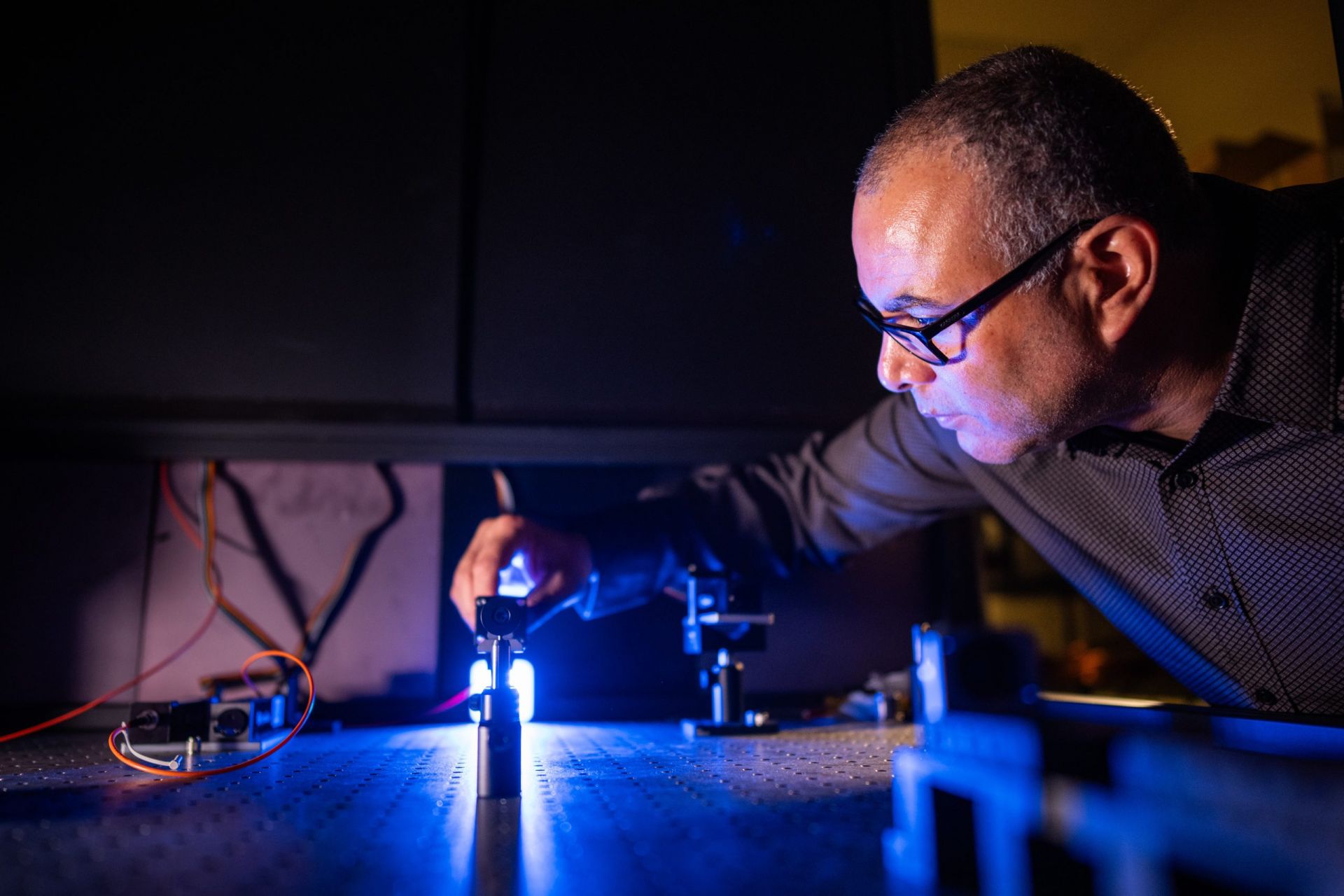
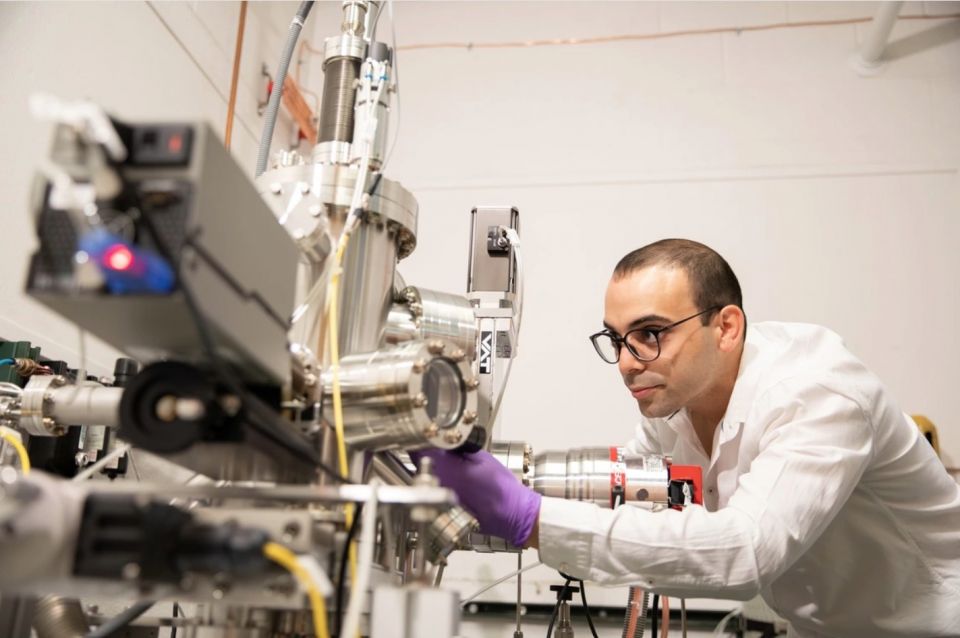
Sandia National Laboratories physicist Israel Owens adjusts the optics of his laboratory system. (Photo: Craig Fritz/Sandia)
Researchers at Sandia National Laboratories have patented a magneto-optical sensor, which uses a rare earth crystal and laser light to measure the strength of intense magnetic fields and electrical currents.
“We think this technology is a pretty major improvement in measuring magnetic fields,” said Israel Owens, a Sandia physicist and co-inventor of the sensor. “We think it’ll be essential especially for research in fusion, high-energy physics, and the power utilities industry. We’re really excited about where things are going.”
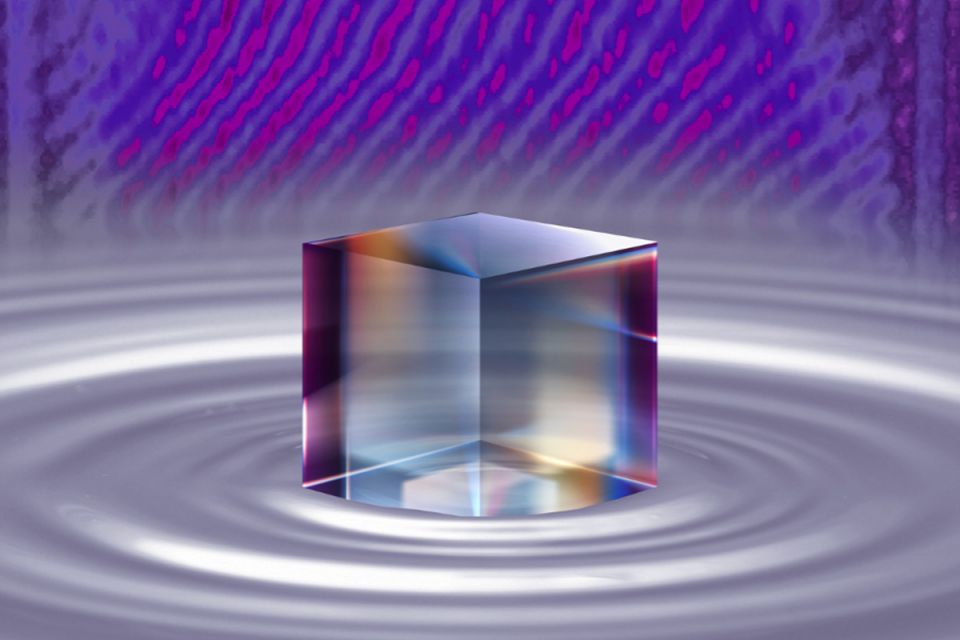
How it works: In the sensor, polarized laser light shines through a crystal around the size of a pencil eraser. When the crystal is exposed to a magnetic field, the polarization of the light rotates in a way that is linearly proportional to the strength of the part of the magnetic field that is parallel to the long side of the crystal. By precisely measuring that rotation, the system can determine the strength of the magnetic field, Owens said.
According to the patent, the wavelength of the laser and the length of the crystal are key parameters that define the system field sensitivity and dynamic range. The system does not require external calibration or mathematical integration of the signal.
A handful of candidate crystals could work in such a system, but the patent focuses on terbium gallium garnet, where the paramagnetic nature of the terbium ions facilitates a strong Faraday effect.
An eye for fusion: Plasma-facing components in fusion machines must hold up to an incredibly harsh environment, including exposure to high temperatures and radiation levels that interfere with measurements and degrade many materials typically used to design sensors.
“There’s a lot that goes into fusion,” Owens said. “They hold a plasma in place using strong magnetic fields. It’s important for them to be able to measure the magnetic confinement of their plasma. Our technology has the unique capability of working in areas where conventional sensors would short out.”
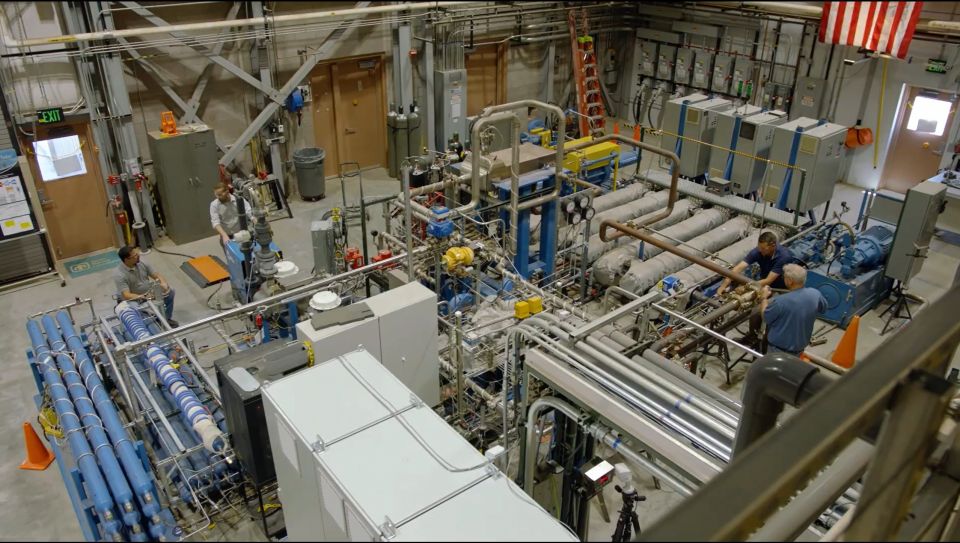
Through testing at Sandia’s High-Energy Radiation Megavolt Electron Source III and Short Pulse High Intensity Nanosecond X-Radiator (SPHINX), Owens and his team have found that their rare earth crystal sensors have the accuracy of conventional sensors while being more resilient to intense radiation and electromagnetic interference.
“We’ve done quite a bit of testing over at SPHINX and we saw less statistical spread compared to conventional sensors,” Owens said.
Owens’ team is only just starting to test the sensor in an actual plasma environment, but he believes that their technology will work in contexts where conventional metallic sensors would short out and conventional fiber optic sensors would darken.