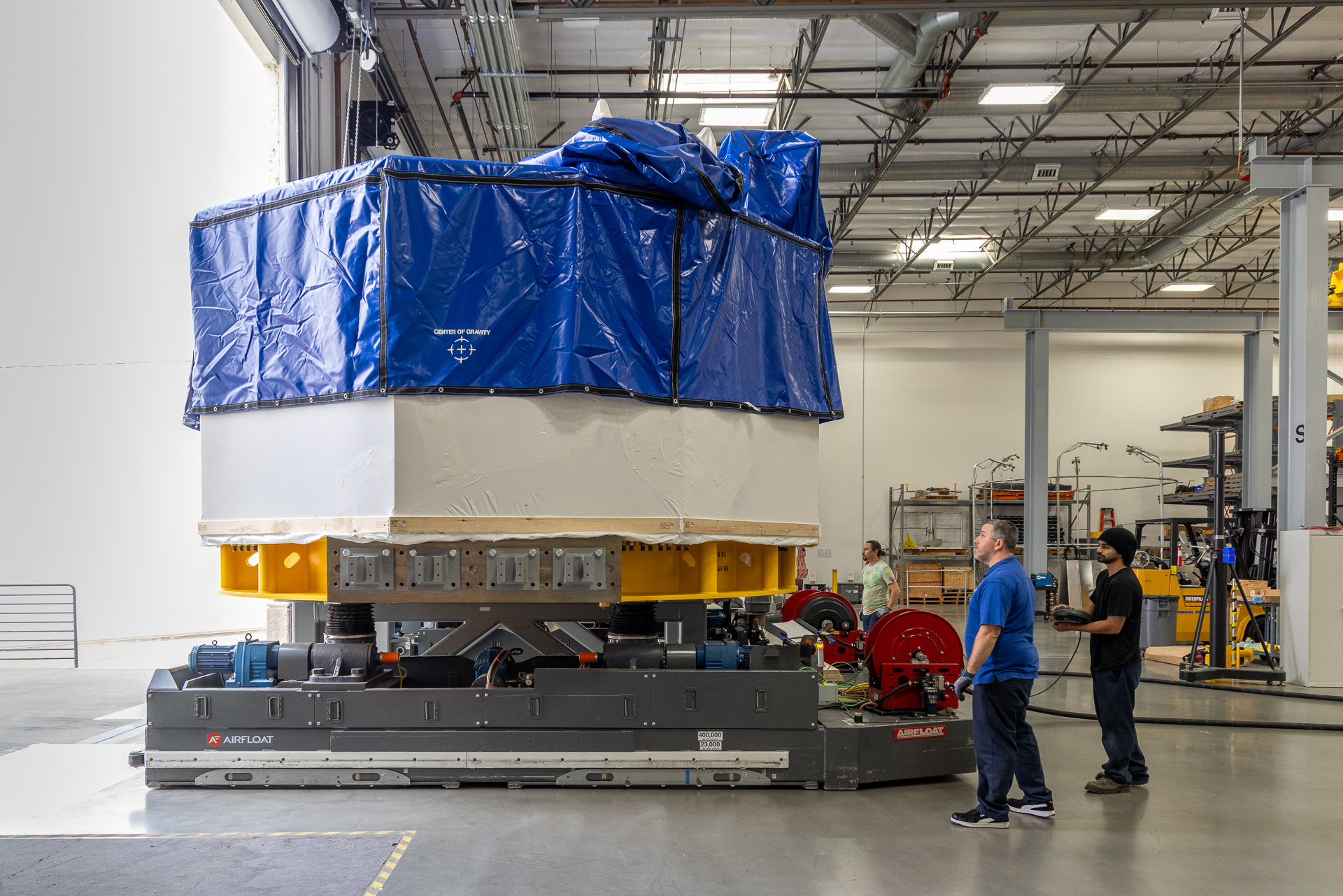
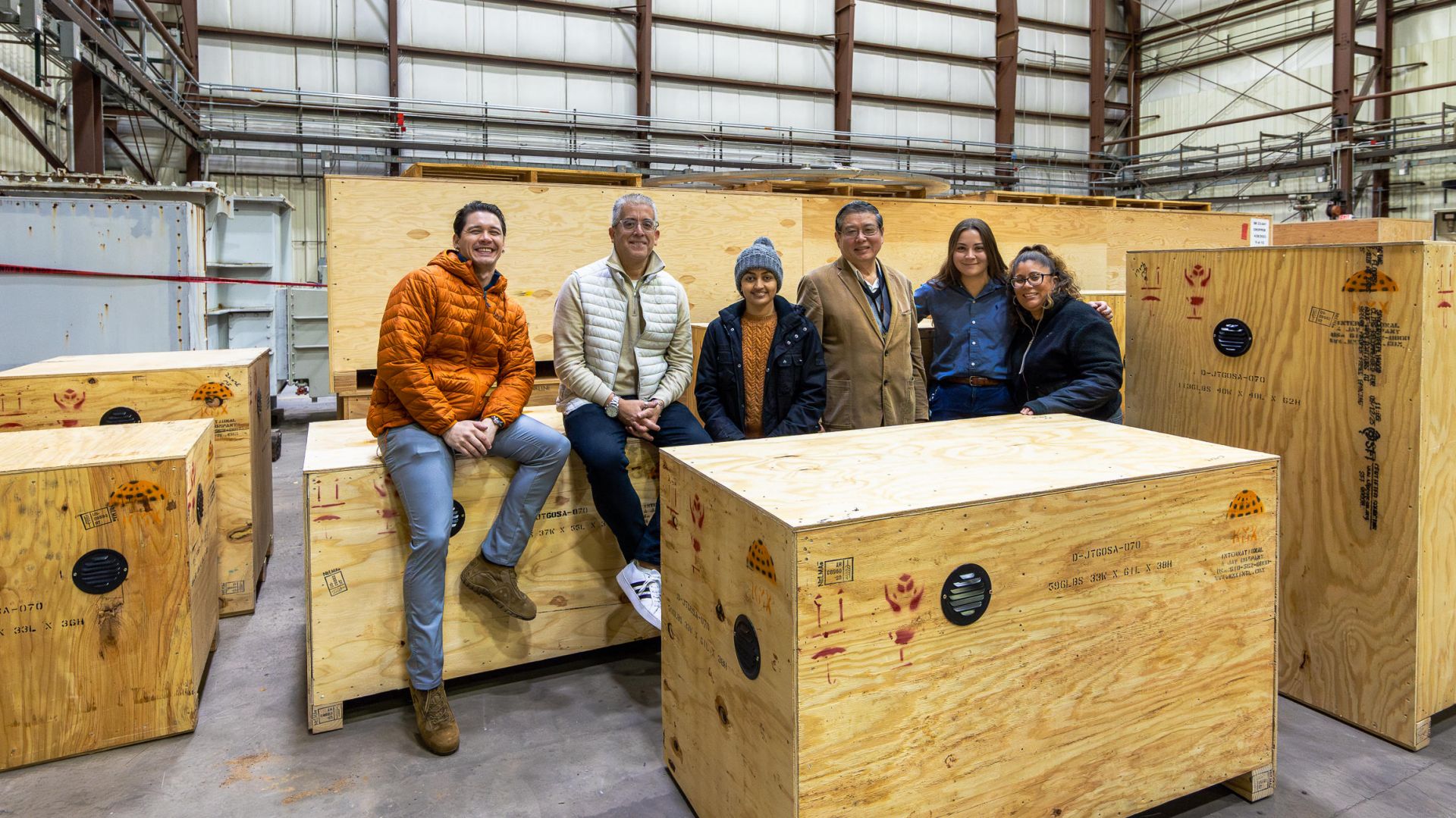
PPPL staff pose with the shipping crates containing an XCIS system ready to be shipped to Japan. (Photo: PPPL)
As researchers continue to seek ways to better understand the plasma inside fusion machines to fully harness fusion energy, Princeton Plasma Physics Laboratory is leading a project to provide new X-ray imaging systems to two international tokamak projects: WEST, in southern France, and JT-60SA, in Japan—both of which are designed to support the development of ITER.
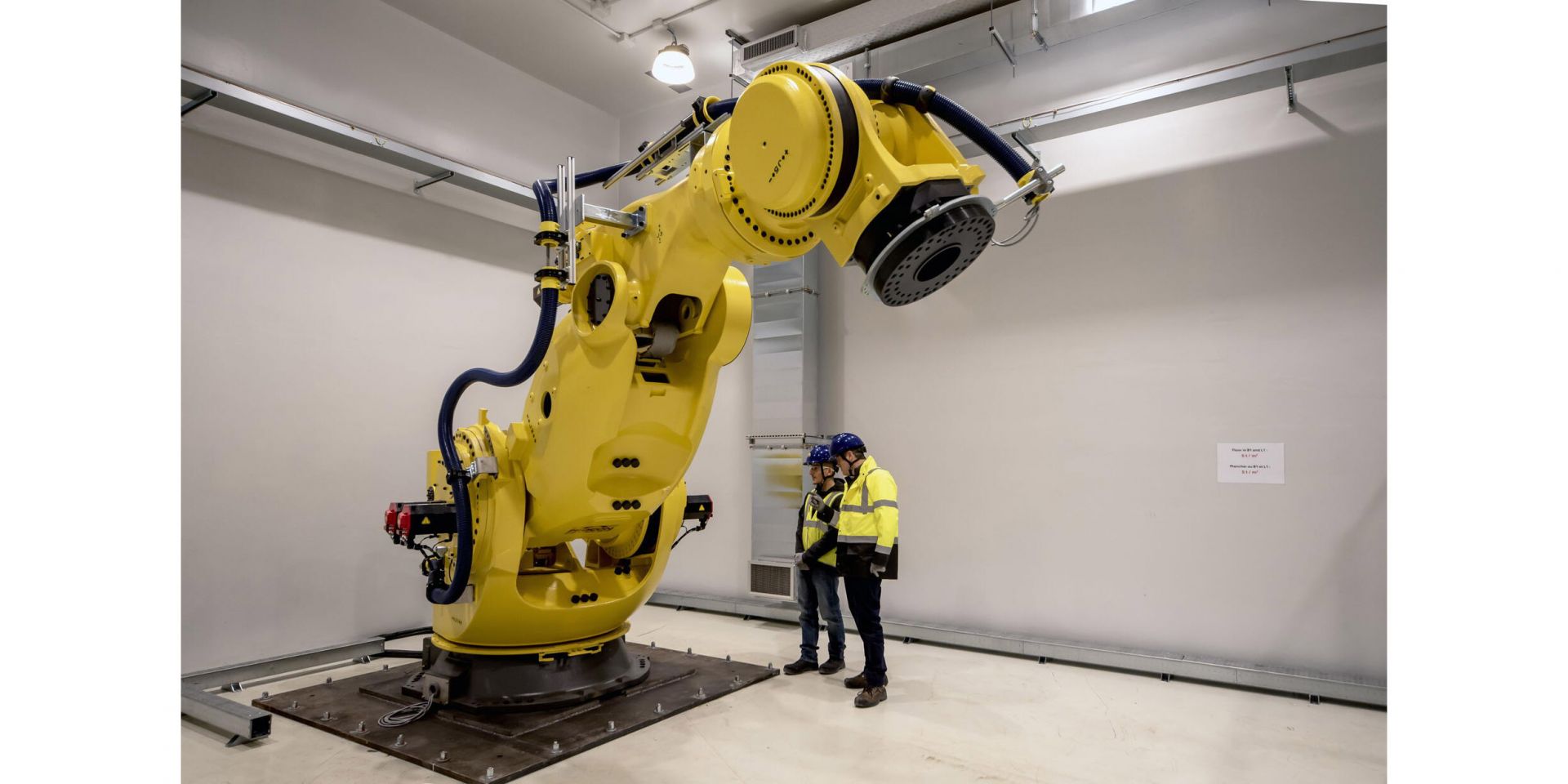
ITER employees stand by Godzilla, a powerful industrial robot. (Photo: ITER)
Many people are familiar with Godzilla as a giant reptilian monster that emerged from the sea off the coast of Japan, the product of radioactive contamination. These days, there is a new Godzilla, but it has a positive—and entirely fact-based—association with nuclear energy. This one has emerged inside the Tokamak Assembly Preparation Building of ITER in southern France.
The sixth ITER central solenoid module is prepared to be shipped to France. (Photo: General Atomics)
General Atomics last week celebrated the completion of the central solenoid modules for the ITER reactor being built in southern France. Designed to demonstrate the scientific and technological feasibility of fusion power, the ITER tokamak will be the world’s largest experimental fusion facility.
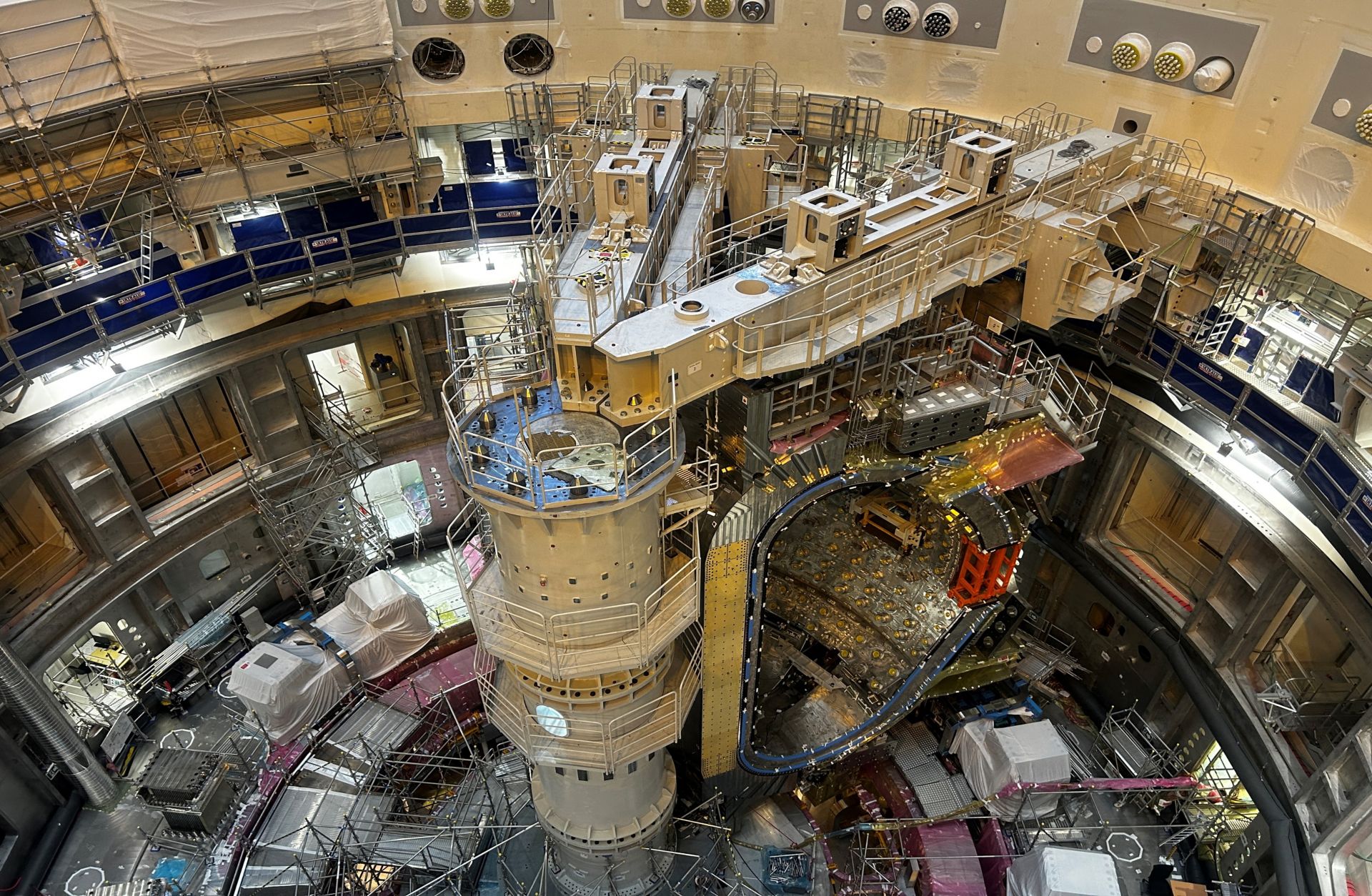
The ITER tokamak pit with the two vacuum vessel sector modules installed. (Photo: ITER)
Westinghouse Electric Company announced that it has signed a $180 million contract with the ITER Organization for the assembly of the vacuum vessel for the fusion reactor being built in southern France. Designed to demonstrate the scientific and technological feasibility of fusion power, the ITER tokamak will be the world’s largest experimental fusion facility.
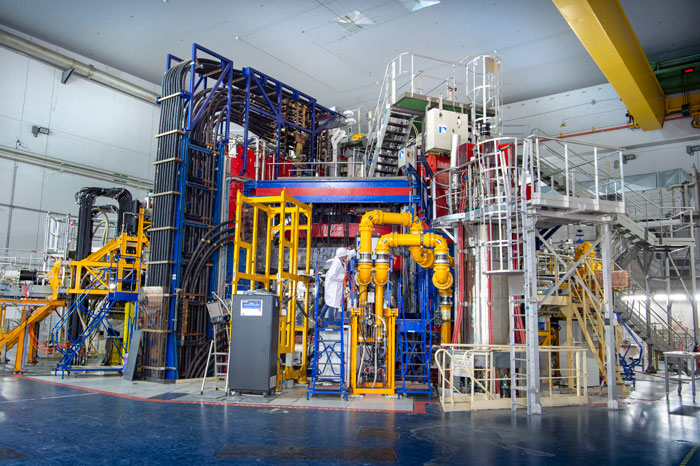
The WEST tokamak. (Photo: L. Godart/CEA)
The French magnetic confinement fusion tokamak known as WEST maintained a plasma in February for more than 22 minutes—1,337 seconds, to be precise—and “smashed” the previous record plasma duration for a tokamak with a 25 percent improvement, according to the CEA, which operates the machine. The previous 1,006-second record was set by China’s EAST just a few weeks prior. Records are made to be broken, but this rapid progress illustrates a collective, global increase in plasma confinement expertise, aided by tungsten in key components.
Korea’s KSTAR tokamak. (Photo: Korea Institute of Fusion Energy)
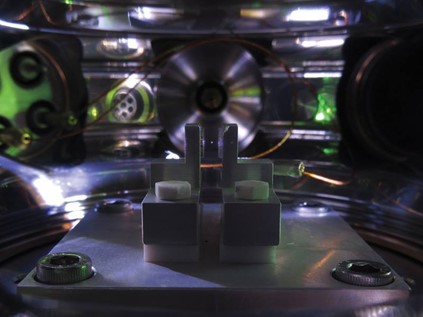
An optically trapped microparticle in high vacuum is visible as a white dot levitated between two lenses, which are used to focus and collect invisible infrared laser light used to trap the particle. (Photo: DOE/Yale Wright Lab)
Start talking about dust in a vacuum, and some people will think of household chores. But dust has featured in recent nuclear science and engineering headlines in curious ways: ITER is deploying oversized dust covers inspired by space satellites in the south of France, while at Yale University, researchers have watched every move of a dust-sized particle levitating in a laser beam for telltale twitches that indicate radioactive decay.
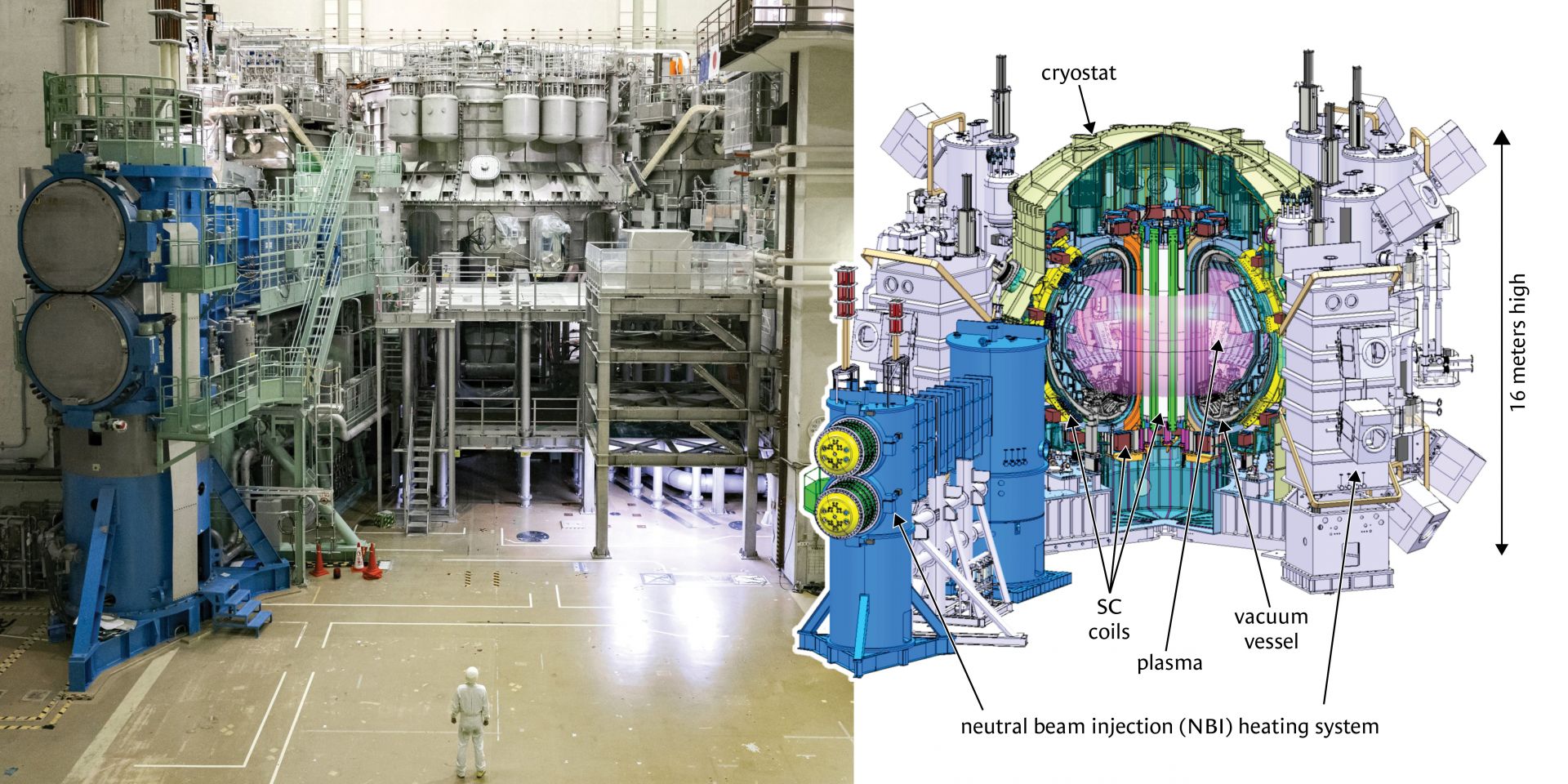
Fig. 1. A photograph (left) and schematic figure (right) of JT-60SA.
(Source: Naka Institute)
JT-60SA (Japan Torus-60 Super Advanced) is the world’s largest superconducting tokamak device. Its goal is the earlier realization of fusion energy (see Fig. 1). Fusion is the energy that powers the Sun, and just 1 gram of deuterium-tritium (D-T) fuel produces enormous energy—the equivalent of 8 tons of crude oil.
Last fall, the JT-60SA project announced an important milestone: the achievement of the tokamak’s first plasma. This article describes the objectives of the JT-60SA project, achievements in the operation campaign for the first plasma, and next steps.
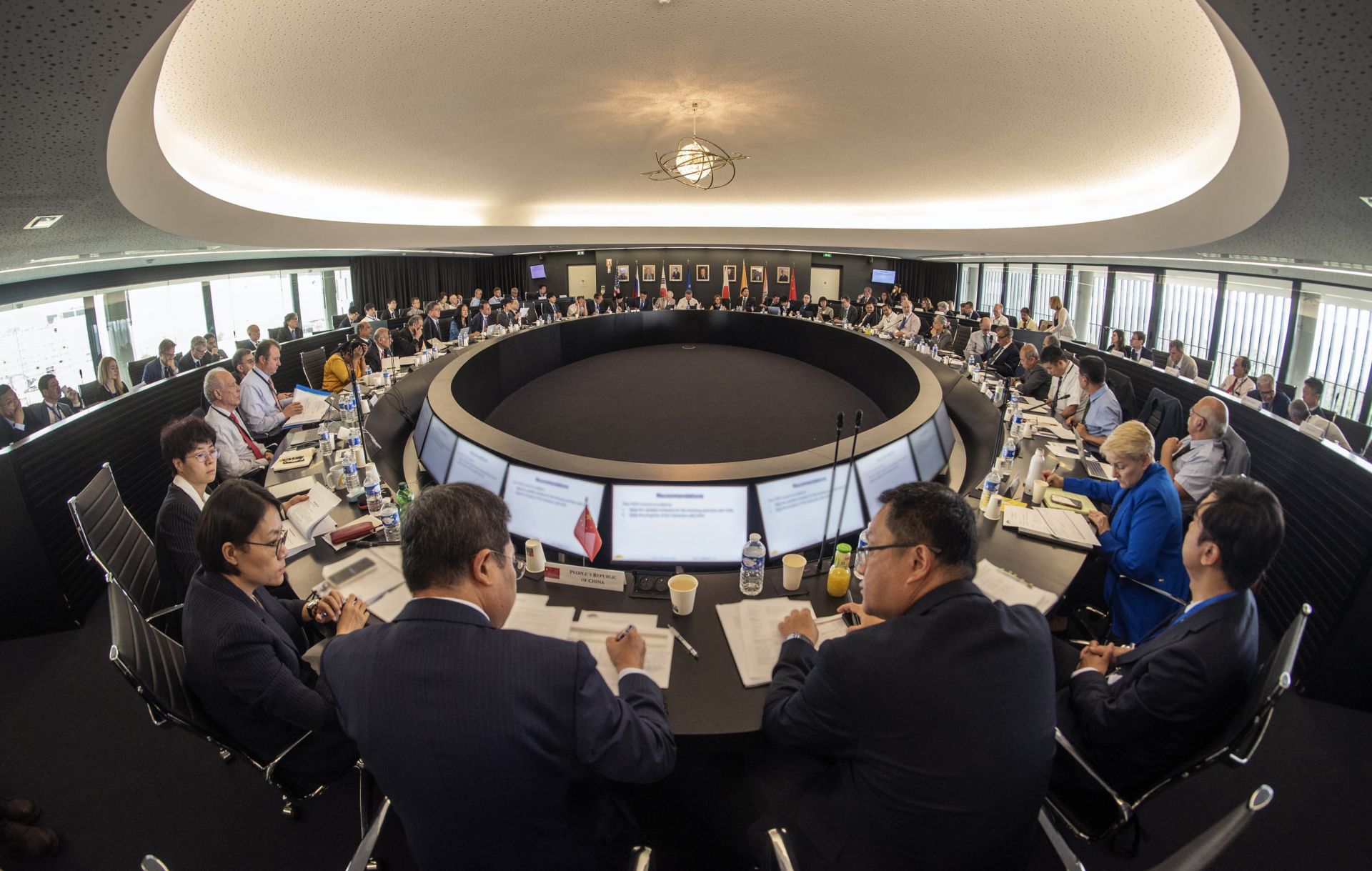
Member delegates, their experts and interpreters, and representatives of the ITER Organization and the ITER domestic agencies convened for the 34th ITER Council. (Photo: ITER)
At the 34th ITER Council Meeting, held June 19–20, ITER director general Pietro Barabaschi reported on ITER’s progress and presented an updated baseline proposal that would “prioritize the start of substantial research operations as rapidly as possible.”
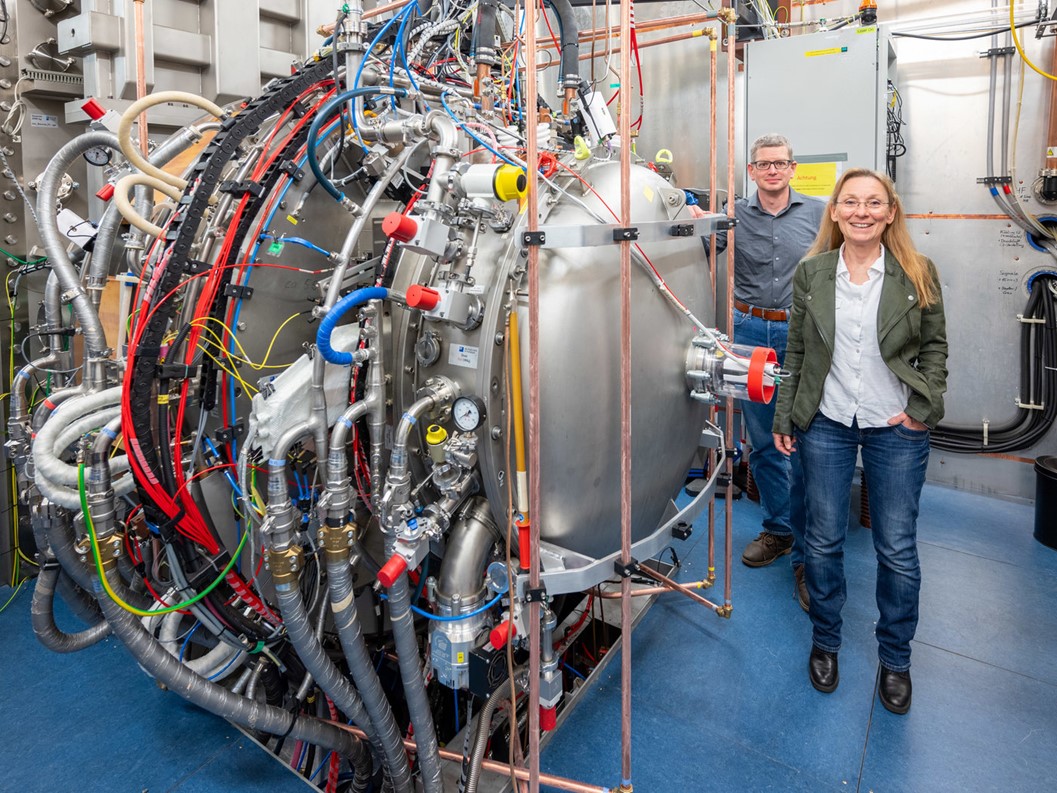
The IPP’s Dirk Wünderlich and Ursel Fantz at the experimental testing facility ELISE in Germany. (Photo: MPI for Plasma Physics/Frank Fleschner)
The Max Planck Institute for Plasma Physics (IPP) announced that it recently has achieved a new record for ion current density for neutral particle heating at its ELISE (Extraction from a Large Ion Source Experiment) experimental testing facility in Garching, Germany. ELISE is being used to test neutral beam injection (NBI) systems that will be used to heat the plasma of the ITER fusion experiment in France.
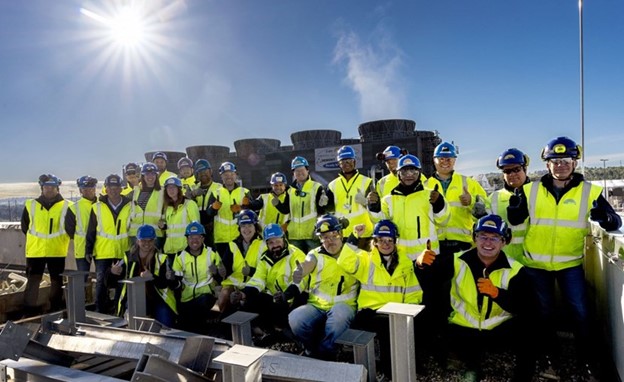
ITER’s 10 cooling cells in the background have 11-meter-long 12-blade fans rotating at 92 rpm to induce an upward draft, which is reason for the yellow-vested assemblage in front to give a thumbs up. (Photo: ITER Organization)
Steam from one of ITER’s ten induced-draft cooling cells offers visual confirmation of a successful cooling system test, the ITER organization announced April 30. ITER’s cooling system features 60 kilometers of piping with pumps, filters, and heat exchangers that can pull water through at up to 14 cubic meters per second. Once fully operational, two cooling loops—one to remove the heat generated by the plasma in the ITER tokamak and one for its supporting infrastructure—will be capable of extracting up to 1,200 MW of heat.


 A new report from the