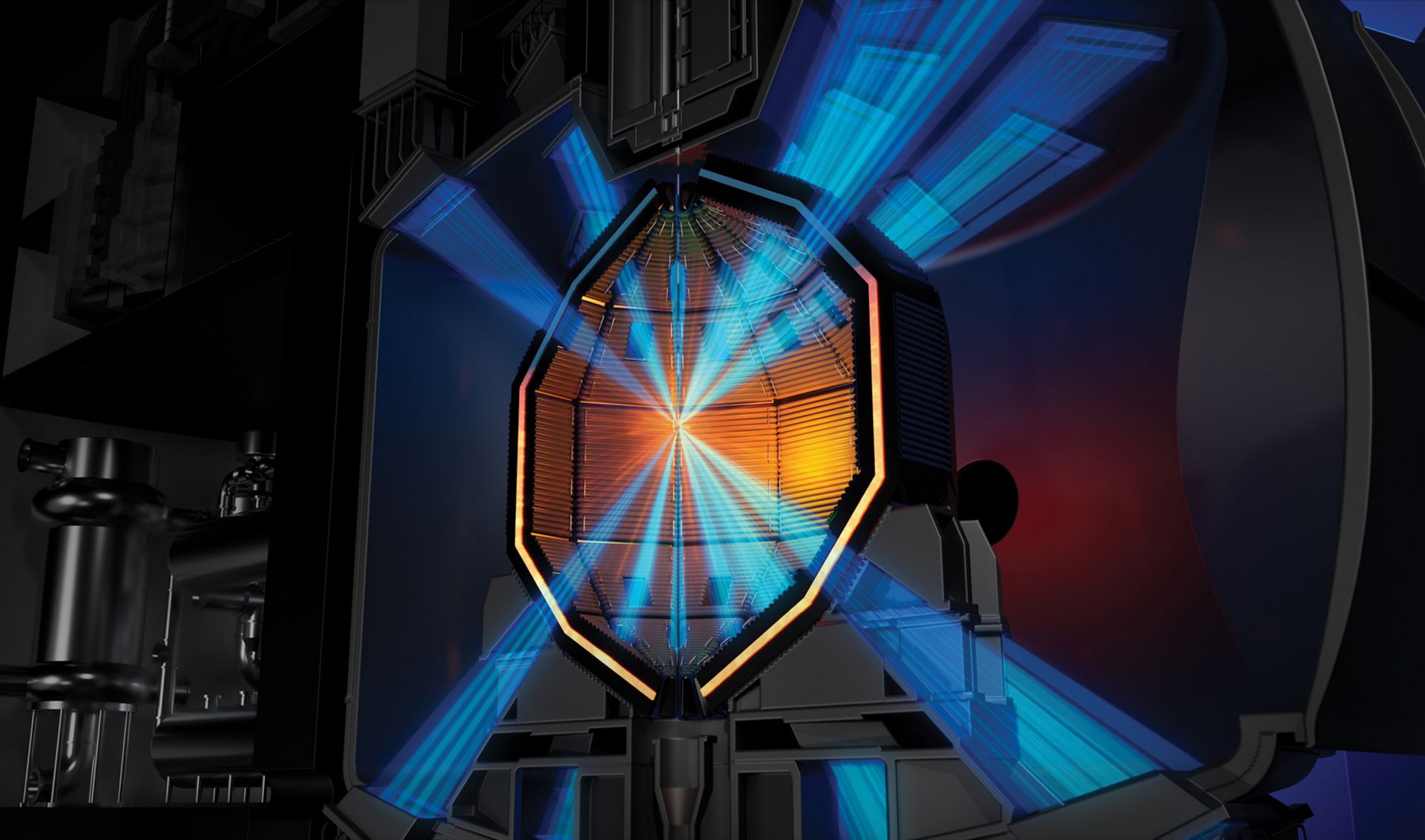
A conceptual model of a laser-based fusion power plant. A key difference from NIF is the ability to inject targets into the chamber rapidly, without needing to insert a long arm to precisely position the target. Targets would enter the chamber from the top at roughly 10 times per second in this model. (Image: Eric Smith)
Commercial fusion power is closer than ever. There are now around 30 U.S. fusion companies, several of which claim to be on track to connect to the grid as early as the 2030s.
Tokamak and laser inertial confinement approaches benefit from decades of research at facilities such as the National Ignition Facility (NIF) at Lawrence Livermore National Laboratory and ITER, with alternative concepts including stellarator, magnetic mirror, and Z-pinch confinement also making notable progress as private and government funding for fusion increases.
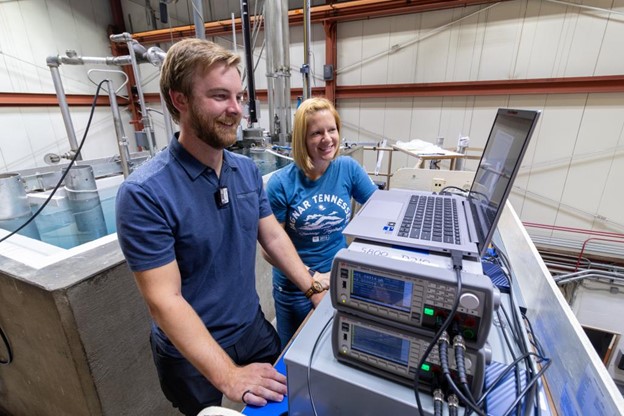
Kyle Reed and Dianne Ezell of ORNL gather data about the performance of a sensor transistor as it is tested against the radiation within the reactor pool behind them at Ohio State University’s Nuclear Reactor Laboratory. (Photo: Michael Huson/The Ohio State University)
Researchers at the Department of Energy’s Oak Ridge National Laboratory want to make the sensors in nuclear power plants more accurate by linking them to electronics that can withstand the intense radiation inside a reactor. Electronics containing transistors made with gallium nitride, a wide-bandgap semiconductor, have been tested in the ionizing radiation environment of space. Now, according to a June 24 article from ORNL, tests carried out in the research reactor at Ohio State University indicate they could withstand neutron bombardment within a nuclear fission reactor.
From left, Framatome’s CEO Bernard Fontana shakes hands with Slovenské Elektrárne’s CEO Branislav Strýček following the signing of an MOU. Also pictured is first vice chairman of Slovenské Elektrárne’s board of directors, Michele Bologna.
Slovakia’s Slovenské Elektrárne—operator of the nation’s two nuclear power plants, Bohunice and Mochovce—and France’s Framatome have signed a memorandum of understanding for the development of a global strategic relationship, the companies announced last week.
Westinghouse chief executive officer Patrick Fragman meets with Dominion Energy CEO Bob Blue on May 15 in Washington, D.C. (Photo: Westinghouse)
Westinghouse Electric Company has signed a contract with Dominion Energy to design, manufacture, and deliver replacement steam generators for Virginia’s Surry plant, the nuclear technology firm announced Tuesday.
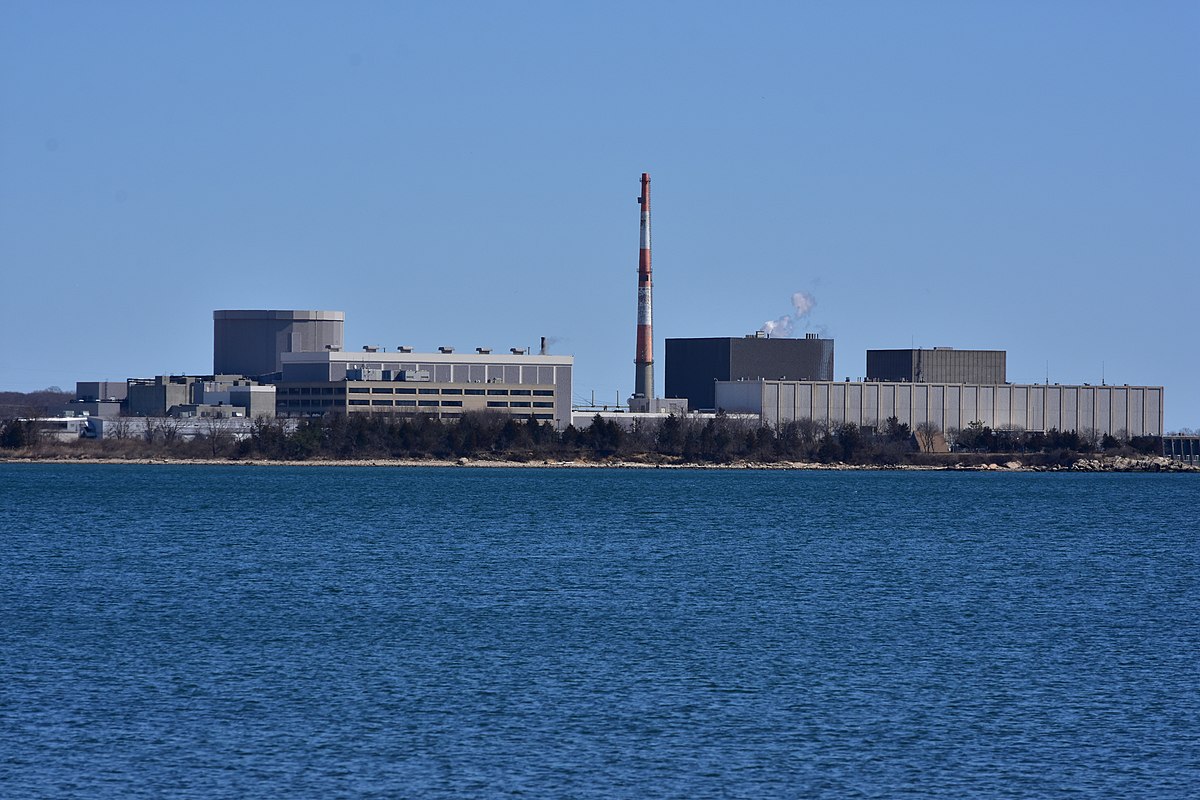
Millstone nuclear power plant
The Nuclear Regulatory Commission has granted Dominion Energy’s request for an increase in the generating capacity of Millstone-3. The Richmond, Va.–based utility had applied for the power uprate last November, requesting an increase of approximately 1.6 percent.
NRC staff determined that Dominion could safely increase the reactor’s heat output, primarily through more accurate means of measuring feedwater flow, according to a November 18 press release. The NRC’s safety evaluation focused on several areas, including the nuclear steam supply systems, instrumentation and control systems, electrical systems, accident evaluations, radiological consequences, fire protection, operations and training, testing, and technical specification changes.




 The Nuclear Regulatory Commission last Friday announced the publication of its