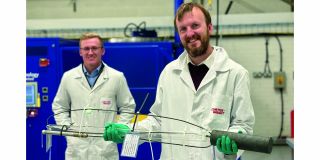
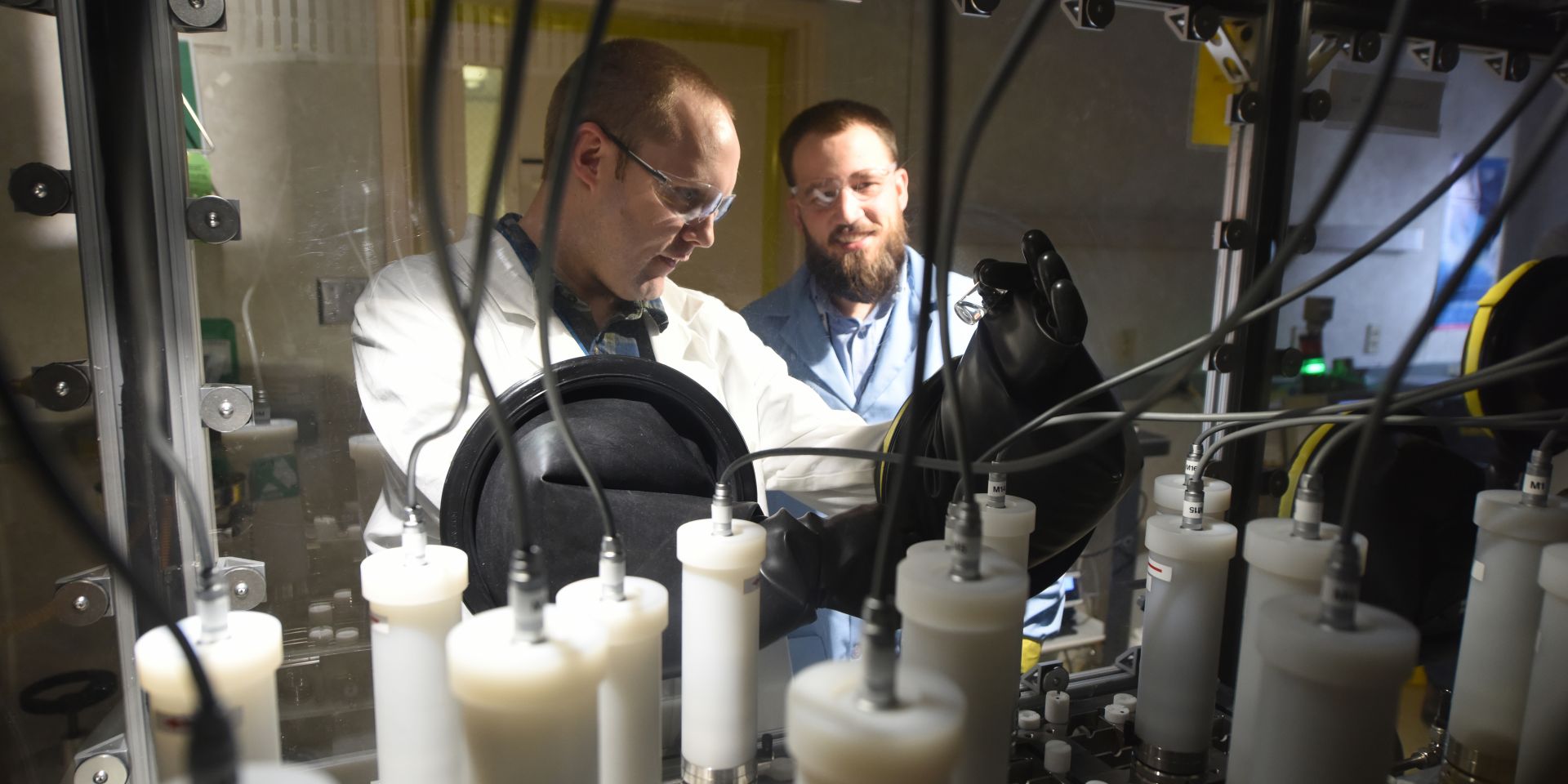
INL researchers inspect a sample from the HALEU purification solvent extraction process. (Photo: INL)
Idaho National Laboratory is playing a key role in helping the U.S. Department of Energy meet near-term needs by recovering HALEU from federal inventories, providing critical support to help lay the foundation for a future commercial HALEU supply chain. INL also supports coordination of broader DOE efforts, from material recovery at the Savannah River Site in South Carolina to commercial enrichment initiatives.
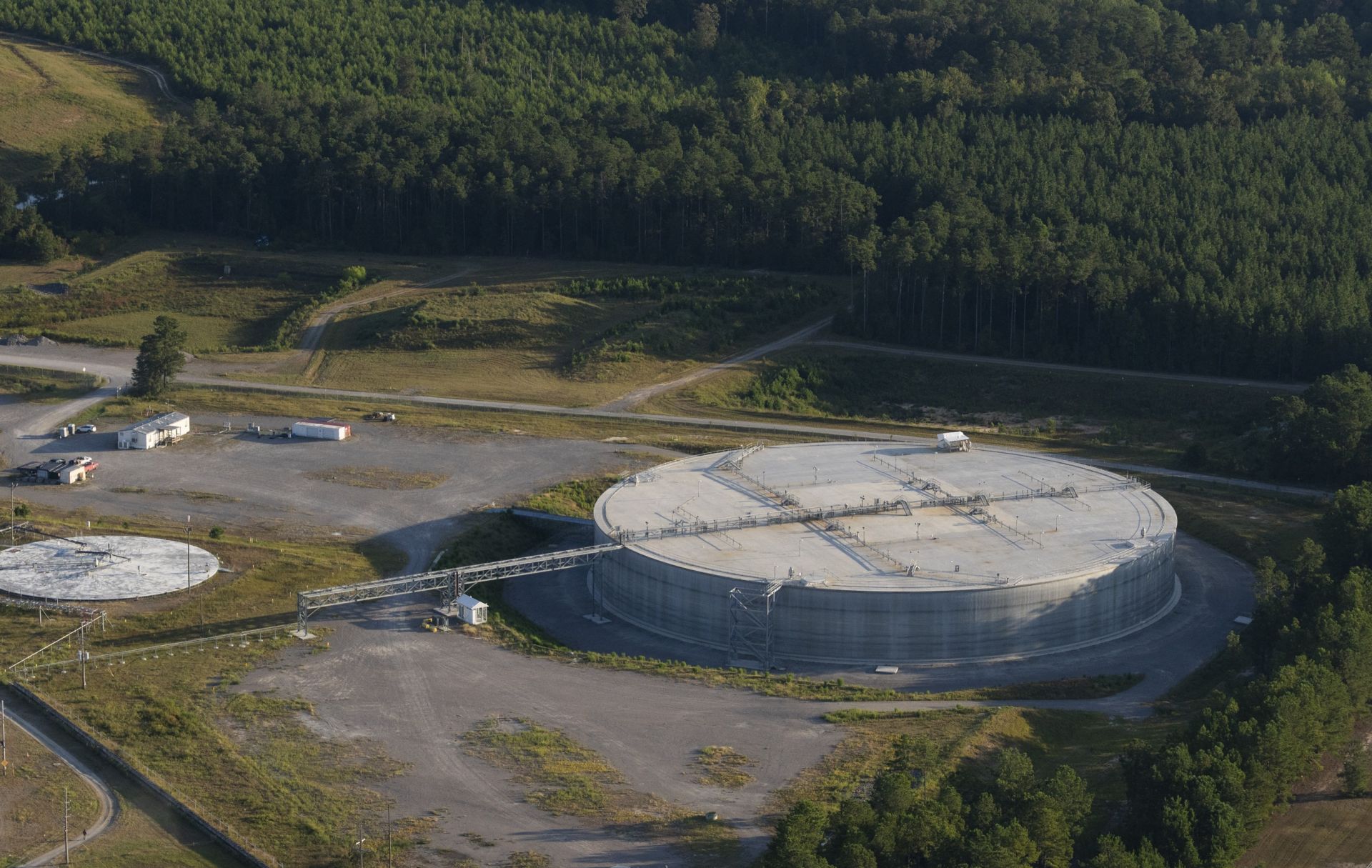
SDU 10, the fifth megavolume Saltstone Disposal Unit at SRS, is the target of an upcoming leak-tightness test. (Photo DOE)
The Savannah River Site in South Carolina will begin a leak-tightness test to qualify the megavolume Saltstone Disposal Unit (SDU) 10 to store up to 33 million gallons of solidified, decontaminated salt solution produced at the site.
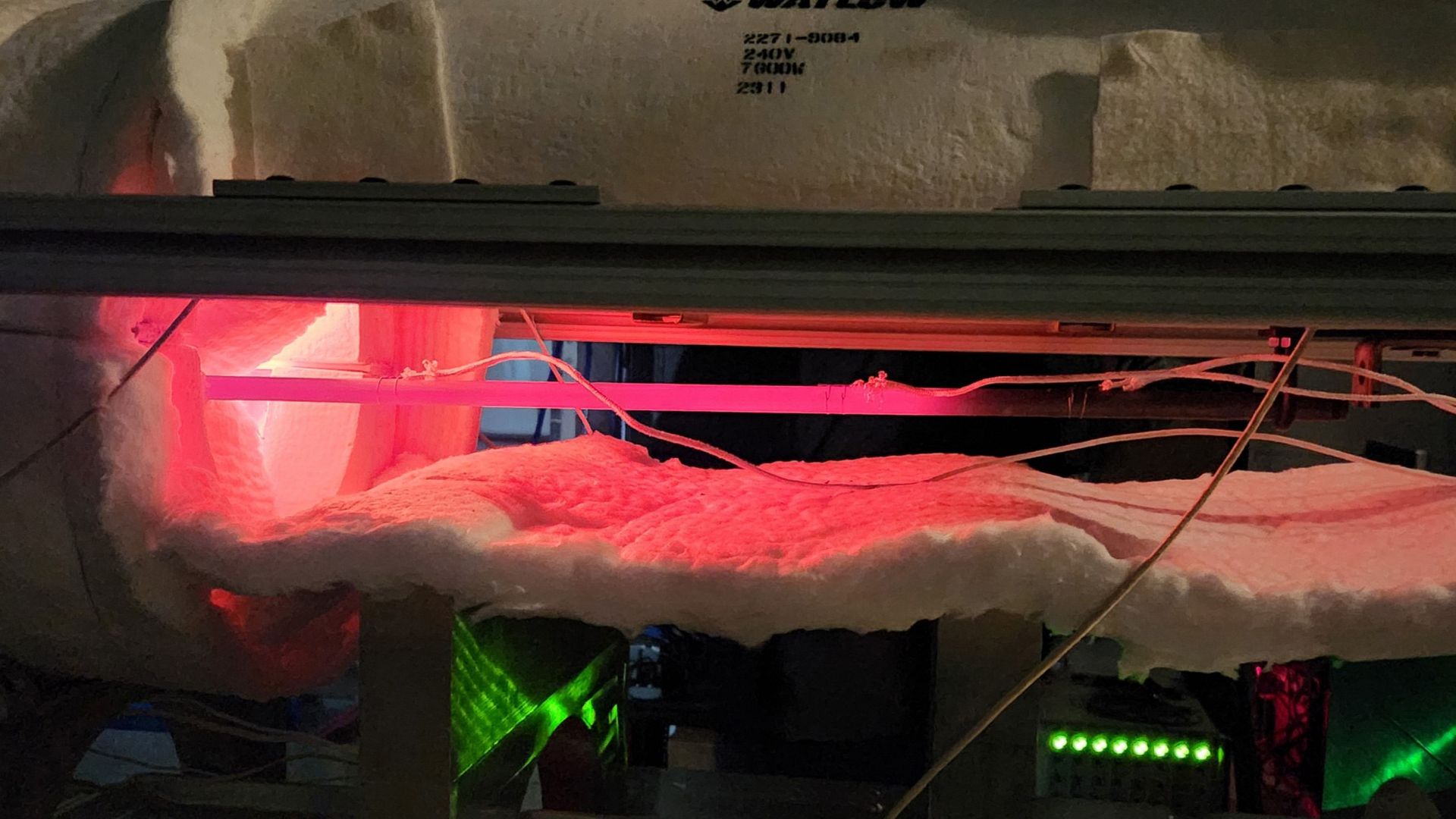
October 10, 2025, 4:42PMNuclear NewsIlyas Yilgor, Mauricio Tano, Katrina Sweetland, Joshua Hansel, and Piyush Sabharwall A high-temperature heat pipe glows during operation at ~800°C at INL’s SPHERE test facility. (Photo: INL)
Idaho National Laboratory under the Department of Energy–sponsored Microreactor Program recently conducted a comprehensive phenomena identification and ranking table (PIRT) exercise aimed at advancing heat pipe technology for microreactor applications.
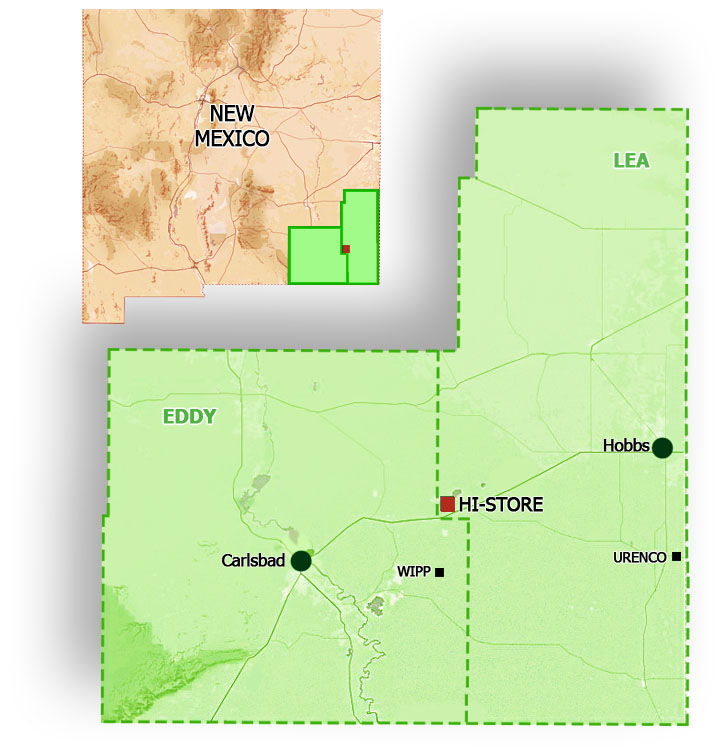
The location of Holtec’s proposed HI-STORE facility. (Image: Holtec)
Holtec International has confirmed it is canceling plans to build a consolidated interim storage facility for spent nuclear fuel in southeastern New Mexico. Named the HI-STORE CISF, the facility would have stored up to 10,000 canisters of commercial SNF on land owned by the Eddy-Lea Energy Alliance (ELEA) near the towns of Carlsbad and Hobbs.
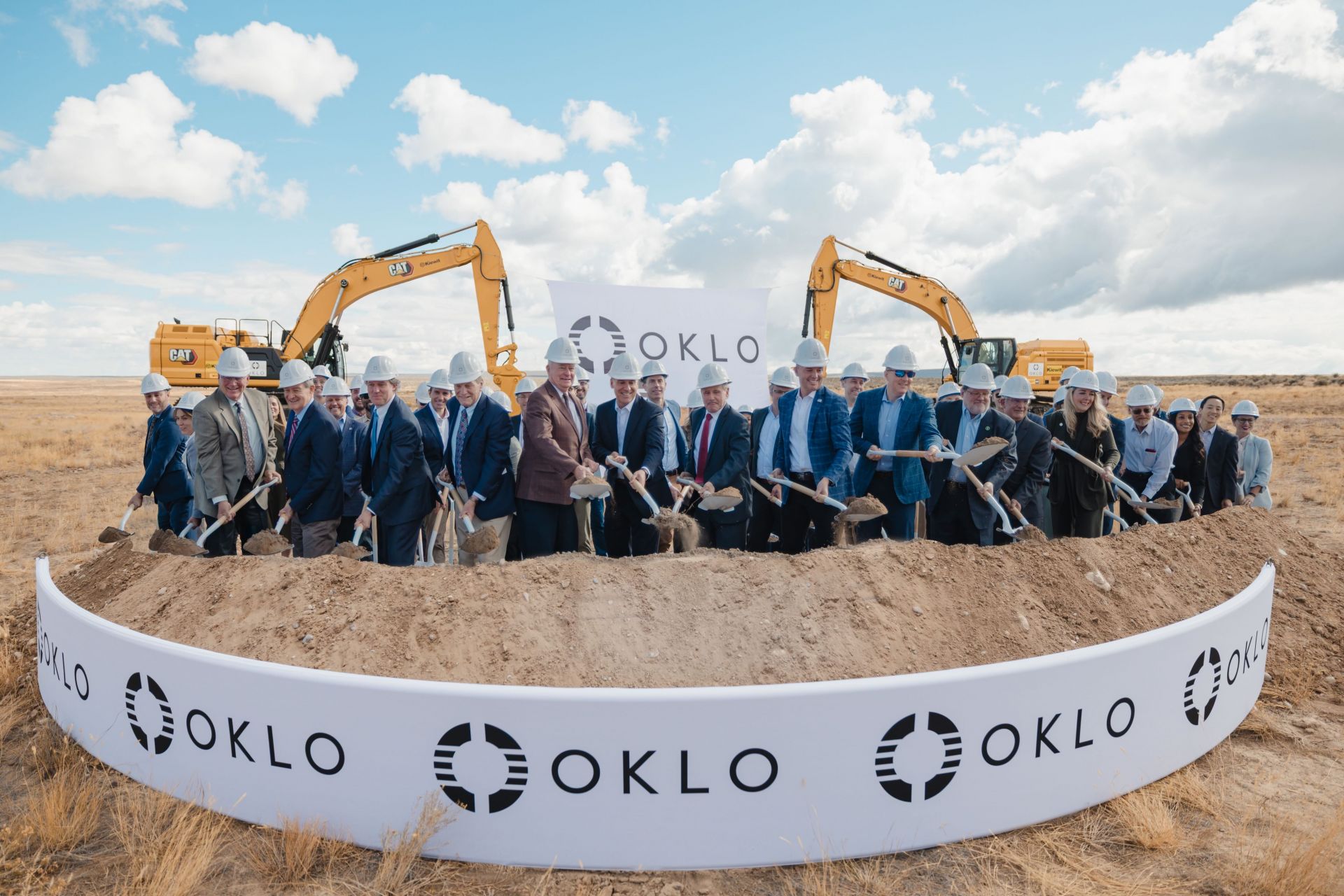
Oklo employees alongside leaders from federal, state, and local government at the ground-breaking ceremony. (Photo: Oklo)
Following the same milestones from Aalo Atomics and Valar Atomics, Santa Clara, Calif.–based reactor start-up Oklo has become the third company participating in the Department of Energy’s Nuclear Reactor Pilot Program to break ground on its fast-tracked project at Idaho National Laboratory.
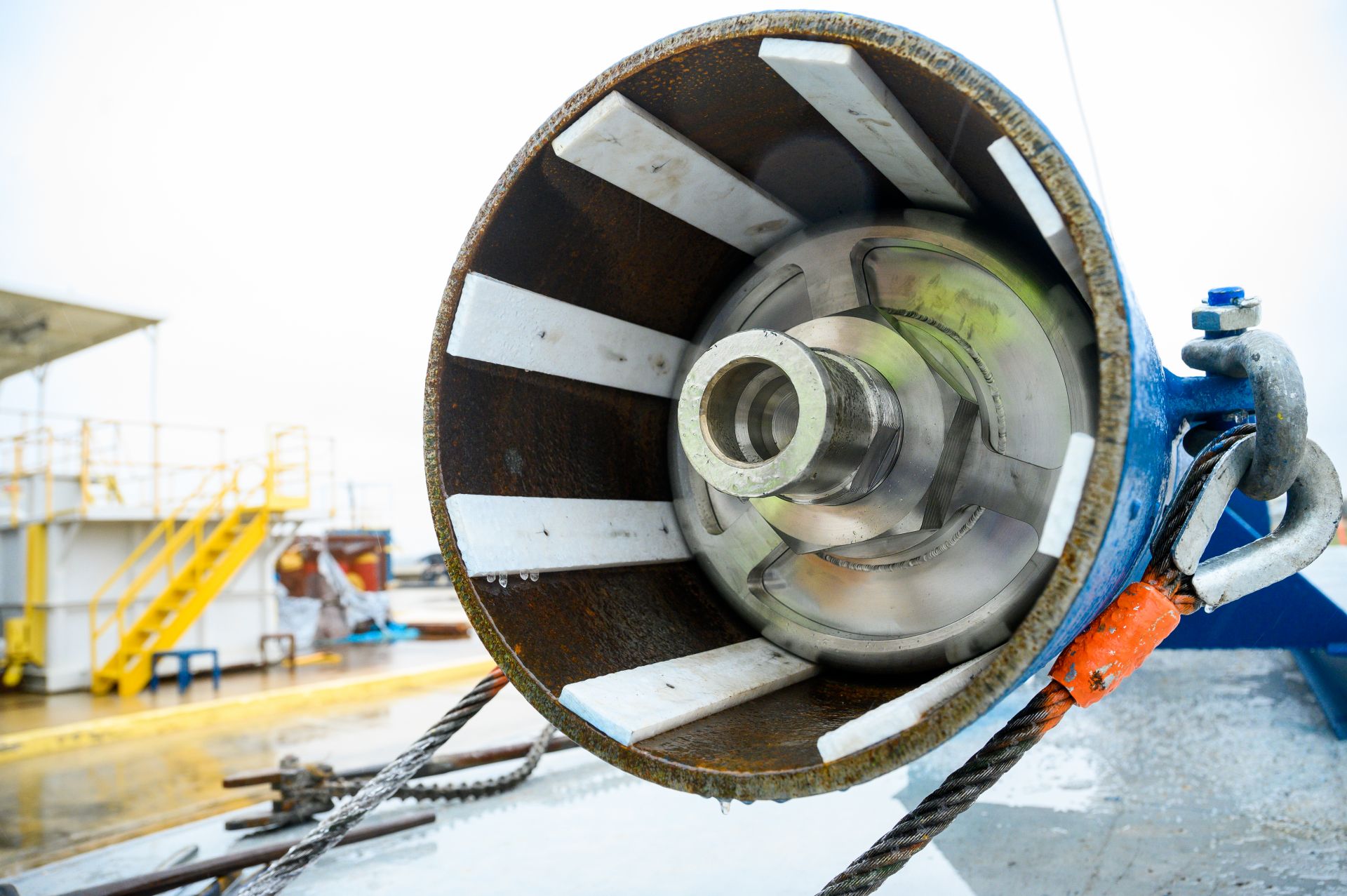
A prototype nuclear waste canister in the drillhole receptacle. (Photo: Deep Isolation)
Nuclear waste disposal technology company Deep Isolation Nuclear announced it has signed a technology licensing agreement with government contractor Navarro Research and Engineering, giving Navarro access to Deep Isolation’s portfolio of intellectual property for use in nuclear and hazardous waste management applications across the states of Tennessee and Idaho.
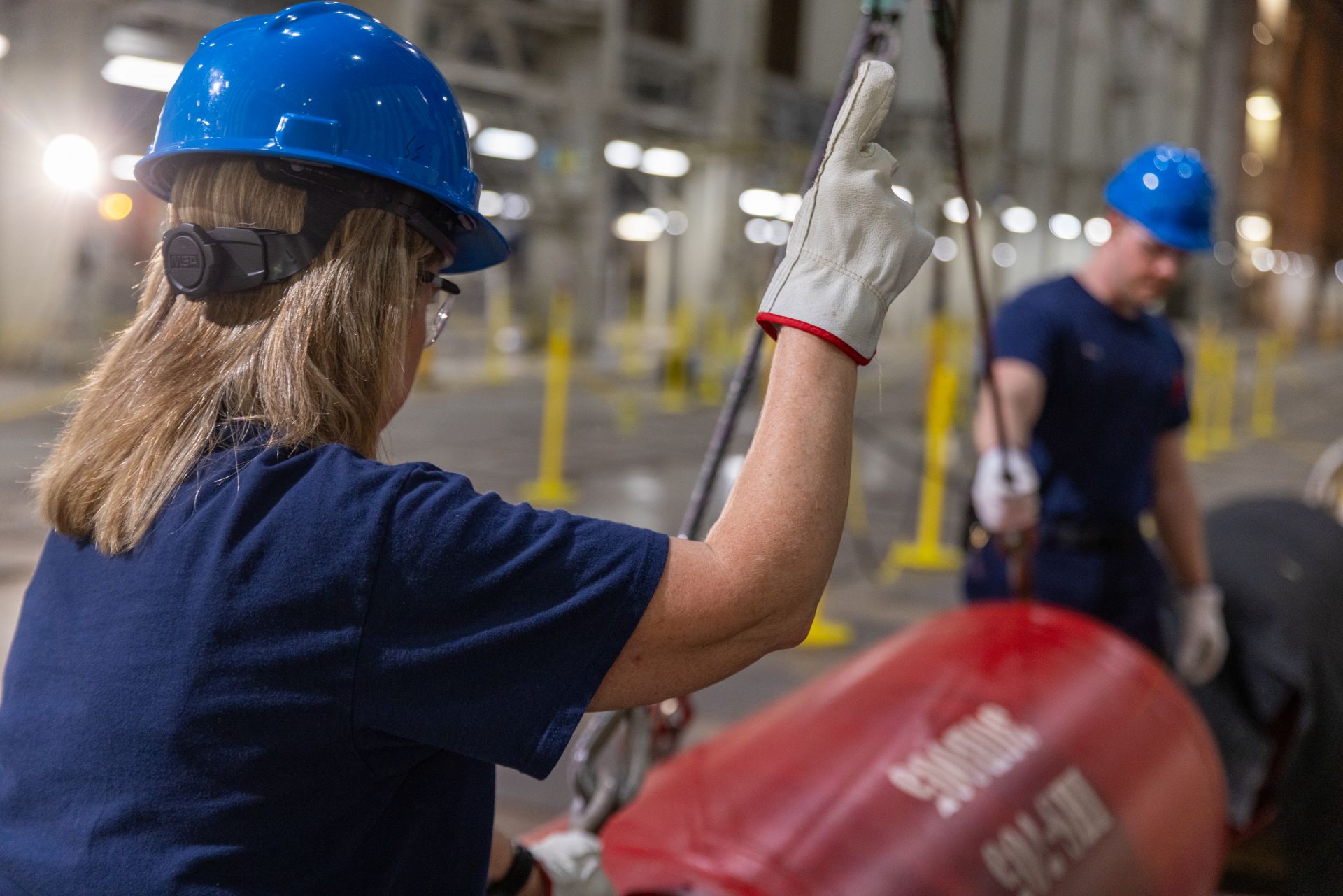
Centrus employees maneuver a cylinder at the American Centrifuge Plant in Piketon, Ohio. (Photo: Centrus Energy)
Centrus Energy announced a plan yesterday to add 300 new jobs at Centrus’s uranium enrichment plant in Piketon, Ohio, “in advance of federal funding decisions.” The company envisions adding capacity for both low-enriched uranium and high-assay low-enriched uranium production at its American Centrifuge Plant, but the “size and scope” of public and private investment is “subject to being selected for funding by the U.S. Department of Energy.”
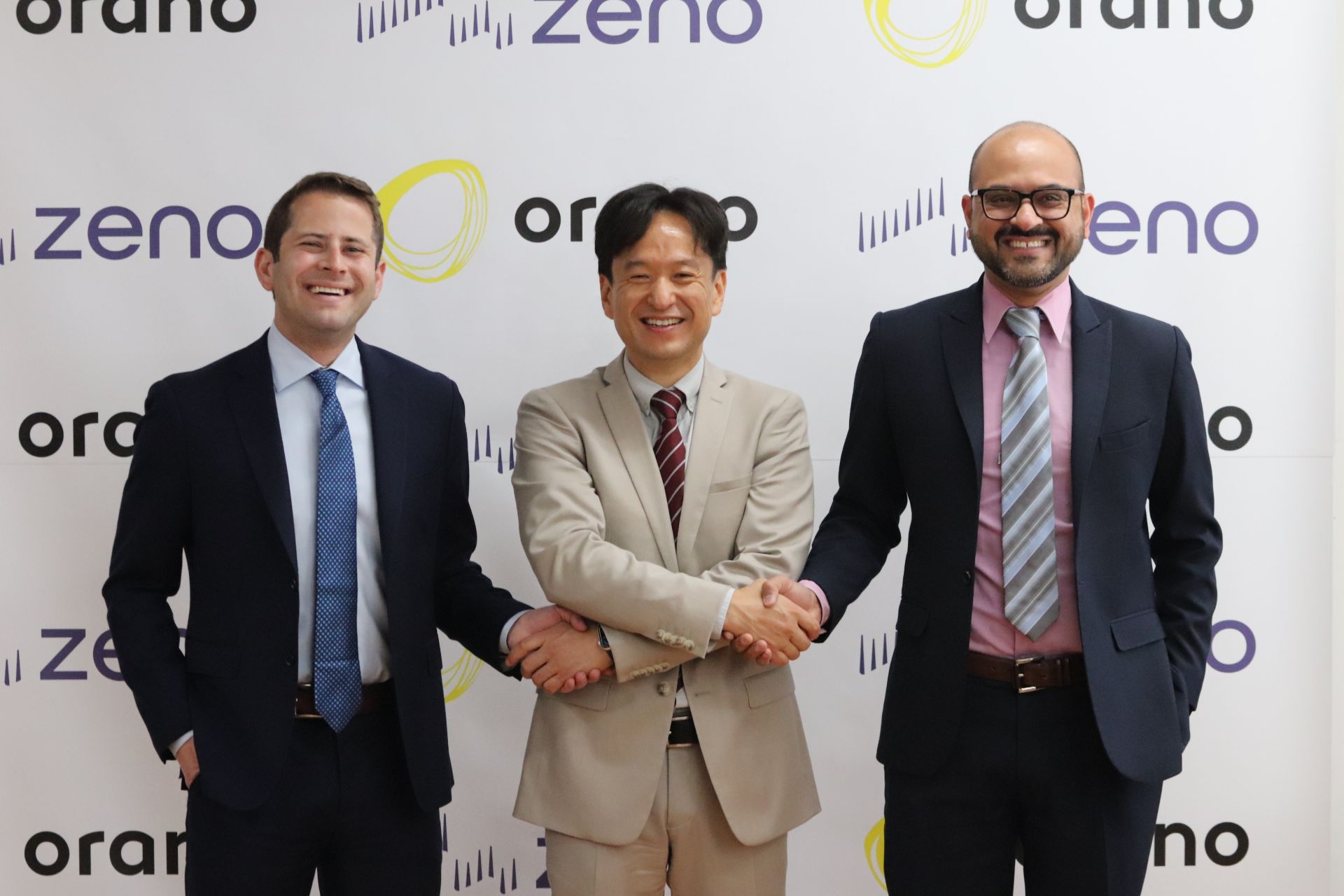
Orano USA CEO Jean-Luc Palayer (middle) shakes hands with Zeno Power’s cofounder and CEO Tyler Bernstein (left) and Chief Commercialization Officer Harsh Desai. (Photo: Orano USA)
Zeno Power, a developer of nuclear batteries, is to receive americium-241 recovered from Orano’s La Hague nuclear fuel recycling site in Normandy, France, under a strategic agreement announced by the companies on September 24.

-3 2x1.jpg)
 The Department of Energy introduced a Fusion Science & Technology (S&T)