
A new goal for fusion: 50 MWe for the U.S. grid by 2035–2040
 Coordinated federal and private industry investments made now could yield an operational fusion pilot plant in the 2035–2040 time frame, according to Bringing Fusion to the U.S. Grid, a consensus study report released February 17 by the National Academies of Sciences, Engineering, and Medicine (NASEM).
Developed at the request of the Department of Energy, the report builds on the work of the 2019 Final Report of the Committee on a Strategic Plan for U.S. Burning Plasma Research, and it identifies key goals, innovations, and investments needed to develop a U.S. fusion pilot plant that can serve as a model for producing electricity at the lowest possible capital cost.
“The U.S. fusion community has been a pioneer of fusion research since its inception and now has the opportunity to bring fusion to the marketplace,” said Richard Hawryluk, associate director for fusion at the Princeton Plasma Physics Laboratory and chair of the NASEM Committee on the Key Goals and Innovations Needed for a U.S. Fusion Pilot Plant, which produced the report.


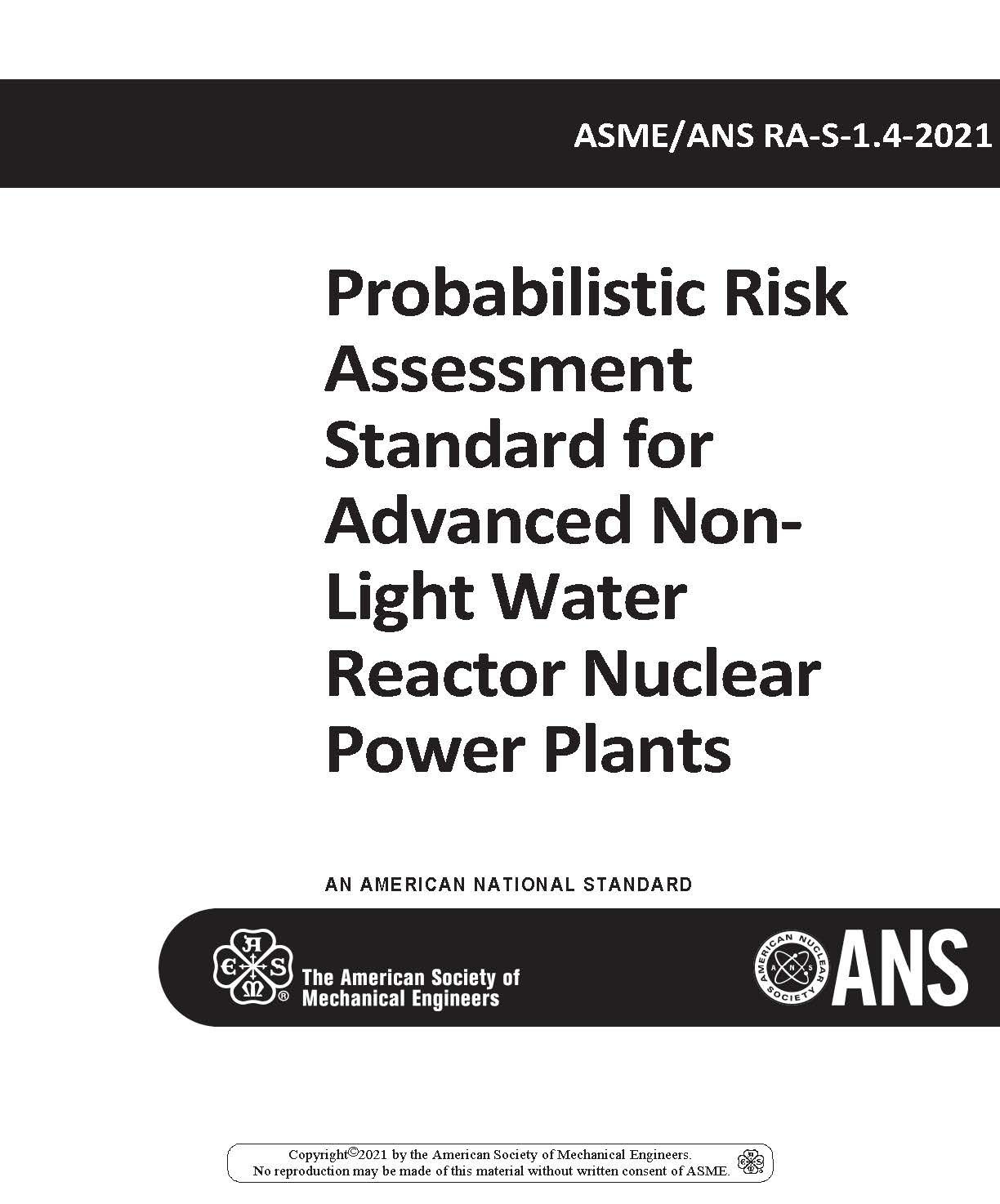 ANSI/ASME/ANS RA-S-1.4-2021, “Probabilistic Risk Assessment Standard for Advanced Non-Light Water Reactor Nuclear Power Plants,” has just been issued. Approved by the American National Standards Institute (ANSI) on January 28, 2021, this joint American Society of Mechanical Engineers (ASME)/American Nuclear Society (ANS) standard sets forth requirements for probabilistic risk assessments (PRAs) used to support risk-informed decisions for commercial nuclear power plants and prescribes a method for applying these requirements for specific applications.