Advantages of the manufacturing process include scalability, low processing time, and low cost. However, the powder-reconstituted materials and exposure to air leave the material contaminated with carbon and oxygen.
When lithium is introduced, it reacts with these elements, and the byproducts clog the pores. A cleaning method is therefore required after installation, once the system is already under vacuum.
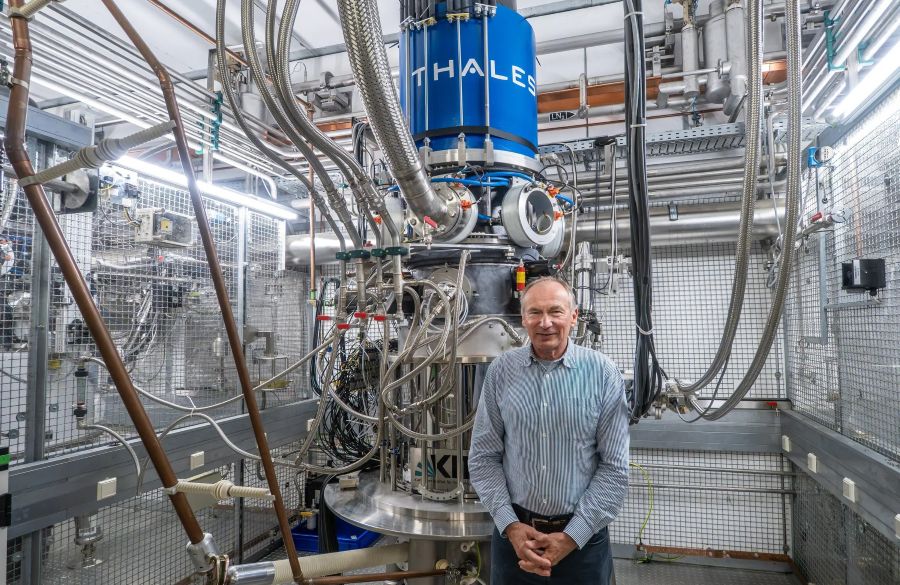
The LTX-β is a small spherical tokamak. According to the PPPL website, it is “the world’s first plasma confinement experiment with full liquid metal plasma-facing components.”
The researchers placed the porous tungsten samples inside LTX-β, exposed them to low-temperature neon plasma, and then heated the system to roughly 720°C. According to the paper, they were analyzed in vacuo with Temperature Programmed Desorption and Secondary Ion Mass Spectrometry.
Camila López Pérez, a research assistant at PPPL who led the project, said the team could visibly see the sample change color from a dull dark gray to a metallic silver.
“I initially thought we were depositing material on the sample, which would have been a terrible result,” she said in a PPPL article about the discovery. “Then the analysis showed that wasn’t the case. It was just being cleaned very effectively. It was very surprising and very exciting to see.”
Results showed the method was especially effective at cleaning the sample surface, with 87 percent of it becoming clean and the fraction of carbon dropping sharply.
It’s a promising first step for developing a cleaning cycle for tokamak inner walls manufactured in this way.
“This research serves as a framework for cleaning these porous tungsten parts while they are inside the fusion system so that material contamination is not what’s holding you back,” she said.
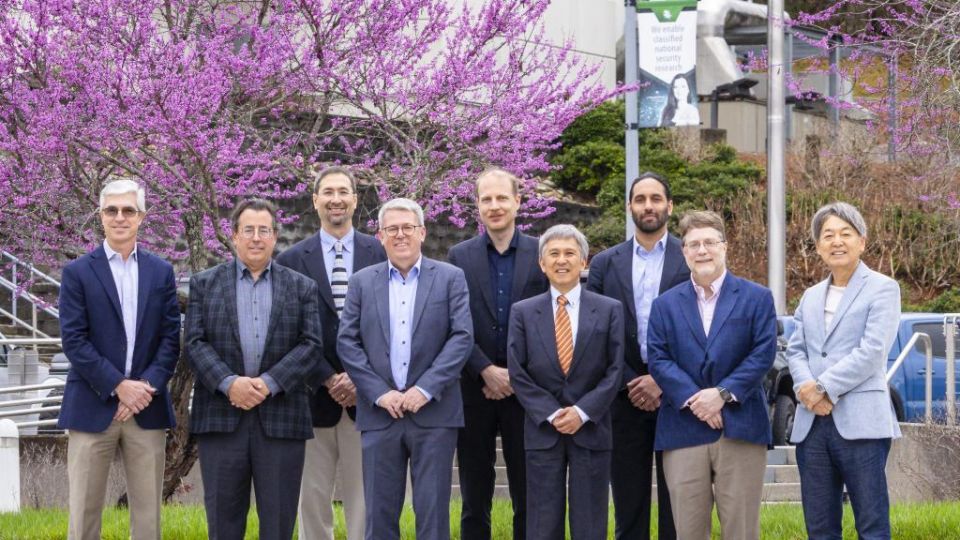
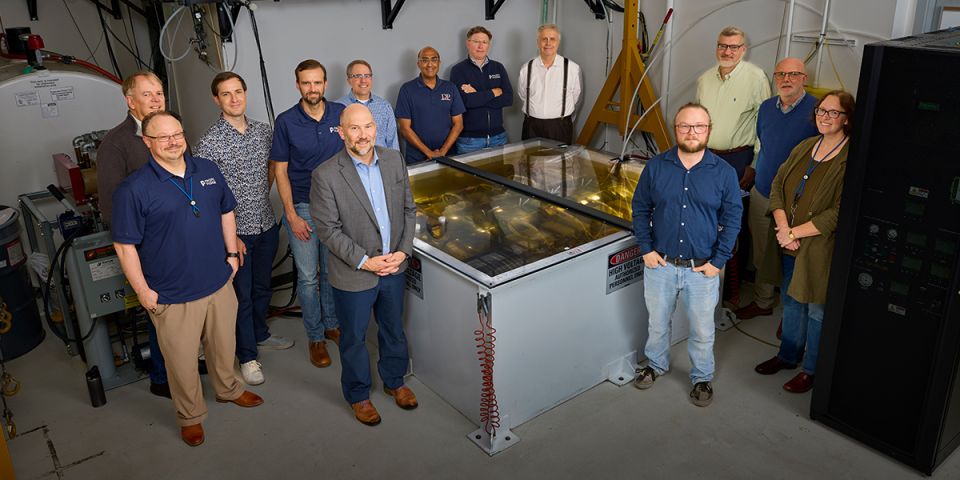
The team included researchers from PPPL, Princeton University, and Pennsylvania State University.