Developing materials that can be used to construct plasma-facing components is essential to the development of fusion machines. Tungsten has been widely used, and copper alloys have also been explored for their high thermal conductivity.
According to SLAC, copper alloys could be used to create heat sinks that draw thermal energy away from materials closer to the fusion reactions.
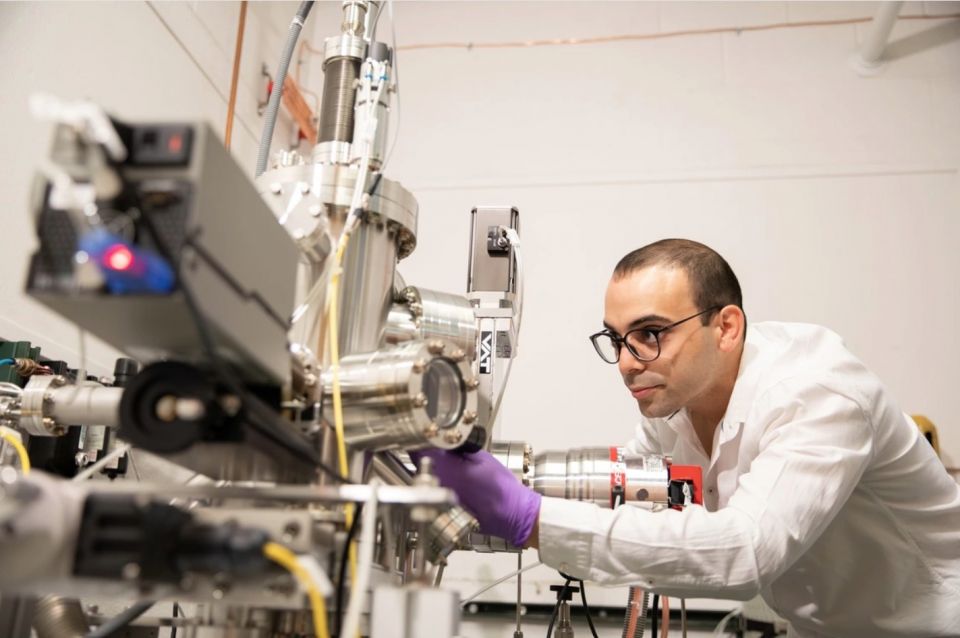
In this new study, researchers looked at a pure copper sample using the Megaelectronvolt Ultrafast Electron Diffraction (MeV-UED) instrument at SLAC, which is a powerful “electron camera” for the study of time-resolved, ultrafast atomic and molecular dynamics in chemical and solid-state systems.
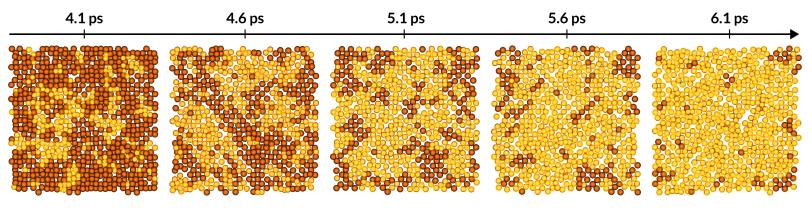
This allowed them to observe how the copper behaved on the atomic level over the couple of picoseconds the sample took to melt.
Simulations predicted a particular progression during ultrafast heating: the copper sample would start melting along its surfaces at about 1,085°C, then the sides and edges would continue melting with increasing temperature while the central area of the sample would retain its crystal lattice structure until the sample reached around 1,424°C, at which point the remaining crystal lattice was expected to instantaneously collapse into a fully disordered liquid.
However, what the researchers observed was a gradual melting as the temperature rose rather than the predicted collapse.
The researchers traced the discrepancy to an assumption in simulations that during melting the copper atoms would experience uniform pressure on all sides, keeping the atoms fixed in place, SLAC said. In reality, the experimental pressure conditions turned out to be far more dynamic, allowing the atoms to shift and retain some order, even above expected temperatures.
By integrating these additional parameters into computer simulations, the team was able to replicate the experimental behavior of the copper atoms.
“It’s a straightforward solution, but molecular dynamics simulations had been overlooking it for years,” said Mo. “When you have complex simulations attempting to capture every aspect of reality, down to individual atoms, it takes real-world data to show you what’s missing from the calculations.”
The experiment also revealed that in ultrafast heating scenarios, copper shows signs of a phenomenon called premelting, in which disorder arises at surfaces of nanosized grains and the boundaries between them before the system reaches its standard melting point.
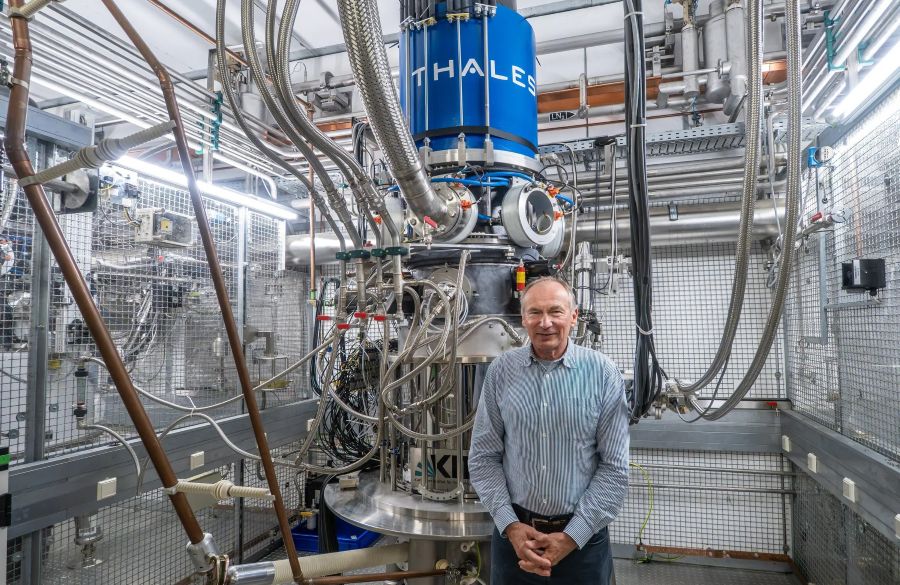
“This is a major improvement to modeling capabilities and their predictive power going forward,” said Siegfried Glenzer, a professor at SLAC and author on the paper. “The precision and resolution with which we are able to see these things demonstrates how remarkable this technique is at unveiling these ultrafast, ultrasmall dynamics.”
Mo’s group has also used the MeV-UED to investigate phonon interactions in tungsten, providing a more nuanced understanding of thermal transport in the material.