ATLAS, new MARAD partnership, among latest maritime nuclear announcements
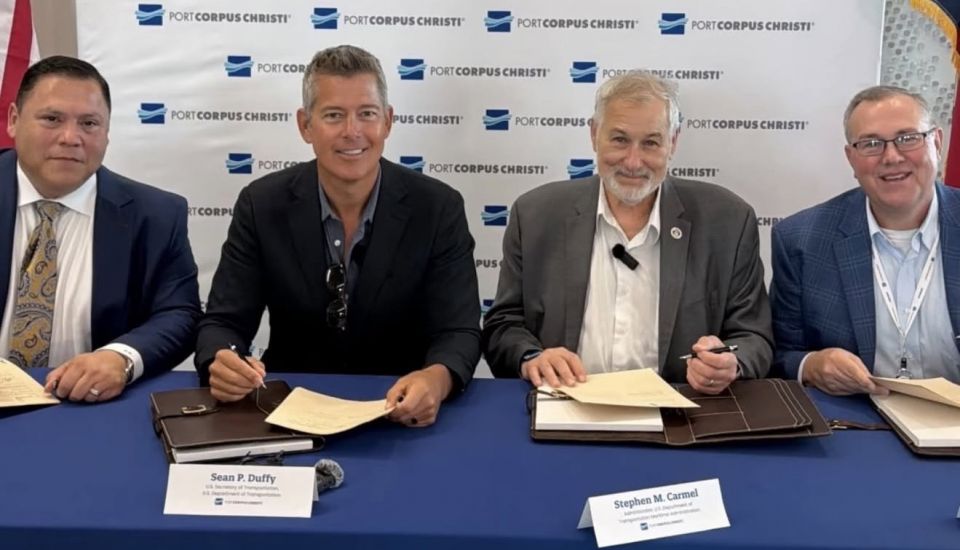
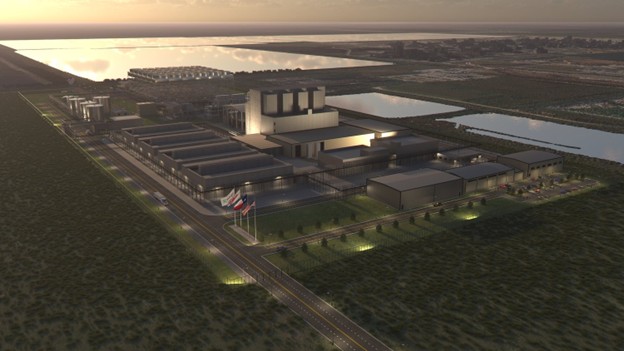
Just days after the Department of Transportation’s Maritime Administration (MARAD) and the Port of Corpus Christi announced a partnership to explore the development of small modular reactors in the U.S. seaport, multiple other maritime nuclear announcements were unveiled to the public, including another MARAD partnership.
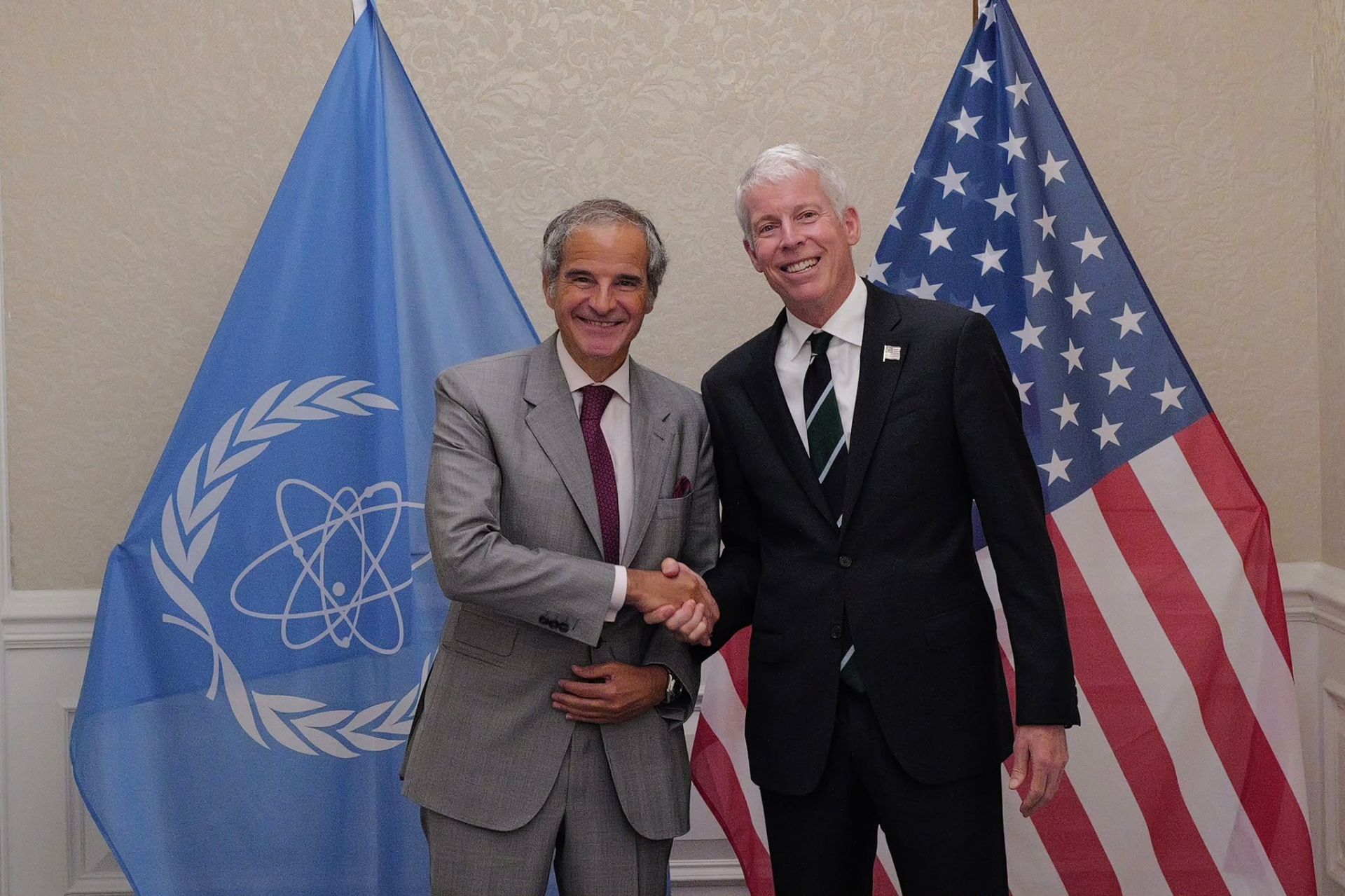
ATLAS launches: Last Wednesday, the International Atomic Energy Agency launched the Atomic Technologies Licensed for Applications at Sea program, or ATLAS. This global initiative—which already has the backing of 25 countries—would support the use of new nuclear reactor technology in civilian shipping and floating nuclear power plants. The potential applications of maritime nuclear power are numerous, according to an IAEA news release announcing ATLAS: providing power to coastal and remote communities, extending the operations of commercial ships, supporting disaster response, and assisting offshore industries where conventional infrastructure is limited, to name a few.
The announcement came during the IAEA’s International High-level Forum on the ATLAS Launch, held in Washington, D.C., August 26–27. DOE Secretary Chris Wright was among those in attendance at the forum.
“The work accomplished at this [IAEA] Ministerial brings us closer to turning the promise of offshore nuclear energy and nuclear-powered shipping into commercial reality,” Wright said at the meeting.
“ATLAS is launching at precisely the right time,” added IAEA Director General Rafael Mariano Grossi. “By bringing together the nuclear and maritime sectors, we have the opportunity to shape the future of two crucial industries—energy and shipping—and to build global confidence in the safe, secure, and peaceful use of nuclear technology at sea.”
Following the launch, six expert groups will begin work through the IAEA on an integrated ATLAS framework that should address the “safety, security, safeguards, and regulatory aspects, whilst taking account of deployment scenarios and other attributes of nuclear-powered shipping and floating nuclear power plants,” according to the news release.
The IAEA says some designs could be ready for deployment as early as the 2030s.
Core Power–MARAD MOC: Separate from MARAD’s recent agreement with the Port of Corpus Christi, Core Power announced a memorandum of cooperation (MOC) with the agency, an apparently first-of-its-kind federal-private partnership to establish a “cooperation framework to accelerate the commercial, industrial, and regulatory pathway for a future fleet of U.S.-flagged nuclear-powered merchant ships.” Core Power targets 2028 for initial construction on these merchant ships.
The two parties acknowledged the then-impending ATLAS launch in their MOC announcement on August 24.
“China is already moving toward nuclear-powered commercial shipping. That should focus minds in Washington,” Core Power founder and CEO Mikal Bøe said in the announcement. “America does not regain maritime strength by building a better version of yesterday’s ship.
“We are not asking for another study. . . . Government can set the direction and coordinate; private industry must move the money and the steel,” he continued. “We are honored to be working with MARAD on this landmark program.”
Core Power noted that the MOC is nonexclusive and is not a procurement contract, grant, or commitment to federal funds, nor does it commit MARAD to any vessel, technology, or service acquisition. Whether first construction occurs in 2028 is subject to regulatory, commercial, project, and industrial readiness.
Newcleo eyes nuclear barge: Paris-based reactor developer Newcleo also mentioned the ATLAS launch in its August 26 announcement that it will lead a consortium to develop the conceptual design of a nuclear barge hosting multiple 200-MWe reactors. The other parties involved in this consortium are classification company Bureau Veritas Marine & Offshore and engineering firm ABMI Groupe.
Newcleo is developing its LFR-AS-200, a 200-MWe lead-cooled fast reactor. Its so-called “n-Floating” project seeks to demonstrate the feasibility of deploying multiple 200-MWe reactors on a non-self-propelled floating barge.
Work is underway on this project, which already has almost €1 million (about $1.15 million) in funding, according to the announcement. The work is expected to take roughly 18 months.
“Maritime deployment of advanced reactors opens a broader and still largely unexplored market for nuclear energy,” said Newcleo CEO Stefano Buono. “Floating nuclear offers an opportunity to bring reliable, low-carbon power to applications at sea and in coastal locations.”