Details of the deal: Kazakhstan’s new nuclear power plant will be called Balkhash, named after the lake on which it will be sited. According to Rosatom, Russia’s state nuclear company, the project will involve two VVER-1200 reactors. The company added that more than 90 percent of the siting studies for the project have been completed.
According to the Kazakh Atomic Energy Agency, the project will come in at a total cost of $16.4 billion. Of that, $14.4 billion will be allocated to the construction of the plant itself, while the remaining $2 billion will be used for “infrastructure, safety systems, and fuel for the warranty period.” The project will be supported by a Russian state export loan, which will reportedly cover as much as 85 percent of financing for the plant. In a statement to the media on the deal, Kazakh President Kassym-Jomart Tokayev said that Russia’s investments in his country have outpaced all other investors, and that this nuclear project is only one of 177 projects the countries are jointly undertaking.
Beyond funding, Russia will also support the development of Kazakhstan’s nuclear sector on several other fronts, including plant maintenance and fuel supply. Additionally, the two parties entered into an agreement concerning “cooperation in the regulation of nuclear and radiation safety for 2026–2030,” though the details of that cooperation have not yet been made clear.
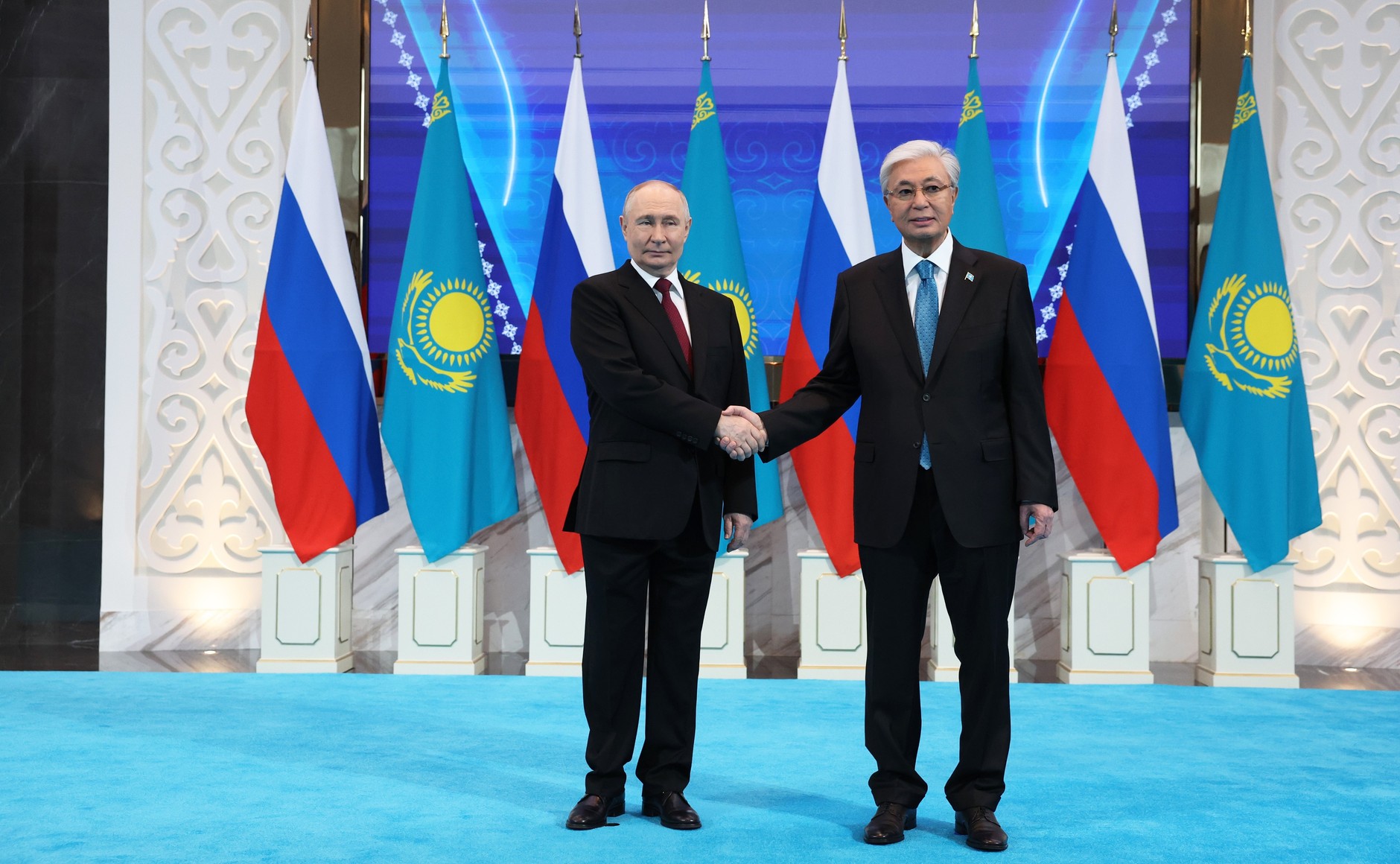
Emphasizing the scope of the deal, Russian President Vladimir Putin said, “We are not simply talking about the creation of a nuclear power plant or construction; we are talking about the creation of an entire industry, including education, personnel training, and so on.”
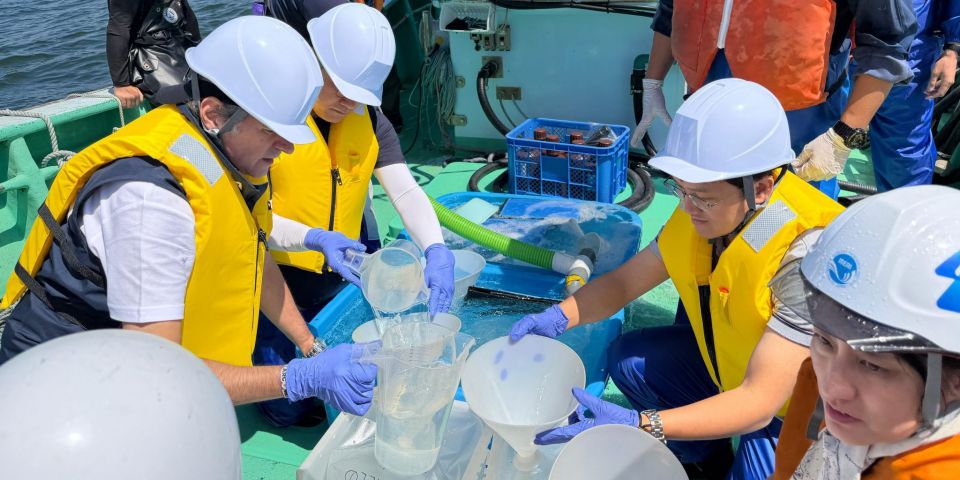
IAEA deal: Kazakhstan’s new deal with Russia is only one of two notable nuclear agreements it recently entered. Last week, Rafael Mariano Grossi, director general of the International Atomic Energy Agency, visited the country to strengthen cooperation on nuclear power, science, and medicine. On that visit, both parties signed a new 10-year road map outlining “a long-term vision for joint work across nuclear infrastructure, capacity building and technical cooperation.”
A separate agreement was also signed to support new joint research and scientific capacity building on technologies like the sterile insect technique, which can be leveraged to boost food security in the country.
Broader background: Kazakhstan is the largest uranium exporter in the world and among the 10 largest oil exporters. Despite this wealth of fuels, coal accounts for about one-half of the country’s total energy mix, and the country currently produces no nuclear power.
The country was previously home to Aktau, a 135-MWe sodium-cooled fast reactor, but that reactor entered operation in 1973, when Kazakhstan was still part of the Soviet Union. Aktau closed in 1999, only eight years after the country declared its independence. Outside of its uranium industry, Kazakhstan currently operates two research reactors and one subcritical assembly.
Beyond plans for Balkhash, Kazakhstan also has plans for a second nuclear power plant to be built in partnership with China National Nuclear Corporation. It is also in early-stage collaborations with the United States on potential small modular reactor projects and more broadly aims to have nuclear account for 5 percent of its generation mix by 2035.