Their findings, which were recently published in the journal Materials Degradation, could lead to the development of “more predictive and physically grounded” models for how uranium components degrade when exposed to hydrogen gas, according to LLNL. Such models, in turn, could lead to improved safety and durability for materials that are used in fusion energy generation, nuclear fuel storage, and hydrogen storage.
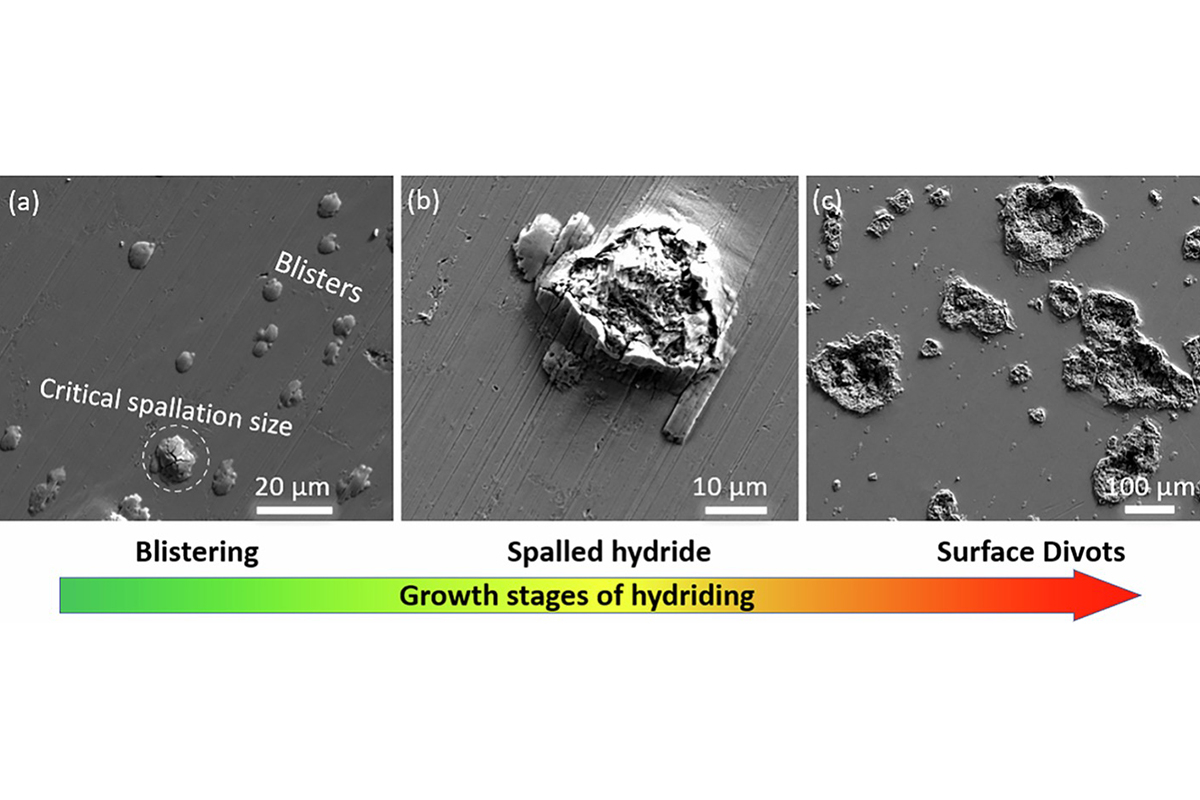
Uranium to uranium hydride: As hydrogen gas chemically reacts with uranium metal, the hydrogen diffuses into the uranium, resulting in the transformation of parts of the uranium into a compound called uranium hydride. That compound has a substantially greater volume than the original uranium metal.
As the uranium hydride expands toward the surface of the metal, it forms blisters that grow and burst open, releasing uranium hydride powder. After the surface is breached in this way, corrosive chemical reactions accelerate. Materials engineer and postdoctoral researcher Jibril Shittu, who is the corresponding author of the study, explained, “Adsorb, dissociate, diffuse, accumulate, blister, rupture, spall [fragment]. That's the cycle, and once it starts, it's hard to stop.”
Such runaway corrosive reactions can shorten the lifespan of fusion machines and weaken the viability of hydrogen and nuclear fuel storage systems.
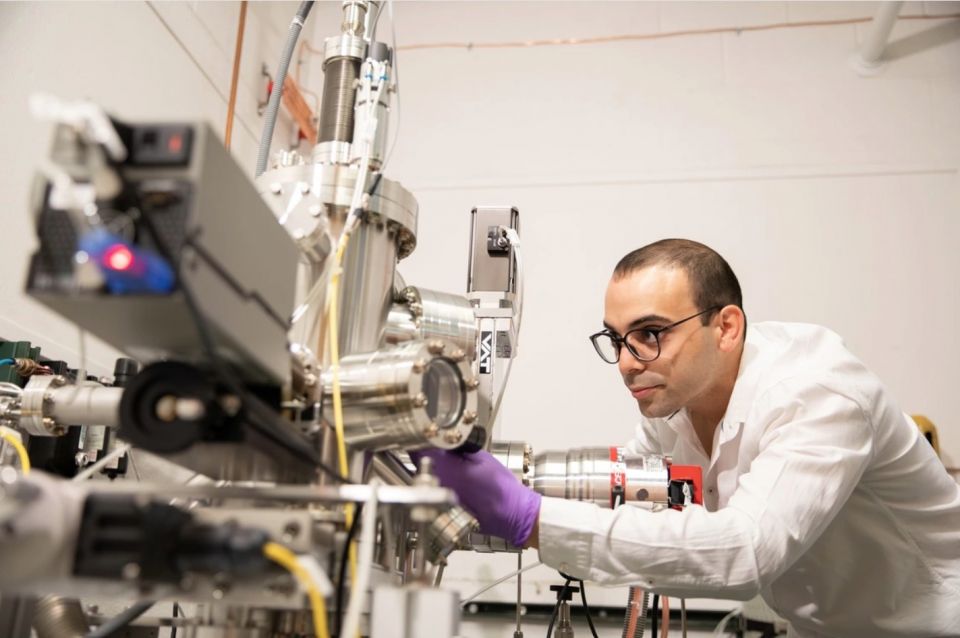
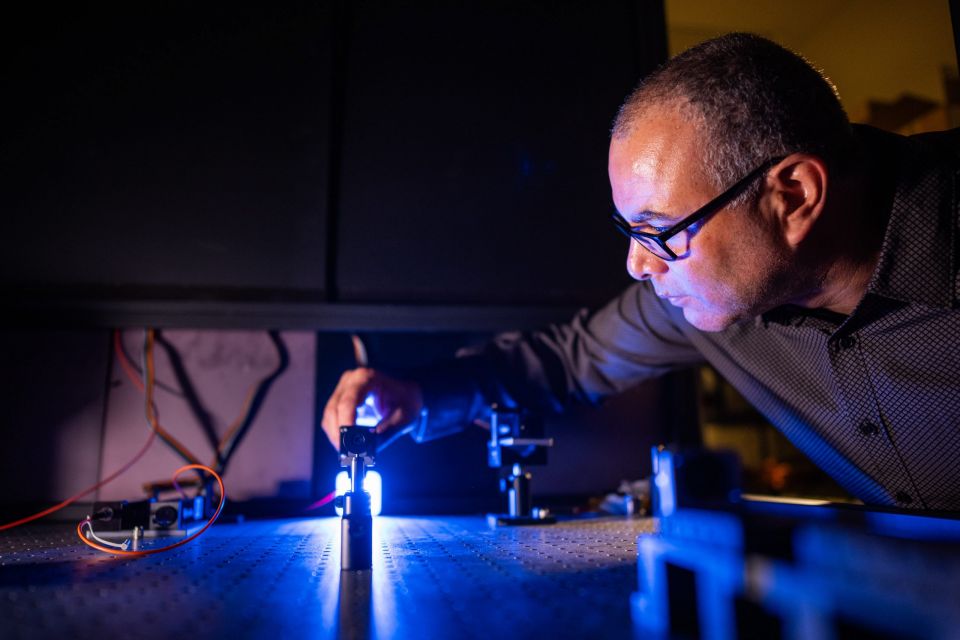
White-light interferometry: To better understand how this problematic hydrogen-uranium interaction begins, LLNL researchers used white-light interferometry to measure light reflected off a uranium surface and create a topographic map of the surface from the start of the interaction. They used this technique to repeatedly scan the uranium surface during the blistering process and created a video record of it for analysis.
The analysis revealed previously unknown details about the development of hydride blisters, including that they form in unexpected places on the uranium surface and then spread sideways through the shallow surface region rather than penetrating deep into the metal. The blisters were shown to be surprisingly wide and shallow.
The insights gained in this research will help scientists and engineers create more accurate models of the uranium-hydrogen corrosive process as they work to improve material properties to prevent such degradation in fusion reactors and other nuclear-related applications.
Other applications: The LLNL researchers intend to continue their white-light interferometry materials degradation studies under a wider range of temperature and pressure conditions to gather additional information. In addition to potentially leading to improvements in nuclear-related materials, this type of hydrogen-metal interaction analysis could have useful applications in other technology areas, including hydride superconductors.