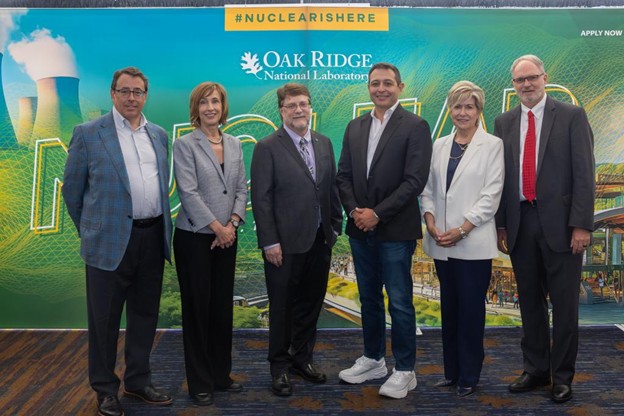
ORNL leadership gathered at the Nuclear Opportunities Workshop in Knoxville, with Trey Lauderdale, CEO of Atomic Canyon. From left: Joe Hoagland, Director of Special Initiatives; Susan Hubbard, Deputy for Science and Technology; Stephen Streiffer, ORNL Director; Lauderdale; Gina Tourassi, Associate Laboratory Director for Computing and Computational Sciences; and Mickey Wade, Associate Laboratory Director for Fusion and Fission Energy and Science. (Photo: Carlos Jones/ORNL)
The United States has tight new deadlines—18 months, max—for licensing commercial reactor designs. The Department of Energy is marshaling the nuclear expertise and high-performance computing assets of its national laboratories, in partnership with private tech companies, to develop generative AI tools and large-scale simulations that could help get nuclear reactor designs through the Nuclear Regulatory Commission’s licensing process—or the DOE’s own reactor pilot program. “Accelerate” and “streamline” are the verbs of choice in recent announcements from Oak Ridge National Laboratory and Idaho National Laboratory, as they describe plans with Atomic Canyon, Microsoft, and Amazon.
Energy Secretary Chris Wright (center) and leaders from Argonne, Intel, and Hewlett Packard Enterprise cut the ribbon to celebrate the Aurora exascale supercomputer. (Photo: Argonne)
Leaders from private companies, government, and national laboratories gathered at Argonne National Laboratory on July 17 and 18 for an exclusive AI x Nuclear Energy Executive Summit that the Department of Energy called a first-of-its-kind forum to “align next-generation nuclear systems with the needs of digital infrastructure.”
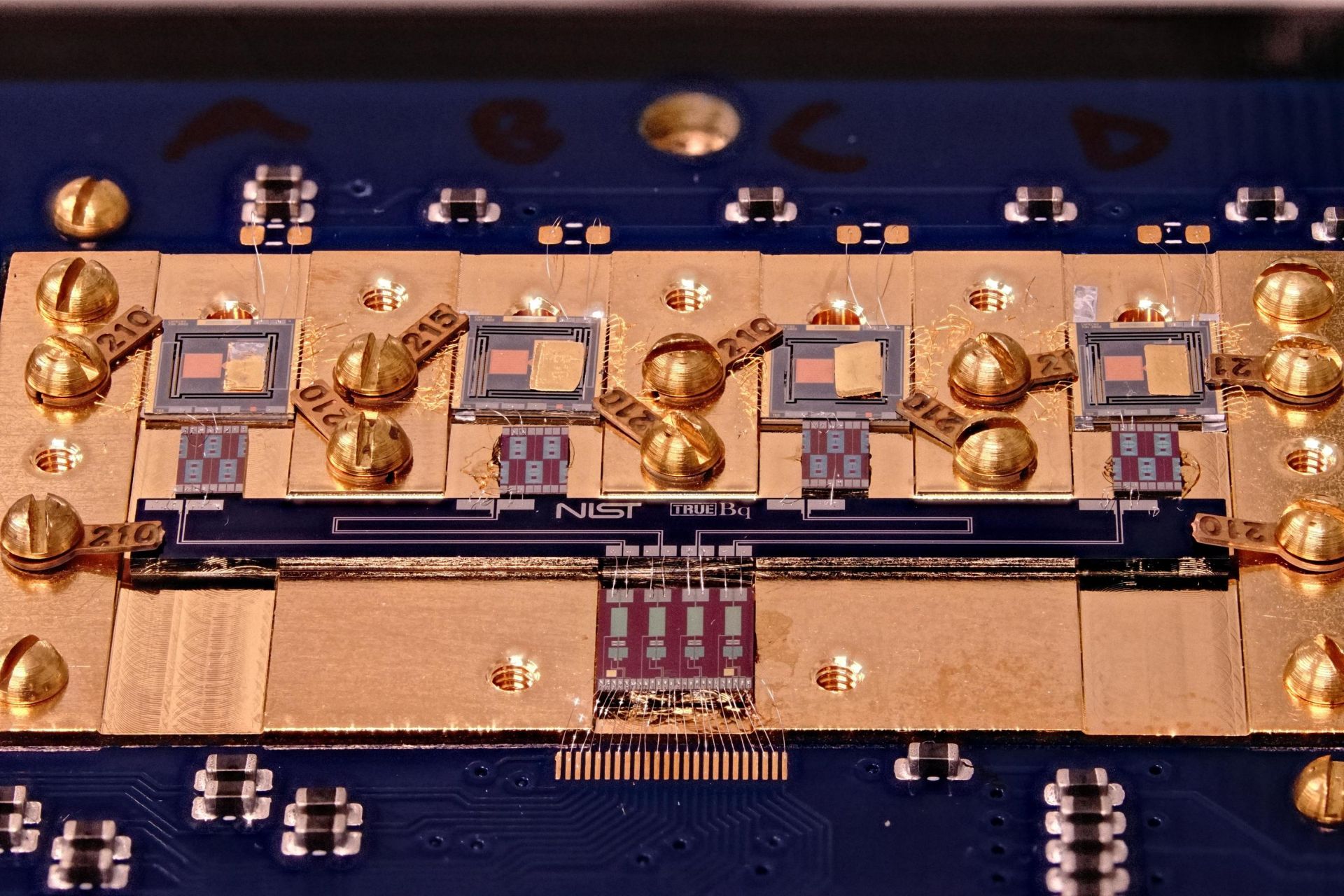
Close-up of a superconducting sensor board containing multiple transition-edge sensors (top row of squares), which detect energy released by individual radioactive decay events. (Photo: M. Carlson/NIST)
Researchers at the National Institute of Standards and Technology have developed a technique called cryogenic decay energy spectrometry capable of detecting single radioactive decay events from tiny material samples and simultaneously identifying the atoms involved. In time, the technology could replace characterization tasks that have taken months and could support rapid, accurate radiopharmaceutical development and used nuclear fuel recycling, according to an article published on July 8 by NIST.
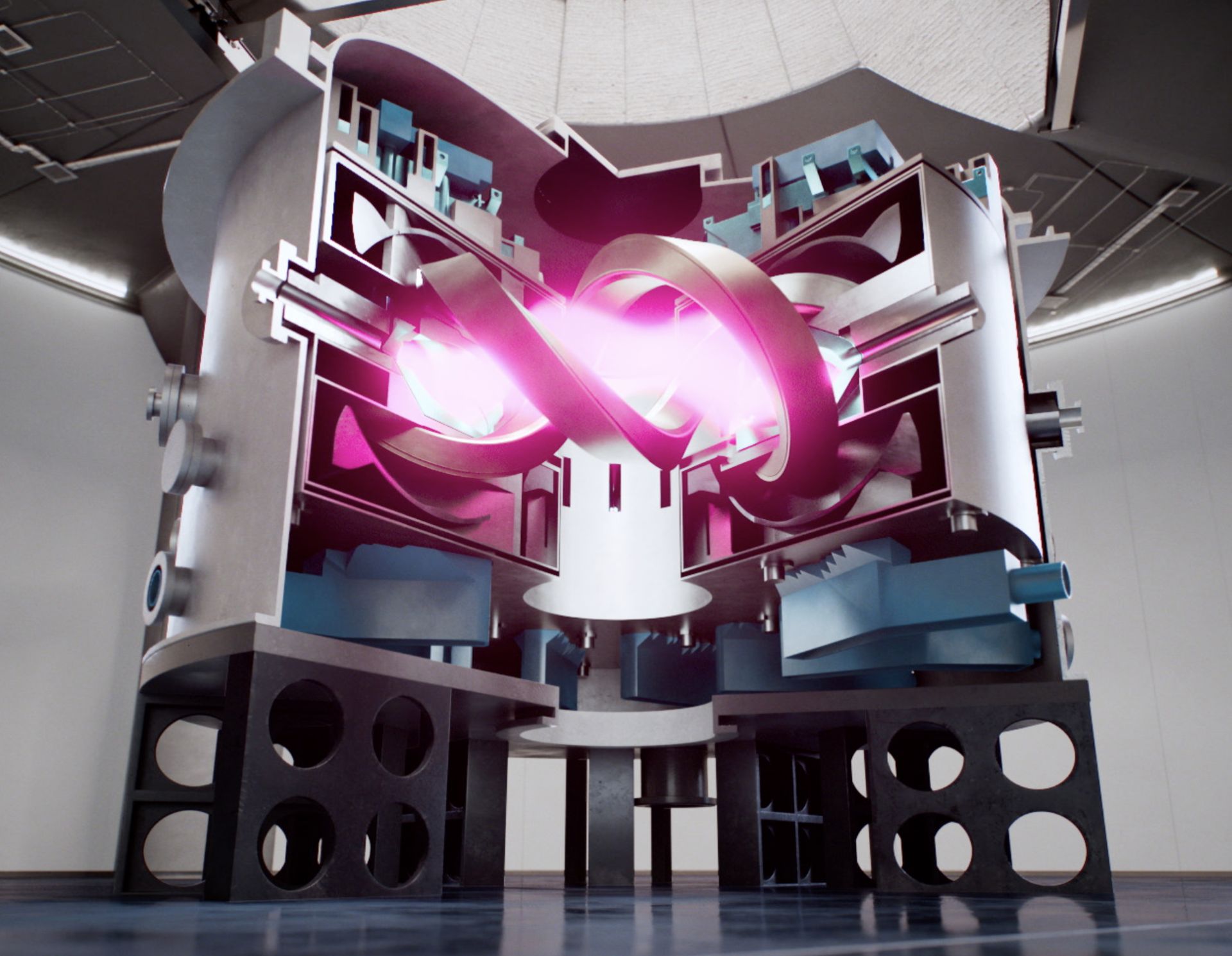
Concept art of the central cross-section of the Helix Katana stellarator. (Image: Helical Fusion)
Helical Fusion, a private fusion start-up based in Japan, announced it has closed its first round of venture capital financing, securing ¥2.3 billion ($15.6 million) in funding. According to Helical Fusion, this brings the company’s total capital investment—including grants and loans—to ¥5.2 billion ($35.3 million).
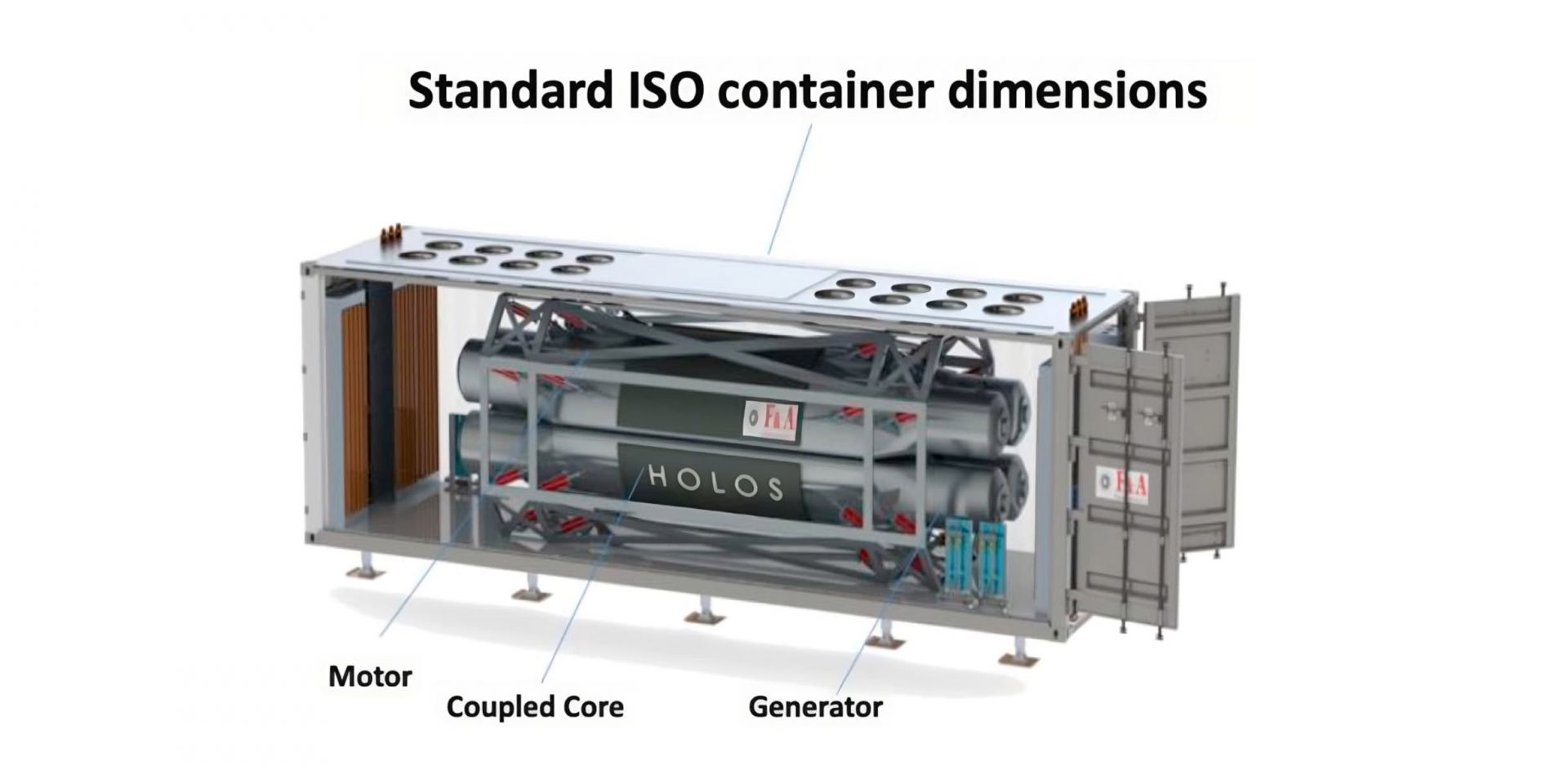
The compact, transportable Holos-Quad microreactor, developed by HolosGen, is shown housed within a standard 40-foot ISO container. (Image: HolosGen)
The University of Michigan’s Department of Nuclear Engineering and Radiological Sciences (NERS) has published a summary of a study on nuclear microreactors and machine learning (ML) that was conducted by researchers from NERS and Idaho National Laboratory. The full paper, “Nuclear Microreactor Transient and Load-Following Control with Deep Reinforcement Learning,” was featured in the July issue of Energy Conversion and Management: X.
A drone-borne GRS system assesses soil properties in an agricultural field. (Photo: M. Casling/IAEA)
The International Atomic Energy Agency has initiated a coordinated research project that will combine an “innovative, non-invasive, and scalable nuclear technique”—gamma-ray spectrometry (GRS)—with drones and satellite imagery to gather and analyze data that can reveal the quality of soil on agricultural lands around the world.
A representation of the NRIC DOME microreactor test bed. (Image: NRIC)
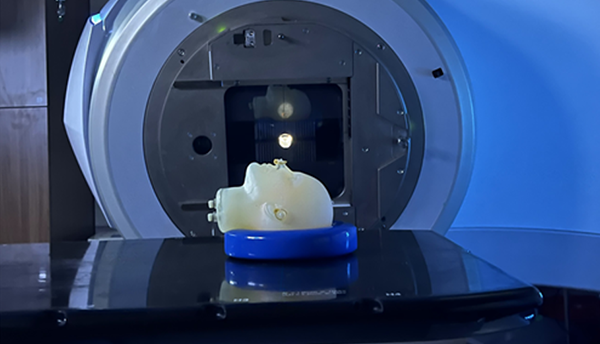
A NIST head-shaped phantom is helping researchers improve radiation dose estimates for cancer treatment. (Photo: NIST)
In an article just published by the Taking Measure blog of the National Institute of Standards and Technology, Stephen Russek—who leads the Imaging Physics Project in the Magnetic Imaging Group at NIST and codirects the MRI Biomarker Measurement Service—describes his team’s work using phantom stand-ins for human tissue.
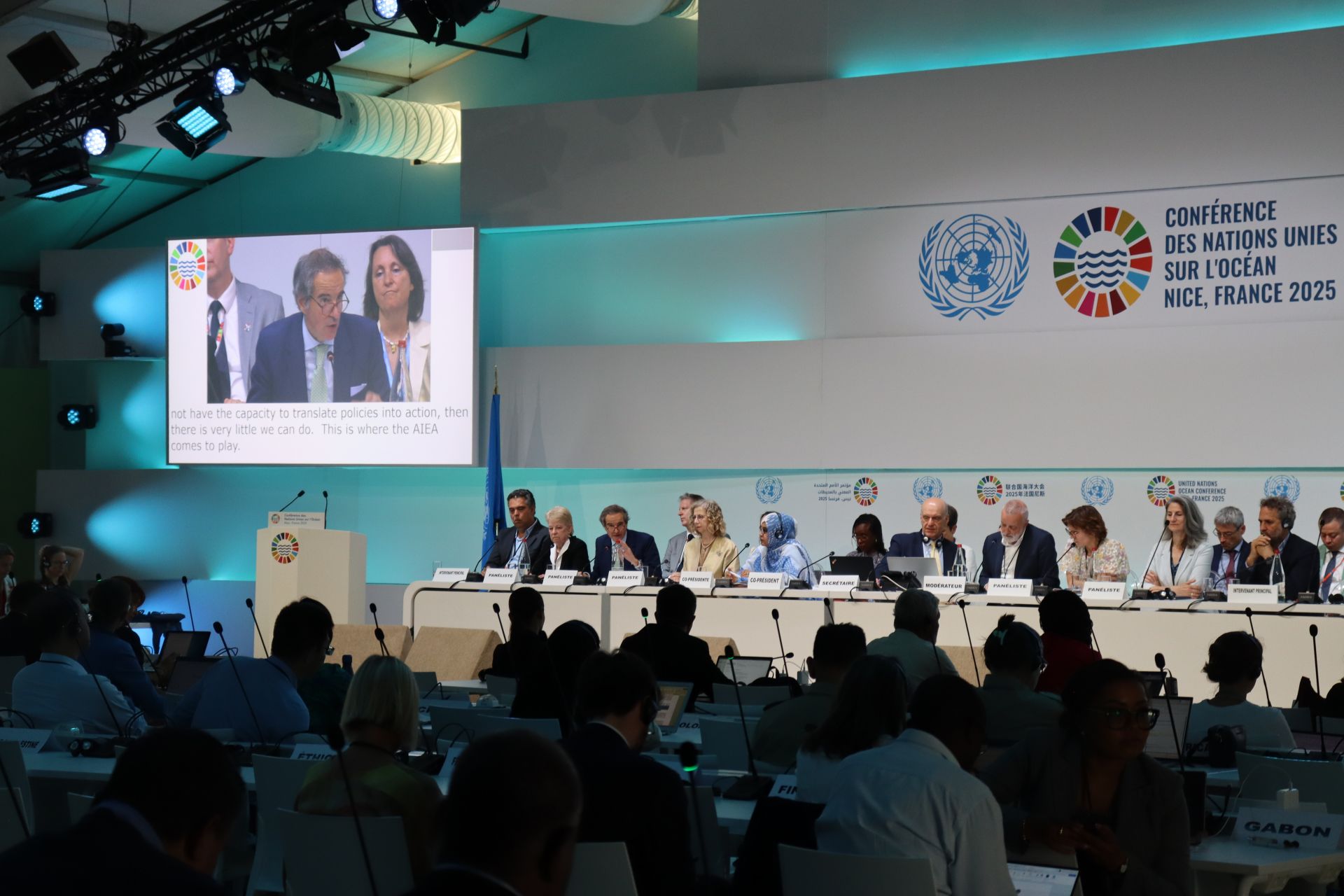
IAEA director general Rafael Grossi speaks during a session on combating marine pollution. (Photo: E. McDonald/IAEA)
Plastic waste is polluting the oceans and entering the human body in the form of microplastics. According to the United Nations, without immediate action the amount of plastic finding a way into the oceans each year could reach 37 million metric tons by 2040, becoming a threat to marine and human life.
In this artist’s concept, a notional spacecraft with a high-power plasma thruster is powered by kilowatt-level radiovoltaics. (Image: DARPA/Alan Clarke)
You could call it a power contest. Teams picked for a new research program from the Defense Advanced Research Projects Agency (DARPA) will compete to design radiovoltaic cells that can outperform others in measured power density and endure high-flux radiation from a U.S. Army Research Lab linear accelerator. The top teams will strive to make it through a second downselect based on the performance of cells sequestered in time capsules and subjected to even more punishing high-flux radiation. Concepts that make it to the bonus period have a chance to be built into radioisotope-fueled power systems uniquely suited to high-radiation regions of space or dark, remote places on Earth.
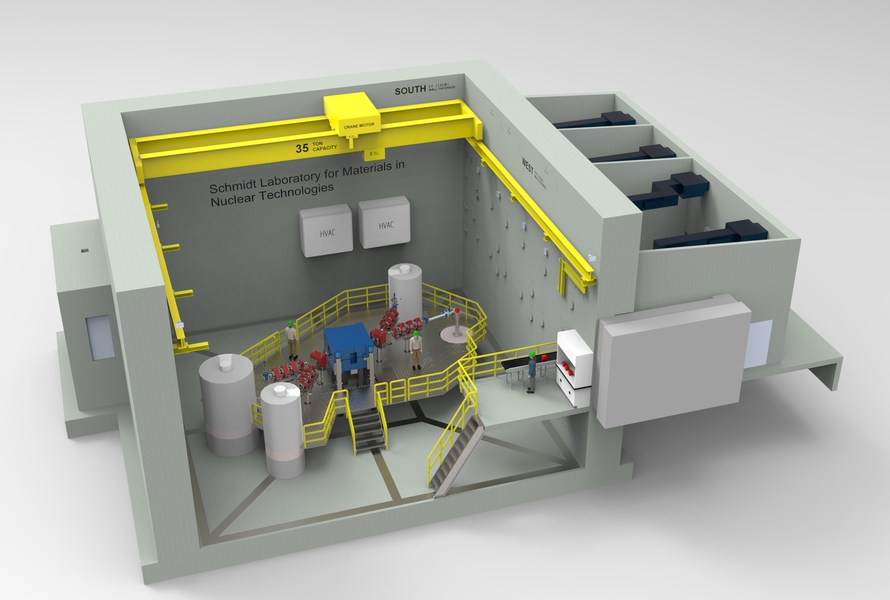
Housed at MIT’s Plasma Science and Fusion Center, the Schmidt Laboratory for Materials in Nuclear Technologies will use a compact cyclotron to accelerate the testing of materials for use in commercial fusion power plants. (Image: Rick Leccacorvi and Rui Vieira/PSFC)
The Massachusetts Institute of Technology’s Plasma Science and Fusion Center (PSFC) has launched the Schmidt Laboratory for Materials in Nuclear Technologies (LMNT). Backed by a philanthropic consortium led by Eric and Wendy Schmidt, LMNT is designed to speed up the discovery and evaluation of cost-effective materials that can withstand extreme fusion conditions for extended periods.
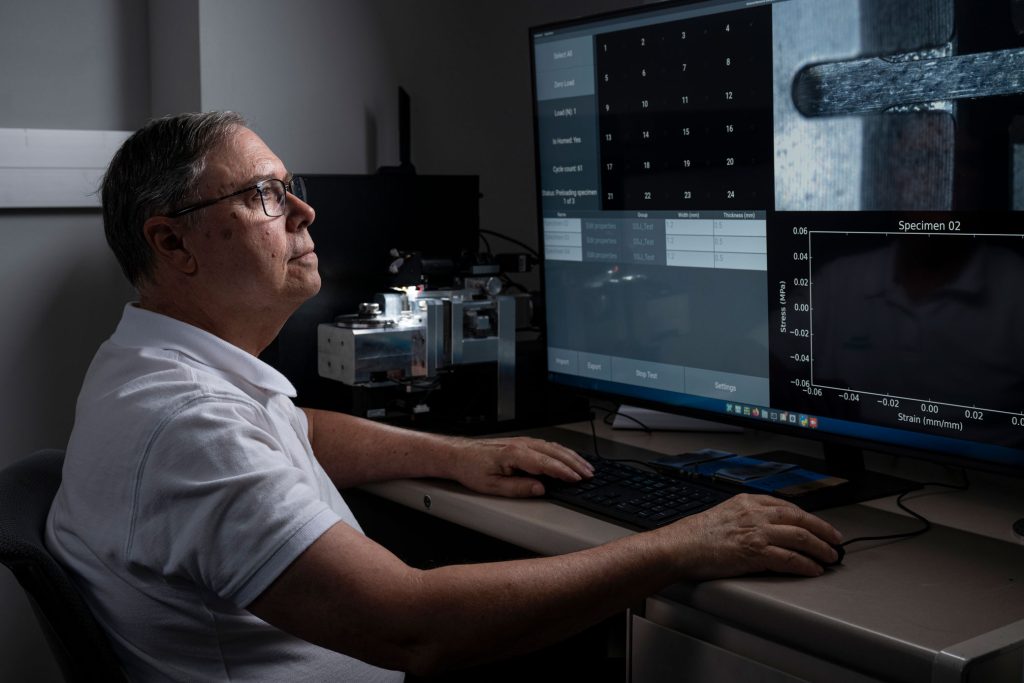
Professor Joseph Newkirk operates a testing device in Missouri S&T’s Toomey Hall. (Photo: Blaine Falkena/Missouri S&T)
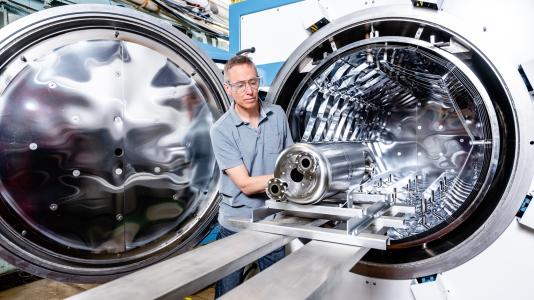
Argonne physicist Michael Kelly loads a superconducting cavity into a large furnace. (Photo: ANL)
Argonne National Laboratory said it has secured just over $10 million from the Department of Energy’s Advanced Research Projects Agency–Energy (ARPA-E) for two research projects investigating the transmutation of spent nuclear fuel into less radioactive substances.
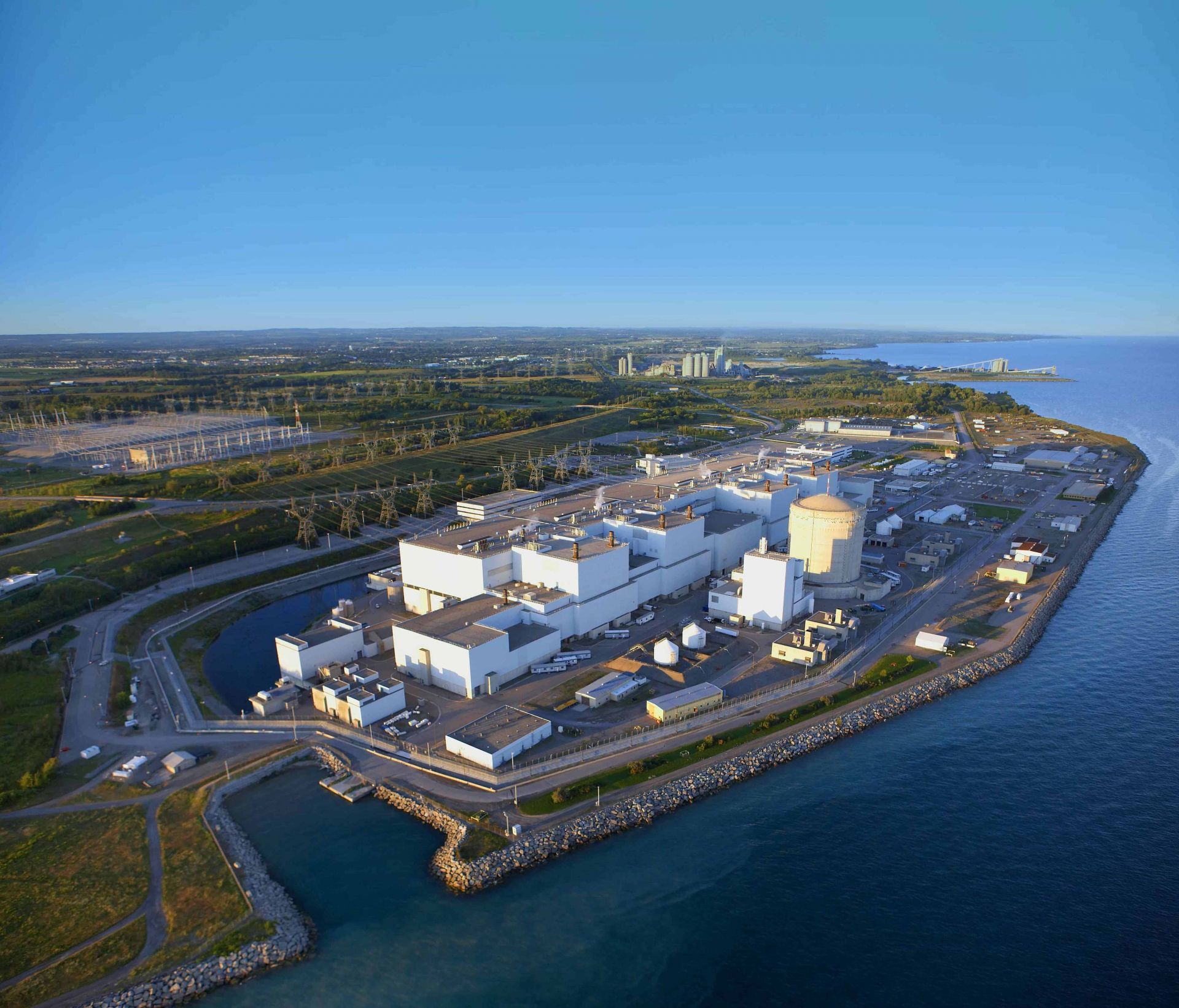
Darlington nuclear power plant in Clarington, Ontario. (Photo: OPG)
The Canadian Nuclear Safety Commission has amended Ontario Power Generation’s power reactor operating license for Darlington nuclear power plant to authorize the production of the medical radioisotopes lutetium-177 and yttrium-90.

-3 2x1.jpg)
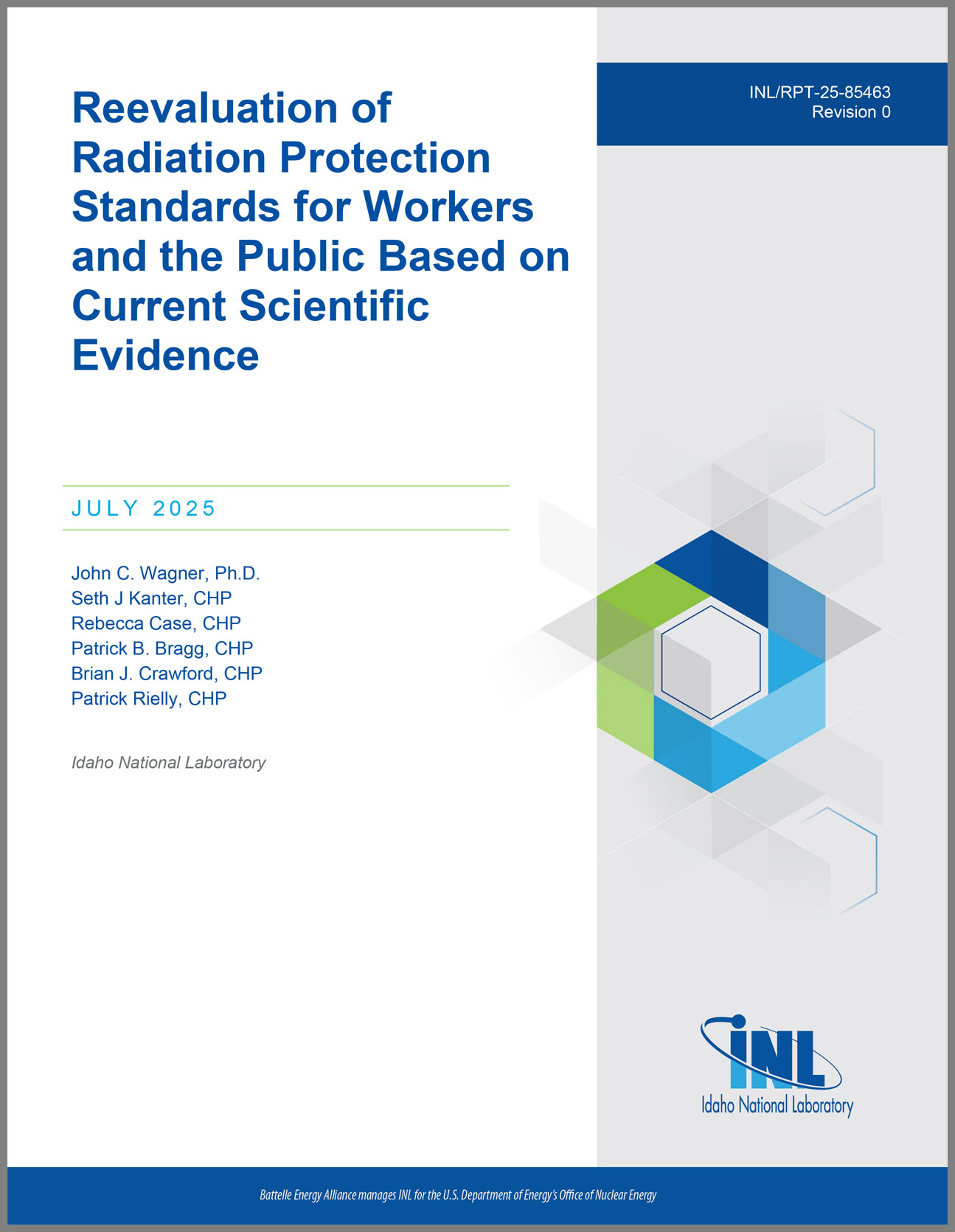 A report just released by Idaho National Laboratory reviews decades of radiation protection standards and research on the health effects of low-dose radiation and recommends that the current U.S. annual occupational dose limit of 5,000 mrem be maintained without applying ALARA—the “as low as reasonably achievable” regulatory concept first introduced in 1971—below that threshold.