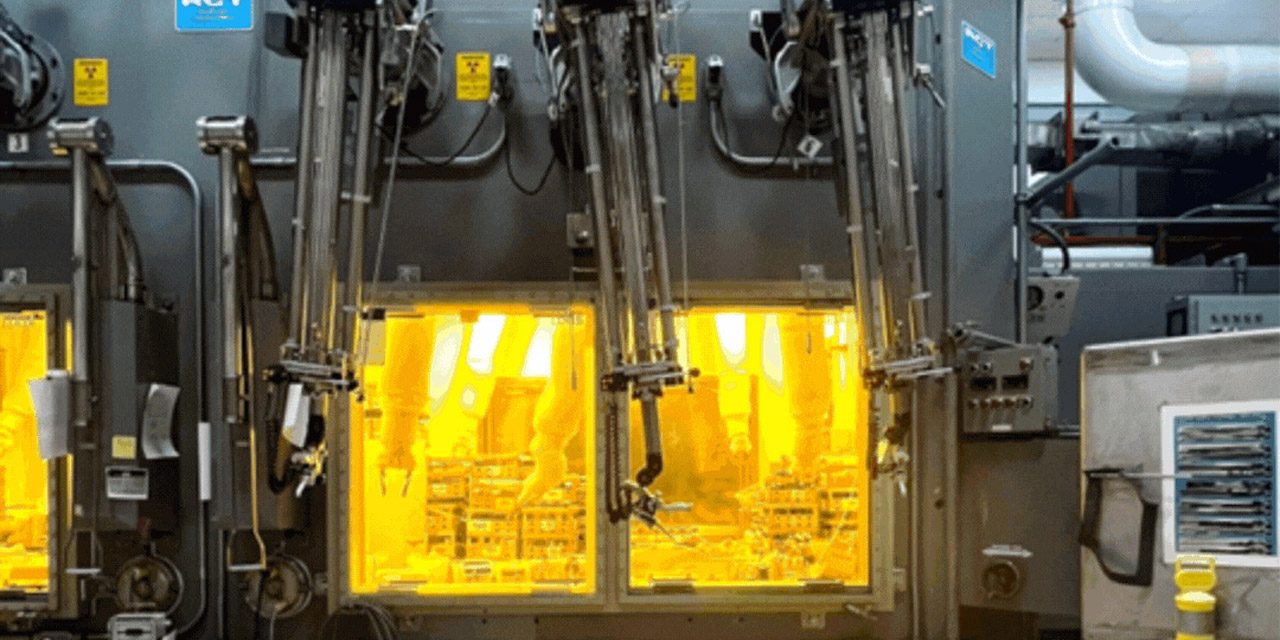
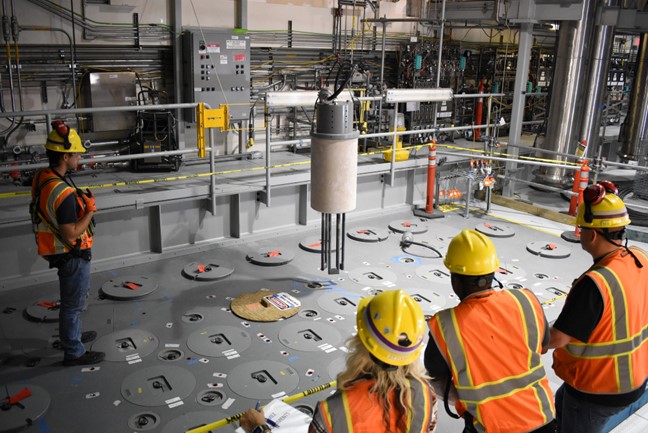
Upgrades are under way at the Hanford Site's 222-S Laboratory, including replacing the Cold War-era windows in the labs hot cells. Photo: DOE)
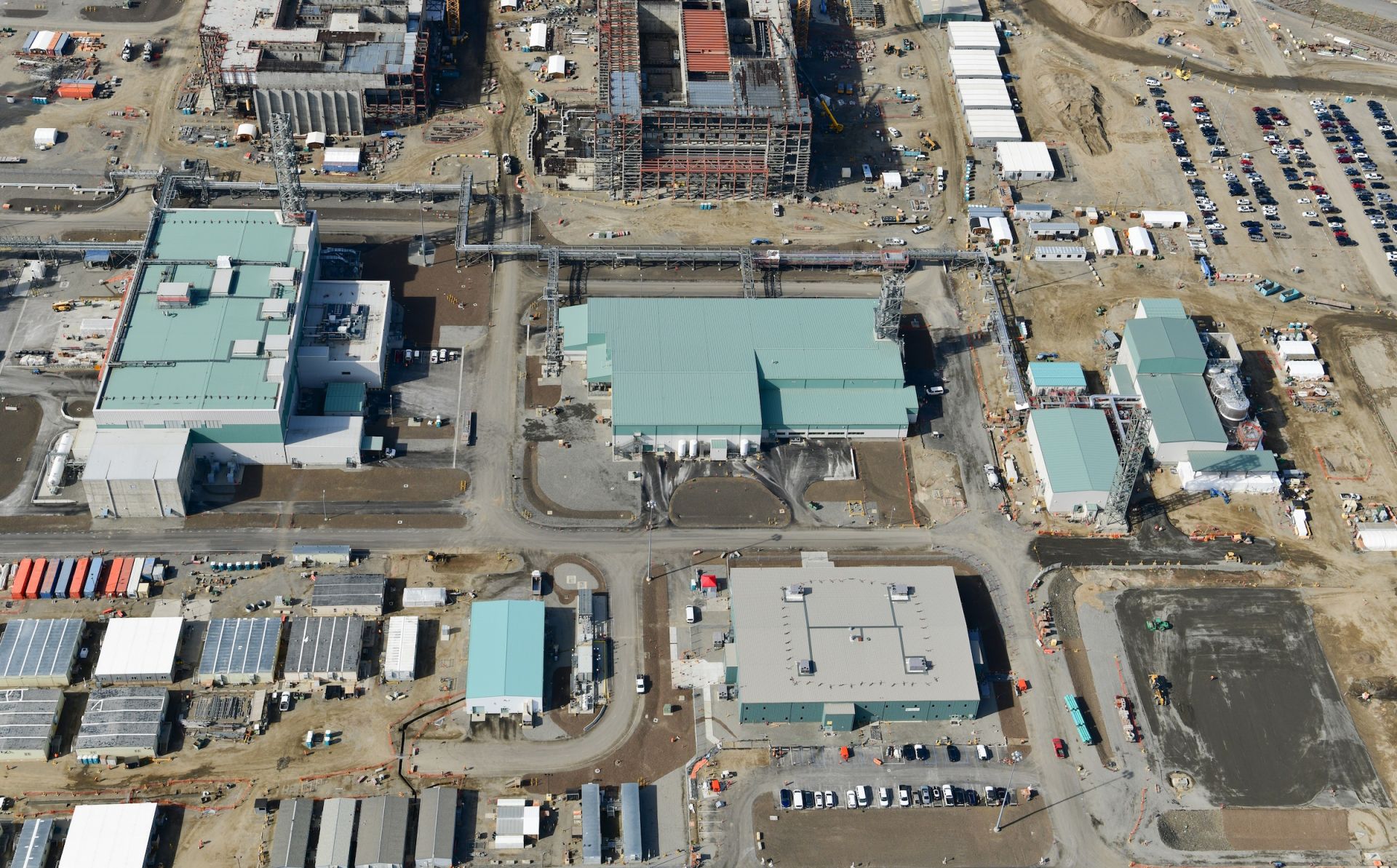
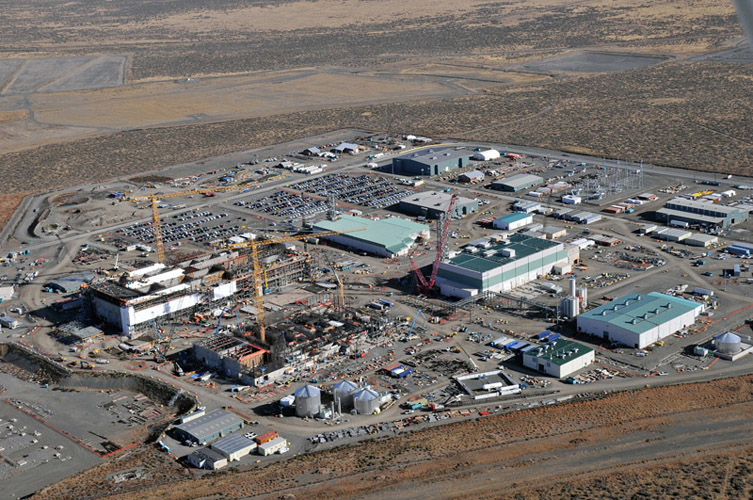
Hanford’s Waste Treatment and Immobilization Plant, also known as the Vit Plant. (Photo: Bechtel National)
The Department of Energy’s Office of Environmental Management once again awarded a 10-year, $45 billion contract to Hanford Tank Waste Operations and Closure (H2C) of Lynchburg, Va., for the cleanup of tank waste at the Hanford Site.
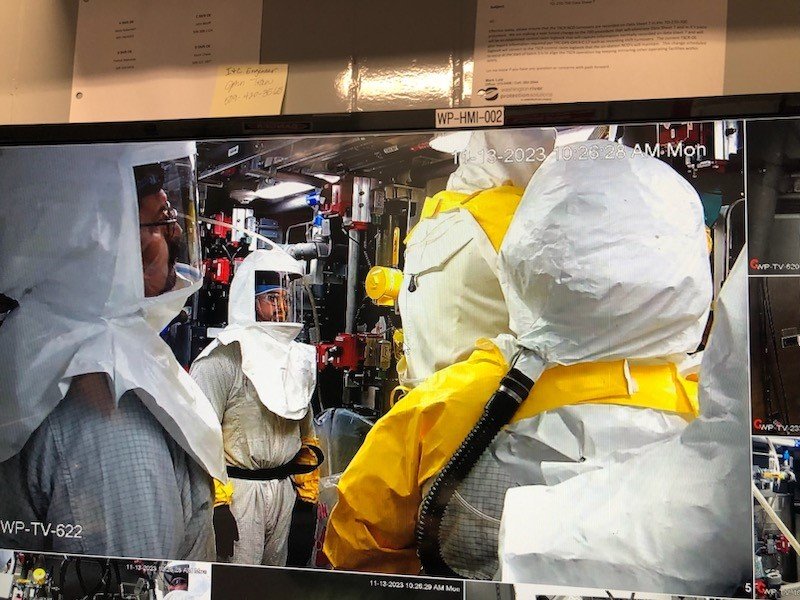
A monitor in the control room of the Hanford Site’s TSCR system shows workers performing maintenance inside the TSCR facility. (Photo: DOE)
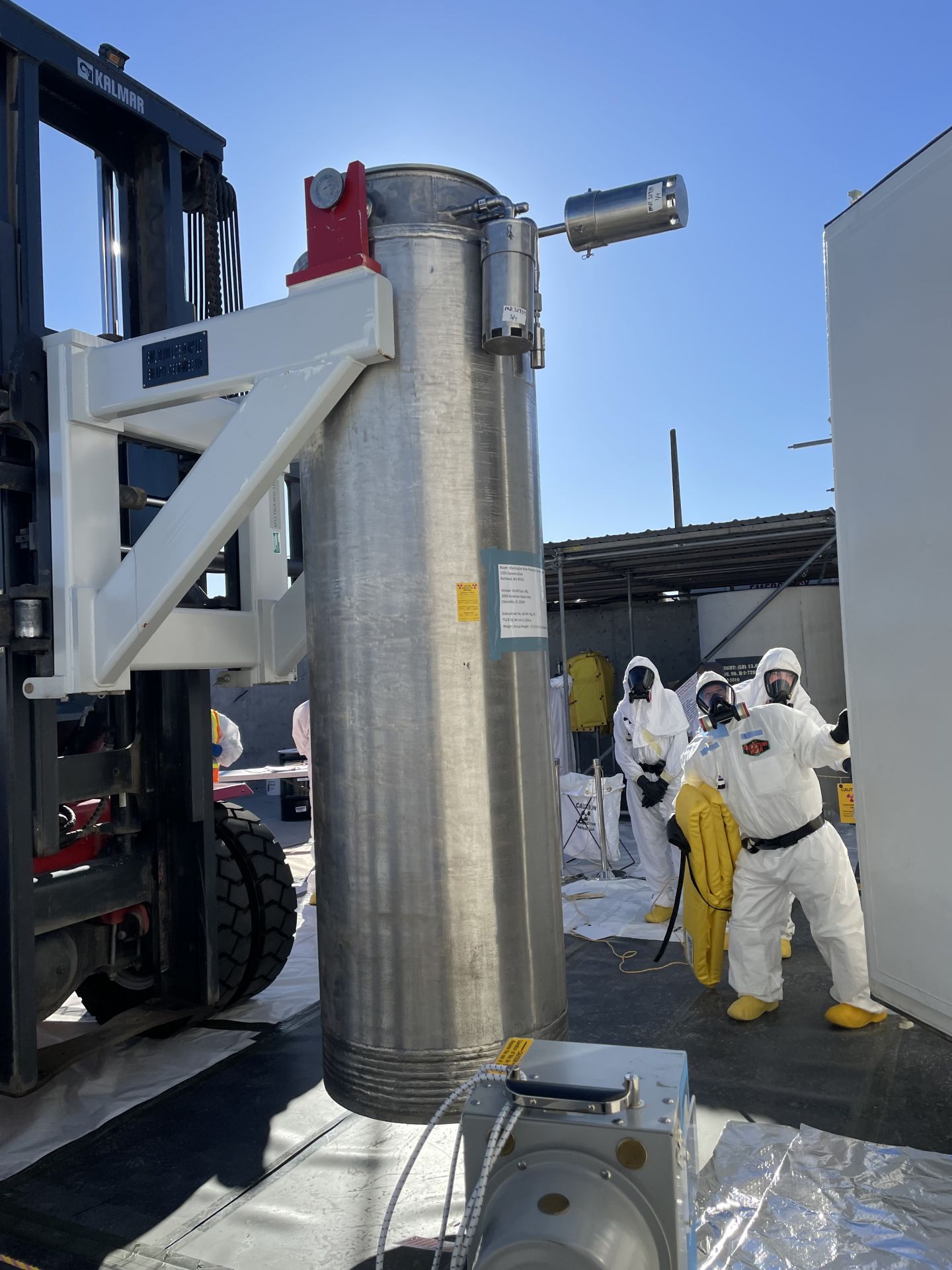
The Department of Energy Office of Environmental Management’s Office of River Protection and contractor Washington River Protection Solutions have completed the first waste processing campaign through the Tank-Side Cesium Removal (TSCR) system at the Hanford Site.
The 2F Evaporator at SRS. (Photo: Savannah River Site Photography)
The Department of Energy’s Office of Environmental Management is responsible for roughly 90 million gallons of radioactive liquid waste at Idaho National Laboratory, the Hanford Site in Washington state, and the Savannah River Site in South Carolina. About 900,000 gallons of waste are stored at INL, 56 million gallons at Hanford, and roughly 36 million at SRS. A further 400,000 gallons of waste from various operations are being stored at the Oak Ridge Site in Tennessee.
Ray Tran, an engineer for Savannah River tank farms, helps complete a timeline of SRS historical events as part of SRMC’s vision casting training initiative. (Photo: DOE)
More than 3,000 employees with Department of Energy contractor Savannah River Mission Completion (SRMC) participated in a vision casting initiative, learning more about the past, present, and future of the Savannah River Site’s liquid waste mission.
Some of the participants of the recent SRNL-Hanford Analytical Knowledge Sharing Workshop pause for a photo. (Photo: DOE)
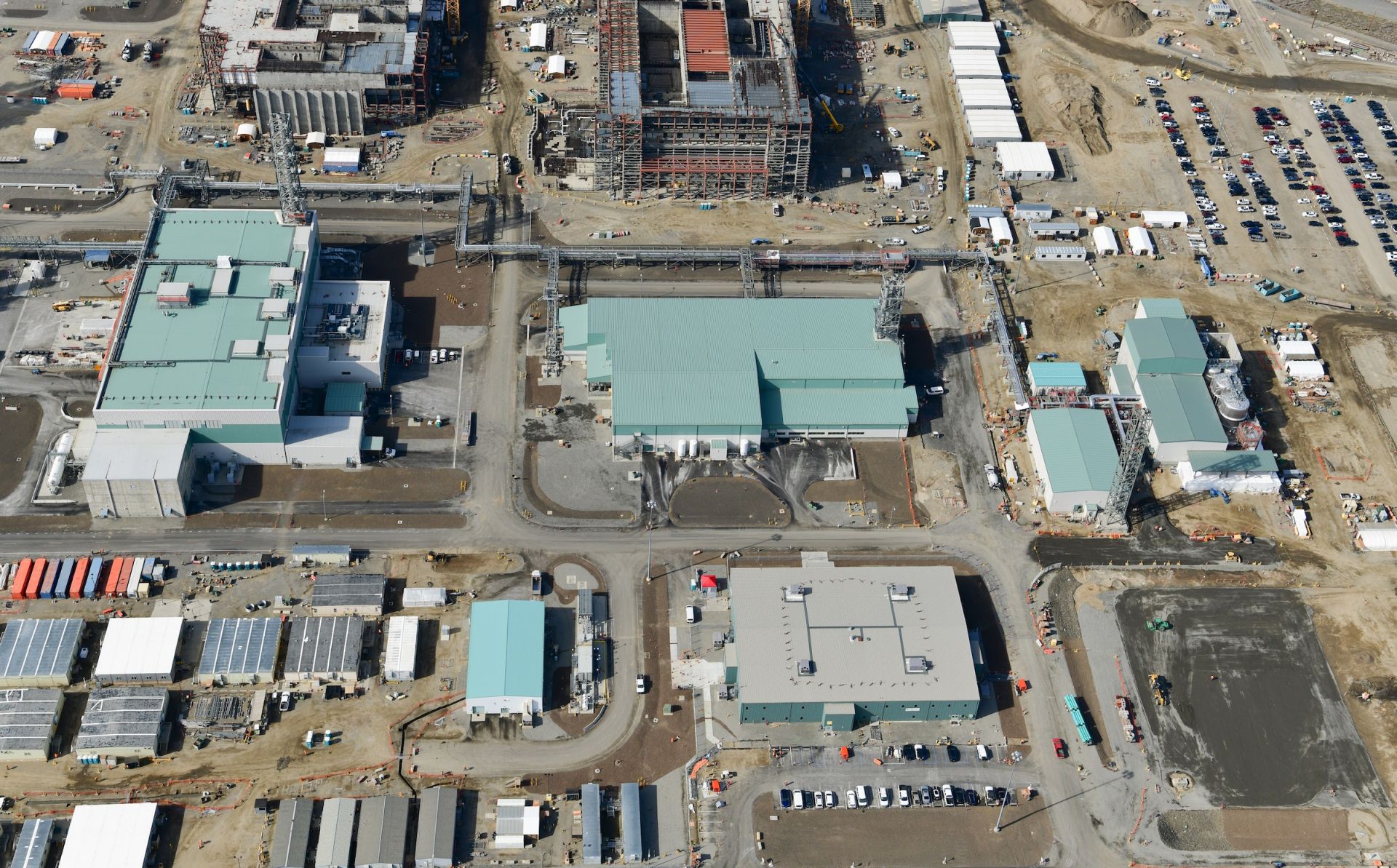
Hanford’s Waste Treatment and Immobilization Plant. (Photo: DOE)
A pair of recent reports by the U.S. Government Accountability Office and the National Academies of Science, Engineering, and Medicine highlight some of the challenges the Department of Energy faces in treating the millions of gallons of legacy radioactive waste at the Hanford Site in Washington state.
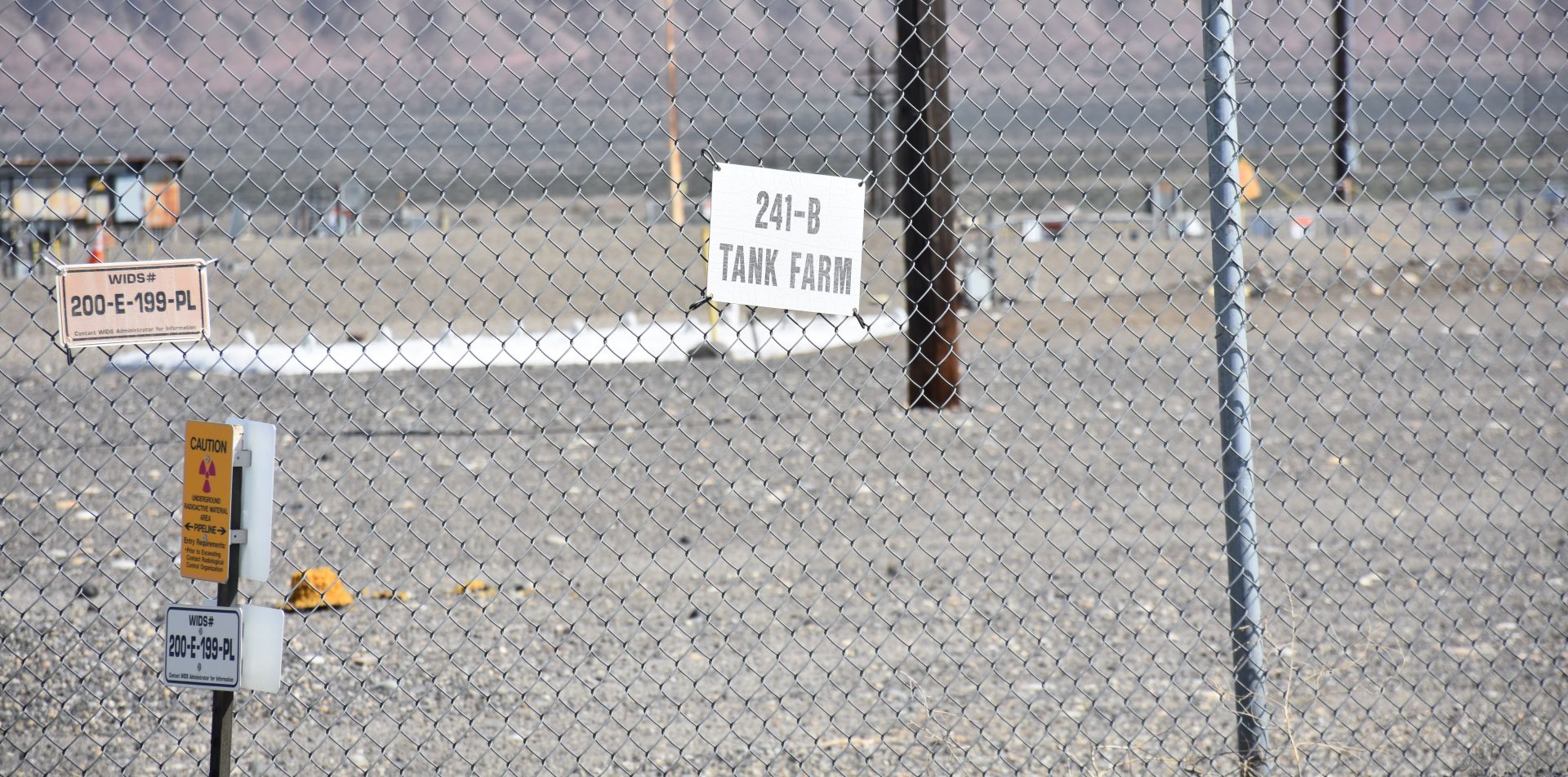
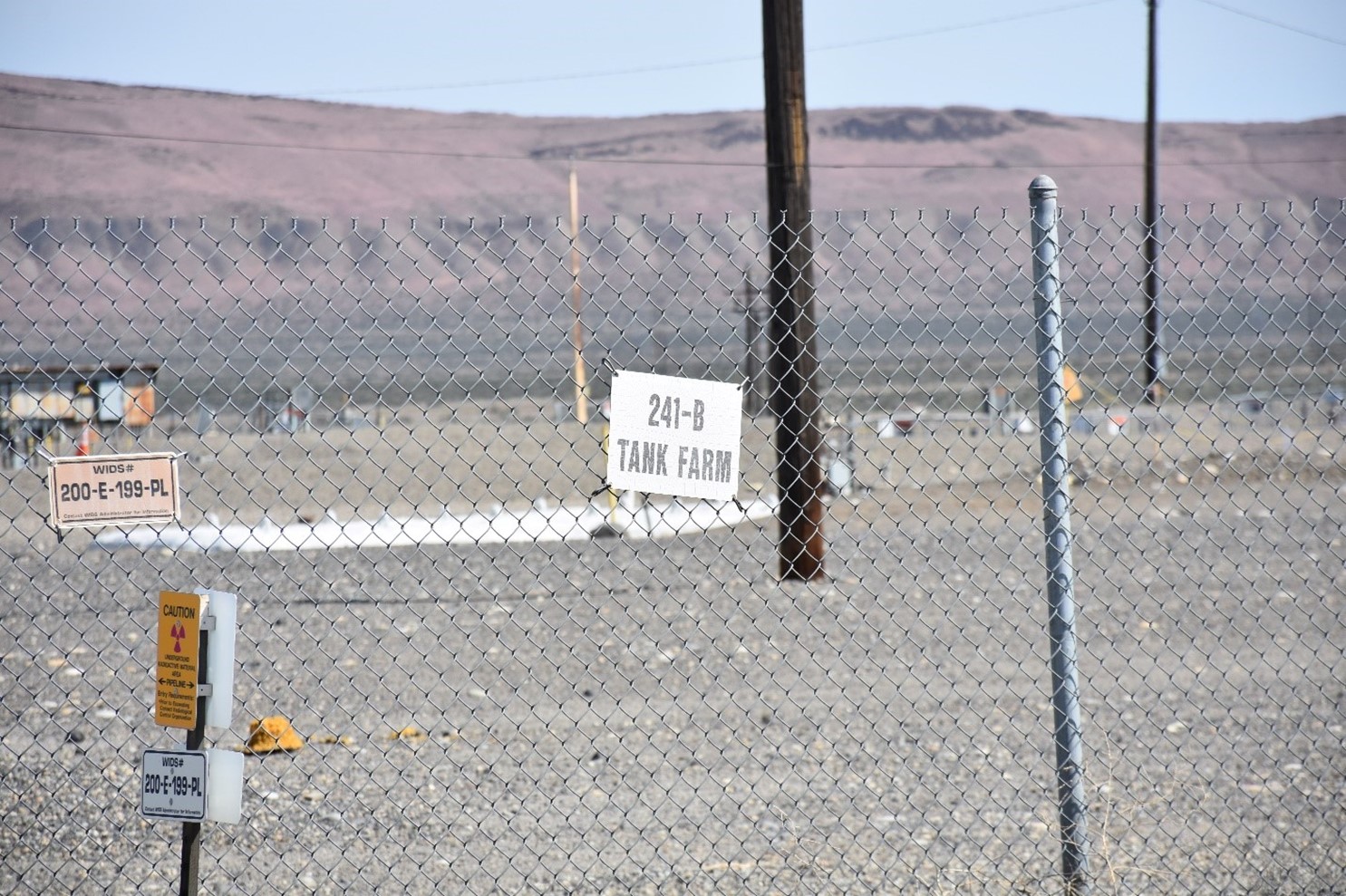
The Hanford Site’s B Complex area tank farm containing waste created during the production of plutonium at the site. (Photo: DOE)
After nearly three years of discussions and more than 60 mediation sessions, the Department of Energy, Washington State Department of Ecology, and the Environmental Protection Agency announced that they have reached a conceptual agreement on revising plans for managing millions of gallons of waste stored in tanks at the Hanford Site near Richland, Wash.
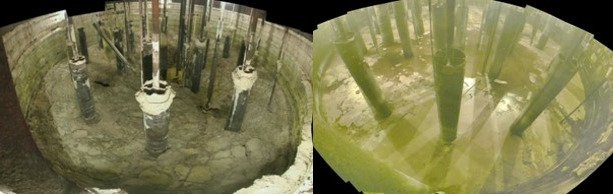
Photos taken inside Hanford’s Tank AX-101 before workers started removing radioactive and chemical waste from it in January. As of April 18, crews have removed 35 percent of the tank waste. (Photos: DOE)
The Department of Energy’s Office of Environmental Management (EM) said in an April 18 release that workers have so far removed almost 150,000 gallons, or about 35 percent, of the radioactive and chemical waste from Tank AX-101 at the department’s Hanford Site near Richland, Wash. Retrieval from this tank began in January.
Hanford’s Waste Treatment and Immobilization Plant, also known as the Vit Plant. (Photo: Bechtel National)
The Department of Energy’s Office of Environmental Management awarded a 10-year contract worth up to $45 billion to Hanford Tank Waste Operations and Closure (H2C) of Lynchburg, Va., to oversee the management of liquid radioactive tank waste at the DOE’s Hanford Site in southeastern Washington state.
Workers install one of 18 startup heaters into Melter 1 of Hanford’s Low-Activity Waste Facility. (Photo: Bechtel National)
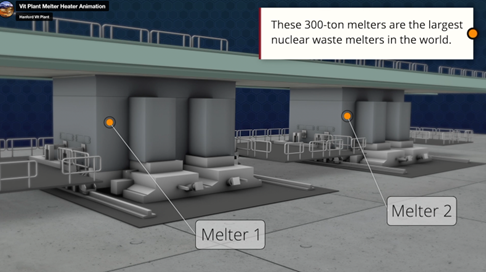
Heating of the first waste vitrification melter at the Department of Energy’s Hanford Site was paused after operators identified an “abnormal condition with the startup heater power supplies,” the DOE’s Office of River Protection (ORP) said. Heat-up of the 300-ton melter, which will be used to vitrify Hanford’s low-level radioactive tank waste, was initiated on October 8.
A screenshot from a 3D animation showing the heat-up of Hanford’s melters. (Image: DOE)
Crews at the Department of Energy’s Hanford Site, near Richland, Wash., have begun heating up the first of two 300-ton melters that will be used to vitrify mixed low-level radioactive and chemical tank waste. According to the DOE’s Office of Environmental Management (EM), initiating and completing the heating of the melter is a critical step to commissioning Hanford’s Waste Treatment and Immobilization Plant (WTP), which will treat and stabilize the site’s 56 million gallons of tank waste by immobilizing it in glass through the vitrification process.
The B Farm underground waste tank area at Hanford. (Photo: DOE)
Washington state’s Department of Ecology and the U.S. Department of Energy have agreed on a plan for how to respond to two underground tanks that are leaking radioactive waste, as well as any future tank leaks, at the Hanford Site near Richland, Wash.
In April 2021, following a year-long leak assessment, the DOE announced that Hanford’s Tank B-109 is leaking waste into the surrounding soil. Tank T-111 was discovered to be leaking in 2013. Currently, Tank B-109 is leaking about 1.5 gallons of waste per day, and Tank T-111 is leaking less than a gallon a day, according to the DOE.
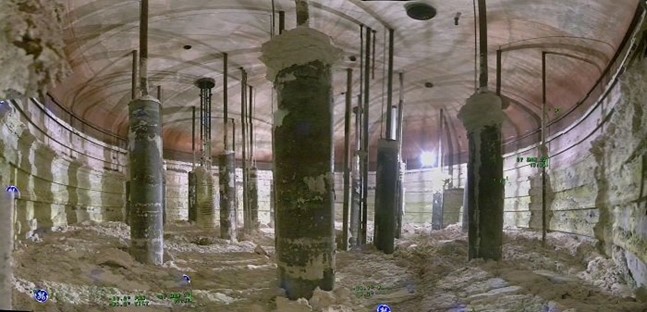
Hanford workers will soon begin retrieving about 373,000 gallons of waste from Tank AX-101, shown here in an image from an inspection video shot. (Photo: DOE)
Washington River Protection Solutions (WRPS) is preparing to retrieve waste from Tank AX-101 at the Department of Energy’s Hanford Site near Richland, Wash. WRPS is the tank operations contractor at Hanford.
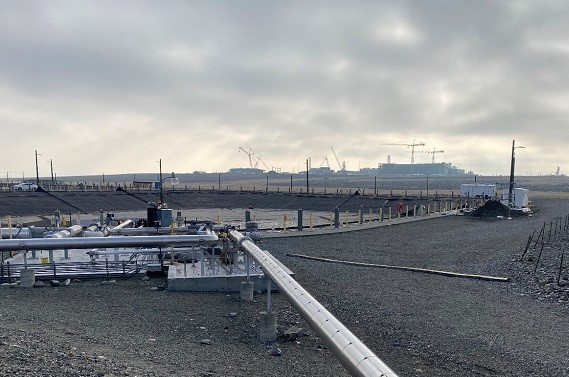
During the Hanford Site's Direct-Feed Low-Activity Waste Program treatment operations, the Waste Treatment and Immobilization Plant, background, will feed liquid waste to the Liquid Effluent Retention Facility, foreground, through a primary transfer line pictured here. (Photo: DOE)
Work crews at the Department of Energy's Hanford Site recently completed the first transfer of test water from the Waste Treatment and Immobilization Plant's Effluent Management Facility to the nearby Liquid Effluent Retention Facility (LERF). The transfer of 6,000 gallons was the first simulation of the process that will be used to treat secondary liquid waste from the plant’s Low-Activity Waste Facility during operations to treat tank waste.
“This is a tremendous accomplishment that culminates years of work by our team and alumni toward being ready for hot commissioning,” said Valerie McCain, project director and senior vice president for Bechtel National, Inc. “It’s an important step for the entire Hanford team and our collective mission of protecting the Columbia River and its shoreline communities.”
Bechtel National is a contractor of the DOE's Office of Environmental Management's Office of River Protection.