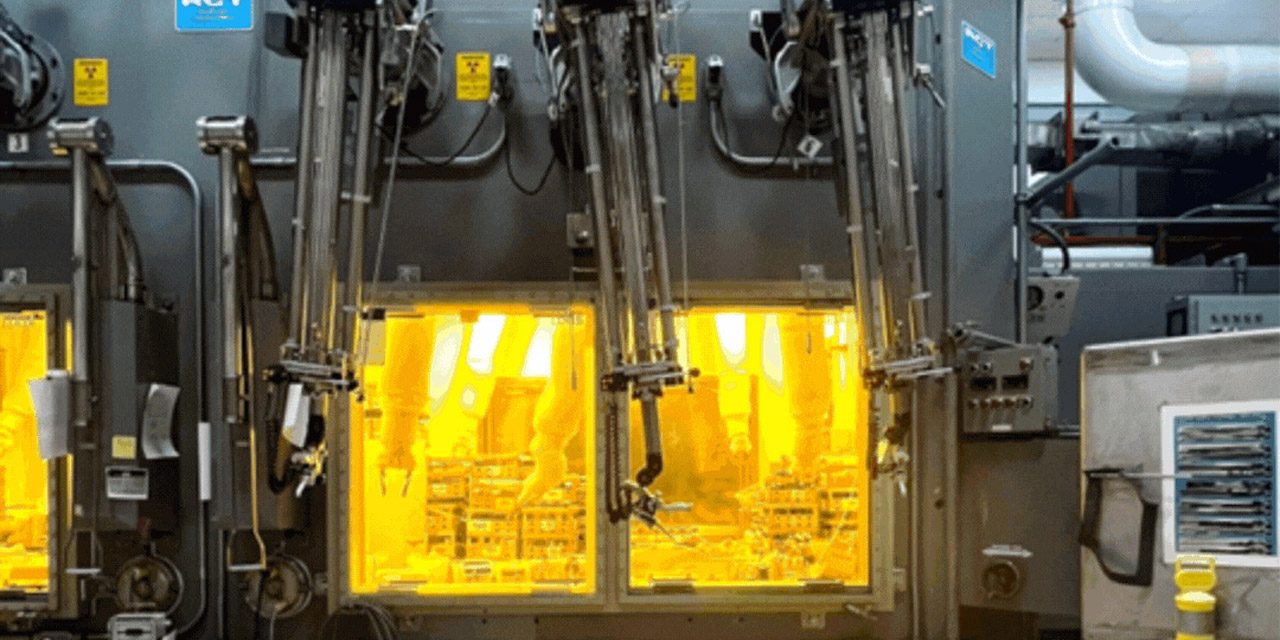
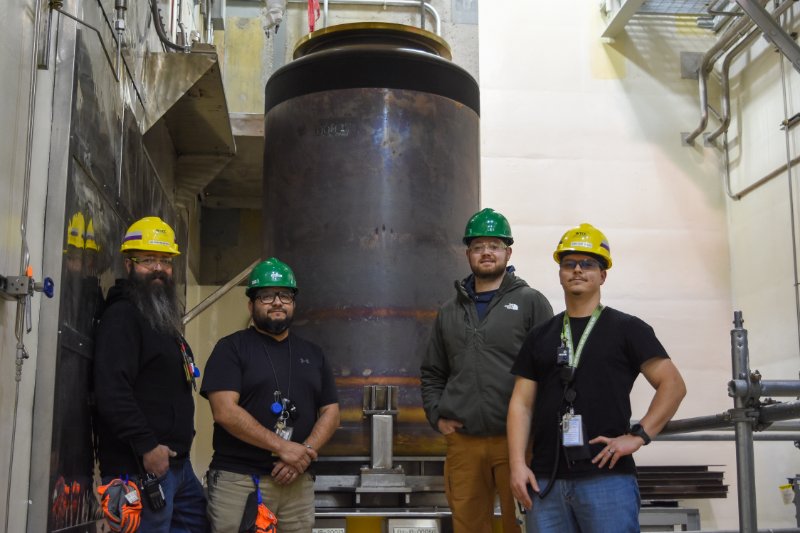
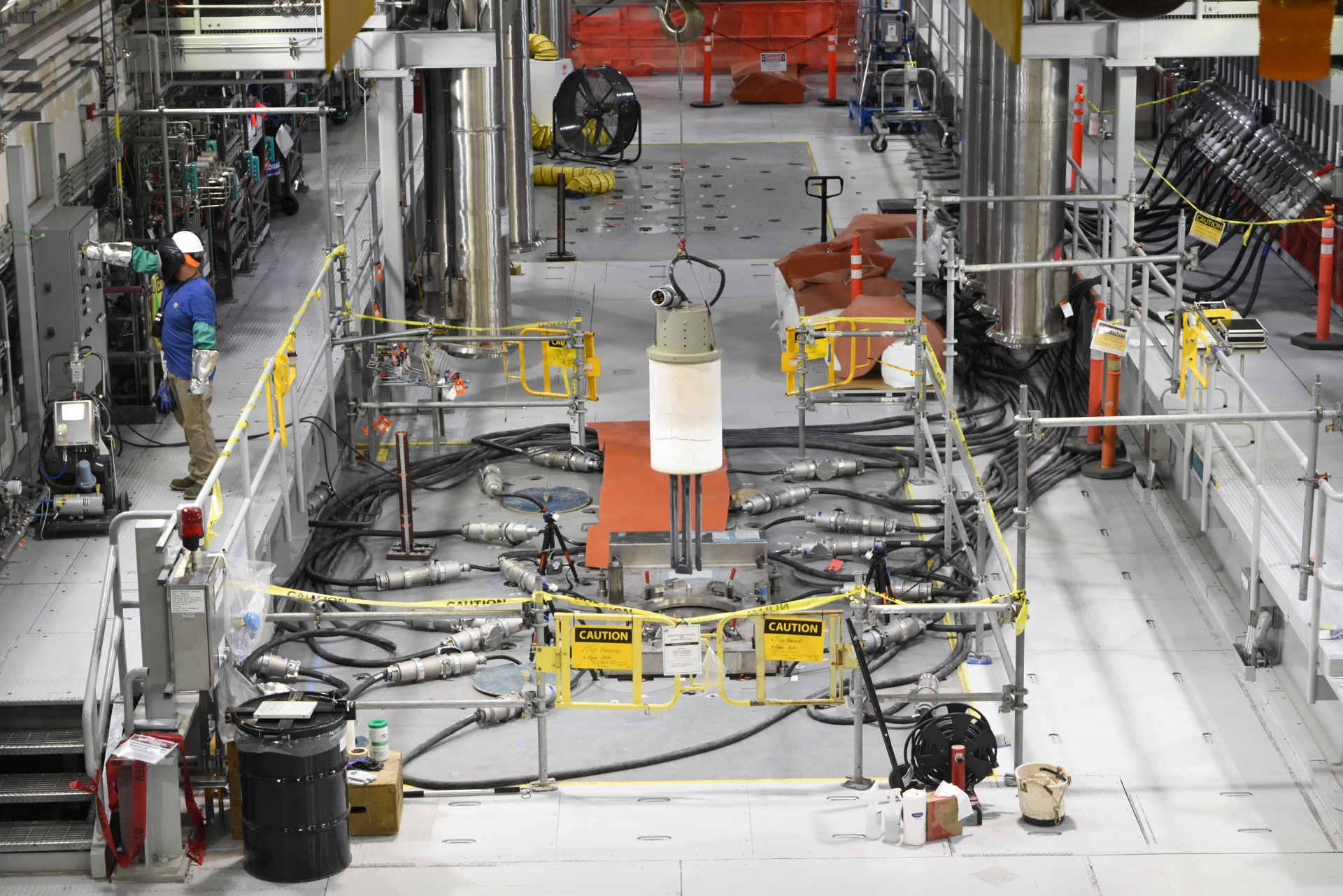
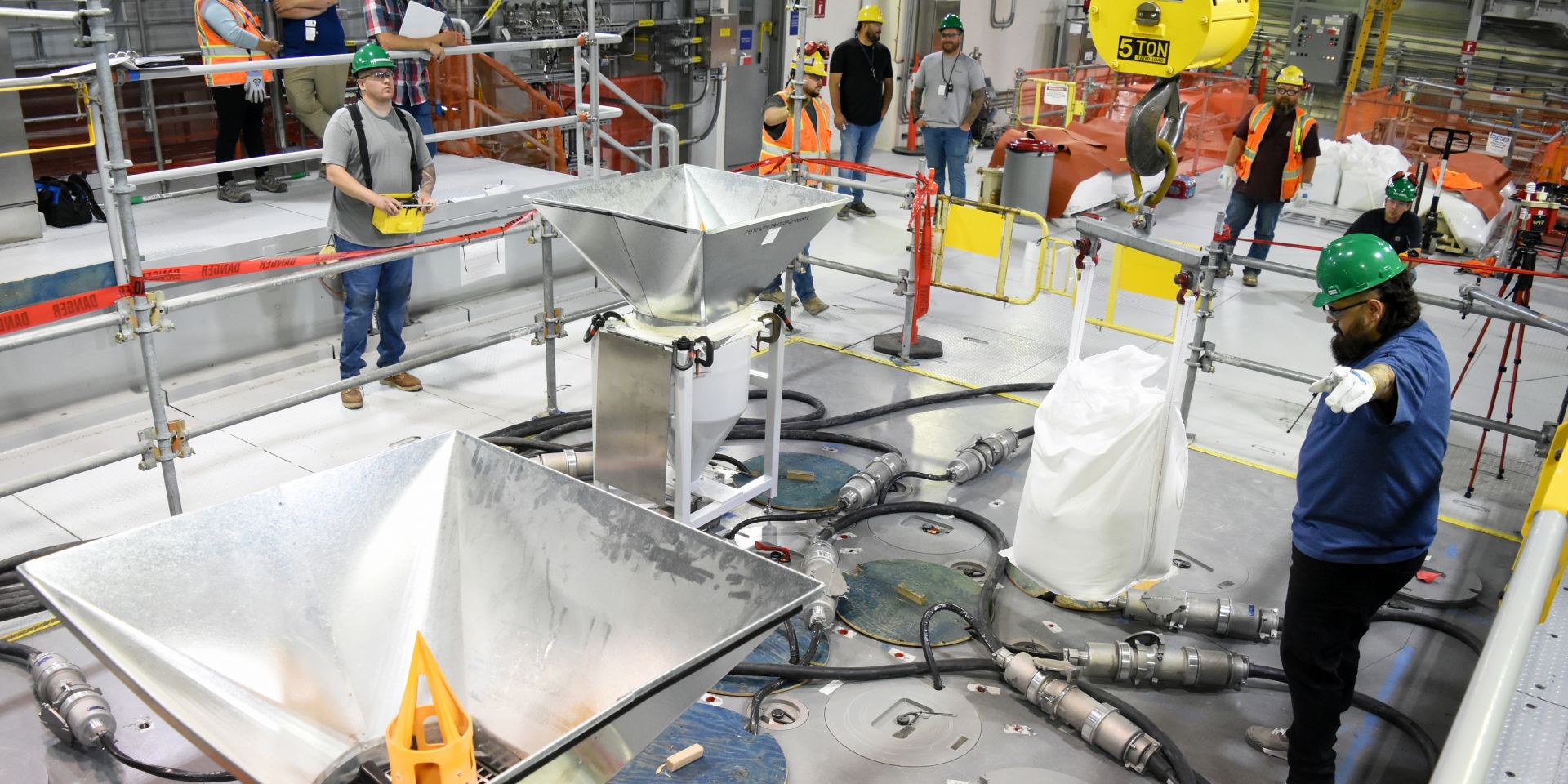
Upgrades are under way at the Hanford Site's 222-S Laboratory, including replacing the Cold War-era windows in the labs hot cells. Photo: DOE)
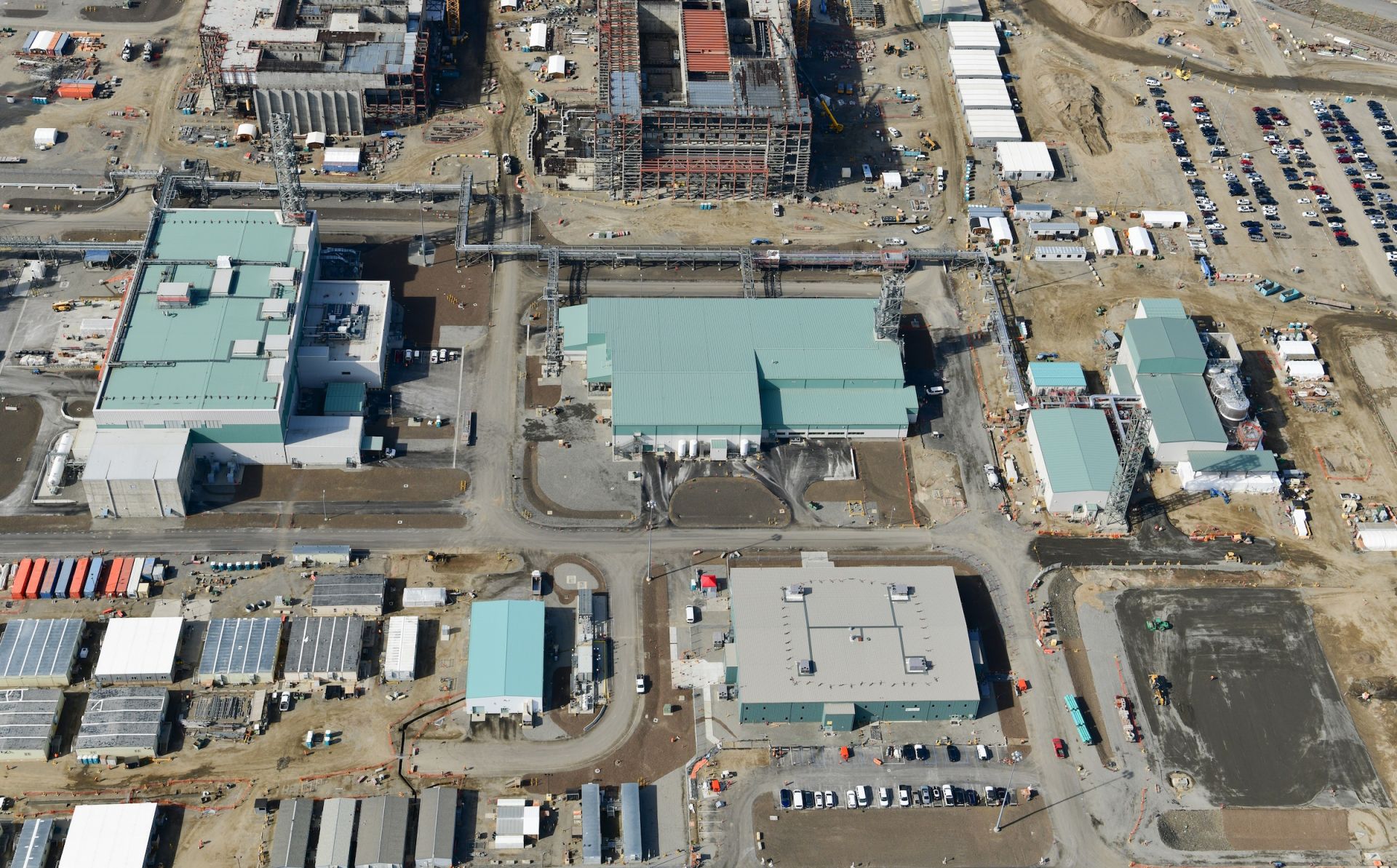
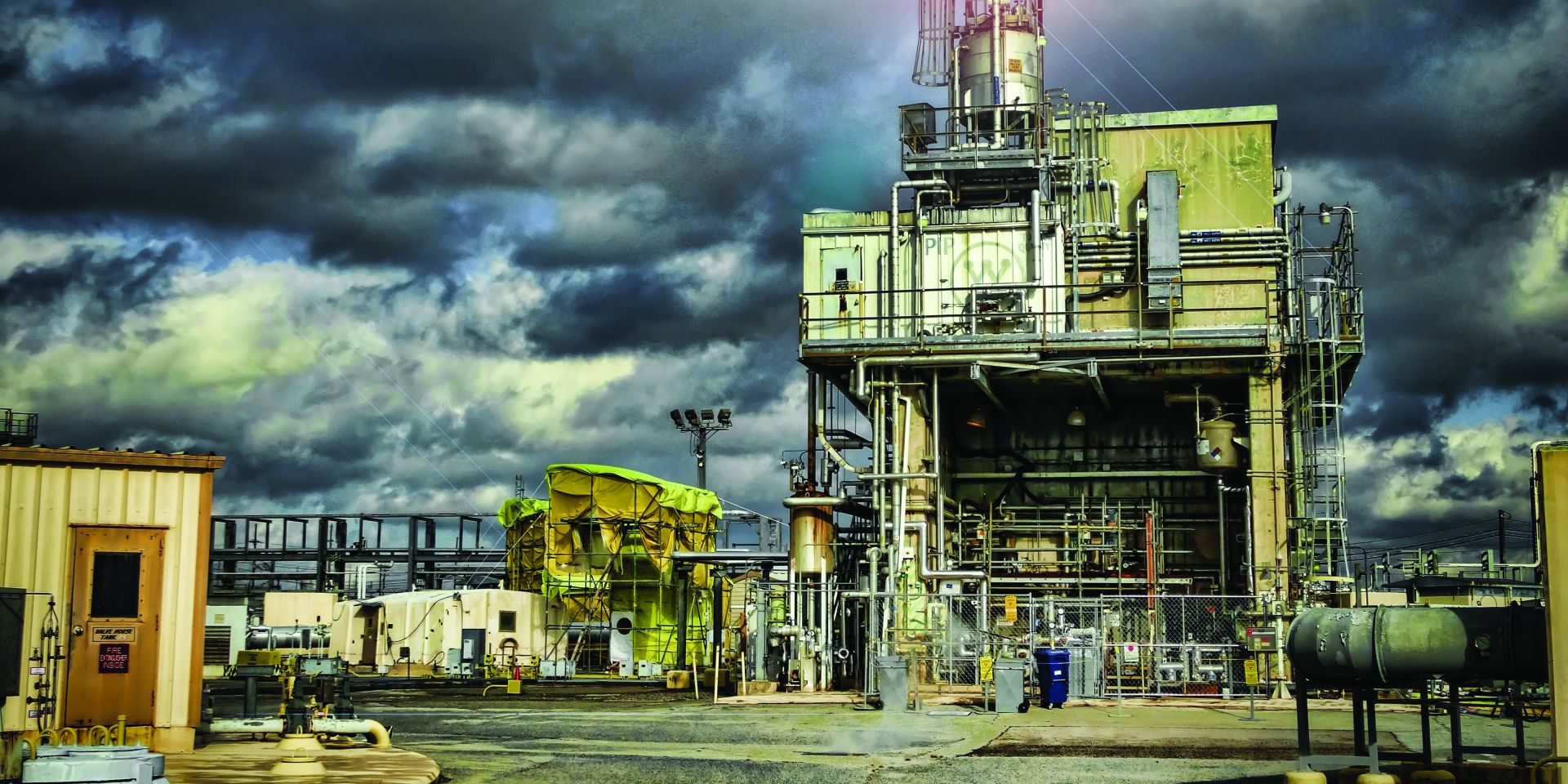
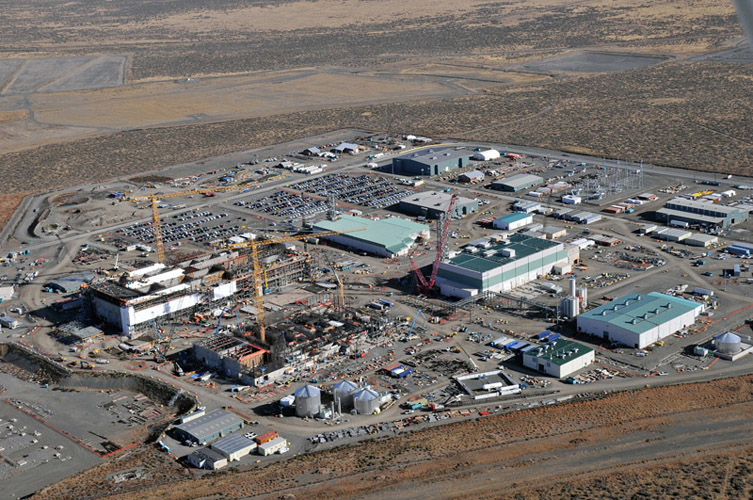
Hanford’s Waste Treatment and Immobilization Plant, also known as the Vit Plant. (Photo: Bechtel National)
The Department of Energy’s Office of Environmental Management once again awarded a 10-year, $45 billion contract to Hanford Tank Waste Operations and Closure (H2C) of Lynchburg, Va., for the cleanup of tank waste at the Hanford Site.
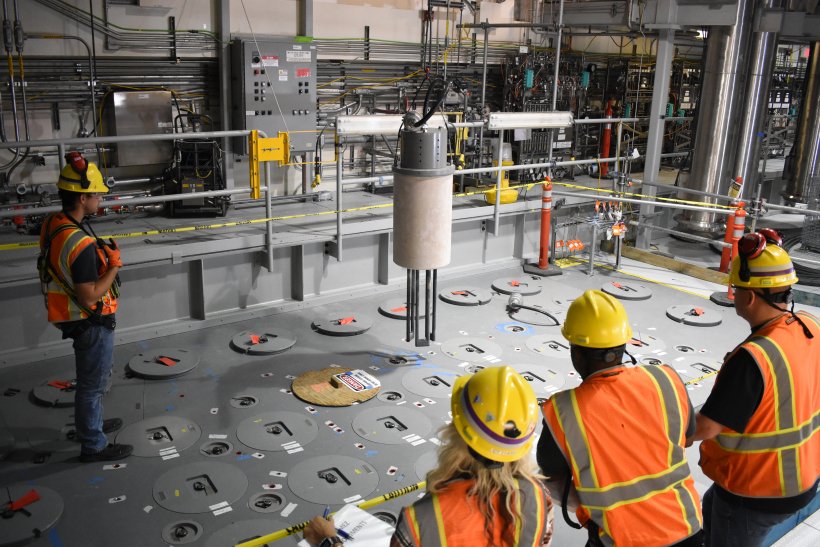
One of 18 startup heaters is installed in Hanford’s second melter, which will be used to vitrify liquid waste. (Photo: DOE)
The Department of Energy’s Office of Environmental Management announced that crews at the Hanford Site’s Waste Treatment and Immobilization Plant, also known as the Vit Plant, recently installed 18 temporary startup heaters in the second of two melters in the plant’s Low-Activity Waste Facility.
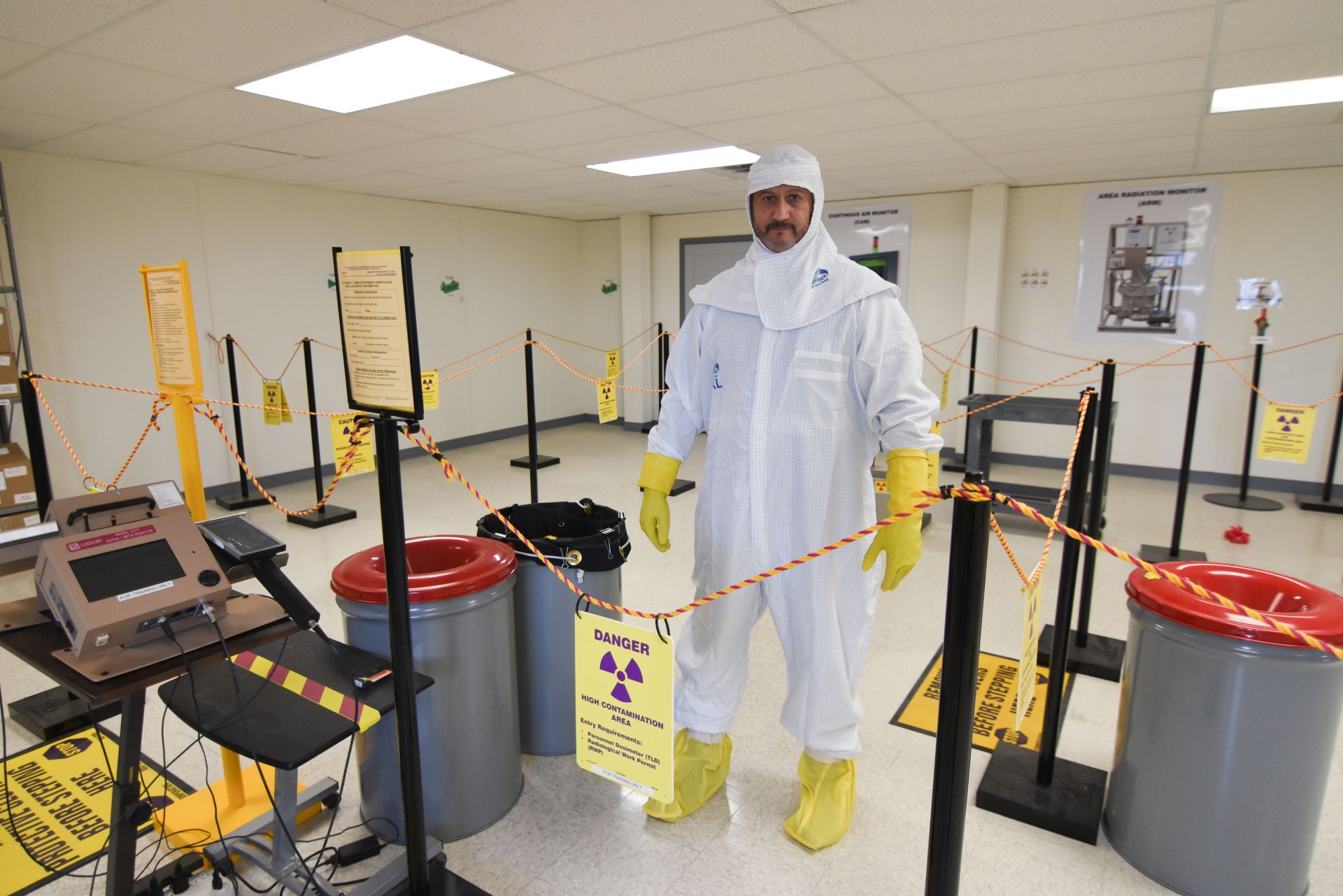
Training instructor Chris Oliveros poses inside a new radiological control training classroom at Hanford’s WTP. (Photo: DOE)
The training team at the Hanford Site’s Waste Treatment and Immobilization Plant (WTP) recently added an extra level of realism to employee trainings by upgrading classrooms and adding new props, according to the Department of Energy.
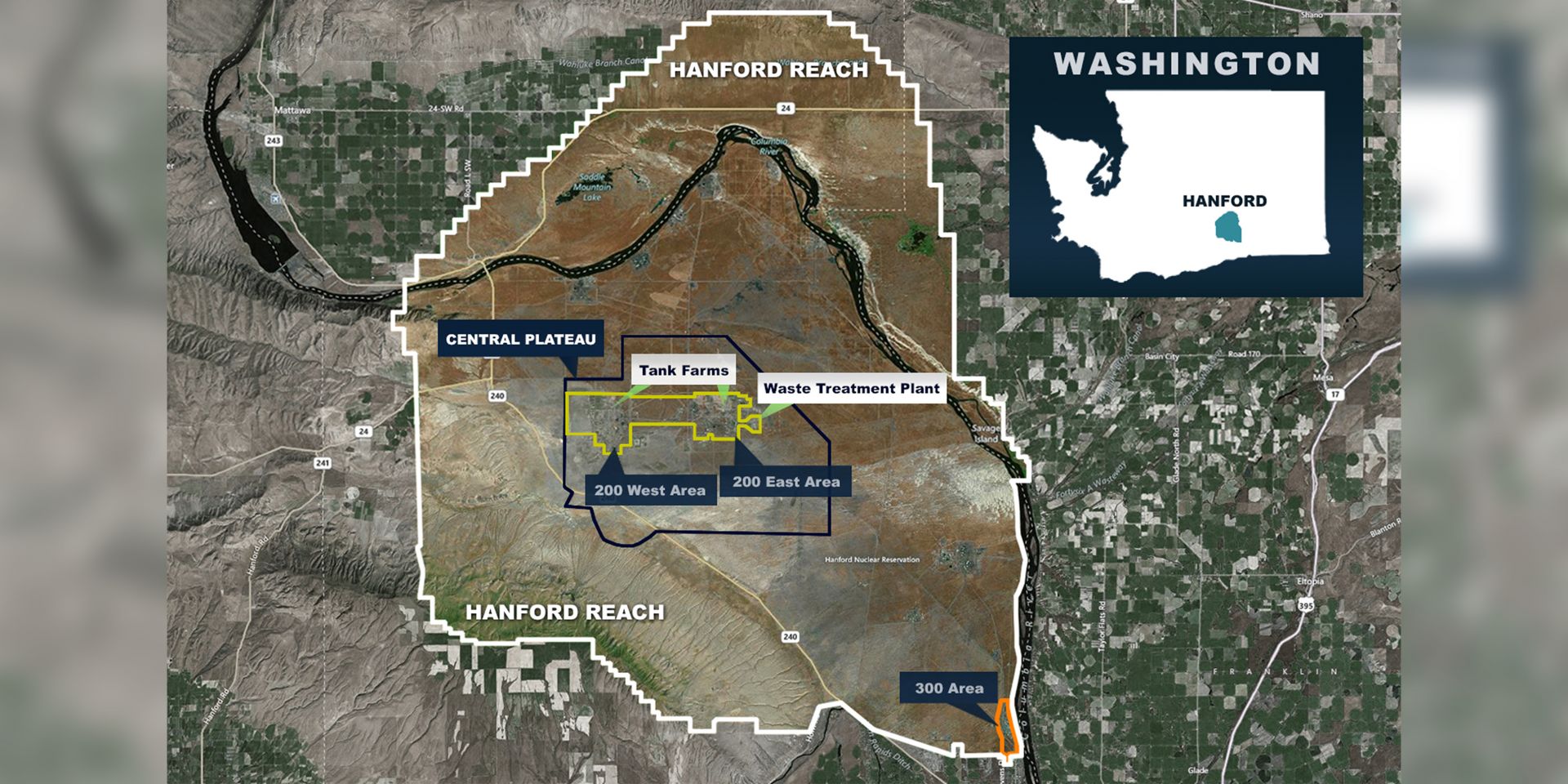
The DOE’s Hanford Site. (Image: Washington River Protection Solutions)
The Department of Energy’s Office of Environmental Management issued for public comment the first request for qualifications (RFQ) related to the department’s Cleanup to Clean Energy initiative, which aims to increase energy production by making DOE land available for the potential development of carbon-free energy (CFE) electricity generation through leases.
Crewmembers stand in front of the first stainless-steel container filled with molten test glass at Hanford’s Vit Plant. (Photo: Bechtel National)
Bechtel and the Department of Energy’s Office of Environmental Management announced on December 4 that the first set of test glass was successfully poured into a stainless-steel storage container designed to hold vitrified waste at Hanford’s Waste Treatment and Immobilization Plant, also known as the Vit Plant.
The 2F Evaporator at SRS. (Photo: Savannah River Site Photography)
The Department of Energy’s Office of Environmental Management is responsible for roughly 90 million gallons of radioactive liquid waste at Idaho National Laboratory, the Hanford Site in Washington state, and the Savannah River Site in South Carolina. About 900,000 gallons of waste are stored at INL, 56 million gallons at Hanford, and roughly 36 million at SRS. A further 400,000 gallons of waste from various operations are being stored at the Oak Ridge Site in Tennessee.
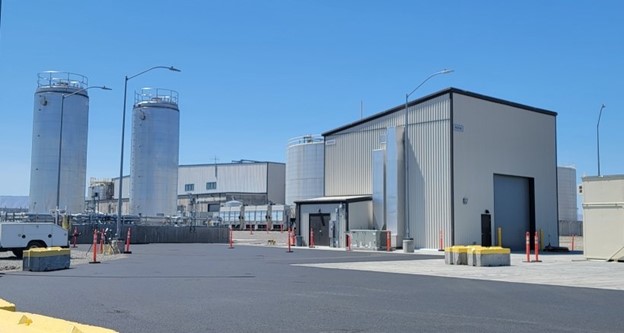
The Hanford Site’s ETF has been expanded. (Photo: DOE)
The Hanford Site’s Effluent Treatment Facility (ETF) has been expanded and will be able to handle almost 7 million more gallons of wastewater per year once the site’s Waste Treatment and Immobilization Plant (WTP) begins treating waste from large underground tanks.
Crews with Hanford contractor Central Plateau Cleanup Company break up concrete and remove contaminated soil near the former K Area reactors on the Hanford Site earlier this year. (Photo: DOE)
The Department of Energy is seeking the public’s input on the Hanford Site’s 5-year plan, which outlines planned cleanup work either to be completed or initiated at the former plutonium production site near Richland, Wash. The DOE updates Hanford’s 5-year plan annually to reflect current progress and ongoing integrated planning for future work at the site.
A Department of Ecology inspector at the Hanford Site. (Photo: Department of Ecology)
Washington state’s Department of Ecology said it has reached a settlement with the Department of Energy over access to data the state described as “critical” to the cleanup of the Hanford Site near Richland, Wash.
A startup heater is removed from a melter in the Vit Plant’s Low-Activity Waste Facility. (Photo: DOE)
Workers at the Hanford Site’s Waste Treatment and Immobilization Plant, also known as the Vit Plant, have begun removing the first three of 18 temporary startup heaters, the Department of Energy announced on September 12. The startup heaters were used to raise the first of two 300-ton glass melters in the plant’s Low-Activity Waste Facility to its operating temperature of 2,100°F.
An elk herd at the DOE’s Hanford Site in Washington state. (Photo: DOE)
The Department of Energy has released the first request for information (RFI) related to the department’s Cleanup to Clean Energy initiative, which aims to repurpose certain DOE-owned lands, portions of which were previously used in the nation’s nuclear weapons program, into sites for clean energy generation.
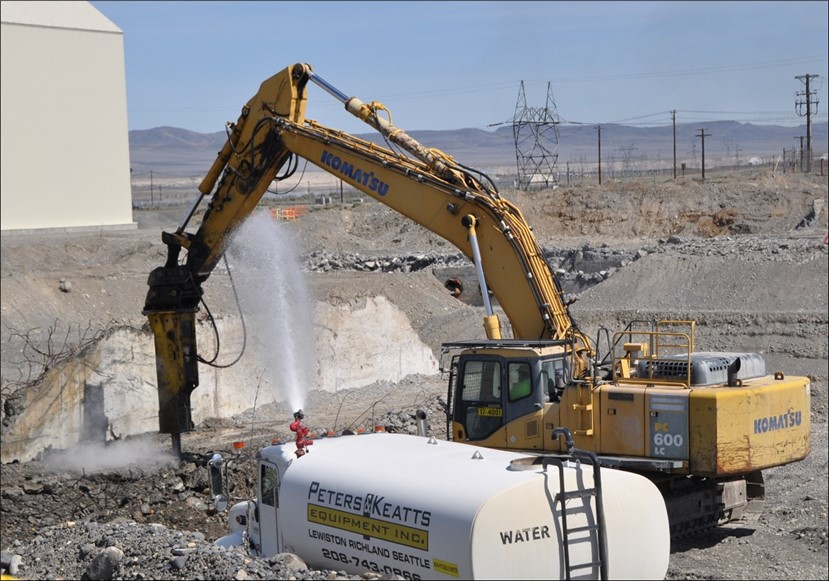
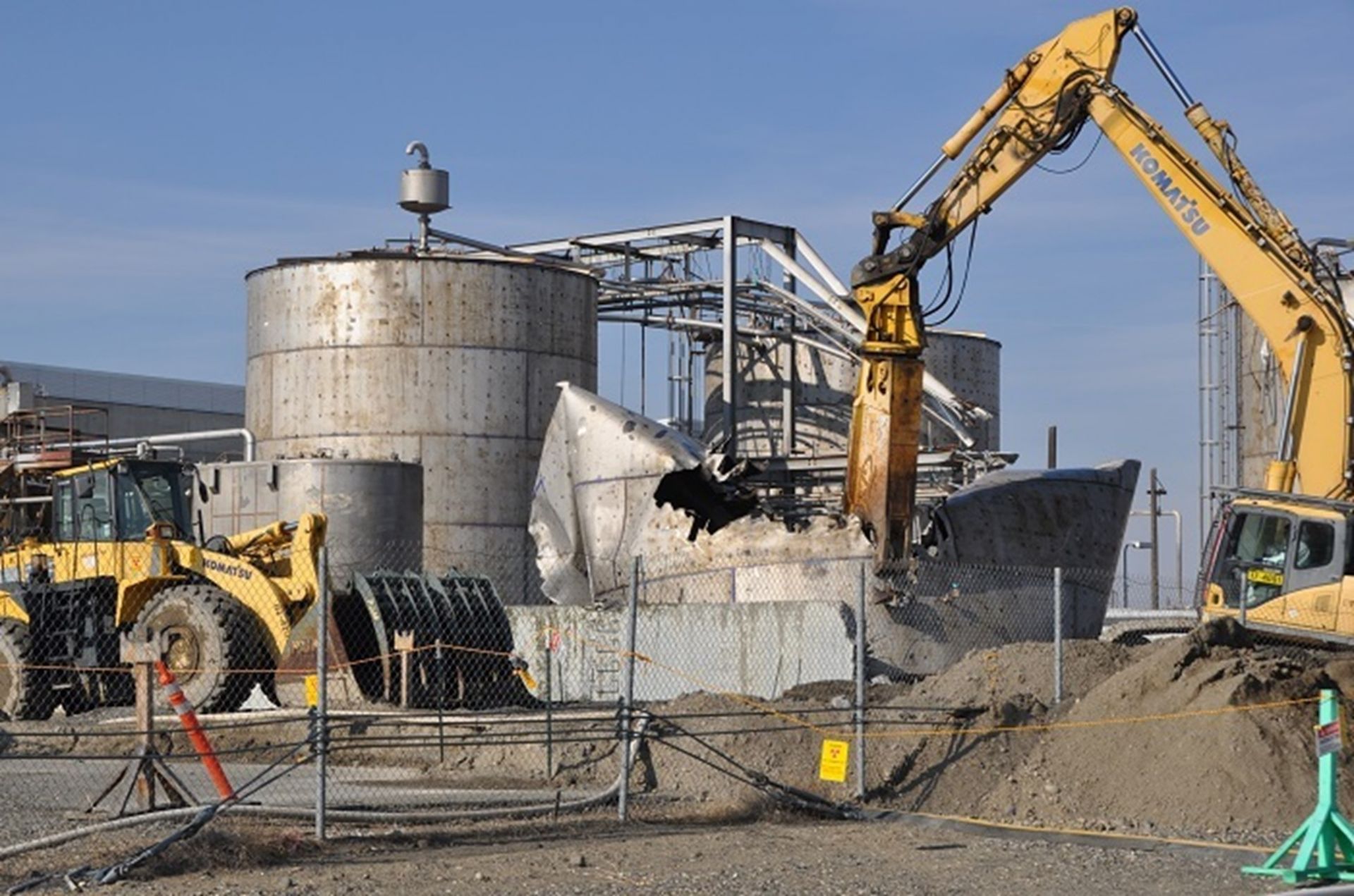
Work crews remove old infrastructure near the Hanford Site’s Cold War–era PUREX plant. (Photo: DOE)
Demolition is underway on several former chemical storage tanks and associated infrastructure near the Plutonium Uranium Extraction (PUREX) plant, the final and most advanced chemical separations facility at the Department of Energy’s Hanford Site.
The project is expected to be completed by the end of September.
K-9 officer Dee and her partner, Patrol Officer Manny Rodriguez, during a training exercise. (Photo: DOE )
The Department of Energy’s Hanford Site has introduced its newest team members, Dee and Freda, two highly skilled explosive-detecting K-9 officers. The police dogs will work with Richland Operations Office contractor Hanford Mission Integration Solutions to help ensure the safety and security of the legacy nuclear reservation near Richland, Wash.
A 300-pound bag of frit is in position to be poured into the melter at Hanford’s LAW Facility. (Photo: Bechtel National)
The Department of Energy’s Office of Environmental Management announced that the first batches of glass-forming beads, called frit, were poured last week into a melter at the Hanford Site’s Waste Treatment and Immobilization Plant (WTP), also known as the Vit Plant. The melter, which has been heated to 2,100ºF, will be used to immobilize Hanford’s radioactive and chemical tank waste, turning it into a stable glass form through vitrification.
Hanford’s Waste Treatment and Immobilization Plant. (Photo: DOE)
A pair of recent reports by the U.S. Government Accountability Office and the National Academies of Science, Engineering, and Medicine highlight some of the challenges the Department of Energy faces in treating the millions of gallons of legacy radioactive waste at the Hanford Site in Washington state.
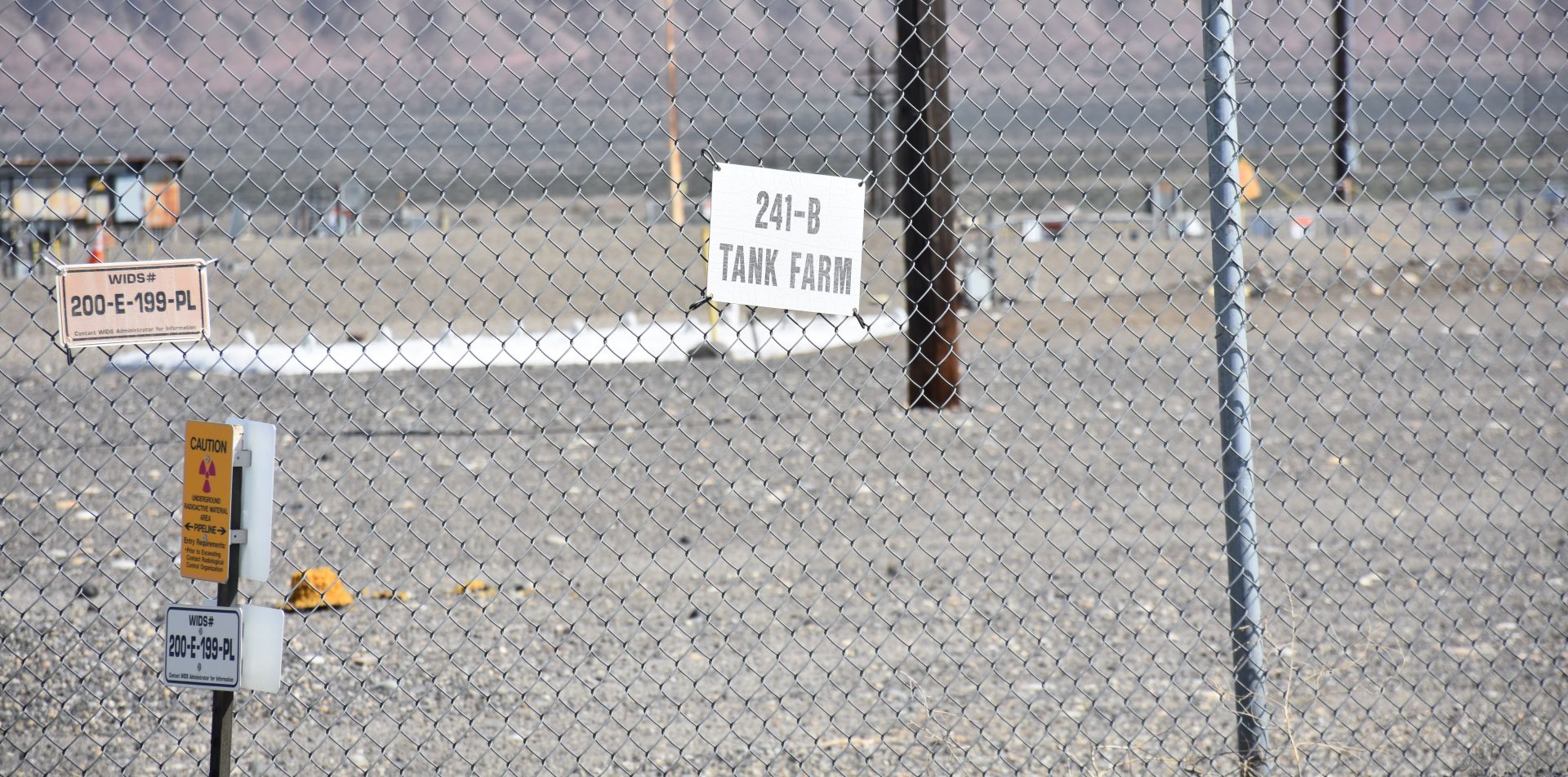
The Hanford Site’s B Complex area tank farm containing waste created during the production of plutonium at the site. (Photo: DOE)
After nearly three years of discussions and more than 60 mediation sessions, the Department of Energy, Washington State Department of Ecology, and the Environmental Protection Agency announced that they have reached a conceptual agreement on revising plans for managing millions of gallons of waste stored in tanks at the Hanford Site near Richland, Wash.