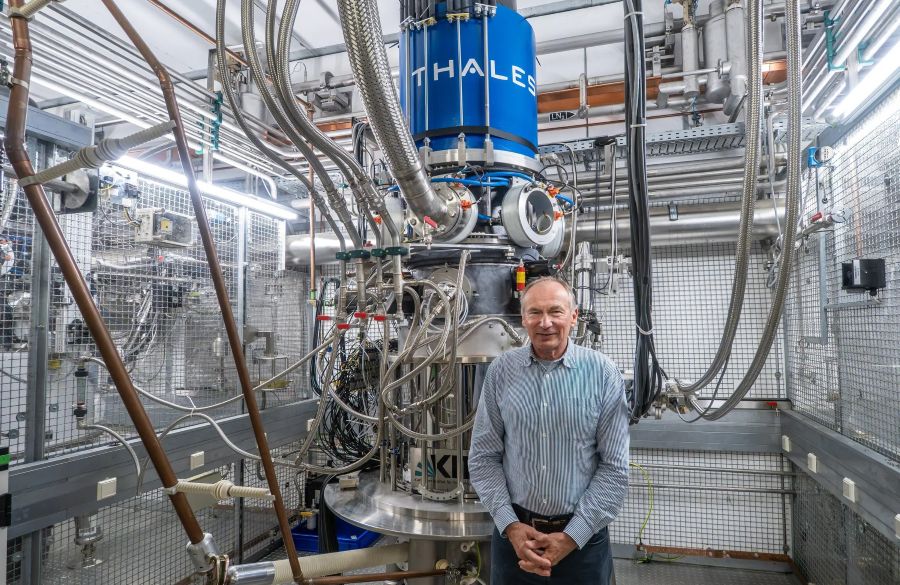
It also announced, on May 21, that the first magnet coil to undergo testing—the 330-metric-ton ITER toroidal field coil #07 (TF07)—had a successful cooldown to the designated temperature. Tests of additional toroidal field coils, as well as a ring-shaped poloidal field coil, are planned.
Risk-mitigation and readiness objectives: No external test can reproduce the extreme operating conditions inside the ITER machine with 100 percent accuracy, the organization explained. Nevertheless, the tests at the magnet cold test facility—the program for which began in 2023—will generate useful information on magnet behavior, cryogenic performance, electrical interfaces, instrumentation, and joints inside the magnet coils. Such test-generated information is crucial for achieving ITER’s risk-mitigation and readiness objectives.
Those objectives include the validation of high-voltage ground insulation at different temperatures, the demonstration of quench detection capabilities (referring to the transition from a magnet’s superconductivity to normal resistive conditions), and the verification of coil performance at the nominal currents of 68 kA for the toroidal field coils and 48 kA for the poloidal field coil. Additional planned tests will involve instrumentation chains, control logic systems, and magnet protection functions.
Cryoplant capabilities: Regarding the start of operations at the magnet cold test facility, ITER director general Pietro Barabaschi said that by “using the capabilities of our cryoplant and mobilizing a multidisciplinary team, we have created a practical way to reduce risk before integrated commissioning. This is important for ITER as well as an example of how ITER can support the wider fusion ecosystem by creating knowledge, infrastructure, and operational experience that others can use.”
Additional magnet tests: After the ITER team completes the testing of additional ITER magnet coils, the magnet cold test facility will be made available to other fusion researchers. The shared use of the test facility is part of ITER’s “knowledge-sharing and engagement initiatives with the private fusion sector,” the organization stressed. Those initiatives are known as the Private Sector Fusion Engagement (PSFE) project.
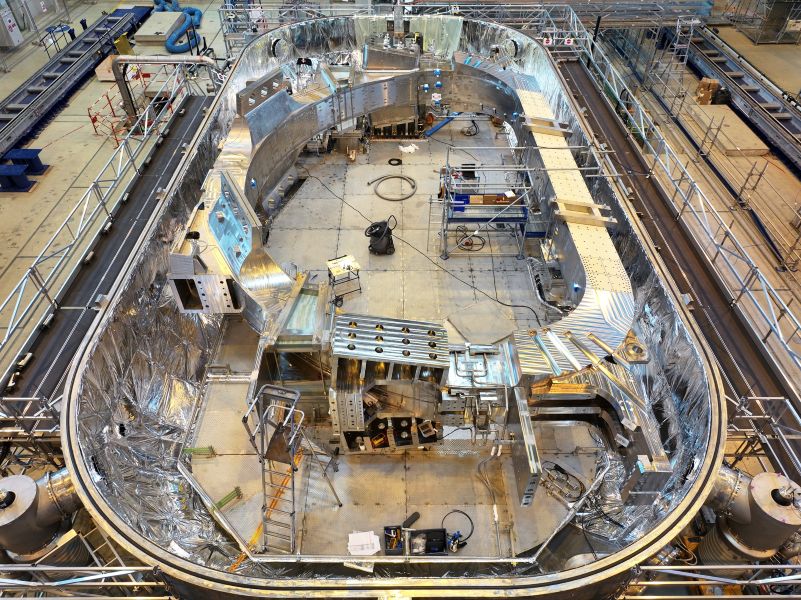
ITER timeline: As the ITER Organization works toward its timeline goals of beginning research operation in 2034, achieving full magnetic energy in 2036, and starting deuterium-tritium operation in 2039, it continues to mark development milestones. In addition to the first testing of a magnet coil at the cold test facility, other recent milestones include the manipulation of vacuum vessel sectors by the ITER machine assembly team and the insertion of these sectors into the ITER tokamak assembly pit.