The NRC’s budget request is roughly 8 percent less than the FY 2026 enacted budget. This includes 2,606 full-time employee equivalents, a decrease of 7 percent from the previous year. As in the House subcommittee hearing, some senators wondered whether a smaller NRC would be able to maintain its high standards while overseeing, licensing, and reviewing current and future nuclear facilities.
“While you shrink the agency’s budget—a loss on top of the existing departure of 1 in 10 NRC employees over the last year and a half—you’re shrinking your ability to conduct oversight over the nuclear fleet and your own agency,” said Sen. Ed Markey (D., Mass.).
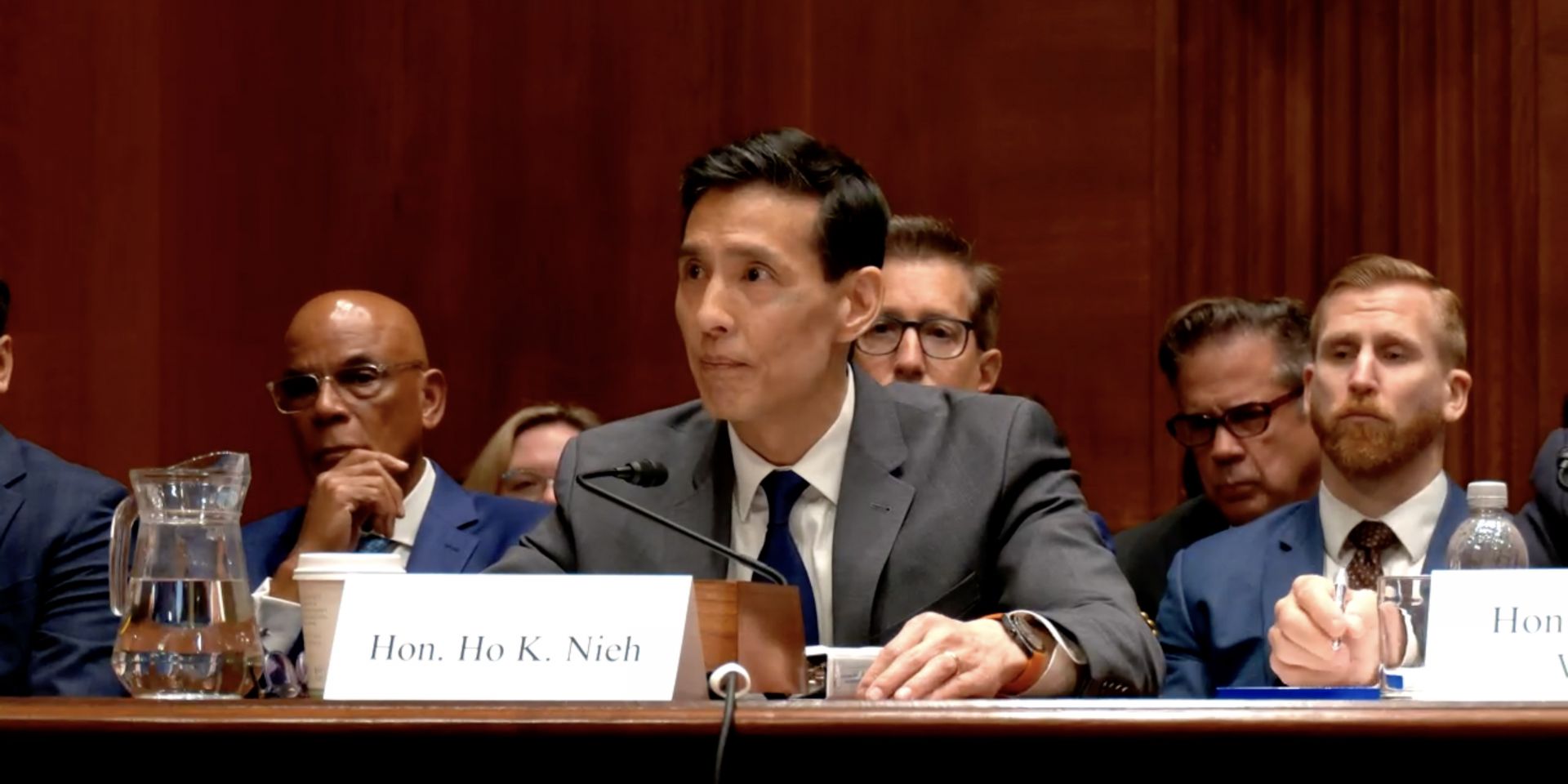
The NRC workforce: In his opening remarks, NRC Chairman Ho Nieh said, “Our success in this moment depends on our people. While the agency has experienced above-average attrition over the last year, we continue to deliver on our mission because we are working smarter, not harder.”
“So far, the commission’s work is encouraging, but the most consequential work, I do believe, still remains in front of us,” Committee Chair Shelley Moore Capito (R., W. Va.) said in her opening statement. “The commission’s proposed 2027 budget reflects the agency’s recent successes, accounts for high-priority ongoing work, and forecasts expected workload.”
Capito asked the commissioners whether the implementation of the ADVANCE Act—legislation that Capito introduced—was reflected in the FY 2027 staffing requests. Nieh said the ADVANCE Act’s intent to make the agency more efficient can be seen in some of the budget requests. In licensing, the NRC proposes reducing costs by about $6 million and 30 full-time equivalents. In oversight, the proposed reductions are about $9 million and 40 full-time equivalents.
Nieh said he’s looked at some of these decisions through the lens of his experiences in the private sector. Companies that execute well tend to streamline, simplify, or eliminate work that doesn’t contribute to overall success.
“We really want to do less with less because we found over the years there are things that we have been doing that really do not materially contribute to mission outcomes,” Nieh said.
In his opening remarks, Commissioner Bradley Crowell said the NRC lost more than 500 employees in the last 16 months and has only added 59 new staff. While he shared Nieh’s optimism in the work the NRC has done, he told the senators that what he characterized as trying “to do more with less” could become a problem down the road.
“Right now, we’re able to meet some of these aggressive goals because we’re pretty much in a one-at-a-time framework,” Crowell said. “When that becomes multiple applications for different technologies, that’s going to be more challenging.”
Commissioners did note that the NRC is hiring. Commissioner Douglas Weaver said there were around 15 job postings on the NRC website, with plans to hire approximately 80 more, and 30 interns coming this summer.
But ranking member Sen. Sheldon Whitehouse (D., R.I.) said the NRC’s recent successes and changes actually may hurt the agency’s recruitment and retention efforts. The nuclear industry has been reinvigorated, and as a result many in the private sector are hiring.
“Where better to go for the experienced folks than the NRC? Not too long ago, it was really hard to get a job in the nuclear energy industry because it was pretty moribund. And now that it’s not, you have real competition,” said Whitehouse.