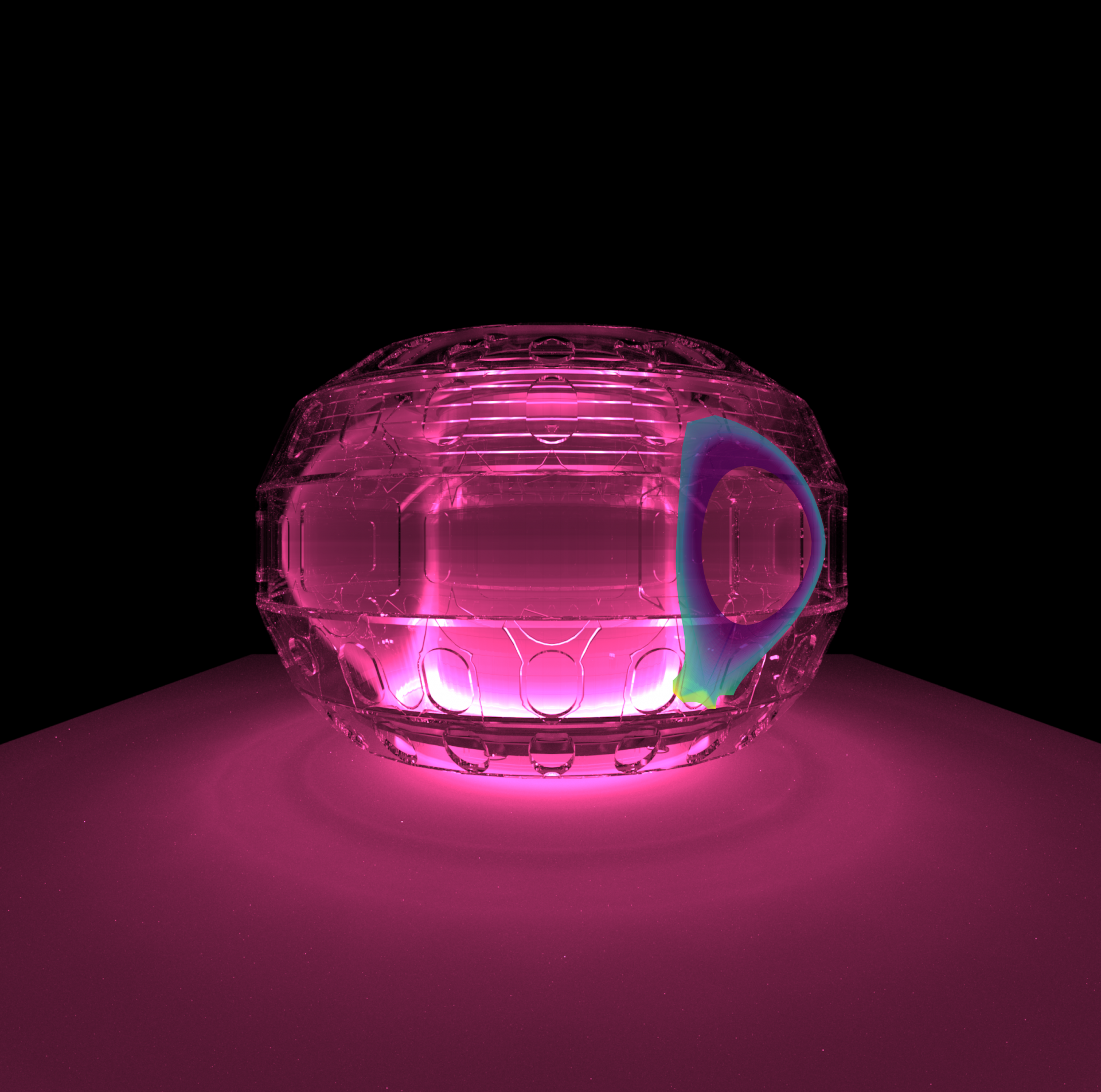
A ray-traced synthetic image from SOLPS plasma-emission simulations, with vessel materials rendered as glass for visualization. This modeling helps researchers understand how light interacts with in-vessel components and how real-world diagnostics would view the plasma during experiments. (Image: Curt Johnson/ORNL)
Over the past decade, fusion energy has moved decisively from scientific aspiration toward a credible pathway to a new energy technology. Thanks to long-term federal support, we have significantly advanced our fundamental understanding of plasma physics—the behavior of the superheated gases at the heart of fusion devices. This knowledge will enable the creation and control of fusion fuel under conditions required for future power plants. Our progress is exemplified by breakthroughs at the National Ignition Facility and the Joint European Torus.
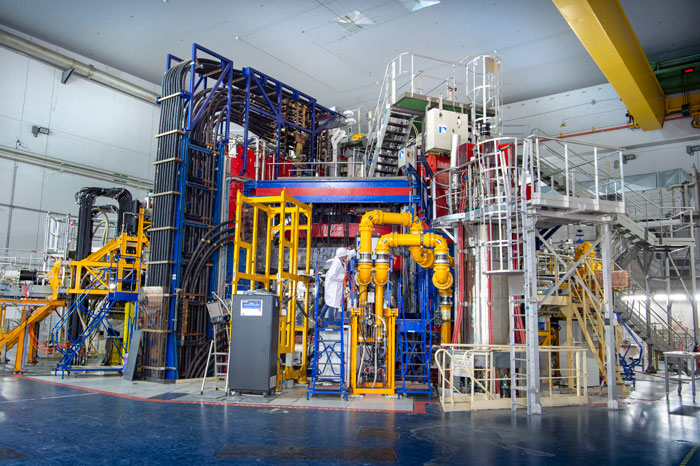
The WEST tokamak. (Photo: L. Godart/CEA)
The French magnetic confinement fusion tokamak known as WEST maintained a plasma in February for more than 22 minutes—1,337 seconds, to be precise—and “smashed” the previous record plasma duration for a tokamak with a 25 percent improvement, according to the CEA, which operates the machine. The previous 1,006-second record was set by China’s EAST just a few weeks prior. Records are made to be broken, but this rapid progress illustrates a collective, global increase in plasma confinement expertise, aided by tungsten in key components.
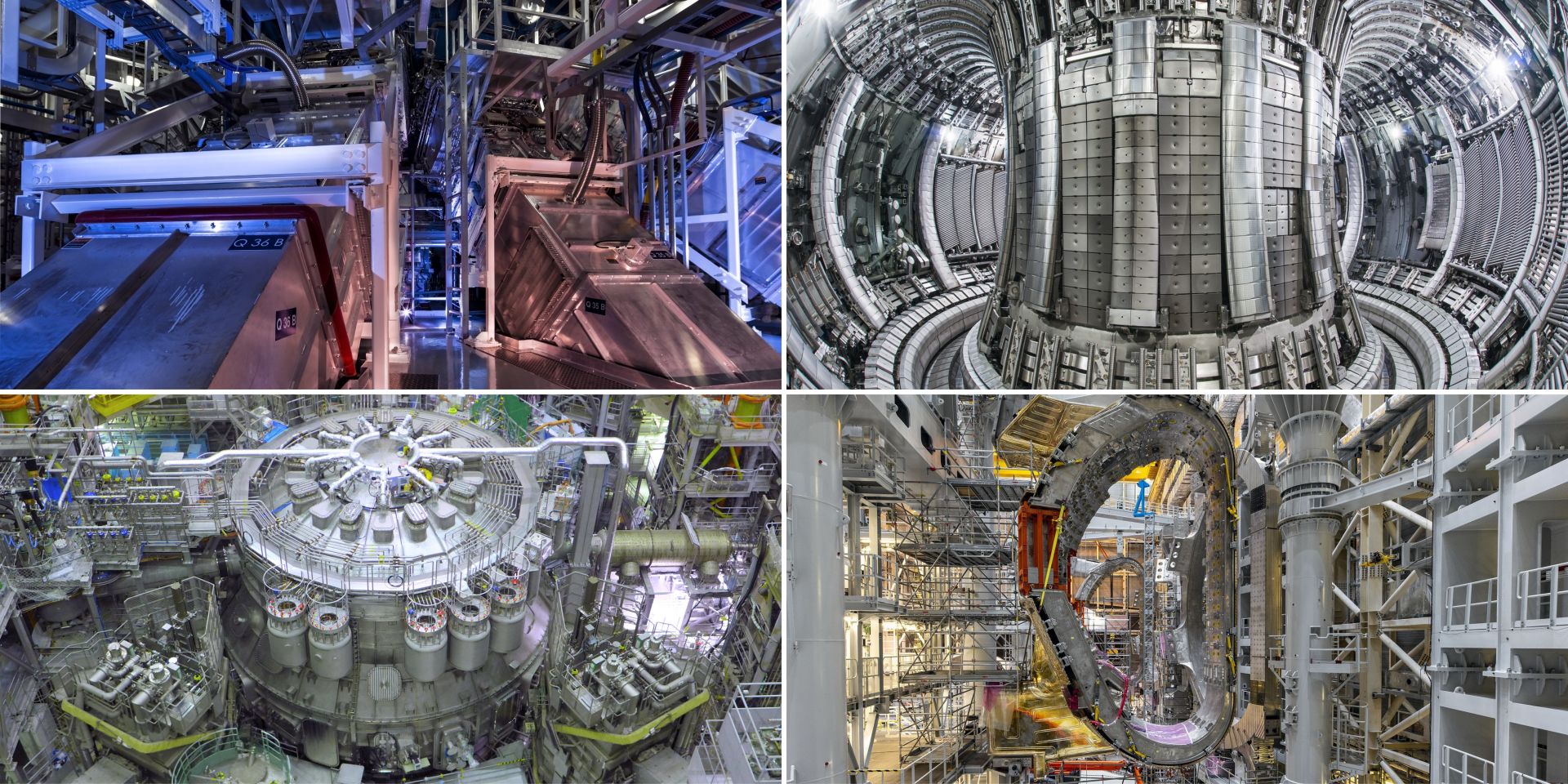
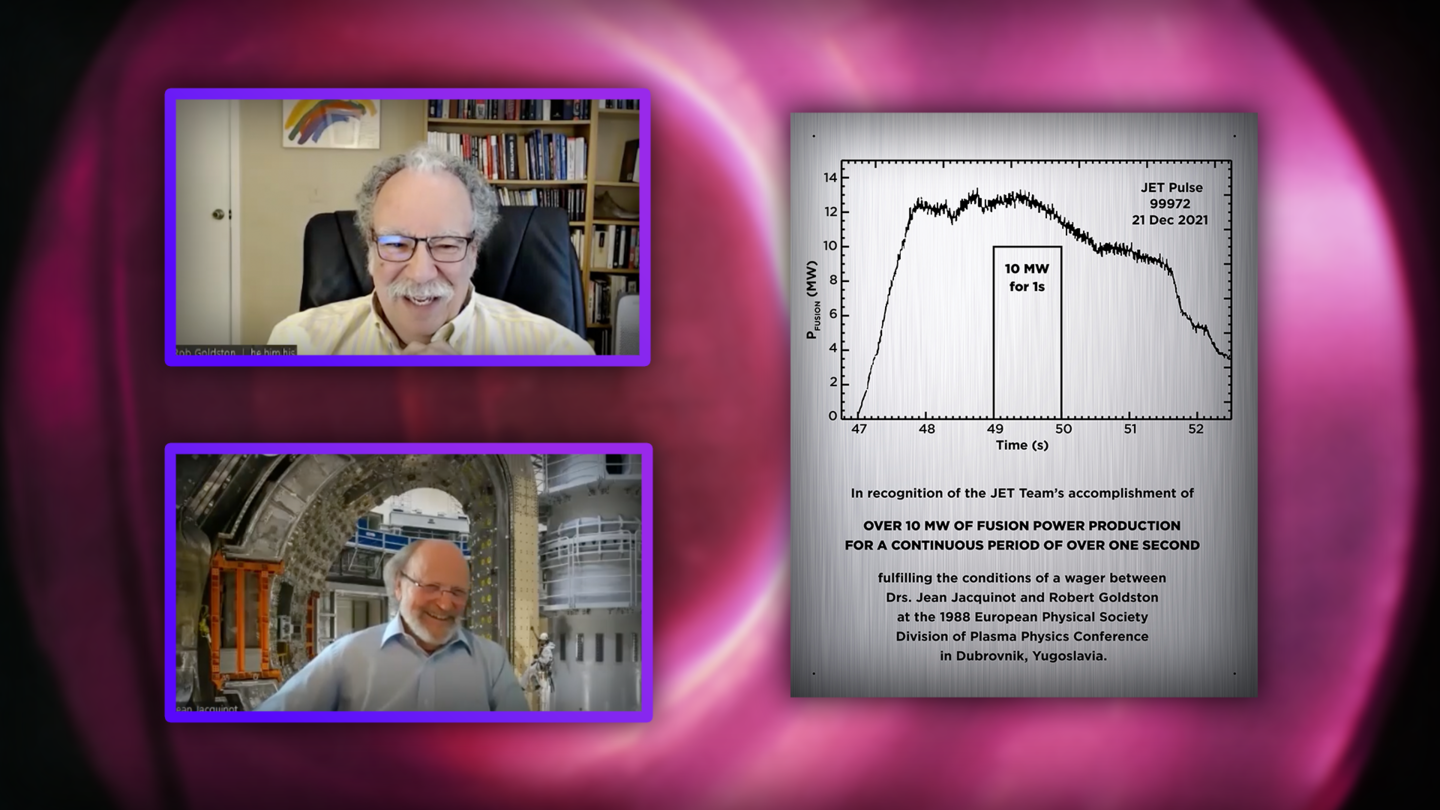
A plaque honoring JET’s world record–setting achievement of fusion energy production of 50 megajoules in a single shot (right) and commemorating a 34-year-old bet between Goldston (top left) and Jacquinot (bottom left). (Photo: PPPL and EUROfusion consortium/collage by Kiran Sudarsanan)
A wager struck by two plasma physicists 34 years ago was finally fulfilled in June during the opening day of the 48th European Physical Society Division of Plasma Physics, when Robert Goldston, former director of the Department of Energy’s Princeton Plasma Physics Laboratory (PPPL), virtually presented a plaque to his friend and colleague Jean Jacquinot, former director of the Joint European Torus (JET), EUROfusion's flagship fusion experiment based at the Culham Centre for Fusion Energy in the United Kingdom. Their bet, and JET’s record-breaking achievements in 2021, were celebrated in an article published by PPPL on July 8.
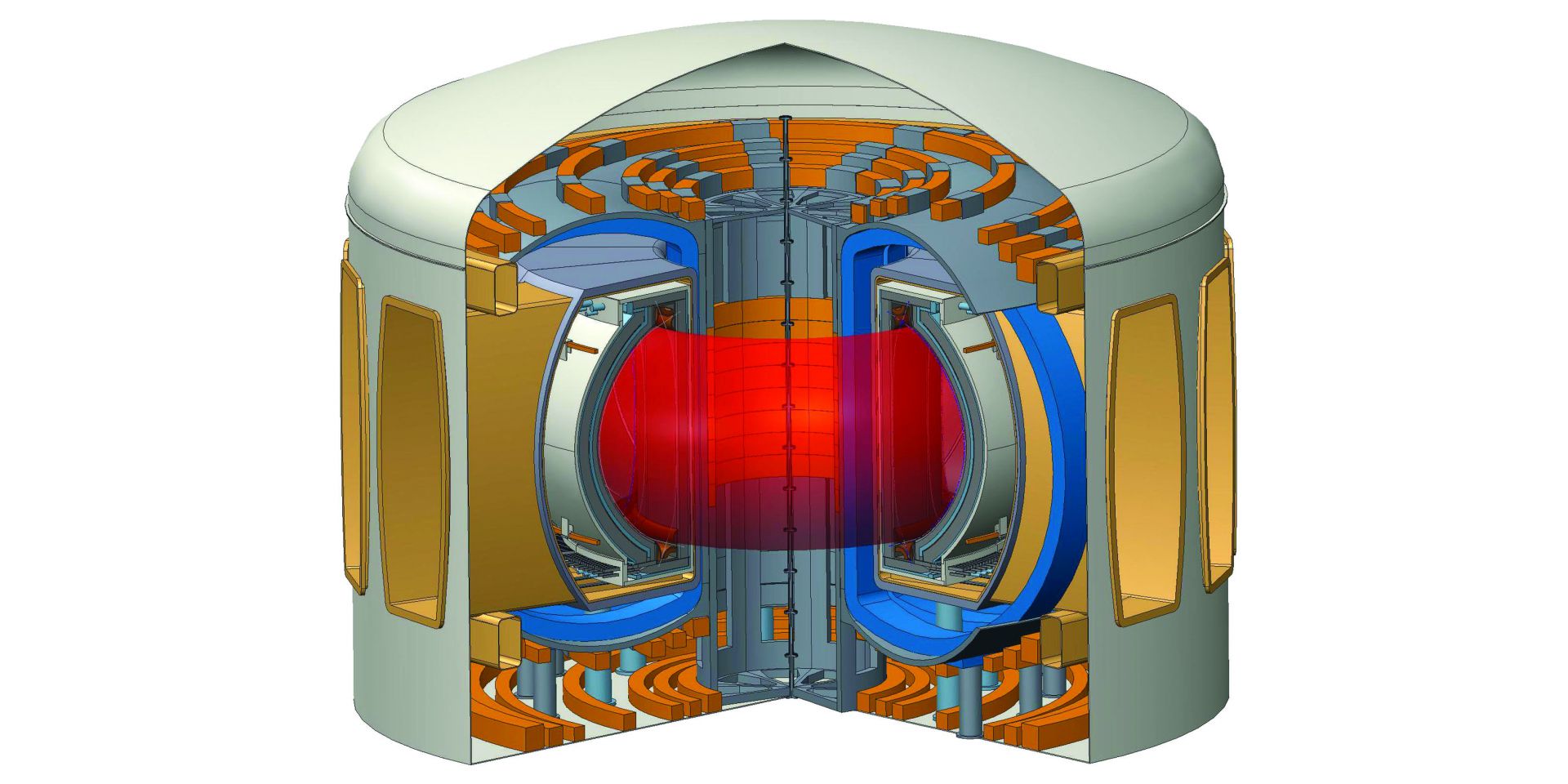
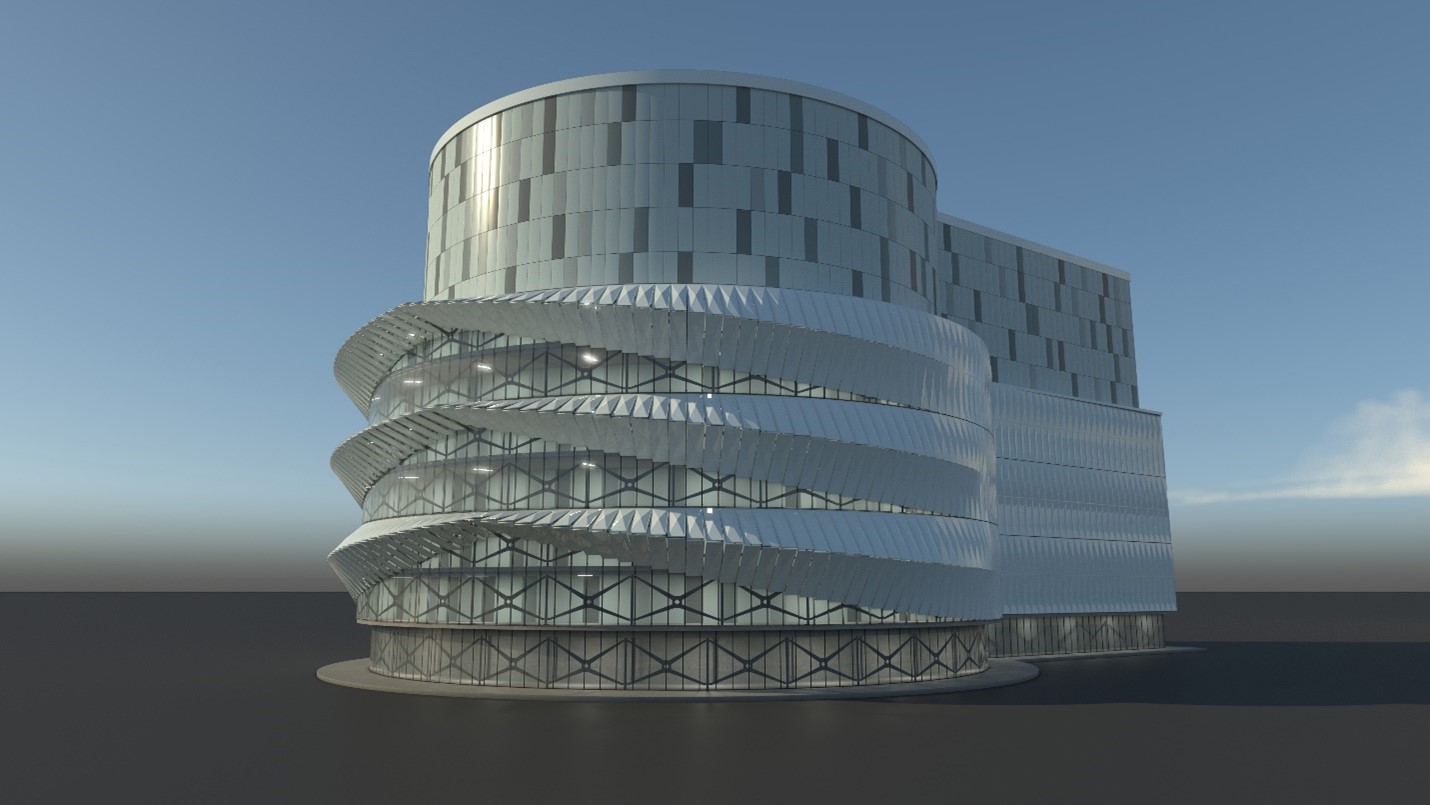
The Spherical Tokamak for Energy Production (STEP), shown here, is a government-backed prototype fusion energy plant planned for operation in the U.K. in the early 2040s. (Image: UKAEA)
Future fusion energy facilities will continue to be regulated by the Environment Agency (EA) and Health & Safety Executive (HSE), the U.K. government announced June 20, and existing law on nuclear regulations will be amended to exclude fusion energy facilities from nuclear fission regulatory and licensing requirements. The move was announced by the United Kingdom Atomic Energy Authority (UKAEA) with the expectation it would provide “clarity to developers of prototype/demonstration fusion facilities currently being planned to support rapid commercialization.”
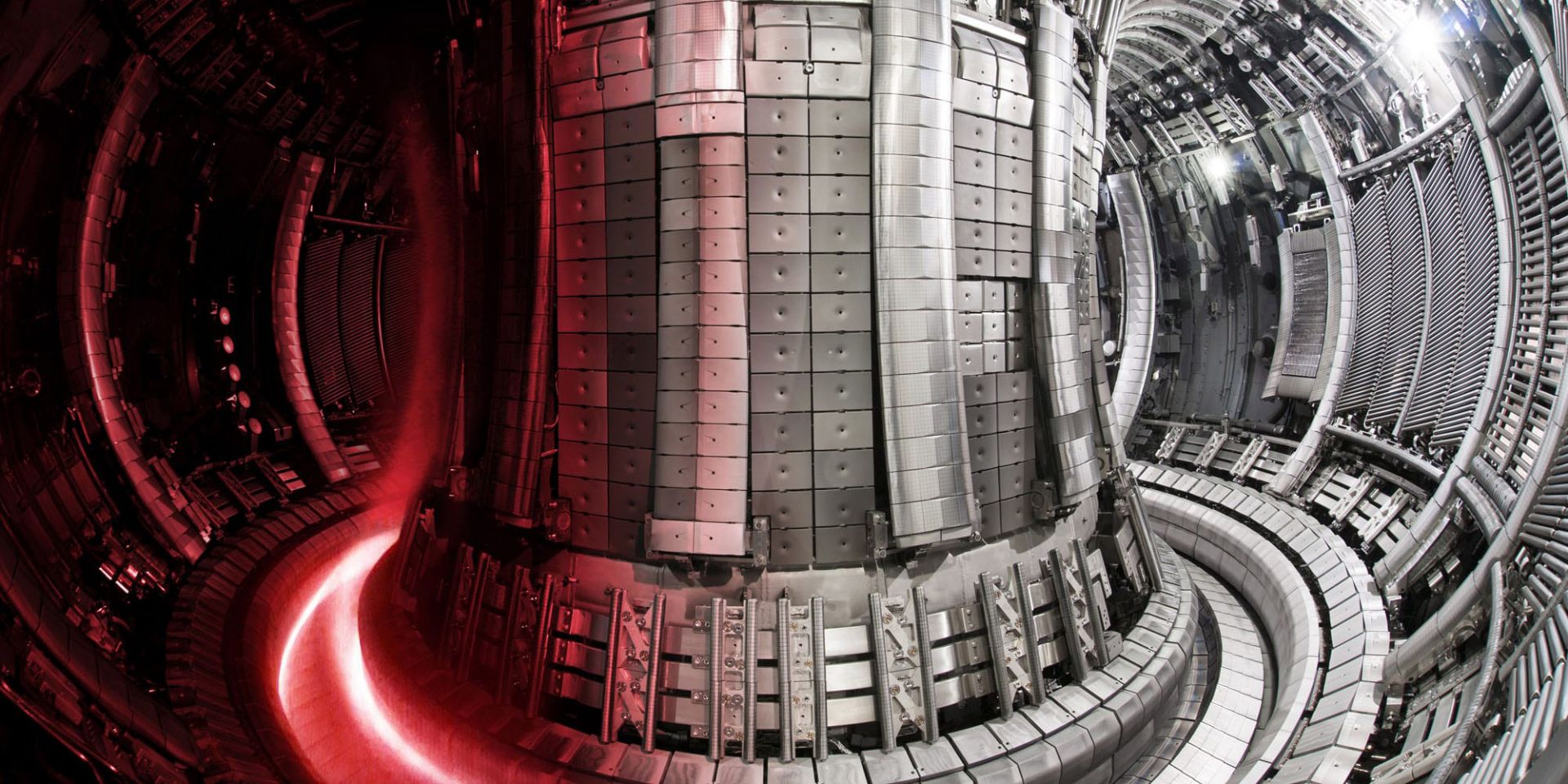
The interior of JET with a superimposed plasma. (Image: EUROfusion)
A new record has been set by the world’s largest operating tokamak, the Joint European Torus (JET). According to the EUROfusion scientists and engineers who work on JET at the U.K. Atomic Energy Authority’s Culham Centre for Fusion Energy, the landmark experiment, announced on February 9, which produced 59 megajoules of fusion energy over five seconds, is powerful proof of fusion’s potential as a clean energy source.