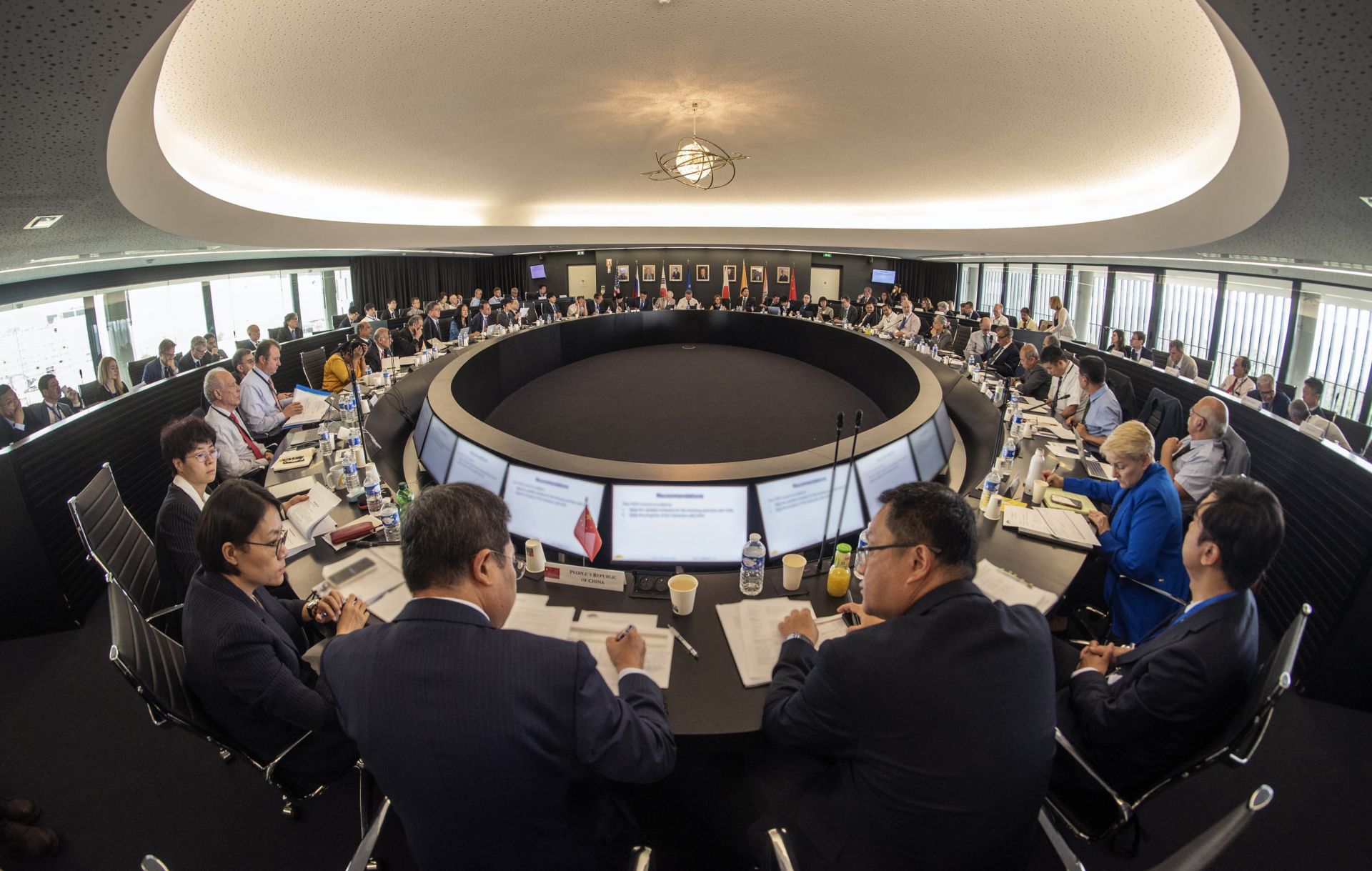
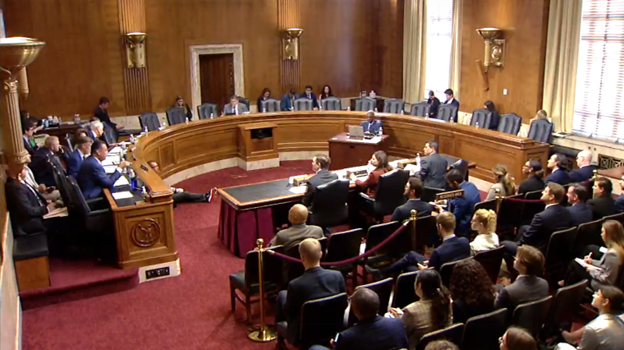
A still shot from the Senate ENR Hearing to Examine Fusion Energy Technology Development.
Hours before the Senate Committee on Environment and Natural Resources (ENR) opened a scheduled September 19 hearing on fusion energy technology development, CNN published an article titled “The US led on nuclear fusion for decades. Now China is in a position to win the race.” The article was entered into the hearing record, but senators had already gotten the message.
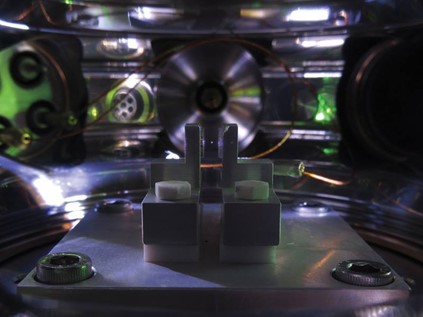
An optically trapped microparticle in high vacuum is visible as a white dot levitated between two lenses, which are used to focus and collect invisible infrared laser light used to trap the particle. (Photo: DOE/Yale Wright Lab)
Start talking about dust in a vacuum, and some people will think of household chores. But dust has featured in recent nuclear science and engineering headlines in curious ways: ITER is deploying oversized dust covers inspired by space satellites in the south of France, while at Yale University, researchers have watched every move of a dust-sized particle levitating in a laser beam for telltale twitches that indicate radioactive decay.
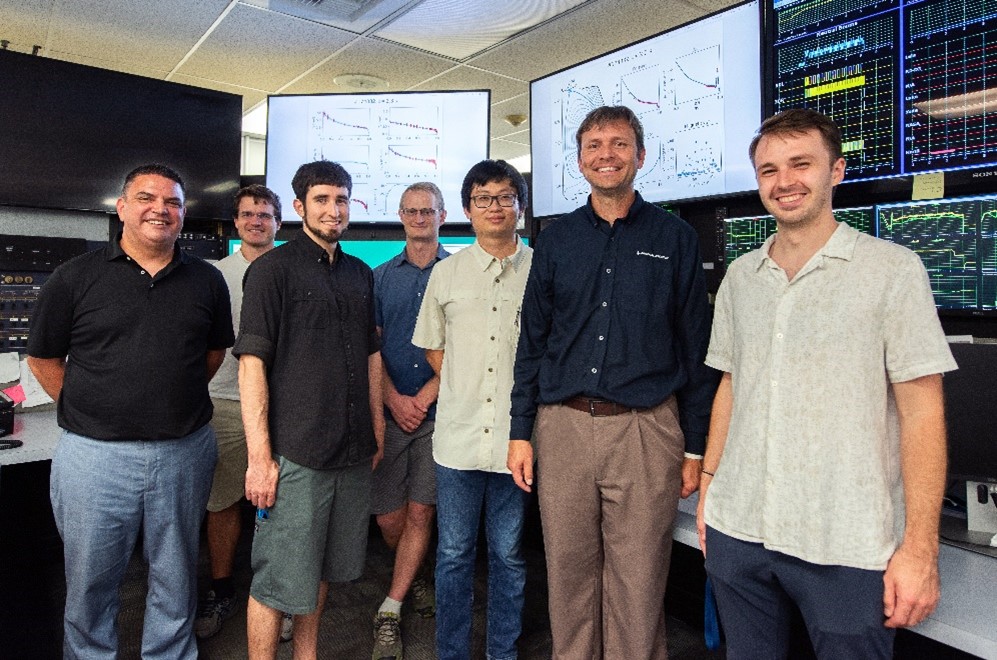
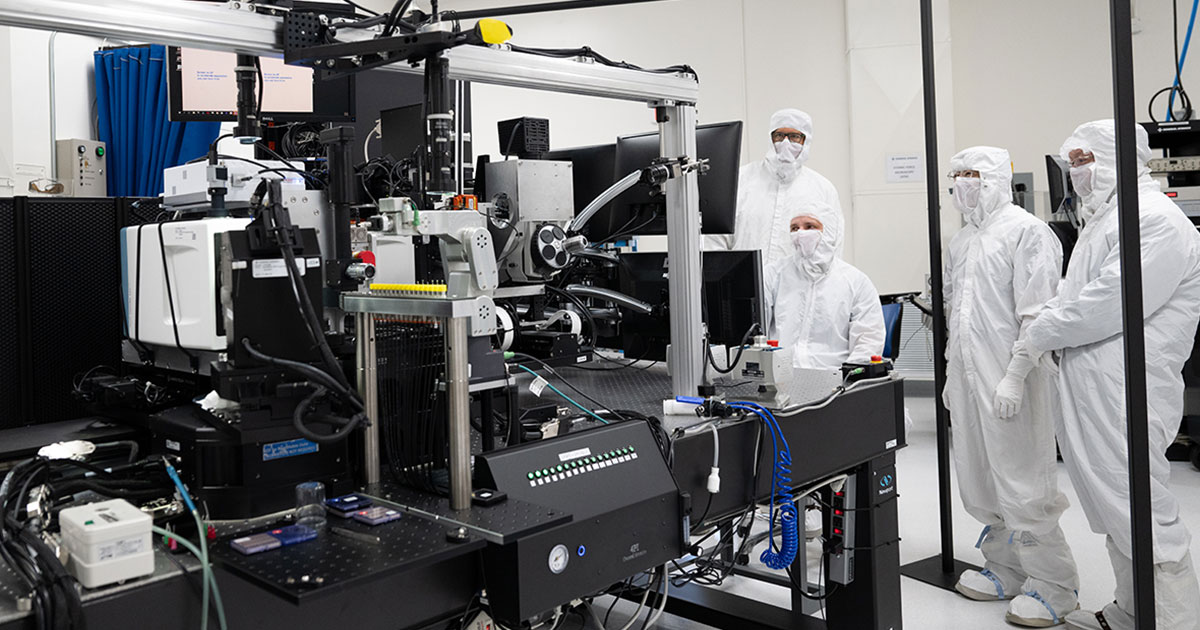
Members of the Metrology Research and Development team working with the 4Pi system in a clean room at GA headquarters. (Photo: General Atomics)
The National Ignition Facility (NIF) at Lawrence Livermore National Laboratory has achieved fusion ignition at least five times, each time by directing its 192 high-powered lasers on a capsule containing a tiny, 2-millimeter target filled with hydrogen fuel. Not every shot achieves ignition, however. Tiny imperfections in the targets can mean fizzle, not fusion. But each of the targets used in successful experiments to date have something in common: they were characterized and selected by the 4Pi Integrated Metrology System, a new measurement system developed by General Atomics. Now, the team behind that system is being recognized.
GA announced last week that its Metrology Research and Development team had won the 2024 "Team of the Year" R&D 100 Professional Award from R&D World. The magazine that each year announces the R&D 100 awards that have been dubbed the “Oscars of Innovation” also selects just one “Team of the Year” and announces that award together with four other professional awards.
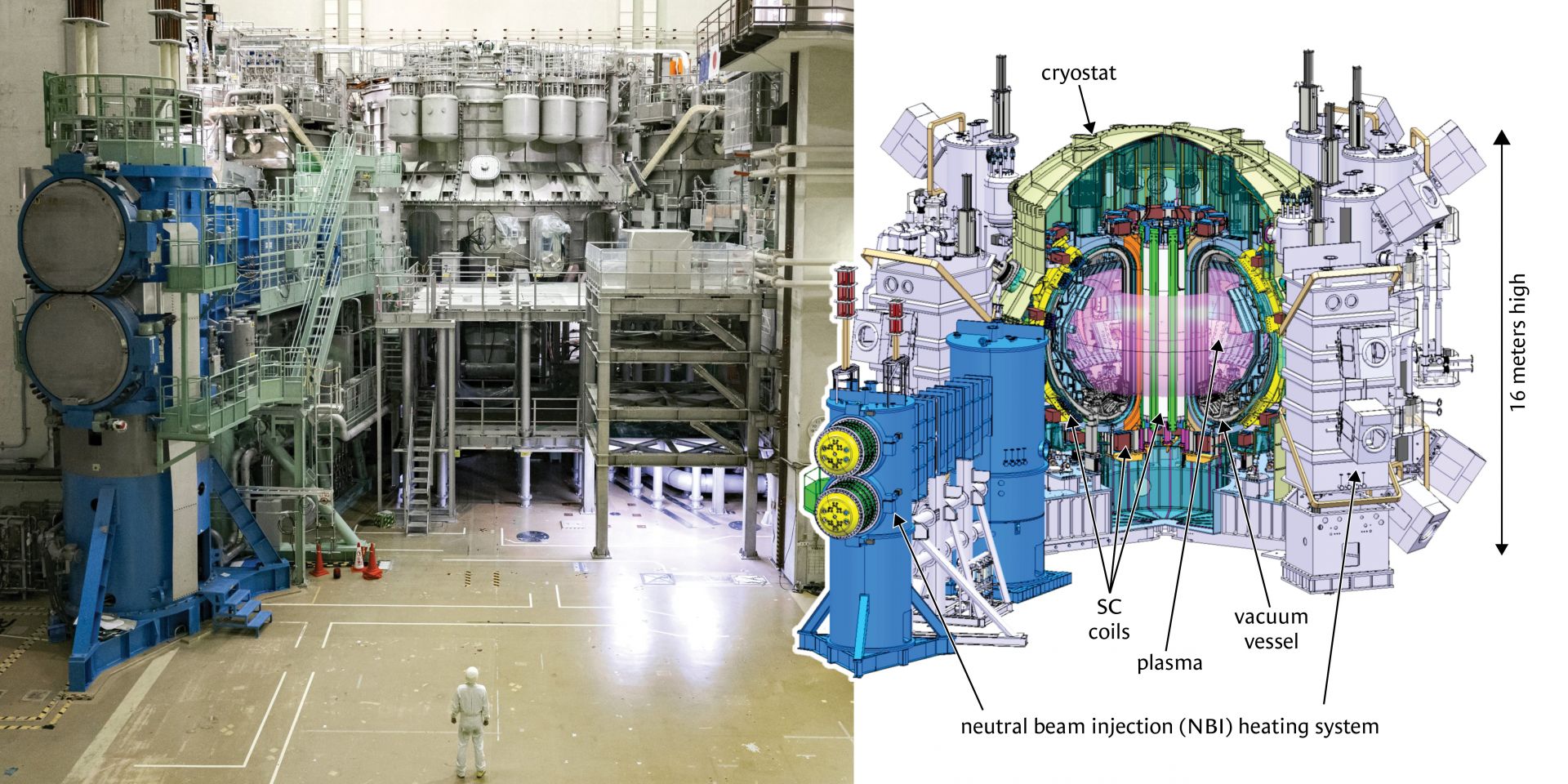
Fig. 1. A photograph (left) and schematic figure (right) of JT-60SA.
(Source: Naka Institute)
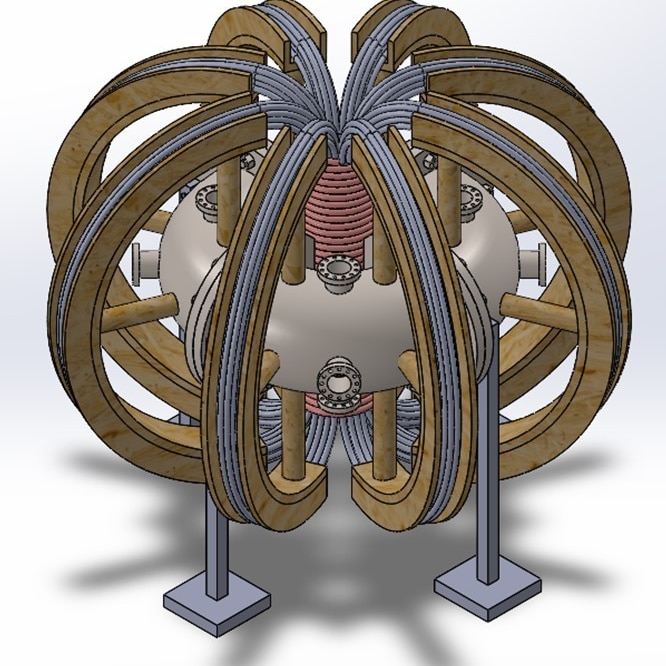
JT-60SA (Japan Torus-60 Super Advanced) is the world’s largest superconducting tokamak device. Its goal is the earlier realization of fusion energy (see Fig. 1). Fusion is the energy that powers the Sun, and just 1 gram of deuterium-tritium (D-T) fuel produces enormous energy—the equivalent of 8 tons of crude oil.
Last fall, the JT-60SA project announced an important milestone: the achievement of the tokamak’s first plasma. This article describes the objectives of the JT-60SA project, achievements in the operation campaign for the first plasma, and next steps.
A screengrab from a video released by the STEP program on July 23 illustrating the future home of the prototype fusion power plant. (Image: UKAEA/STEP)
Japan’s recent moves to boost fusion power in the nation’s energy plan and accelerate the timeline for a prototype fusion power plant come in response to increased global attention on fusion energy. Even as ITER faces delays, more than 40 private fusion developers are pursuing different technologies and competing for attention. And so are other countries, including the United Kingdom, which announced its plans for a fusion pilot plant back in 2019. Fusion companies and nations alike are responding to a growing sense that there is a race—or at least collective momentum—to commercialize fusion energy.
Rafael Mariano Grossi, director general of the International Atomic Energy Agency. (Photo: IAEA)
The peaceful uses of nuclear science and technology today hold more promise to heal the world since Austrian Swedish physicist Lise Meitner and her colleagues discovered nuclear fission in 1938, said Rafael Mariano Grossi, director general of the International Atomic Energy Agency, in a new essay titled “Nuclear Must Be Part of The Solution” published by the magazine Foreign Affairs.
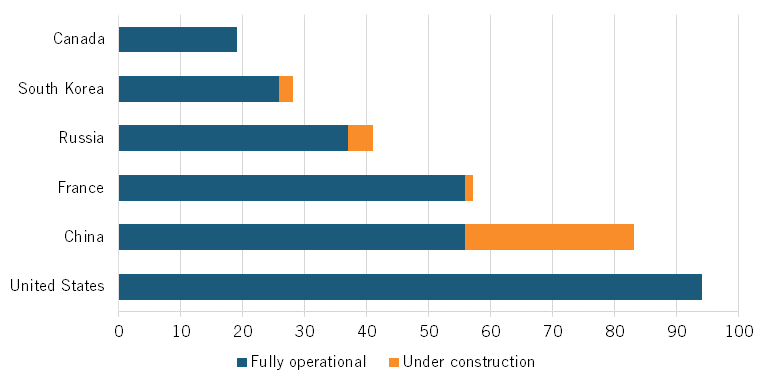
Nuclear power plants in operation or under construction as of May 2024. (Source: IAEA)
The recent article “How Innovative Is China in Nuclear Power?” published by the Information Technology and Innovation Foundation (ITIF) describes how China has become the world’s leading proponent of nuclear energy. The reason, the article maintains, is because its nuclear industry has been “supported by a whole-of-government strategy that provides extensive financing and systemic coordination.”
Member delegates, their experts and interpreters, and representatives of the ITER Organization and the ITER domestic agencies convened for the 34th ITER Council. (Photo: ITER)
At the 34th ITER Council Meeting, held June 19–20, ITER director general Pietro Barabaschi reported on ITER’s progress and presented an updated baseline proposal that would “prioritize the start of substantial research operations as rapidly as possible.”
Xcimer Energy’s headquarters in Denver, Colo. (Photo: Xcimer Energy)
Xcimer Energy announced June 4 that it has raised $100 million in Series A financing for a new facility in Denver, Colo., that will host a prototype laser system with “the world’s largest nonlinear optical pulse compression system.” As a private fusion developer, Xcimer wants to “extend the proven science of inertial fusion to industrial scale” with the help of that laser system and “key technologies and innovations from multiple fields.”
Image: Kyle Palmer and Michael Livingston/PPPL Communications Department
The DIII-D Superfacility team. (Photo: General Atomics)
Researchers at the DIII-D National Fusion Facility, the National Energy Research Scientific Computing Center (NERSC) at Lawrence Berkeley National Laboratory (LBNL), and the Energy Sciences Network (ESnet) are teaming up to make the high-performance computing (HPC) powers of NERSC available to DIII-D researchers through ESnet—a high-speed data network. Their collaboration, described in a May 29 news release, in effect boosts the computing power behind DIII-D’s diagnostic tools to make more data from fusion experiments available to researchers at DIII-D in San Diego and to the global fusion research community.
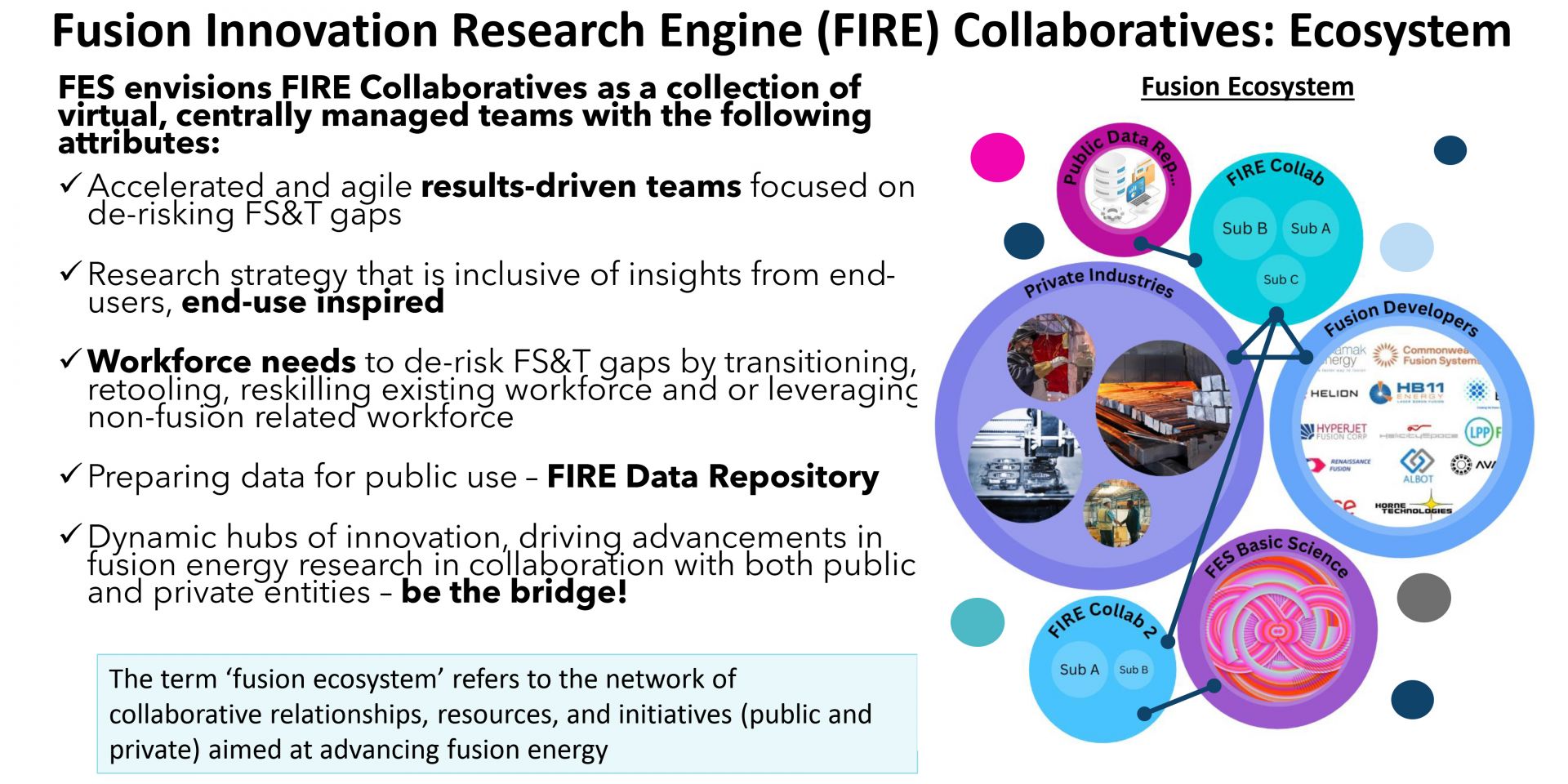
A slide on the FIRE collaboratives presented during a recent FES webinar. (Graphic: FES)
The Department of Energy’s Office of Fusion Energy Sciences (FES) wants Fusion Innovation Research Engine (FIRE) collaboratives to be a bridge between FES’s basic science research programs and the growing fusion industry. A funding opportunity announcement released May 22 explains that FIRE will be a “transformative initiative aimed at creating a fusion innovation ecosystem” with virtual, centrally managed collaboratives working on “end-use inspired” fusion science and technology R&D.
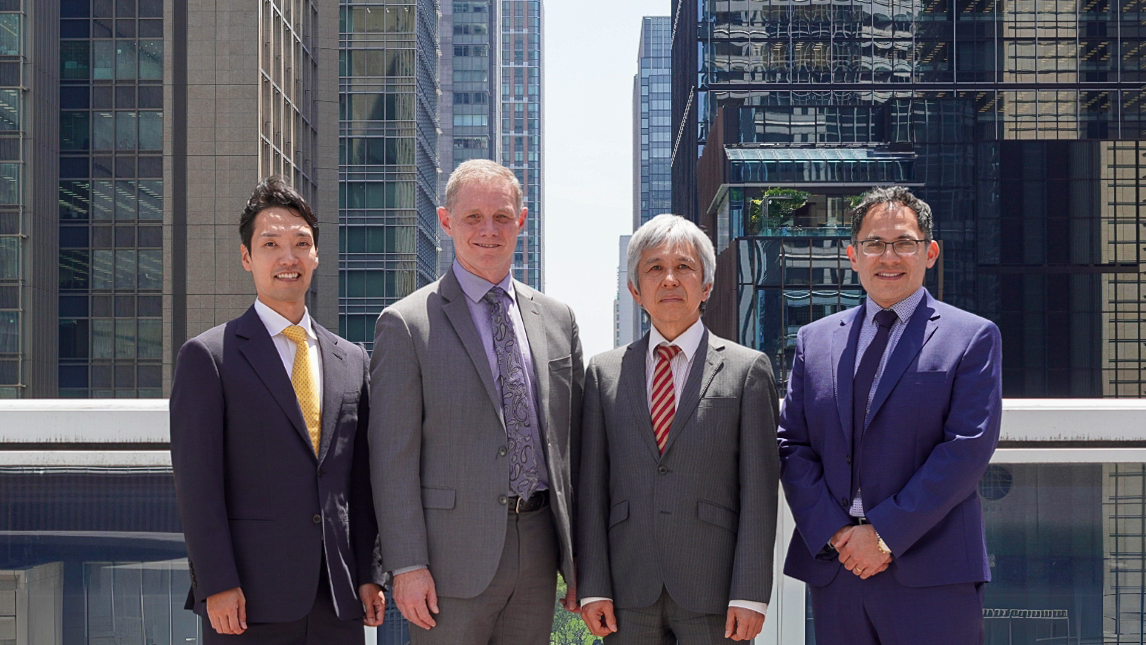
FFC board members (from left to right) Kiyoshi Seko (KF), Stephen Bushby (CNL), Satoshi Konishi (KF), and Ian Castillo (CNL) in Tokyo, Japan.
Japan’s Kyoto Fusioneering, a fusion startup spun out from Kyoto University, and Canadian Nuclear Laboratories have announced the formation of Fusion Fuel Cycles Inc., headquartered in Chalk River, Ontario, Canada. The joint venture extends a strategic alliance formed between the two entities in September 2023 and aims to develop and deploy deuterium-tritium (D-T) fusion fuel cycle technologies.




 Following new federal funding and programs announced