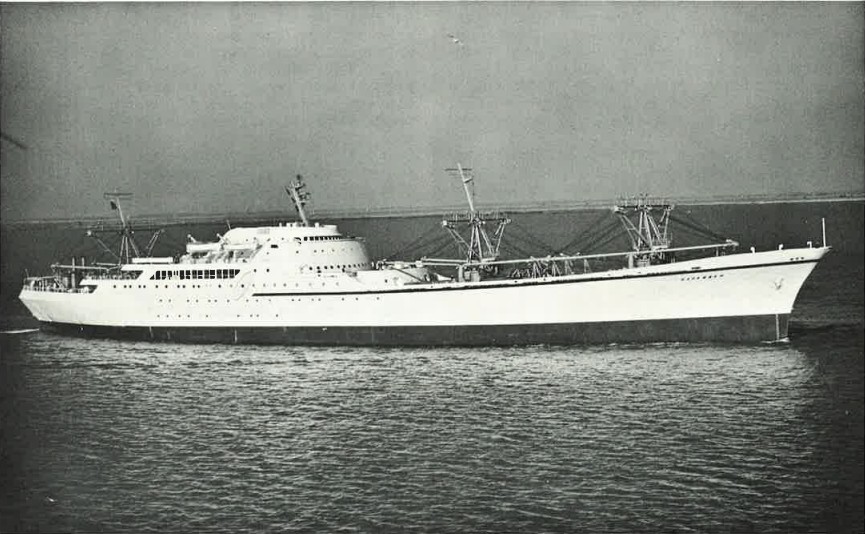
The NS Savannah, the world’s first nuclear cargo-passenger ship, en route to sea trials in Yorktown, Va. (Photo: Nuclear News, May 1962, p. 39)
On Sunday, May 17, in Baltimore, Md., there will be an open house on the NS Savannah to commemorate National Maritime Day. The Savannah acted as a passenger and cargo ship from 1962 to 1970, serving as a floating ambassador for President Eisenhower’s Atoms for Peace program and, more broadly, for the safe and peaceful uses of nuclear power.
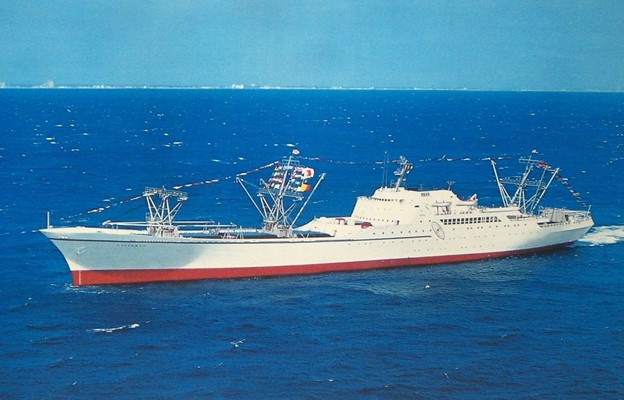
The NS Savannah in 1962. (Photo: DOE)
The world’s first nuclear-powered merchant ship, the NS Savannah, will have a public site visit in Baltimore, Md., on Saturday, February 21.
To register for the event and find up-to-date details on the event’s address, time, and more, click here.
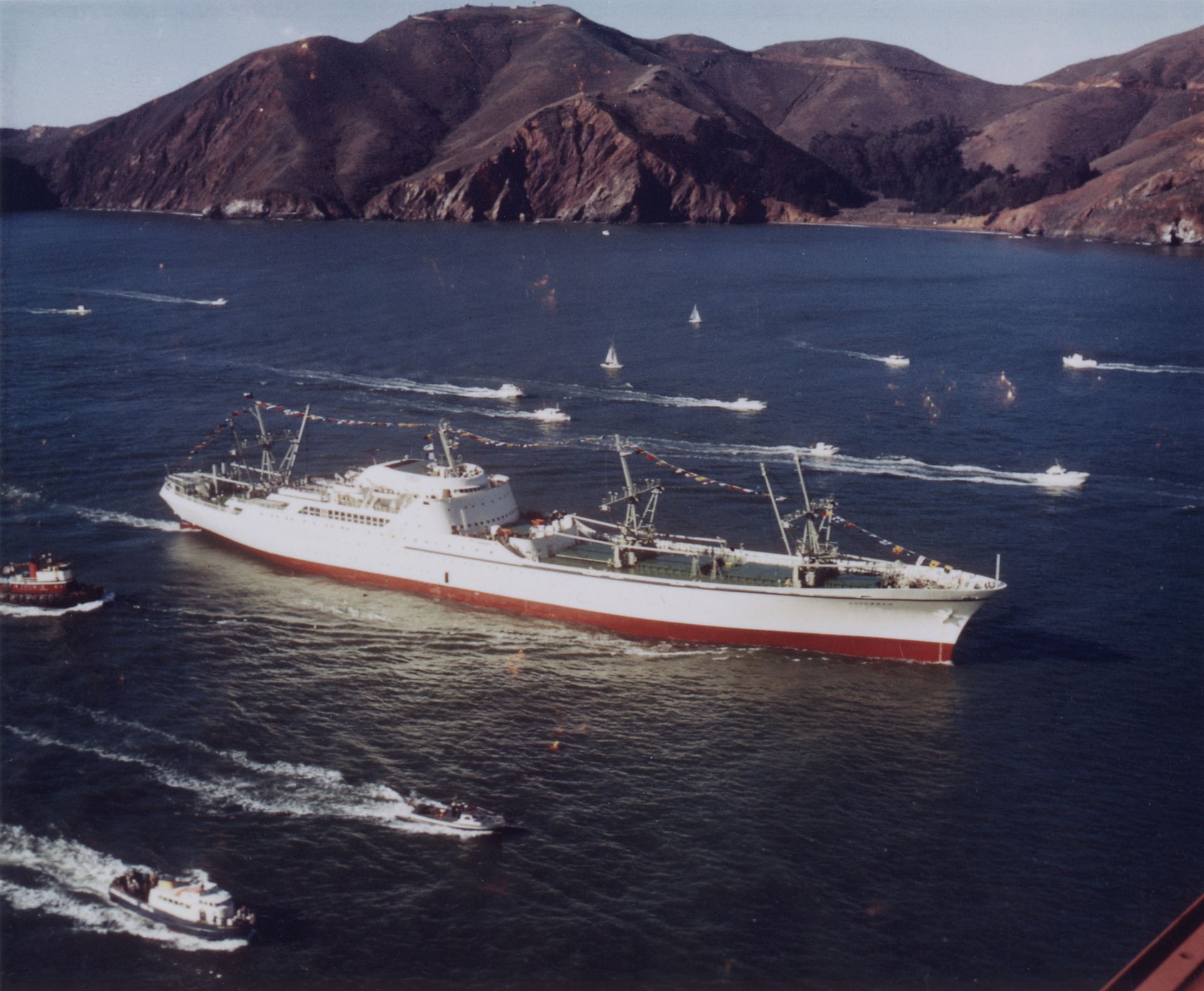
N.S. Savannah, the first commercial nuclear-powered cargo vessel, en route to the World’s Fair in Seattle in 1962. (Photo: U.S. National Archives)
The world’s first nuclear-powered merchant ship, the NS Savannah, will have a public site visit in Baltimore, Md., on Saturday, November 15.
To register for the event and find up-to-date details on the event’s address, time, and more, click here.
N.S. Savannah, the first commercial nuclear-powered cargo vessel, en route to the World’s Fair in Seattle in 1962. (Photo: U.S. National Archives)
The world’s first nuclear-powered merchant ship, the NS Savannah, will have a public site visit in Baltimore, Md., on Saturday, August 23.
To register for the event and find up-to-date details on the event’s address, time, and more, click here.
The NS Savannah in 1962. (Photo: DOE)
In commemoration of National Maritime Day, there will be an open house on the NS Savannah this Sunday, May 18, in Baltimore, Md. The world’s first nuclear-powered merchant ship, Savannah was built through a joint program between the Atomic Energy Commission and the Maritime Administration (MARAD) as part of President Eisenhower’s Atoms for Peace program.
Learn more: For more details on Sunday’s tour of the Savannah, click here.
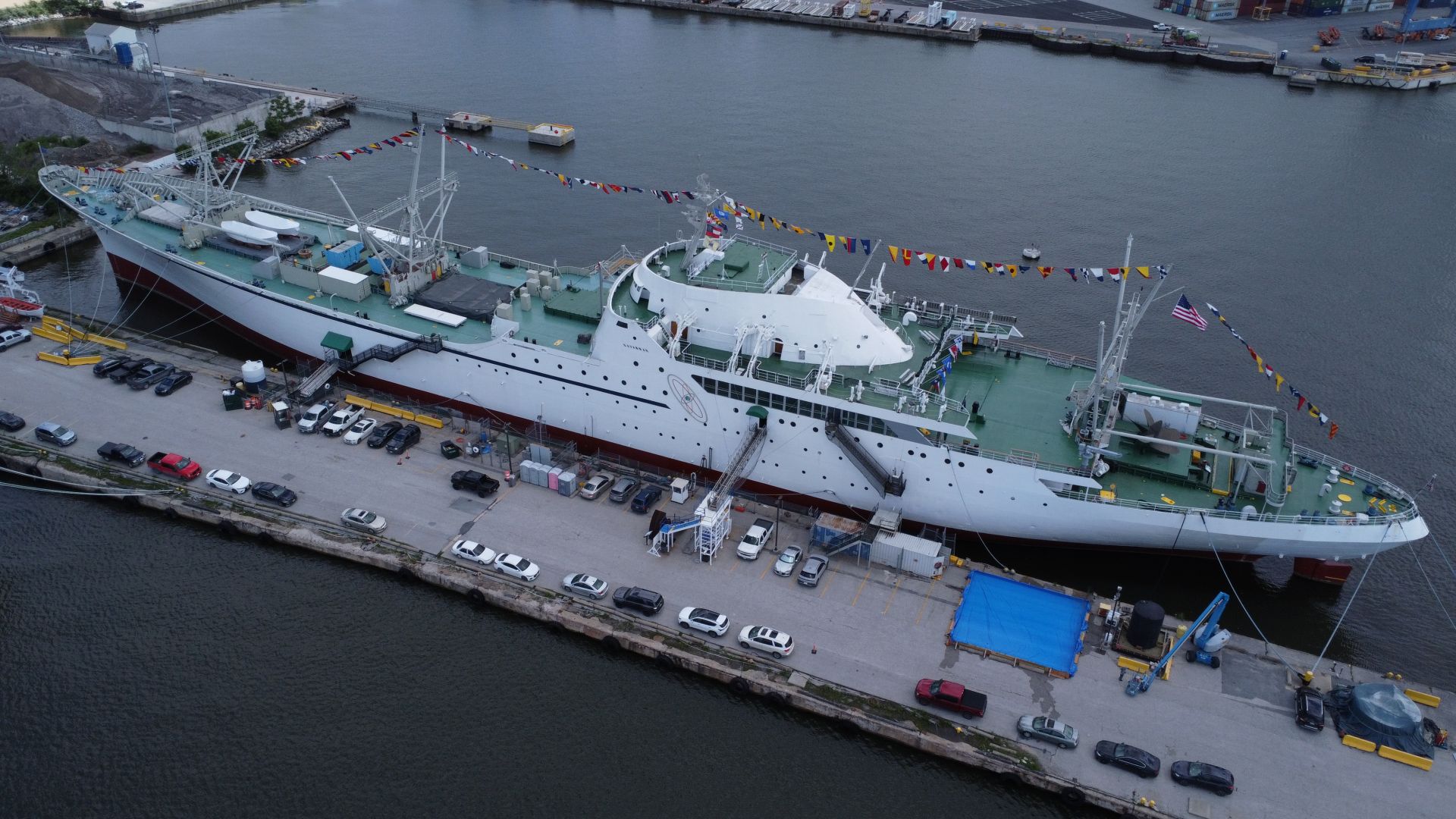
September 12, 2024, 12:00PMNuclear NewsErhard W. Koehler and Anne Jennings N.S. Savannah docked in Baltimore in May 2024. (Photo: MARAD)
The American Nuclear Society was formed in 1954 in the wake of President Eisenhower’s seminal Atoms for Peace speech. Around the same time that Congress was debating the Atomic Energy Act and John Landis was helping establish ANS, the National Security Council began deliberating about adding a nuclear-powered merchant ship to the nascent Atoms for Peace program. We like to imagine that the idea germinated after Mamie Eisenhower christened the U.S.S. Nautilus, but the truth seems much drier. Regardless, Ike championed the project and announced it to a surprised crowd in an April 1955 speech in New York City at the Waldorf Astoria Hotel. Landis would become the principal architect of the ship’s nuclear power plant. Although Savannah’s reactor now rests in the low-level radwaste repository in Clive, Utah, the ship’s prospects are as bright as the future of ANS itself.
Rafael Mariano Grossi, director general of the International Atomic Energy Agency. (Photo: IAEA)
The peaceful uses of nuclear science and technology today hold more promise to heal the world since Austrian Swedish physicist Lise Meitner and her colleagues discovered nuclear fission in 1938, said Rafael Mariano Grossi, director general of the International Atomic Energy Agency, in a new essay titled “Nuclear Must Be Part of The Solution” published by the magazine Foreign Affairs.
The N.S. Savannah. (Photo: N.S. Savannah Association)
What will happen to the retired nuclear-powered merchant ship, the N.S. Savannah? The Maritime Administration (MARAD) of the Department of Transportation is investigating possibilities for the vessel’s future, whether it be in disposition, transportation, or preservation.
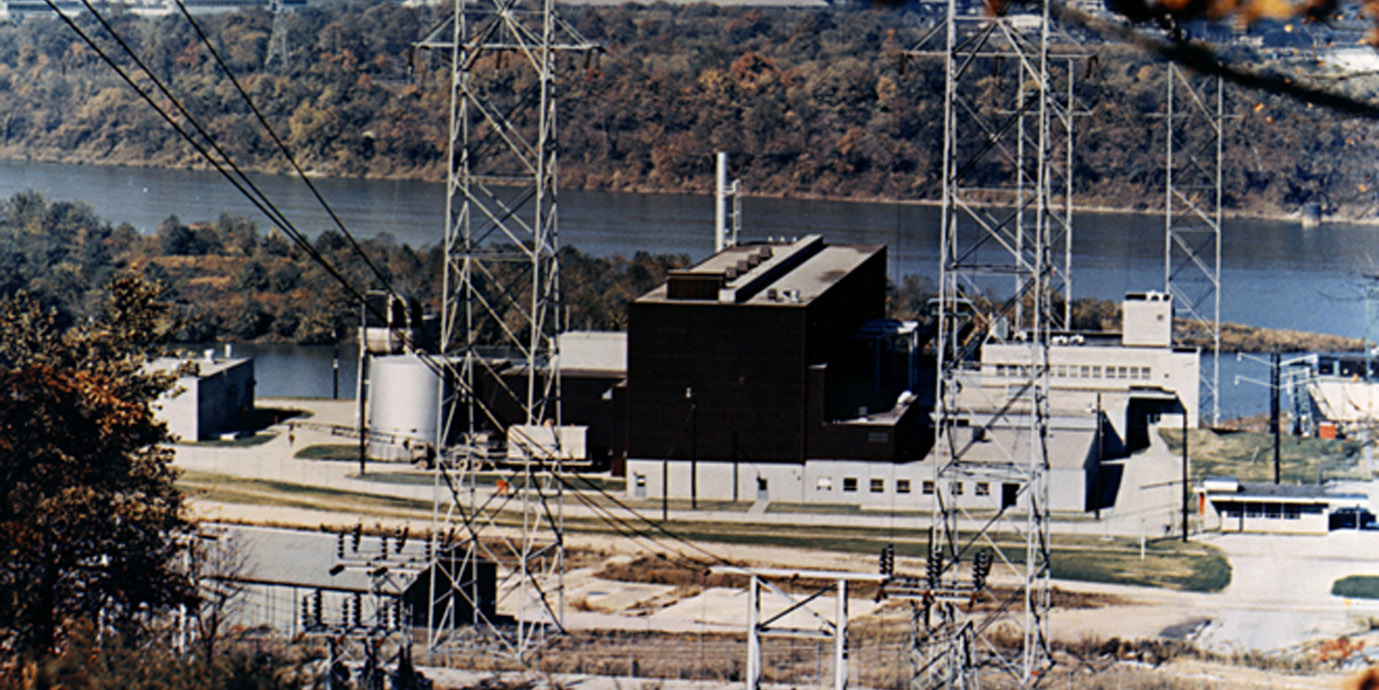
The Shippingport Atomic Power Station in Shippingport, Pa., the first full-scale nuclear power generating station in the United States, began operating in 1957.
Serving as the world’s first scalable nuclear power plant, Shippingport Atomic Power Station led the way for today’s nuclear generation fleet. Shippingport was centrally located roughly 25 miles from Pittsburgh, Pa., to provide electrical generation for many end-users. Shippingport also served as an experimental reactor that allowed engineers and designers the ability to test different core designs, and as such, the site housed additional testing equipment otherwise not commonly seen. The primary goal of Shippingport was always to generate electricity; however, its ability to function as an experimental reactor served utilities in further development of scalable nuclear generation.






 A special issue of the ANS journal Nuclear Technology, published last month, observes the 75th anniversary of the Trinity experiment, the world’s first nuclear explosion, on July 16, 1945, near Alamogordo, N.M. The experiment was a first step toward the conclusion of the Manhattan Project and the end of World War II. The special issue, The Manhattan Project Nuclear Science and Technology Development at Los Alamos: A Special Issue of Nuclear Technology, was sponsored by Los Alamos National Laboratory and curated by Mark Chadwick.