Nuclear EOs: One year later
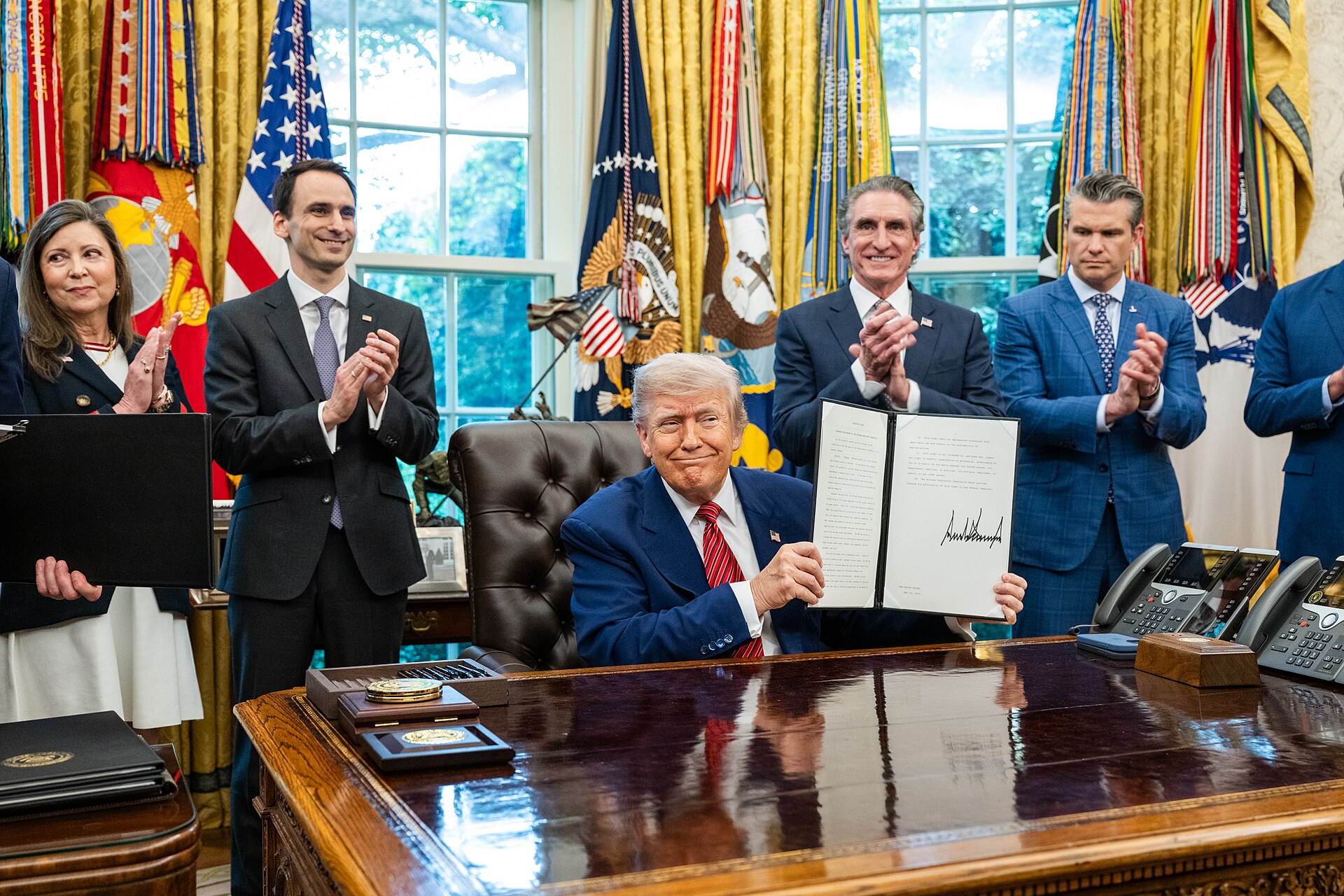
This Saturday, May 23, will mark one year since President Trump issued four executive orders (EOs) that sought to implement sweeping changes across the U.S. nuclear industry. From regulatory reform at the Nuclear Regulatory Commission to new authorization projects at the Departments of Energy and Defense, the orders sent ripples throughout the industry.
In the weeks after their signing, an expert advisory group convened by the American Nuclear Society predicted that the EOs would be beneficial to the industry. Paul Dickman, a retired senior policy fellow at Argonne National Laboratory, said at the time that generally, the group saw the EOs “as a positive trend . . . but the devil is in the details.”
A year on, many of those details have emerged, and some significant changes have been made. With that in mind, many experts are weighing in once again on how the industry has been reshaped in the last 12 months.
The DOE impact: EO 14301, “Reforming Nuclear Reactor Testing at the Department of Energy” specifically directed the DOE to collaborate with private industry and help three demonstration reactors reach criticality by July 4, 2026. This EO in particular set off a closely watched race (which Nuclear Newswire has covered more than 20 times) that has generally provided massive regulatory, financial, and technical tailwinds for each involved company. It also set into motion a parallel program to build new DOE-authorized fuel cycle facilities.
Through 2025, it was unclear what the ultimate fate of the Reactor and Fuel Line Pilot Programs would be after the July 4 deadline passed. That was until March, when the DOE announced that it was expanding both programs into the Nuclear Energy Launch Pad—an authorization pathway that will look similar to the pilot programs on which it is based but will remain available to developers of nuclear-related technology throughout the coming years.
(Separately, EO 14299 set off a new wave of slower-progressing reactor projects managed by the DOD.)
Wider reinvigoration: While these developments have generated significant media attention and have the potential to make long-lasting changes to the development of new nuclear technologies, at the one-year mark, experts are focusing on the less-covered impacts of another EO.
That is EO 14302, “Reinvigorating the Nuclear Industrial Base,” which has perhaps the broadest scope of all four orders. It outlines plans to quadruple U.S. nuclear power production over the next 25 years, accelerate the licensing process for reactors, develop the nuclear workforce, and expand the domestic fuel supply chain—all of which has the ultimate stated aim of securing energy independence and strengthening national security.
Sven Bader, a technical executive at the Electric Power Research Institute, told Nuclear News that this EO is set to “make a lasting change for the ‘severely atrophied’ fuel cycle infrastructure in the U.S. by providing tangible financial support to new enrichment facilities, offering potential feedstock materials that can be vital to demonstrating fuel fabrication for advanced reactors, and requesting (and receiving!) information from states interested in Nuclear Lifecycle Innovation Campuses.”
ANS past president Steve Nesbit (2021–2022) agreed, telling Nuclear News that this order has ambitions to make changes that would be key to the industry. “EO 14302 recognizes the need to put in place statutory changes to enable a new direction for the back end of the fuel cycle,” he said, before pointing out that, to date, “the current administration has not offered any specific legislative proposals to support its policy, but there are rumors such a proposal may be forthcoming.”
The NRC impact: Still another of the four orders, in the past year, has garnered perhaps the most attention from the media and experts alike.
EO 14300, “Ordering the Reform of the Nuclear Regulatory Commission,” directs the NRC to make significant reforms and, as the agency put it, “cut red tape and enable nuclear energy deployment in America.”
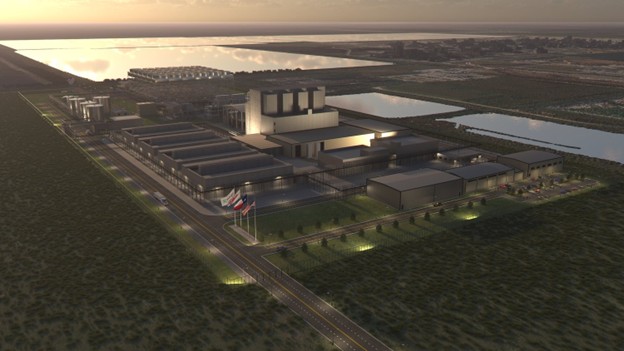
Agency officials used this phrase in an announcement on Wednesday of the anniversary of the EO and the notable achievements and benchmarks the NRC has hit because of it. That list included issuing a construction permit to TerraPower’s Natrium power plant, renewing the operating license of the Robinson nuclear power plant in less than 12 months, and finalizing five final rules and publishing seven proposed rules out of a planned 27 per the order’s directive to complete a wholesale review of NRC rulemakings within 18 months.
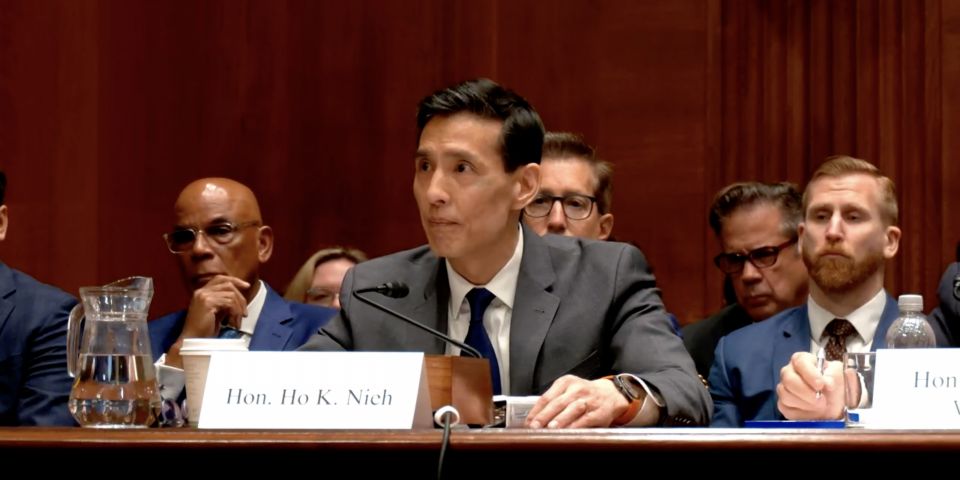
In a media call Tuesday, NRC Chairman Ho Nieh touted the work the agency had achieved in the last year—work that occurred during a consequential period in American nuclear energy and nuclear safety regulations.
“The ADVANCE Act laid the foundation and set us on a path, and Executive Order 14300 was the catalyst for the work that NRC staff have been doing in the last year or so to do the most comprehensive redesign of our regulatory system in nearly 50 years,” said Nieh.
Some of this work is being done at speeds not seen before. For instance, Sabrina Atack, deputy executive director for reactor and preparedness programs at the NRC, said there are 33 active rulemakings in progress. (The agency’s typical workload is 3–6 rulemakings per year.) What would normally take 5–7 years will be done in about 2 years, she said.
Despite this, Nieh said some final rules may extend beyond the 18-month mark, and the agency has already updated its schedule. Reasons for this possibility include the reviewing of public comments, identifying changes because of comments, developing the final rule language, and going through the Office of Information and Regulatory Affairs review process.
Nieh, meanwhile, defended the speed at which some reforms like rulemaking are taking place. Some of the work leading up to these proposed and final rules already had happened well before EO 14300.
“We are not rushing our work,” he said. “The things we are putting into these rules are things that have been talked about for a very, very long time.”
Maria Korsnick, president and CEO of the Nuclear Energy Institute, said high-profile reviews like TerraPower’s Natrium reactor or Kairos Power’s Hermes demonstration reactors are being done by the NRC at an “unprecedented speed” without sacrificing their safety standards.
“Efficiency is not the opposite of safety. In fact, efficiency often enhances safety by keeping the focus of NRC reviews on those items most important to protecting workers and the public,” she wrote in a May 20 piece for the National Interest. “And it is essential that we deliver safe power efficiently so we can meet today’s energy demand.”
"The momentum was already there with the ADVANCE Act, which passed with overwhelming bipartisan support in 2024, and the industry had been pushing for licensing reform for years. The EOs accelerated and formalized what was already moving,” Emily Caffrey, assistant professor of health physics at the University of Alabama–Birmingham, told Nuclear News. “Whether the changes are lasting depends less on the EOs themselves and more on whether the regulatory culture at the NRC actually shifts, and whether Congress stays engaged after the current political moment passes.”
A group of professors and researchers at the University of Illinois–Urbana-Champaign said the best path to satisfy the mandates of the EOs is one with a more explicit, risk-informed approach that integrates cost-benefit analysis with a systematic treatment of uncertainty. This approach would ensure addressing both the technical and legal challenges in nuclear regulation.
“The executive orders have introduced additional uncertainty into an agency already struggling with swiftly changing law on agency discretion and agency independence, and how to properly approach efficient licensing and regulation while maintaining its original commitment to safety,” they said in a statement. The group includes George Joslin, Zahra Mohaghegh, Arden Rowell, Seyed Reihani, and Ha Bui.
Concerning transparency: In the year since the EOs, the topics of transparency and independence have become major talking points. Developments like the DOE’s Reactor Pilot Program, the firing of then NRC Commissioner Christopher Hanson, and the NRC’s proposed rule on a streamlined pathway for licensing reactors already approved by the DOE and DOD have had some people pondering whether certain decisions are being influenced from beyond their respective agencies.
At a May 20 U.S. Senate subcommittee hearing on three proposed nuclear energy bills, Patrick White, group leader for fusion, safety, and regulation at the Clean Air Task Force, said historically the NRC has shown how important transparency and independence is to them. He especially values the dedication of the NRC library to record the agency’s work going back decades. An ongoing commitment to these two principles is necessary to get good regulatory outcomes and reinforce the public trust the NRC has earned, he told the subcommittee.
“As we talk about the NRC moving forward to try to meet the needs of the moment, I want to make sure we maintain that independence and that transparency,” White said. “When I start to see some of the changes of the agency—for example, not publishing all the commission votes for certain activities—as someone that’s outside trying to understand what's going on in the agency, it makes it harder to understand what the commission is doing. And while I would love to trust that the NRC is doing great work—and I do—it's always good to be able to verify that.”
Dickman also weighed in on the topic, telling Nuclear News, “Independence and transparency go hand in hand. The NRC has always had very transparent review processes; it is what makes them a recognized global leader in nuclear safety. Any process changes that limit reviews or mask comments as 'deliberative' are concerning and need to be avoided to maintain the NRC’s independence.”
Zooming out: Taking a step back and considering in broad strokes the impact these EOs have had in the past year is a difficult task. As Bader pointed out, “Considering there are approximately 30 tasks in these four EOs” with due dates ranging from one month to 25 years, “the progress made by DOE on responding to these tasks (about 20 are due within the first year) is impressive.”
Nesbit voiced a similar positivity—though that positivity is qualified with some remaining questions. “Taken as a whole, the four May 2025 EOs provided a welcome bias toward action in the nuclear technology field. Many initiatives are underway as a result, although it is too early for most of them to have borne substantive fruit.”
Ultimately, for him, one year in, important questions—particularly in financing and long-term disposal—still remain. “Perhaps the biggest question is, ‘Will this activity translate into real progress that is sustainable over the coming decades?’”
For a deeper exploration of the impact of all four EOs, ANS will be hosting a technical session titled “Progress on the President's Executive Orders Related to the Nuclear Industry” at the upcoming 2026 ANS Annual Conference.