NRC commissioners testify before U.S. House subcommittee
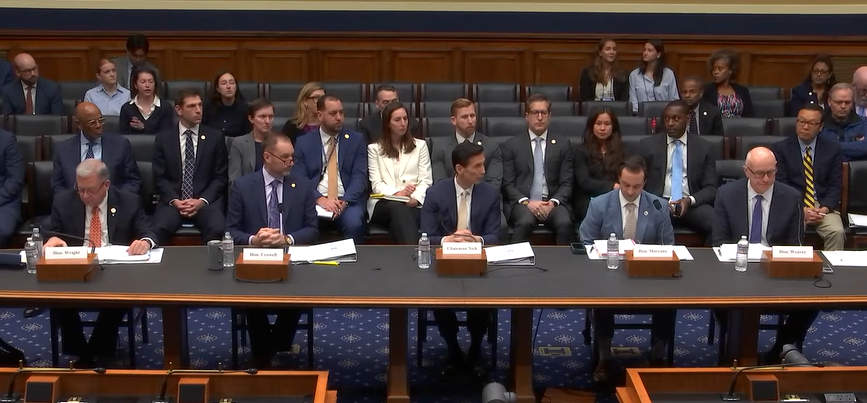
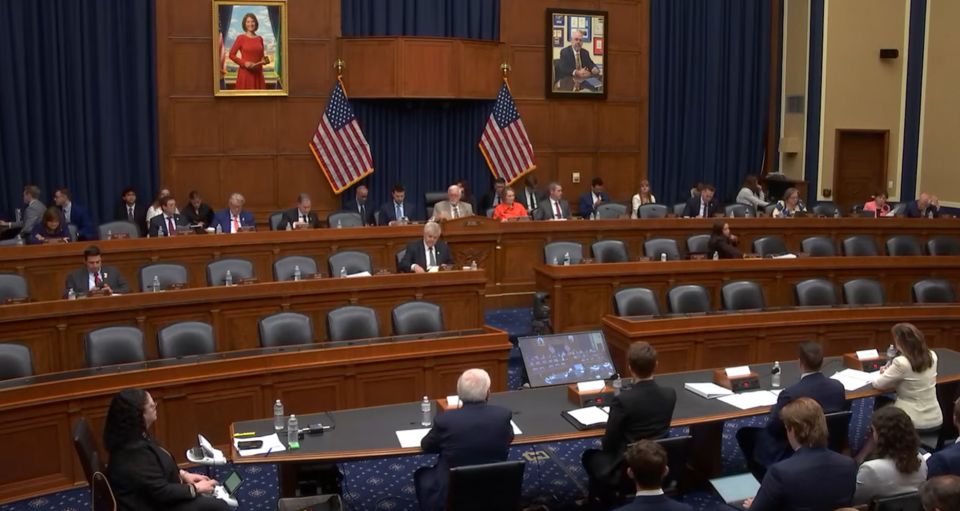
All five commissioners of the Nuclear Regulatory Commission provided insight into the agency’s priorities, activities, and its proposed $892.3 million budget for fiscal year 2027 when they testified before the U.S. House Committee on Energy & Commerce’s Energy subcommittee on Wednesday.
The multihour hearing allowed commissioners to weigh in on several topics, including the agency’s independence, its review and overhaul of its rules, and recruitment and retention of NRC staff. It was a rare opportunity for the congressional subcommittee. As chairman Rep. Bob Latta (R., Ohio) pointed out, it had been three years since the full commission had testified before the subcommittee.
“Of course, success depends on many factors beyond the NRC,” Latta said. “However, success will rest on a regulatory system that will efficiently provide reasonable assurance that health and safety are adequately protected.”
Independence questions: The NRC’s independence remains a topic of great interest and discussion among lawmakers—and Wednesday was no exception. Several committee members brought up the topic, with examples ranging from pressure from the White House and the Department of Energy, President Trump’s dismissal of commissioner Christopher Hanson last year, and the transparency of its rulemaking process. Rep. Frank Pallone (D., N.J.) asked the five whether it is critical for the future of American nuclear energy that the NRC retain its independence. All five agreed with Pallone that it is.
“I do believe any potential nuclear renaissance will be cut short if the NRC can’t guarantee its independence,” said Pallone.
Rules progress: The commissioners said the NRC is on track to complete the wholesale revision of its regulations by the November 23 deadline set forth in Executive Order 14300, “Ordering the Reform of the Nuclear Regulatory Commission.”
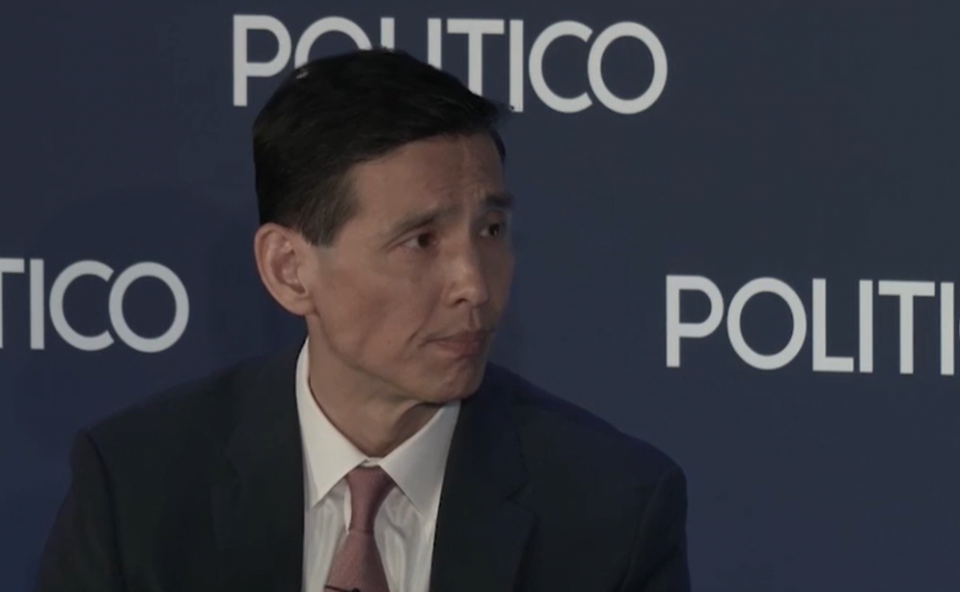
In his opening statement, NRC Chairman Ho Nieh listed some of the agency’s recent accomplishments, including that it had prepared 18 draft rules under EO 14300.
“These results demonstrate that timely regulatory actions and a strong safety focus go hand in hand,” he said. “This is how America will regain nuclear leadership. The NRC will not be an impediment to nuclear energy innovation.”
One of the rules that attracted attention from the subcommittee was a proposed rule that could streamline a pathway for reactor designs already approved by the Department of Defense or DOE. The NRC does collaborate with other agencies on initiatives like the DOE’s Reactor Pilot Program. For instance, Nieh said that NRC staff embedded in the pilot program observe the DOE’s authorization process, provide technical input and insights, and evaluate how these projects can best transition into the NRC licensing process.
Budget cuts: The NRC’s $892.3 million request for FY 2027 is roughly 8 percent less than the FY 2026 enacted budget. This includes 2,606 full-time employee equivalents, a decrease of 7 percent from the FY 2026 enacted budget.
Some lawmakers and NRC commissioners expressed concerns over this reduction in personnel. Rep. Jennifer McClellan (D., Va.) said public trust in nuclear energy can erode when staff reductions become part of the discussion. And in his testimony to the subcommittee, Commissioner Bradley Crowell said his greatest concern is the current and future workforce at the NRC.
“The agency is being directed to do more with less despite a growing workload and aggressive new timeframes for agency licensing and oversight activities. This is an unsustainable dynamic,” he said.