Launching into tomorrow: NRIC guides new era of research and deployment
In June 2025, the Department of Energy announced the Reactor Pilot Program, an authorization pathway that allowed reactor developers to partner with the DOE to get first-of-a-kind (FOAK) reactors built and tested. Soon after, the DOE rolled out a complementary Fuel Line Pilot Program, which aimed to fast-track fuel projects. In all, 20 projects were accepted into the new programs.
The pilot programs took their structure—and the deadline for at least three reactors to reach criticality by July 4, 2026—from Executive Order 14301, “Reforming Nuclear Reactor Testing at the Department of Energy.” In the ensuing months, the companies involved in this unprecedented race have been announcing new milestones left and right. Yet at least one large question has remained unanswered: Are the programs a one-off boost to a few companies, or will they develop into an enduring change for reactor development?
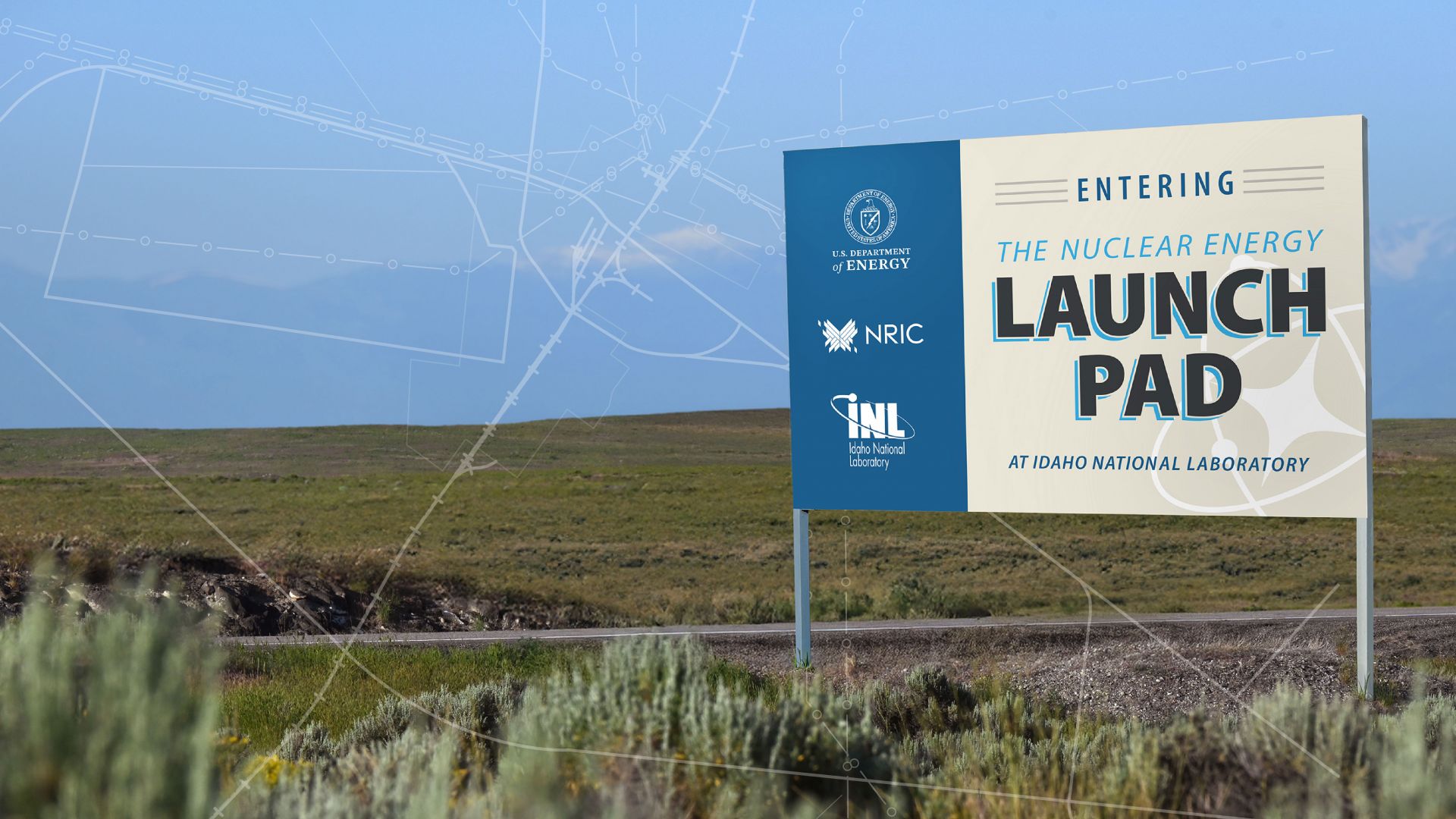
One answer came in March, when the National Reactor Innovation Center announced a new program: the Nuclear Energy Launch Pad. The DOE-led program expands and extends the pilot program opportunities, establishing a more permanent authorization pathway for developers of new nuclear technologies.
As part of Idaho National Laboratory, NRIC has a variety of test beds, programs, and initiatives designed to take nuclear technologies from concept to commercialization, including the Demonstration of Microreactor Experiments (DOME) test bed, now officially open for business (see p. 44 for more on DOME).

Tomer
To learn how these resources will be used in a new era of DOE-authorized projects, Nuclear News Associate Editor Lucas Geiger spoke with Brad Tomer, NRIC’s director. Tomer joined NRIC in 2020 as chief operating officer, less than a year after it was established, and took over as director in 2023.
Tomer brings a unique viewpoint to the nuclear industry: prior to INL, he worked in various positions in the oil and gas industry. Perhaps most notably, for more than a decade, Tomer held various roles overseeing research, development, and demonstration at the National Energy Technology Laboratory, including as director of the Strategic Center for Oil and Gas and the Office of Major Demonstrations.
Starting off, the big picture question: What do you see as the unique value that NRIC is bringing to the construction of nuclear projects?
 As part of INL, NRIC was formed with the primary mission of partnering with industry to bridge the gap between research and development and commercial deployment by bringing to the table the best that the national labs have to offer—particularly at INL—in terms of facilities, expertise, and the ability to get things done. The unique value that NRIC brings is combining the best of the expertise and facilities at the national labs with the technology from reactor developers to try to speed advanced nuclear to commercialization.
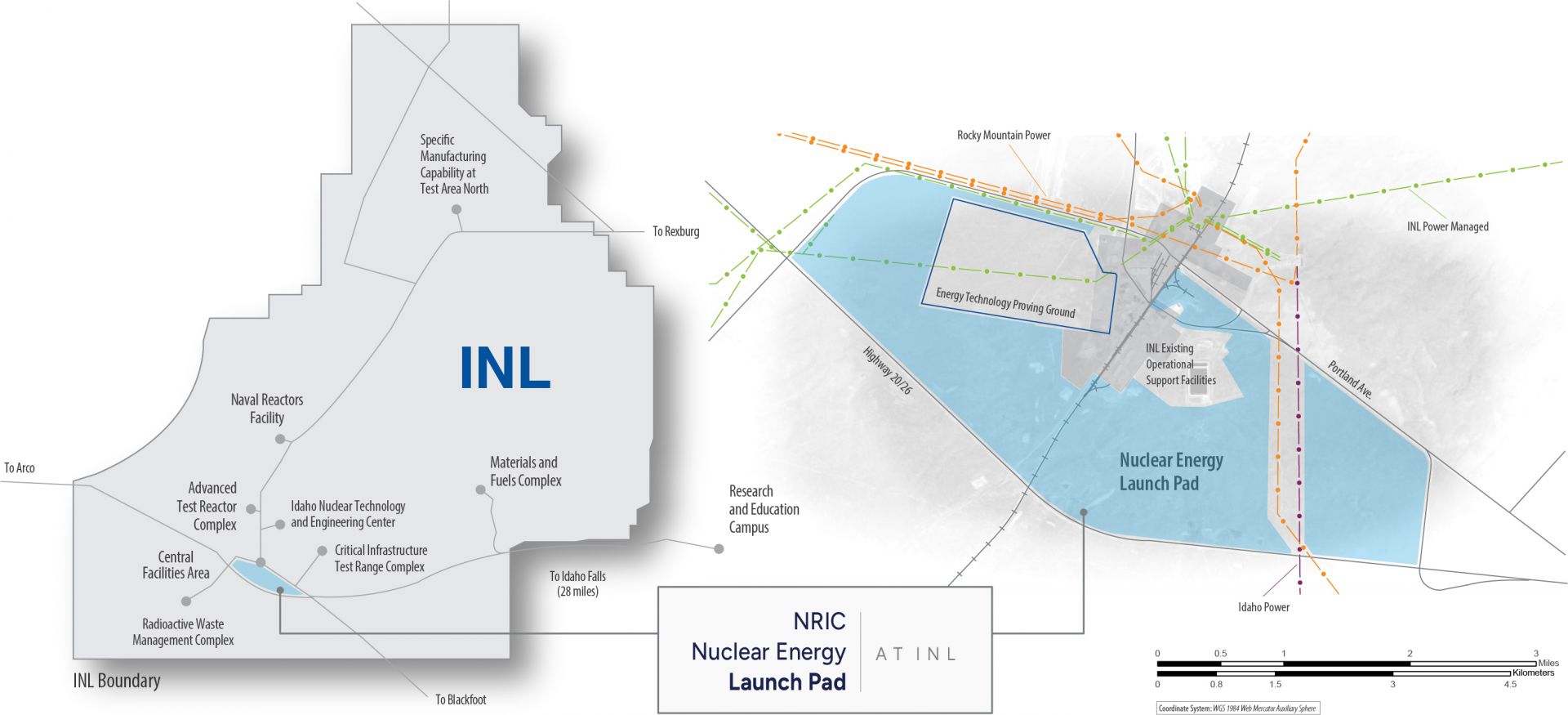
An INL site map with a highlighted expansion of Launch Pad INL. (Photo: NRIC)
How do you see the Nuclear Energy Launch Pad program slotting into NRIC’s existing infrastructure? How does it complement or supersede some of the things that NRIC or INL were already doing?
NRIC is a national program headquartered at INL; we do work here and across the United States, and we have a wide portfolio of projects. We build test beds (such as the DOME) so that reactor developers can concentrate on developing their reactors while we provide a safe place to test that technology for the first time. We also help with siting—and that can take many forms. Additionally, we have an advanced construction technology initiative that we’re working on to reduce the costs and time to build nuclear plants. We’re also looking at applications of advanced nuclear for maritime, so we have a broadly scoped program.
The Nuclear Energy Launch Pad initiative expands on that scope, giving us greater flexibility in terms of where we site and giving developers access to the DOE’s authorization program, a process for authorizing the startup of FOAK advanced nuclear technologies.
With the flexibility that we get from the Launch Pad program, developers will be able to work toward DOE authorization of their advanced technology from wherever in the country they want. However, we do have a 2,000-acre area set aside here at INL, as well. We put that area aside to get economies of scale, bringing together several developers into a concentrated area where we can share services and generally increase access.
Could you talk a bit more about the distinction between Launch Pad INL and Launch Pad USA?
Launch Pad INL is a centralized demonstration site at INL. We have dedicated land reserved for projects that is fairly well characterized with existing environmental and safety data. We can have shared infrastructure, facilities, and services through co-location, along with direct, on-site access to INL staff and facilities.
Launch Pad USA involves distributed demonstration sites across the United States. Any suitable location outside of INL is available. In this pathway, the developer identifies the site and may be responsible for site characterization, depending on the location. Infrastructure will also vary by site, because it’s not shared with INL. On the other hand, Launch Pad USA is a highly flexible opportunity to leverage any unique regional or project-specific advantages a site may have.
Whether a developer is involved in Launch Pad USA or Launch Pad INL, they will get priority access to DOE authorization processes.
Will NRIC’s resources be available during the early siting phases of Launch Pad USA, or will companies be on their own in the early development stages?
NRIC resources will be here every step of the way for each developer, whether they are at INL or elsewhere. The only difference is whether or not we will have to travel to a developer’s site to help them out.
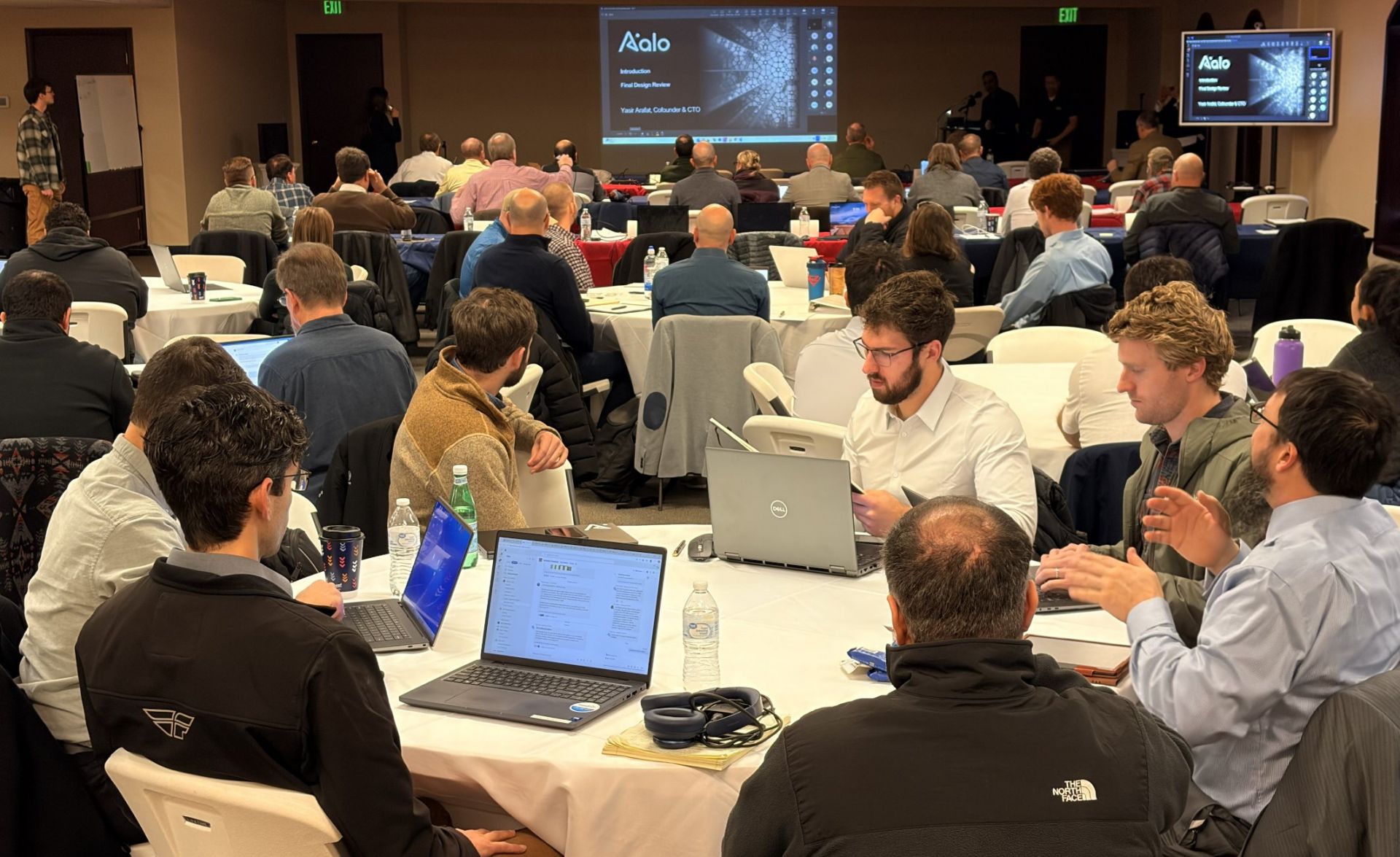
DOE reviewers and NRC observers at the Final Design Review of Aalo Atomics, one of the companies involved in the ongoing Reactor Pilot Program, which the Launch Pad seeks to extend and expand. (Photo: Aalo Atomics)
When you say resources will be made available to developers, what do you imagine will move the needle forward significantly for these projects?
Here at INL, we have a deep expertise in nuclear safety, so we can help support developers with nuclear safety documentation. We also have deep expertise in operations, so we can help developers set up their operations as well. We have unmatched domain experience in getting DOE authorization. Building things like the DOME, for example, required DOE authorization, so we have experience in how to submit paperwork to the DOE to get projects approved and authorized to operate.
Overall, we offer a variety of technical services that you can’t find anywhere else. These services are particularly valuable to a lot of these advanced nuclear developers who are just starting for the first time.
Is NRIC’s Launch Pad role more proactive or reactive?
We’ll handle Launch Pad the way we handle all of our current reactor developer projects. We assign a technical program manager to each developer, and we behave as part of their team and are actively engaged in every part of their process to get authorization. Sometimes these technical program managers are dedicated to one project, and in other cases, they span several projects, depending on the size of the effort.
Between the Reactor and Fuel Line Pilot Programs, the DOE has accepted 20 projects. Do you have a sense of how many projects will be in Launch Pad?
A lot of companies currently are reaching out to us about the program, but how many of those companies end up coming to the table and how ready they are when we issue our request for applications is yet to be seen. I imagine it will be on the order of 10 to 15 the first go-around. We will most likely leave the request for applications open on a rolling basis, so I expect that number to grow as we move through this year and the next.
Natura Resources and Abilene Christian University’s molten salt research reactor is an edge case in the Reactor Pilot Program as the only involved research reactor, though Natura is planning to commercialize a reactor. Going forward, will NRIC support the development of research reactors?
Yes, we will support those that have a commercialization plan; a commercialization plan will be one of the key criteria for selecting folks to join the Launch Pad program. If a research reactor can show a path toward commercialization, then we’ll absolutely consider them.
There is also a lot of momentum right now in gigawatt-scale reactors, which the Reactor Pilot Program has not had any interaction with. Will NRIC have any role on that side of the industry?
The role of the Launch Pad is to get DOE authorization, which is primarily for FOAK plants. Once developers pursue commercial, gigawatt-scale deployments, they will need to pursue NRC licensing. I don’t anticipate that we will help test a gigawatt-scale plant, unless it’s some kind of FOAK plant, but I don’t foresee that happening.
Now, we do have another program for advanced construction technology, the Advanced Construction Technology Initiative. In that program, we’re developing technologies that will help build plants at any scale with less risk. So, we do have some efforts that any reactor developer can use to speed their construction.
Switching gears, can you give me a big picture look at what NRIC is doing with maritime applications?
NRIC has a lead role for maritime within the DOE’s Office of Nuclear Energy. The overall goal of NRIC’s involvement in the sector is to support the demonstration, commercialization, and deployment of maritime projects.
One of our key projects here is the Maritime Nuclear Applications Group, which we created in collaboration with the American Bureau of Shipping and Morgan and Lewis. That group is a research hub and resource center with nearly 200 members representing about 80 companies, universities, regulators, and government agencies. They all come together with one goal in mind: to understand how advanced nuclear can be deployed for maritime applications.
Under the MNAG umbrella, we are pursuing multiple studies approaching gaps in the field from several angles. These include a study to match reactor technologies to suitable maritime applications, a port siting study, a language study looking to harmonize terms used in the maritime and nuclear industries, and a study comparing oil and gas industry project deployment with nuclear industry project deployment.
Overall, we’re building the foundation of maritime right now. Compared to the overall NRIC program, it’s a fairly small effort, but we are also strongly partnered with DOE-NE to support their interagency and international work in the maritime sector.
You have experience bridging the gap between R&D and commercial projects in the oil and gas industry. What is that industry doing well that the nuclear industry could adopt?
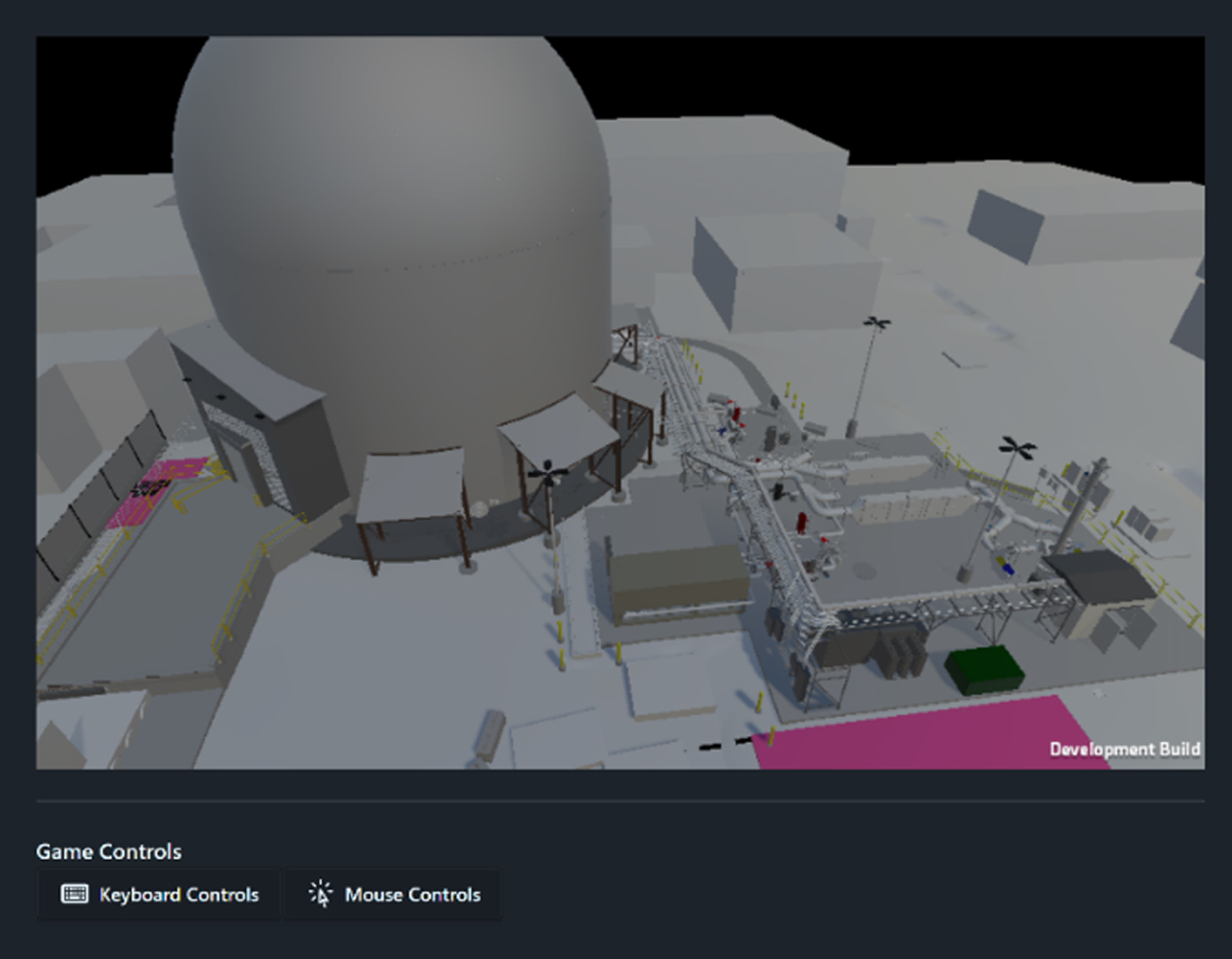
An early-stage example of the graphical user interface for the currently under development digital twin of NRIC’s DOME. (Image: NRIC)
In the oil and gas industry, we’re very quick to get projects started and tested. We pivot if we need to or stop if we think something is not going to work. We do the hardest things first, and then we figure out if we want to go forward or not. That mentality lets you learn a lot fast and fail fast, as well. This is something that we’re bringing to the nuclear industry at NRIC: the opportunity to quickly get your reactor built and tested.
NRIC is filling some of the gaps that existed in the nuclear industry, which is what really attracted me to come to this organization. I think it’s actively taking the best lessons from the oil and gas industry.
On a more specific note, in oil and gas, we do a lot of digital engineering, digital twins, digital everything. We’re bringing that same thought process to nuclear, and I think the industry is picking it up pretty quickly. NRIC has a virtual test bed for our reactor developers to use, which brings the modeling and simulation capability together in one place.
When the Launch Pad was announced, the DOE said it would take national innovation to the “next level.” Overall, what do you see as the fundamental difference demarcating this next level that NRIC is going to enable?
What the Nuclear Energy Launch Pad really does is increase developers’ access to DOE authorized testing. The DOE authorization process is top notch, because the DOE works with you from beginning to end in a partnership. Having the availability of the Launch Pad, whether sited at INL or somewhere else, gives developers the opportunity to partner with the DOE, get authorizations, and test technology together.
This is a comprehensive program that is not limited to reactors. Developers can bring advanced nuclear technologies of all sorts, including anything fuel cycle related, to the table here. That’s what we mean by taking it to the next level: more technologies, more testing area. It’s just more of a good thing.