NEA head gives talk about growing global interest in nuclear energy
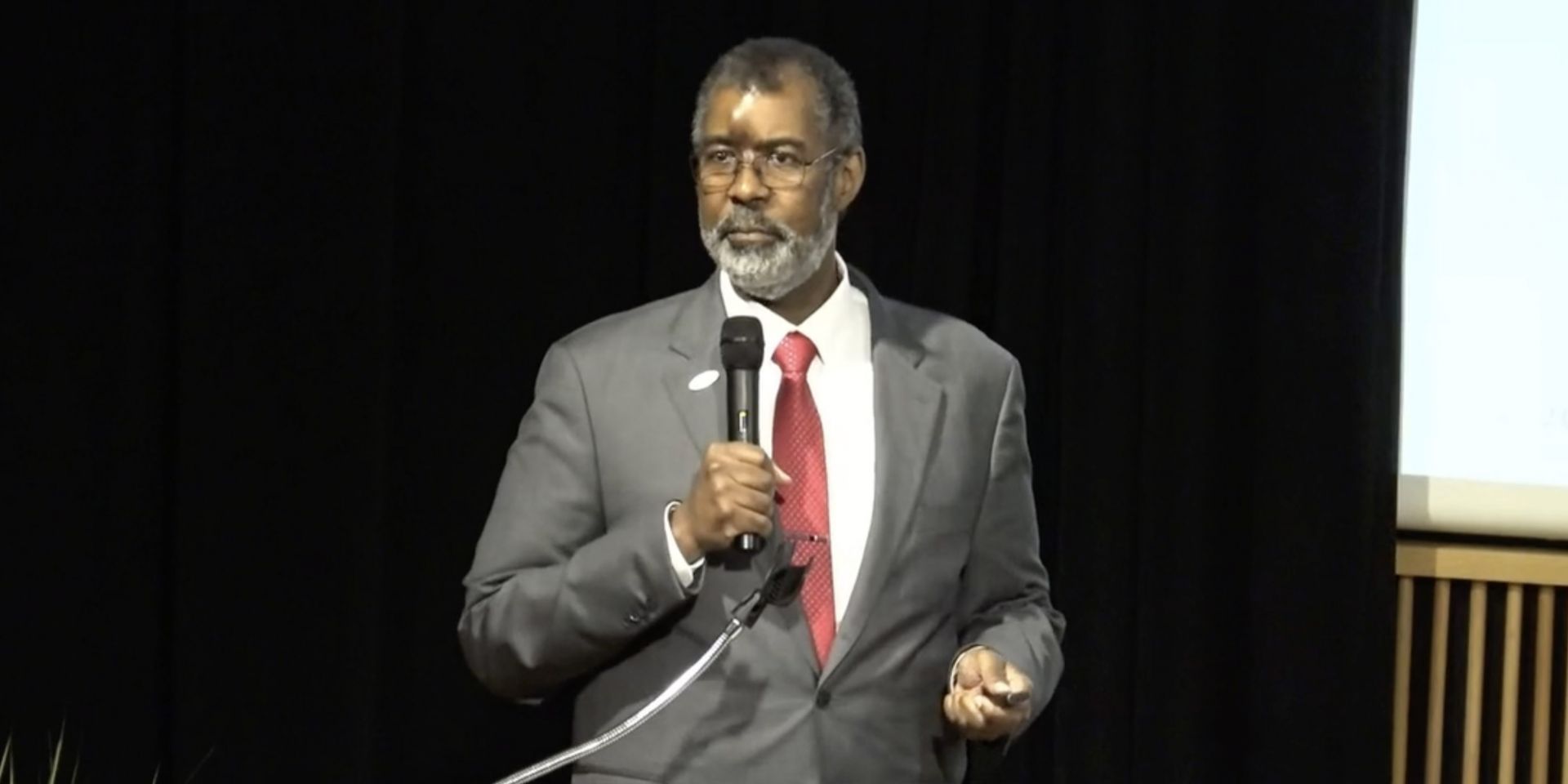
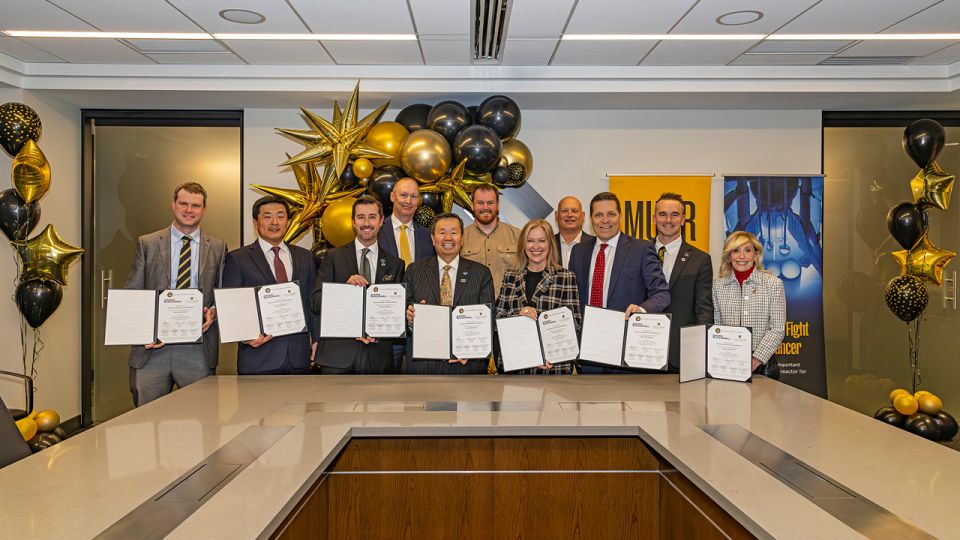
The University of Missouri’s President’s Distinguished Lecture Series featured a talk by William D. Magwood IV, director general of the OECD Nuclear Energy Agency and a former NRC commissioner, on May 13 at the Columbia campus’s Bond Life Sciences Center. Magwood speech was titled “The Next Nuclear Energy Era: Opportunities and Challenges.”
Momentum and challenges: Magwood explained prior to his lecture that he wanted to focus on “the next era” of nuclear energy because of the unprecedented momentum with which it is currently unfolding: “We are seeing the most active resurgence of nuclear energy interest since the Atoms for Peace period in the 1950s, driven by urgent needs related to energy security, environmental targets, and economic development. Importantly, this resurgence is no longer limited to a small group of traditional nuclear countries but involves a much broader range of nations, technologies, and stakeholders.”
He also discussed the challenges that the nuclear industry faces, including in terms of financing, workforce development, and supply chain readiness. He stressed that these challenges “must be overcome if this new phase of nuclear energy is to be successful, safe, and sustainable.”
Global shift, demand growth: Magwood began his talk by noting that the number of countries with which the NEA is working is growing. “We’re finding that it’s becoming very important to recognize that the kinds of questions and technologies that we’re talking about in the U.S., people around the world are having the same conversation,” he said. He related examples of recent discussions he’s had in Kenya and the Philippines in this regard, indicating “a global shift” toward nuclear energy beyond highly developed nations.
He added that in his widespread travels around the world, “The security of supply of electricity is the highest priority in virtually every government that I talk to,” pointing out that this issue has supplanted climate change in top national concerns—though climate change does remain a concern. He attributed this development to Russia’s invasion of Ukraine and subsequent effects on global energy markets, combined with the growing demand around the world for more electricity.
Magwood told the audience, “In fact, in a lot of the countries we deal with, growth [in electricity demand] is expected to basically double over the next 20 years, and that’s just something we haven’t seen in a very long time. So it’s a very big change in realities.”
Meeting needs: Magwood continued, “People in the Global South have recognized that access to electricity is a key to the future. Many [governments] are trying to pull people out of poverty. They’re trying to get people a better chance for more development, and the reality is, if they don’t have electricity, they can’t do it.” He related a story of Kenya’s president wanting to bring American IT investment into his country with a computer server farm, but the president was unable to do so because the server farm’s high electricity demands would have required shutting off electricity for three-fourths of the country.
Magwood said that this need for electricity is why “nuclear energy’s back on the table as a part of the solution” for many countries. The need to meet climate change–mitigation goals with carbon dioxide reductions continues to be another reason for the renewed interest in nuclear power, he added, and “There really is no practical way to do it without nuclear, and that’s something that’s been well recognized.”
At COP 28 in 2023, more than 20 countries, including several that do not yet have operable power reactors, expressed a desire to triple nuclear energy capacity by 2050. “Well, if you want to triple global capacity,” Magwood said in his talk, “you basically have to do everything. You have to continue long-term operation, build new reactors, go into new areas of application outside of electricity.” That includes bringing newcomer countries into the fold.
SMRs in the mix: Magwood next talked about small modular reactors, observing that “a lot of people misunderstand how SMRs will actually fit. . . . SMRs are not going to take over the world.”
Many different types of SMRs are under development, with many different kinds of projected applications that “could be very important in the long-term future.” According to Magwood, SMRs “enable us to think about using nuclear in ways that we have not in the past. . . . A really good example is merchant shipping.
“So you put the SMRs, you put together the large-scale light water, you put together keeping the existing plants, throw in these non-electric applications, and you can sort of creep your way up towards that tripling” of nuclear capacity.
Yes, but: Magwood pointed out the challenge in front of the nuclear industry, noting the “bad track record” of cost overruns with plants like Vogtle, Summer, Flamanville, and Olkiluoto. He stressed the need to rebuild the skills and experience necessary for constructing new nuclear power plants, but also that “one of the big problems is nobody wants to be first. . . . Somebody has to bite the bullet. Somebody has to take the risk. And what I think the industry would really like would be if [governments] somehow put a safety net under the first projects. But right now, to date, the government hasn’t shown an interest in doing that.”
He added that even if companies were willing to accept the risk, “the global supply chain is not really ready” and “we don’t have the infrastructure to do that.” As well, the need for more nuclear fuel is “a big issue that we have to deal with. And human resources. . . . We don’t have enough engineers and scientists.”
Education and communication: These issues led Magwood to call on universities and industry to do a better job of explaining the value of nuclear engineering to society. He observed that many young people today want to pursue careers that “could improve society, make the world a better place. . . . It’s a generational thing. A lot of young people say that, and they just didn’t see how nuclear does that until we talked to them. And then when you talk to them, you see the lights going on. So, it is a communication challenge.”
He finished his lecture by talking about the NEA’s increasing involvement in education, including through the Global Forum on Nuclear Education, Science, Technology, and Policy and through mentoring workshops aimed at high school students. He said, “If we’re going to make a difference in the world, it is going to start with the students. It begins with them.”
_Page_06_Image_0001 copy 2x1.jpg)