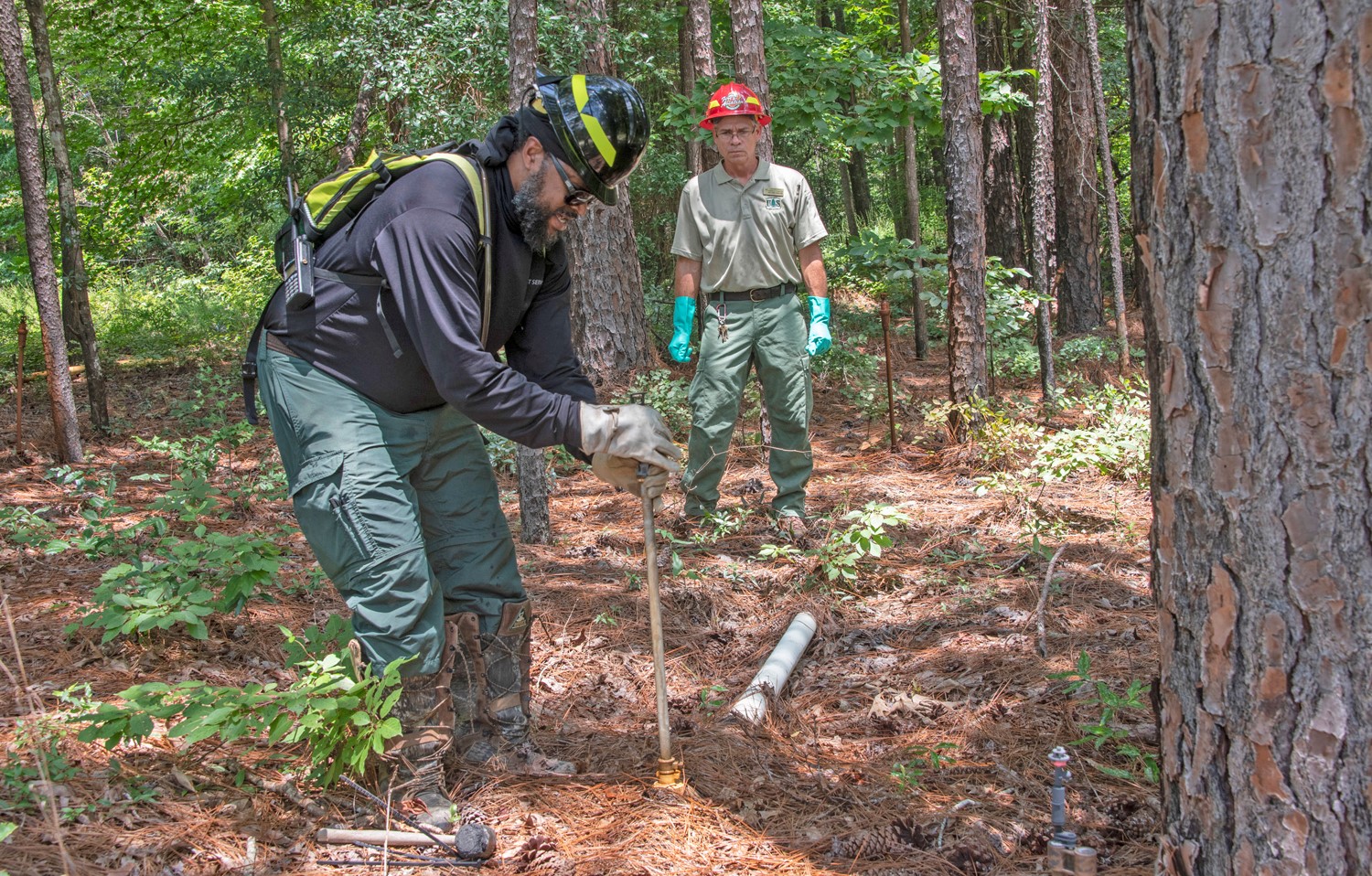
U.S. Forest Service employees Secunda Hughes (left) and Andrew Thompson inspect irrigation piping and sprinkler heads, part of a 62-acre pine plantation used to safely disperse tritium at the Savannah River Site.
The Department of Energy’s Office of Environmental Management (EM) is managing the release of tritiated water using a 62-acre plantation of pine trees and other natural resources to limit radioactively contaminated groundwater from reaching waterways on the Savannah River Site in South Carolina.
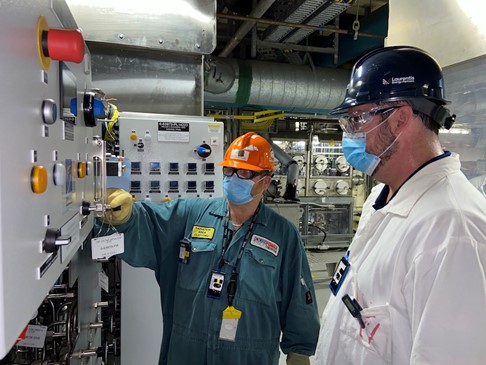
Don Perrie (left), of OPG, and Michael Lefebvre, of Laurentis Energy Partners, examine the He-3 extraction tool installed at Darlington NPP
Laurentis Energy Partners, a subsidiary of Ontario Power Generation (OPG), has launched a new program to produce helium-3. The He-3 will be obtained from tritium stored at OPG’s Darlington nuclear power plant, a four-unit CANDU station located about 100 kilometers east of Toronto.
Darlington houses one of the world’s largest reserves of tritium, which is a by-product of the heavy water used in CANDU reactors.
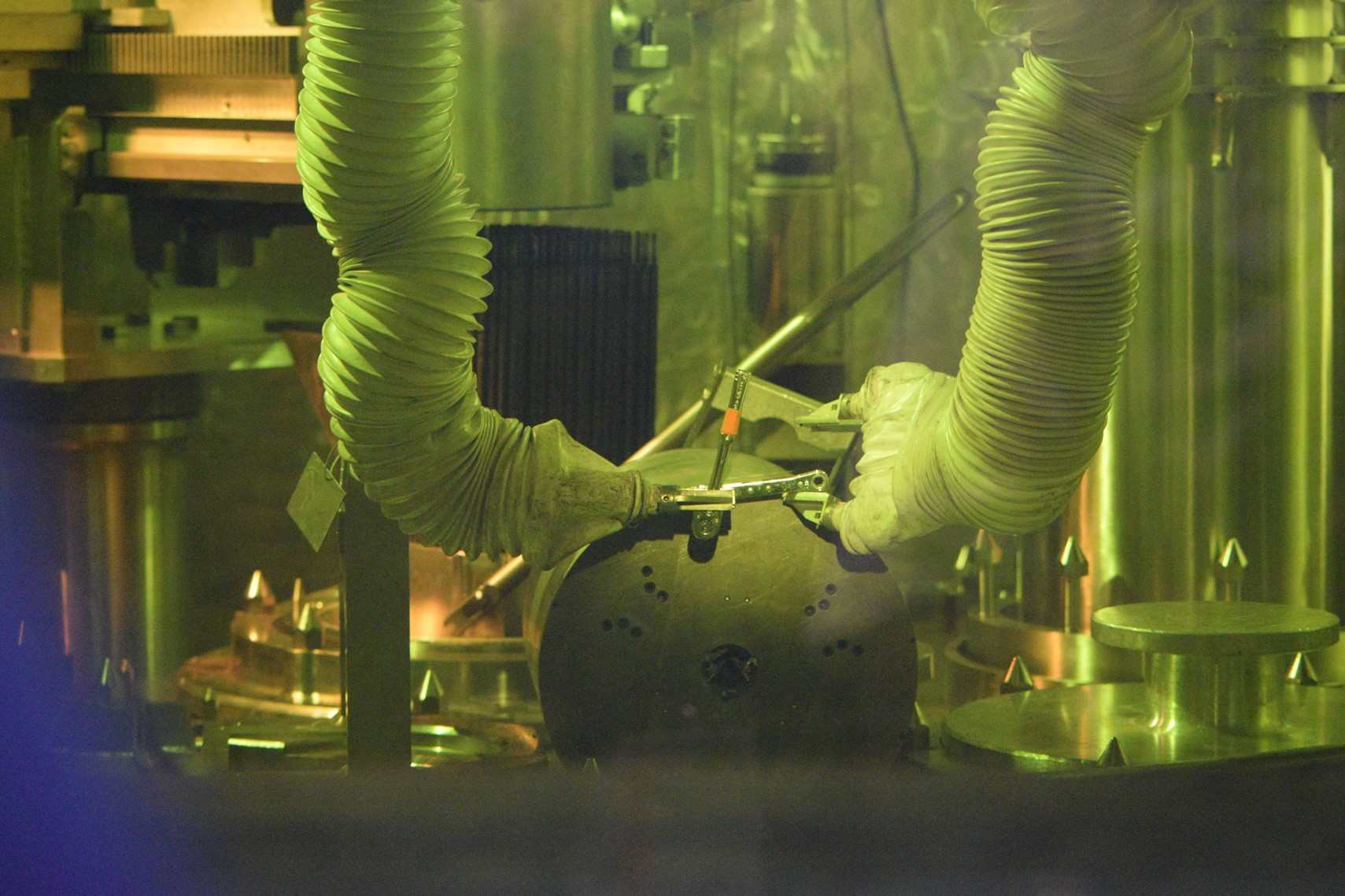
Operators disassemble a cutter head inside a module at the Savannah River's Tritium Extraction Facility using manipulators and hand tools. (Photo: SRNS)
Using basic hand tools and remote manipulators, operators at Savannah River Nuclear Solutions (SRNS) were able to reduce radiation exposure to workers performing cutter head maintenance in the Savannah River Site’s Tritium Extraction Facility (TEF).
According to SRNS, the innovative procedure proved to be an excellent example of real-world application of As Low As Reasonably Achievable (ALARA) principles of time, distance, and shielding.
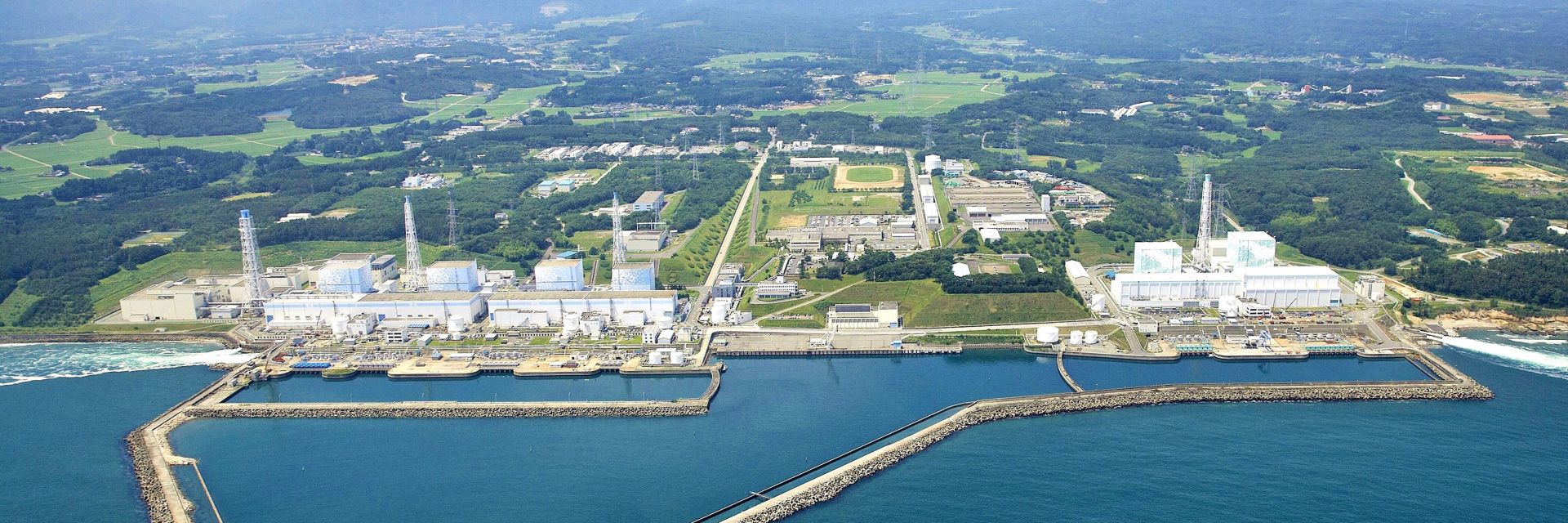
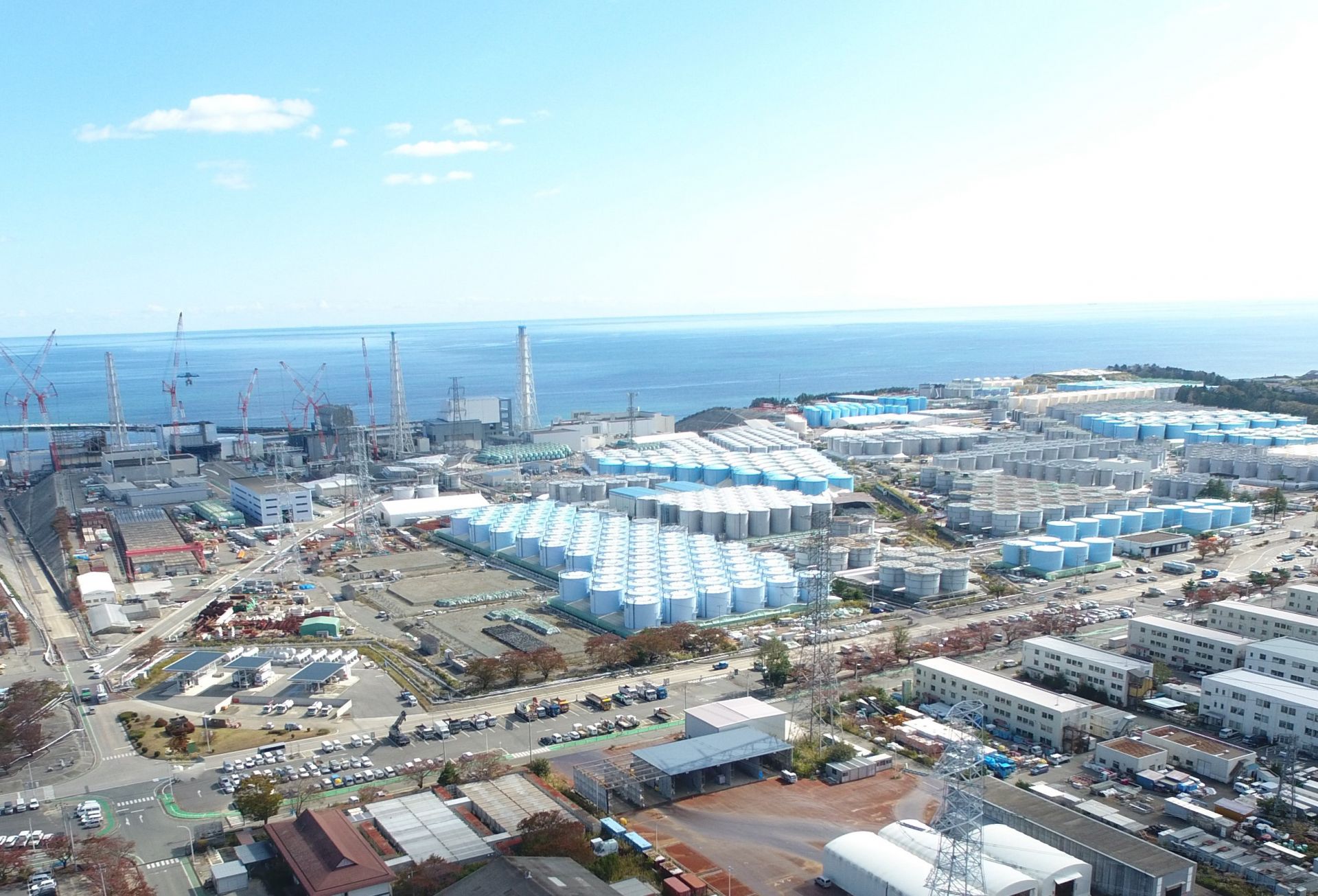
A current picture of the Fukushima nuclear power station with the more than 1,000 water storage tanks on site. Photo: Courtesy of TEPCO.
The Japanese government will soon announce the decision to dispose of stockpiled Fukushima wastewater into the Pacific Ocean, according to an AP News story published last Friday. The decision is years in the making and follows the guidelines from a panel of government-appointed experts named the Subcommittee on Handling of the ALPS-Treated Water (ALPS Subcommittee).

 and Andrew Thompson.jpg)
. of OPG, and Michael Lefebvre, of Laurentis Energy Partners, examine tew He-3 extraction tool installed at Darlington NPP.jpg)
.jpg)