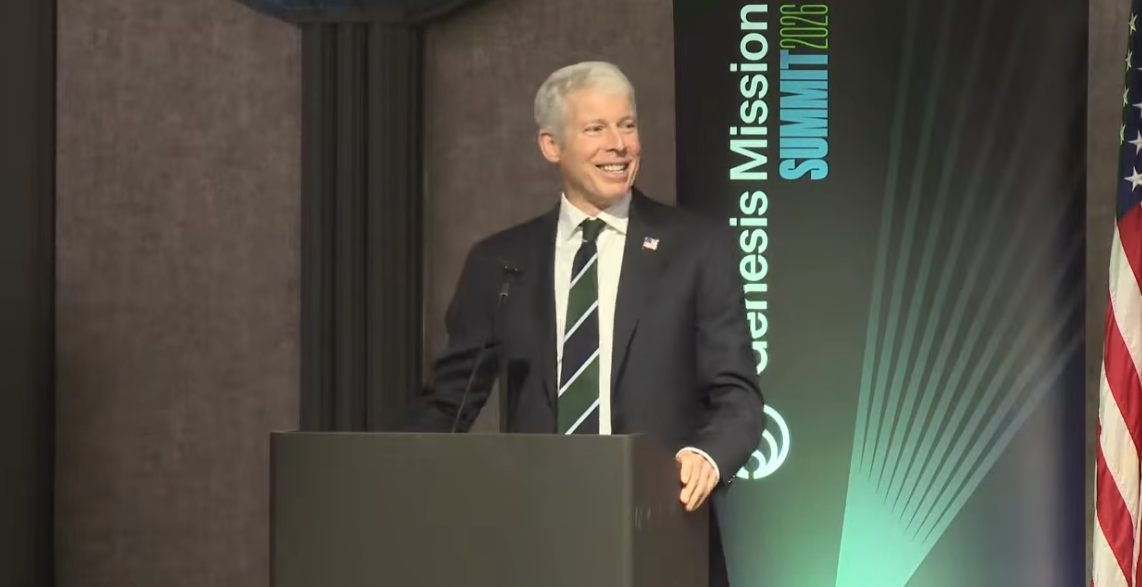
DOE Secretary Chris Wright speaking at the Genesis Mission Summit on July 22. (Image: DOE)
The Department of Energy announced yesterday that it has selected 278 projects under the Genesis Mission request for applications, which opened in March.
According to a White House press release on the same day, $5 billion in federal commitments will be put toward the Genesis Mission.
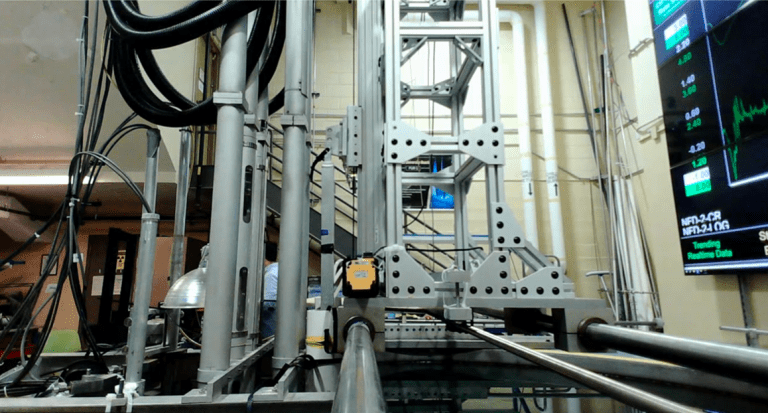
Purdue’s PUR-1 research reactor. (Photo: Purdue University)
The remote, automatic, real-time adjustment of a research reactor’s power by a geographically distributed control system has been reported by researchers from Idaho National Laboratory, the Grainger College of Engineering at the University of Illinois–Urbana-Champaign, and Purdue University. The investigators first used an automatic adjustment “digital control loop” system to demonstrate remote adjustments of Purdue’s PUR-1 research reactor. They then applied a reinforcement learning model that simulates the interaction of physical forces inside the reactor, making the loop system more autonomous.
Argonne’s Paige Kingsley presents “Inside the Neural Network: An Interactive AI Experience” at the AI STEM Education Summit. (Photo: Argonne)
Last September, in the Chicago suburb of Lemont, Ill., Argonne National Laboratory hosted its first AI STEM Education Summit. More than 180 educators from high schools, community colleges, and universities; STEM administrators; and experts in various disciplines convened at “One Ecosystem, Many Pathways–Building an AI-Ready STEM Workforce” to discuss how artificial intelligence is reshaping STEM-related industries, including the implications for the nuclear engineering classroom and workforce.

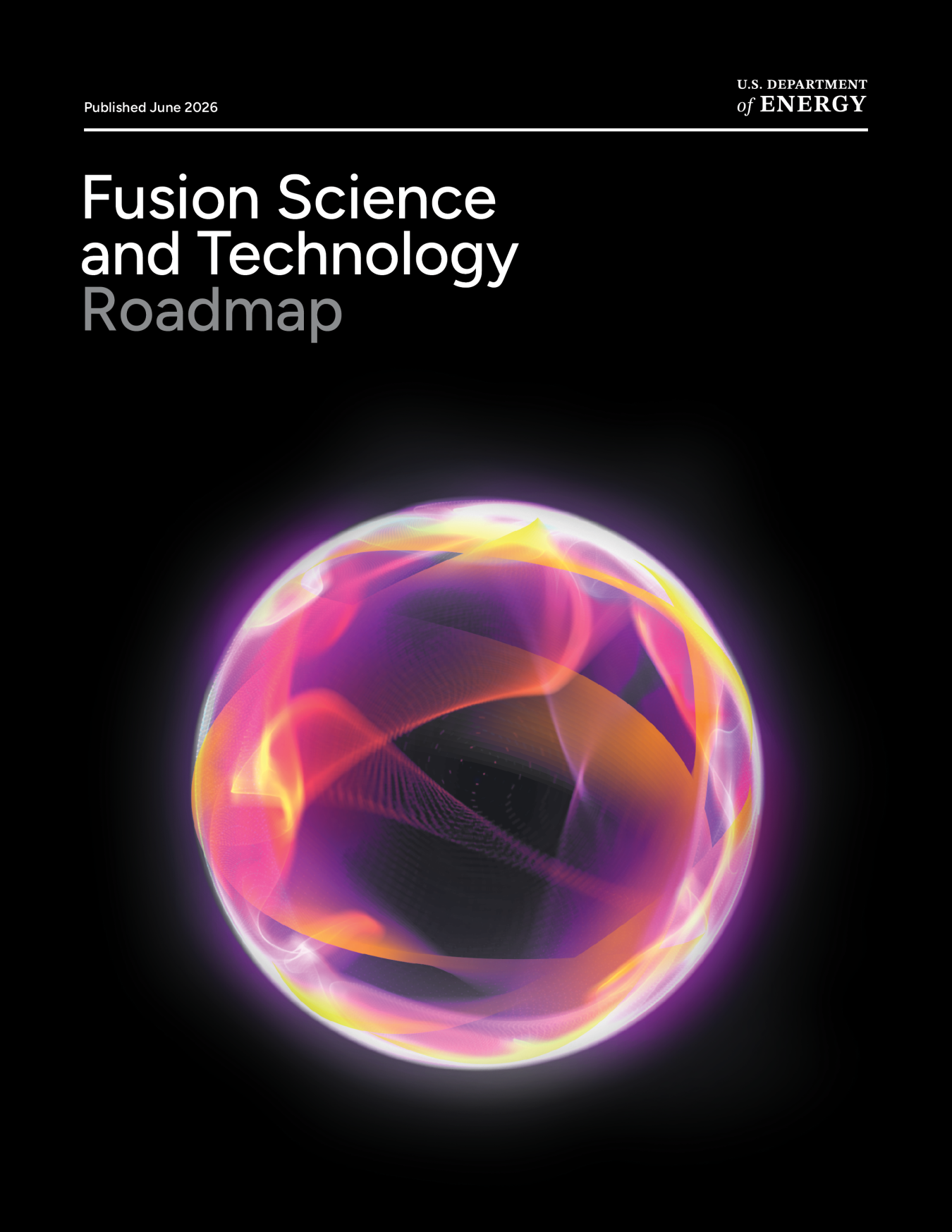 The Department of Energy has released what it is calling a “finalized” national strategy to accelerate the development and commercialization of fusion energy, with the goal of scaling up the private fusion sector by the mid-2030s.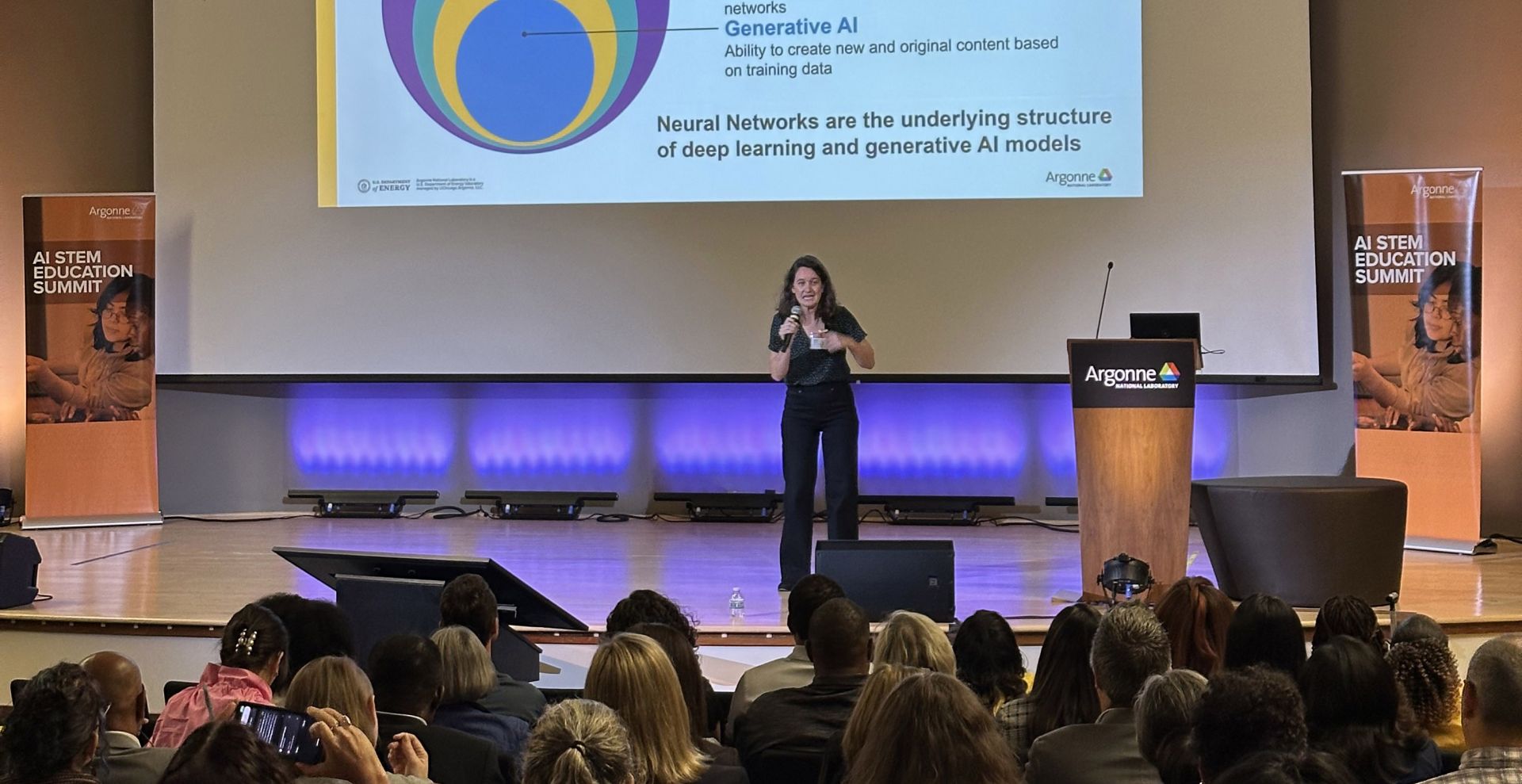

 The Department of Energy’s newly published