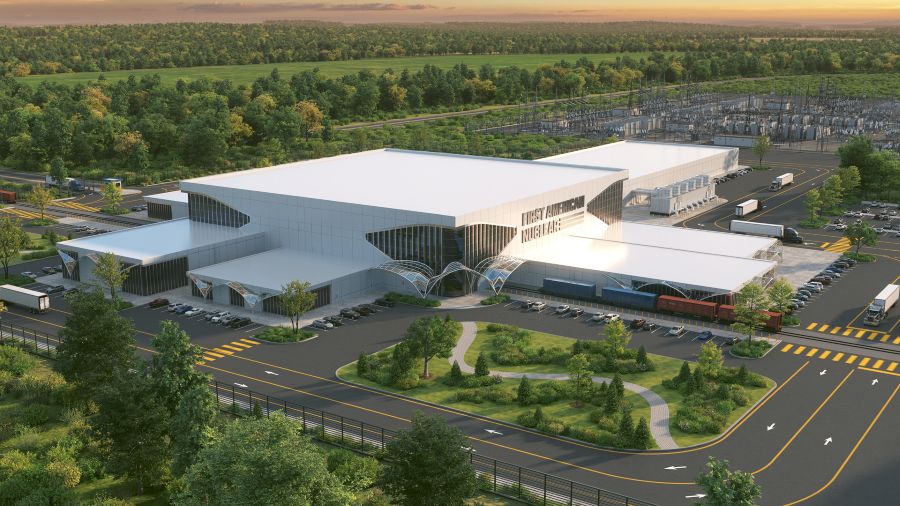
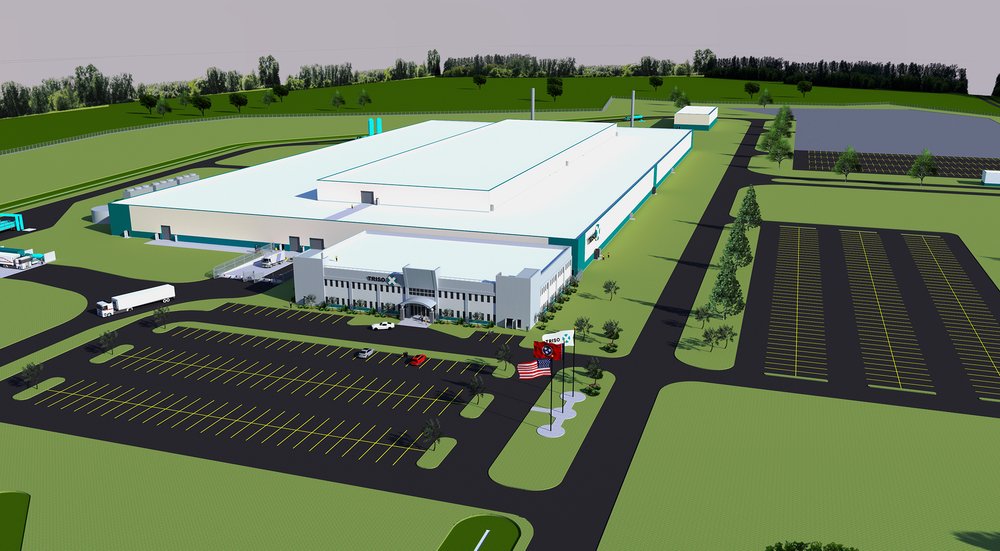
A stylized rendering of a FANCO Energy Park. (Image: FANCO)
First American Nuclear Co., developer of the 240-MWe EAGL-1 reactor, has announced its intention to make its own advanced reactor fuel. The Indianapolis-based company has filed a regulatory engagement plan with the Nuclear Regulatory Commission for the construction of a Category II high-assay low-enriched uranium deconversion and fuel fabrication facility, and the NRC has docketed the plan for consideration.
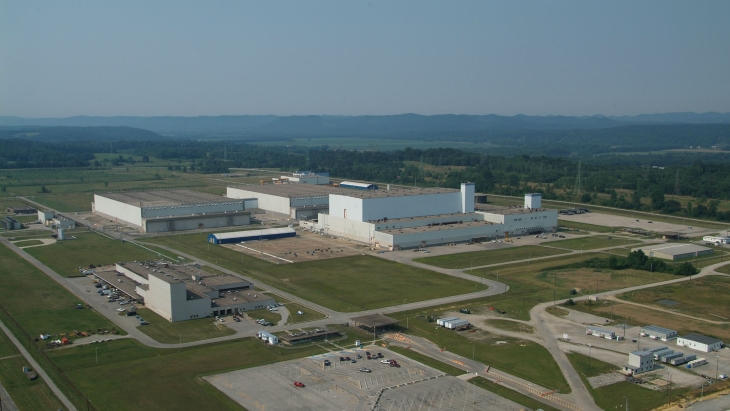
August 14, 2026, 4:04PMNuclear NewsNatalia Amosova and Seth Grae Centrus’s American Centrifuge Plant, in Piketon, Ohio. (Photo: Centrus Energy)
The global nuclear revival, which is fueled by unprecedented demand for firm, affordable, dispatchable power for artificial intelligence and data center build-out, energy security imperatives, and climate commitments, has exposed a structural reality of the Western fuel cycle: No single allied nation currently possesses the full suite of front-end capabilities. From mining through conversion, enrichment, fabrication, and the emerging deconversion and metallization steps required for reactor fuels, capability is distributed across Canada, France, Japan, the United Kingdom, and the United States (collectively, the “Sapporo Five”), as well as a small group of close partners.
Concept art showing the Aurora Powerhouse. (Image: Oklo)
A strategic collaboration has been launched by Lightbridge Corporation and Oklo Inc. to explore locating Lightbridge’s fuel fabrication facility within Oklo’s planned advanced fuel manufacturing facility. The collaboration aims to “accelerate the commercialization of advanced nuclear fuels through joint fuel fabrication and research and development, including manufacturing fuel using repurposed plutonium from legacy materials,” according to the companies.
The Westinghouse fuel fabrication facility in South Carolina. (Photo: Westinghouse)
Hundreds of employees at the Westinghouse nuclear fuel fabrication facility in South Carolina are trying to form a union and join the International Brotherhood of Electrical Workers.
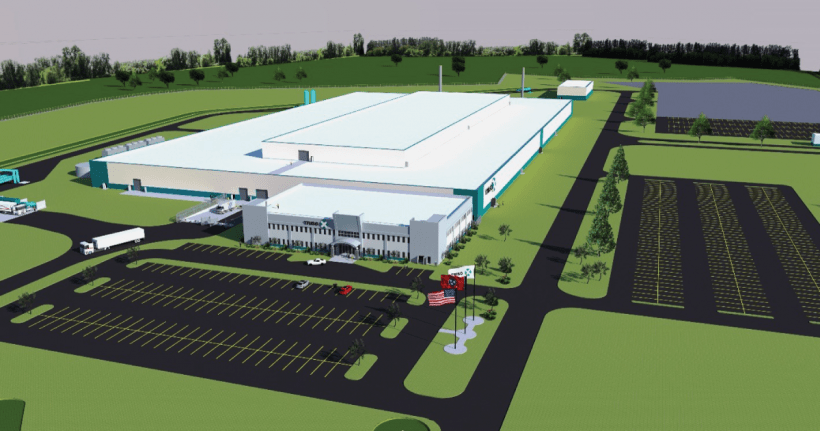
A rendering of the TRISO-X fuel fabrication facility. (Image: DOE)
The Nuclear Regulatory Commission recently presented its proposed 30-month licensing review timeline of TRISO-X’s planned fuel fabrication facility at the project’s first-ever public meeting in Oak Ridge, Tenn.
TRISO-X, a subsidiary of X-energy, has requested a 40-year license to possess and use special nuclear material to manufacture advanced fuel. The facility would be the first-ever commercial-scale fuel fabrication plant focused on using high-assay low-enriched uranium (HALEU).
Artist’s rendering of the proposed TRISO-X World Headquarters and Commercial Fuel Facility at the Horizon Center Industrial Park in Oak Ridge, Tenn. (Image: X-energy)
The Nuclear Regulatory Commission has accepted an application from X-energy's fuel subsidiary, TRISO-X LLC, for a proposed TRISO-X Fuel Fabrication Facility (TF3) in Oak Ridge, Tenn., X-energy announced last week. A 30-month review schedule has been developed by the NRC that would be completed by June 2025, assuming TRISO-X provides sufficient responses to expected requests for additional information (RAIs) within 30 to 60 days of their issuance. On December 16, the NRC announced that it would seek public input on the scope of its environmental review and environmental impact statement for the application and published a notice in the Federal Register.
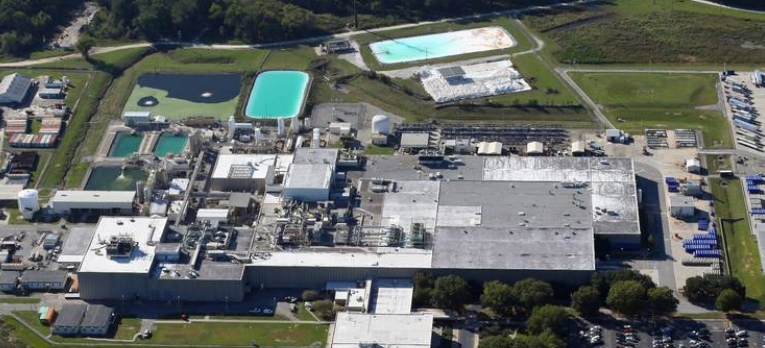
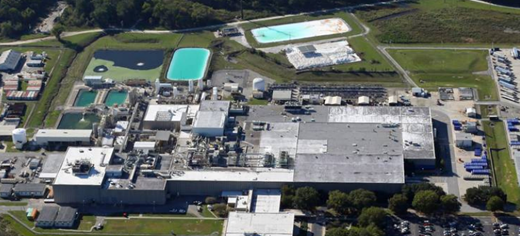
An aerial view of Westinghouse’s Columbia Fuel Fabrication Facility in Hopkins, S.C. (Photo: Westinghouse)
The Nuclear Regulatory Commission yesterday announced that it has issued a renewed license for Westinghouse Electric Company’s Columbia Fuel Fabrication Facility (CFFF), authorizing operations at the plant for another 40 years—through September 12, 2062.
Located in Hopkins, S.C., the CFFF manufactures fuel rods for use in commercial nuclear reactors. According to Westinghouse, 10 percent of the nation’s electricity comes from the fuel manufactured at the facility.