European fusion studies shed light on disruptive phenomena at plasma edge
Recent research out of the United Kingdom and Germany is offering promising advances in the understanding of fusion plasmas, potentially bringing the dream of commercial fusion energy closer to reality.
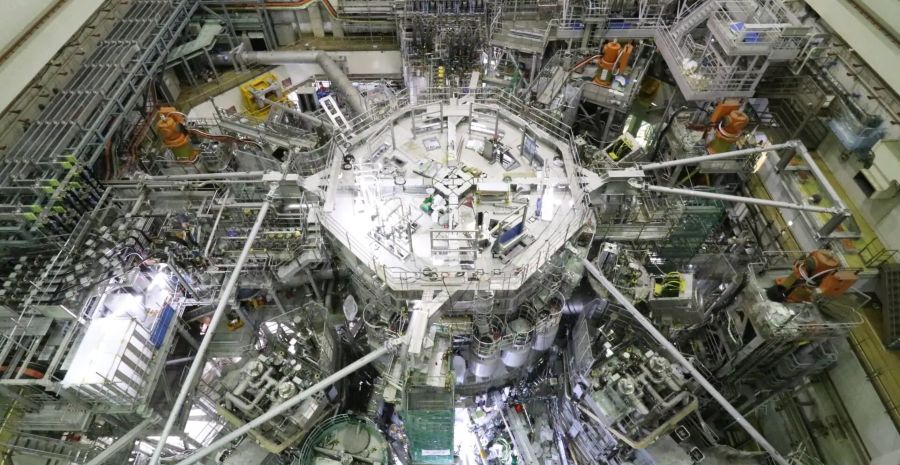
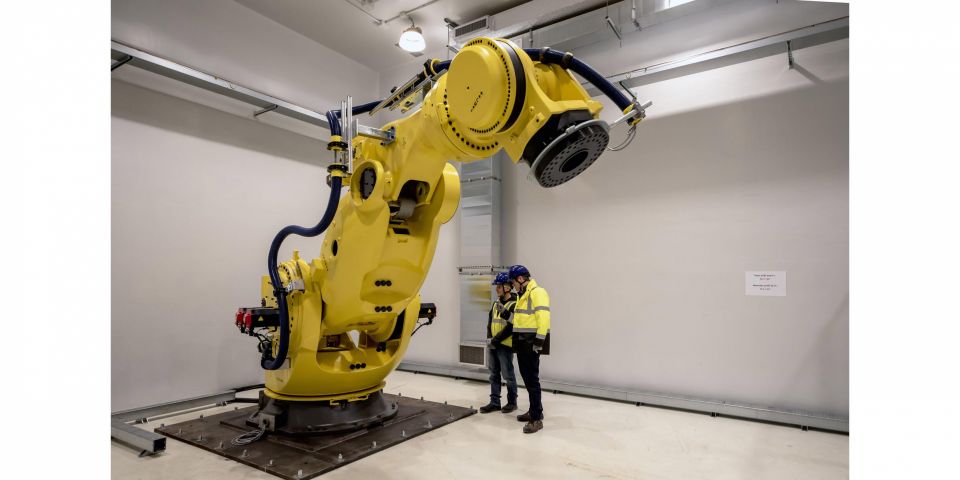
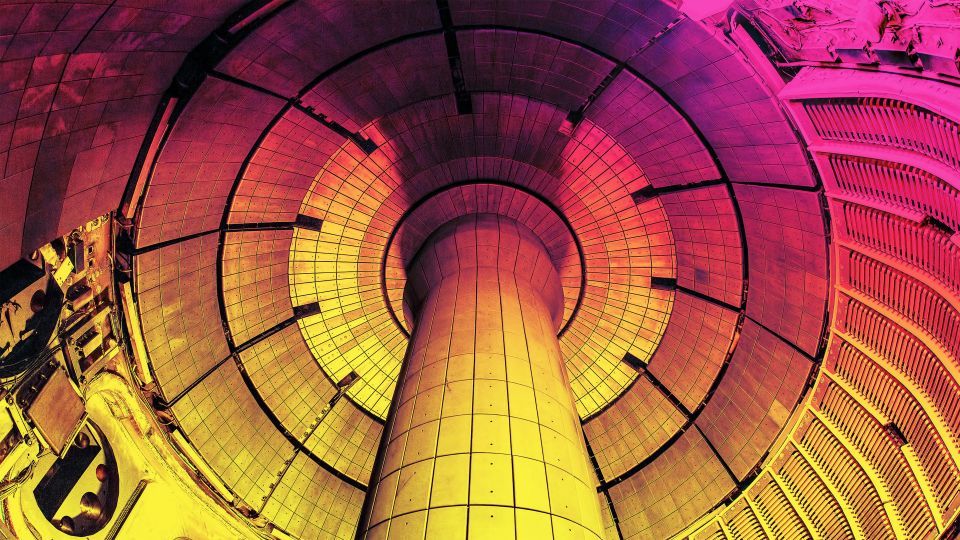
The U.K. Atomic Energy Authority reports that it has completed the fifth in a series of experiments with its MAST Upgrade fusion machine, the largest operational spherical tokamak in the world. In this latest round of experiments, UKAEA researchers employed new techniques to detect and control plasma imbalances while achieving the MAST Upgrade’s highest plasma pressure yet.
Germany’s Max Planck Institute for Plasma Physics reports that two IPP studies published in the journal Physical Review Letters “explain for the first time, from first principles, what happens in the extremely thin edge layer of a fusion plasma.” Like the new research reported by the UKAEA, the German studies shed light on ways to better control bursts of energy that disrupt plasma stability in fusion machines.
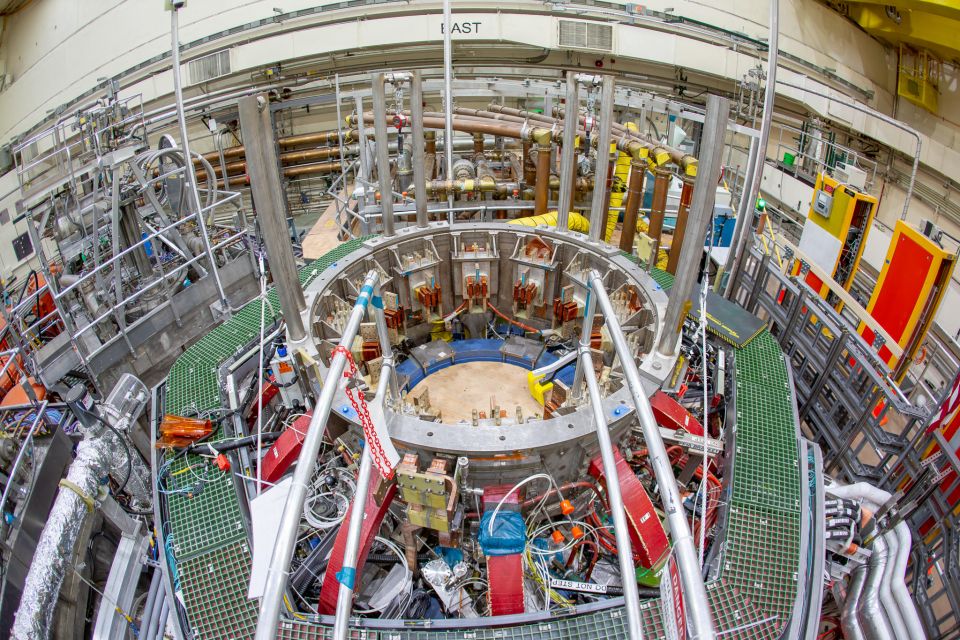
MAST Upgrade experiments: The MAST, or Mega Amp Spherical Tokamak, Upgrade is the UKAEA’s flagship fusion technology, capable of generating plasmas of 30 million degrees Celsius. It is being used to achieve three main objectives: to investigate novel exhaust concepts, to derisk and advance the spherical tokamak design for future fusion power plants, and to extend physics knowledge in support of the broader U.K. fusion program.
During 2025 and 2026, the MAST Upgrade research team produced more than 1,000 fusion plasmas, in which they sought to suppress the damaging plasma instabilities caused by the high pressures generated within the plasma. These instabilities, known as edge localized modes (ELMs), take the form of eruptions along the plasma edge that cause drops in the plasma pressure and loss of energy, preventing the fusion machine from achieving commercially viable levels of energy. These eruptions can also damage the tokamak’s inner wall and exhaust system.
To suppress the ELMs, the scientists applied research regimes known as the quasi-continuous exhaust (QCE) mode and resonant magnetic perturbations (RMP) ELM suppression mode, in which coils create three-dimensional magnetic fields that reduce the pressure along the plasma edges to keep the plasma stable and prevent the bursts.
In addition, two other regimes, called the quiescent H (QH) mode and I mode, were used to enhance the plasma energy confinement while mitigating certain problems associated with large ELMs.
A step closer: In another breakthrough, the UKAEA research team developed a technique for controlling the position of the plasma. This technique involved precise measurements of the visible light that is created by deuterium emitted from the tokamak’s upper and lower outer divertors. These measurements allowed for the real-time detection and correction of minute positional imbalances.
In yet another aspect of the new research with the MAST Upgrade, the investigators explored the creation of plasma shapes referred to as “negative triangularity.” Such shapes can allow for high-power operations of the tokamak without the generation of ELMs.
The new achievements made with the MAST Upgrade will “enable plasmas to operate with a more stable boundary, giving genuine confidence that fusion power plants can operate with fewer damaging energy surges” and will advance “fusion towards using automated, real-time control systems that future power plants will need to operate without constant manual intervention,” according to the UKAEA.
James Harrison, the head of MAST Upgrade Science at the UKAEA, said that the latest research results “genuinely shape the design of future fusion power plants.” He continued, “The level of international interest in our data reflects the U.K.’s central role in global fusion research, and these findings take us another step closer to practical fusion energy.”
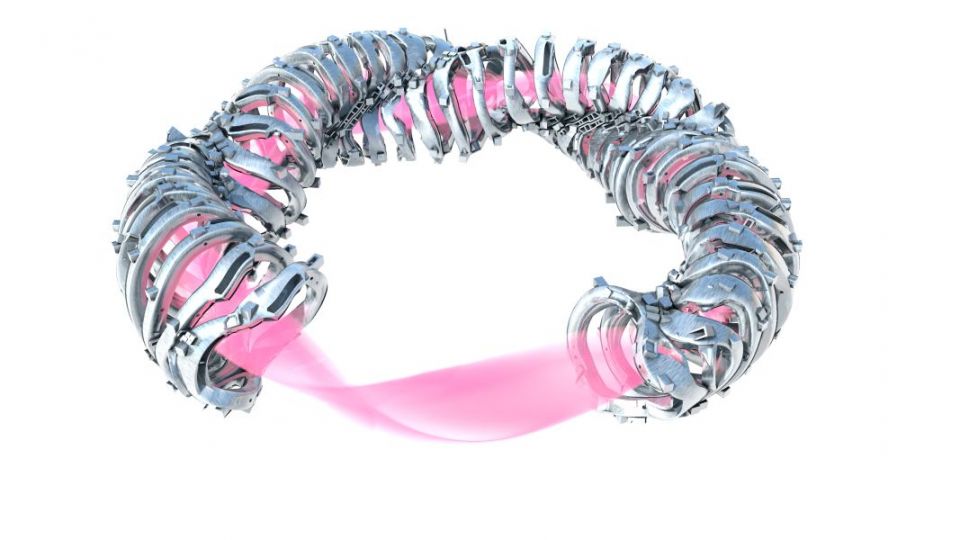
ASDEX Upgrade studies: At IPP, two research teams working with simulations of the ASDEX Upgrade tokamak used high-performance computers to calculate details of a strange phenomena happening along the plasma edge. The ASDEX, or Axially Symmetric Divertor Experiment, Upgrade is a mid-sized tokamak that has been in operation since the early 1990s.
ELMs and QCE: One IPP team, led by Kaiyu Zhang, focused on the steep pressure gradient at the plasma edge where ELM eruptions occur. The team simulated the QCE behavior.
Those simulations revealed that a wavelike structure travels along an invisible boundary on the plasma edge, called the separatrix, causing the pedestal to oscillate rhythmically. During this oscillation, fingerlike packets of plasma are continuously pinched off. Each packet is only about 1 centimeter across, but it extends for more than 19 meters along the magnetic field lines. The packets propagate outward at a rate of about 1,000 meters per second, distributing heat over a broad area.
In their simulations, Zhang’s team demonstrated for the first time that this phenomenon is caused by the interplay of two different kinds of instabilities that meet at the separatrix boundary. Suppression of this interplay causes the heat-carrying plasma packets to disappear. The density and temperature profiles from the simulations agreed with actual measurements made with the ASDEX Upgrade.
Magnetic field direction: The other IPP team, led by Baptiste Frei, ran simulations to better understand the effects of magnetic field direction on the H mode, which is the heating power required to reach the tokamak’s operating regime.
The simulations showed that the turbulence at the plasma edge generates an energy flow feedback loop that can shear the turbulent structures apart, thereby bringing the turbulence under control. However, the feedback loop operates efficiently in only one direction of the magnetic field—in which the turbulent structures at the plasma edge are tilted so that they transfer their energy effectively to the flow. In the unfavorable direction of the magnetic field, the turbulence and instability remain strong.
Accessing H mode: Frei explained, “Reversing the magnetic field changes, in a sense, the choreography of the turbulence—and with it how readily the plasma can access H mode.”
IPP summarized the results of both studies by noting that “at the plasma edge, turbulence is not merely a disruptive influence that researchers seek to suppress. It self-organizes and, in doing so, helps regulate how effectively a plasma is insulated and how it exhausts its heat.” To design a demonstration fusion power plant, IPP continued, “a quantitative understanding of this interplay” is required.
.jpg)