LANL’s ZiaCore microreactor reaches criticality
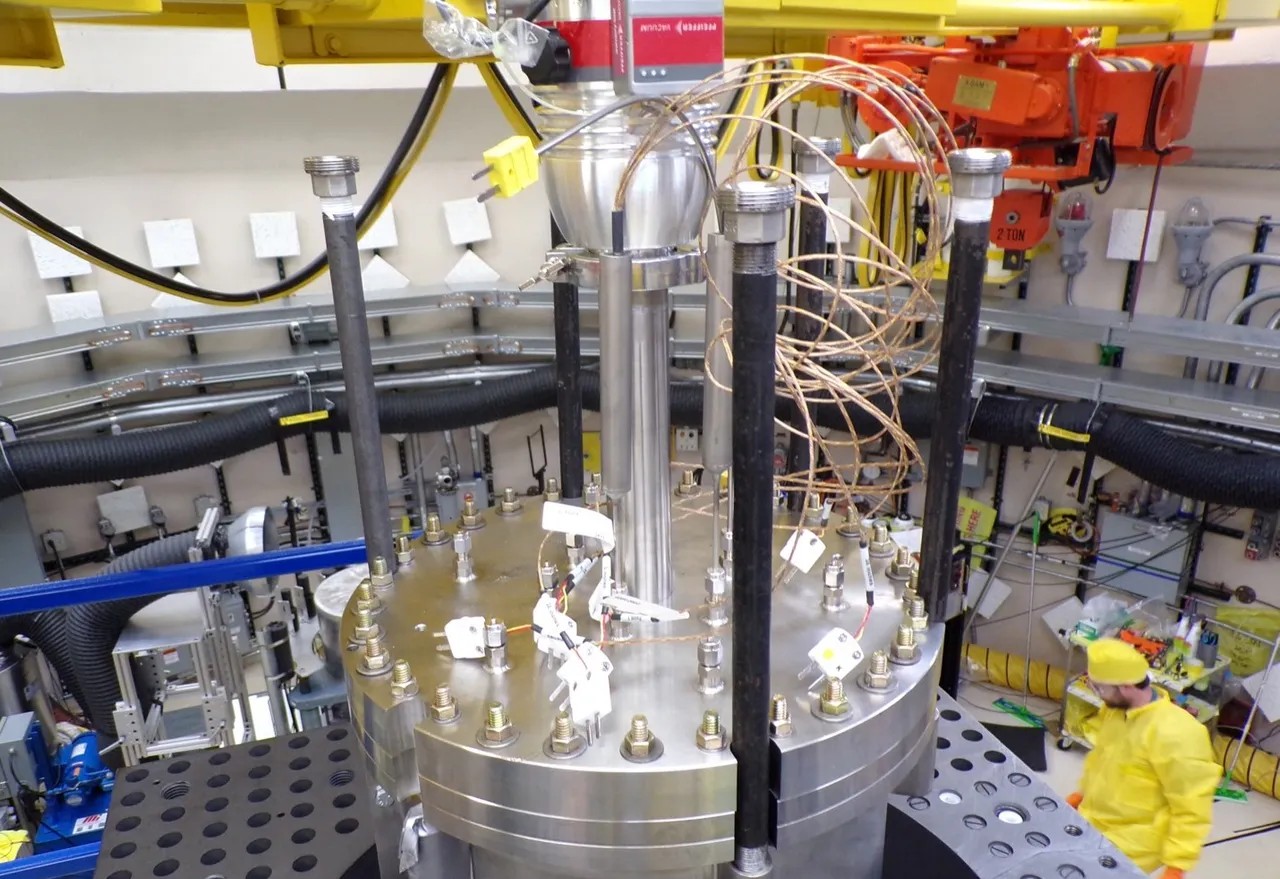
Last week, Los Alamos National Laboratory announced that its ZiaCore microreactor was brought to zero-power criticality at high temperatures in April through May of this year during four weeks of experiments on the Deimos test bed at the National Criticality Experiments Research Center (NCERC).
The design: According to a LANL press release from May 2025, a key question driving ZiaCore’s design at its inception in 2021 was, “What would happen if we developed a reactor with real-world, off-the-shelf materials?”
The team came up with a system that uses a zirconium hydride moderator and heat pipe cooling and won $5.5 million in funding over three years from LANL’s Laboratory Directed Research and Development (LDRD) program with an October 2023 start date.
While significant developments have been made to the high-assay low-enriched uranium supply chain in the United States in recent years, the ZiaCore team wanted to build for what was already commercially available and so designed the microreactor to work with low-enriched uranium dioxide fuel, though the design can also use HALEU.
The press release said it’s designed to scale up or down, making it adaptable to different power needs and space constraints. The team estimates the microreactor will have an operational lifetime of eight years.
“The idea is you could turn this machine on and produce the same energy as a large diesel generator, but there's no refueling for eight years,” said Topher Matthews, a nuclear engineer at LANL and principal investigator of the project.
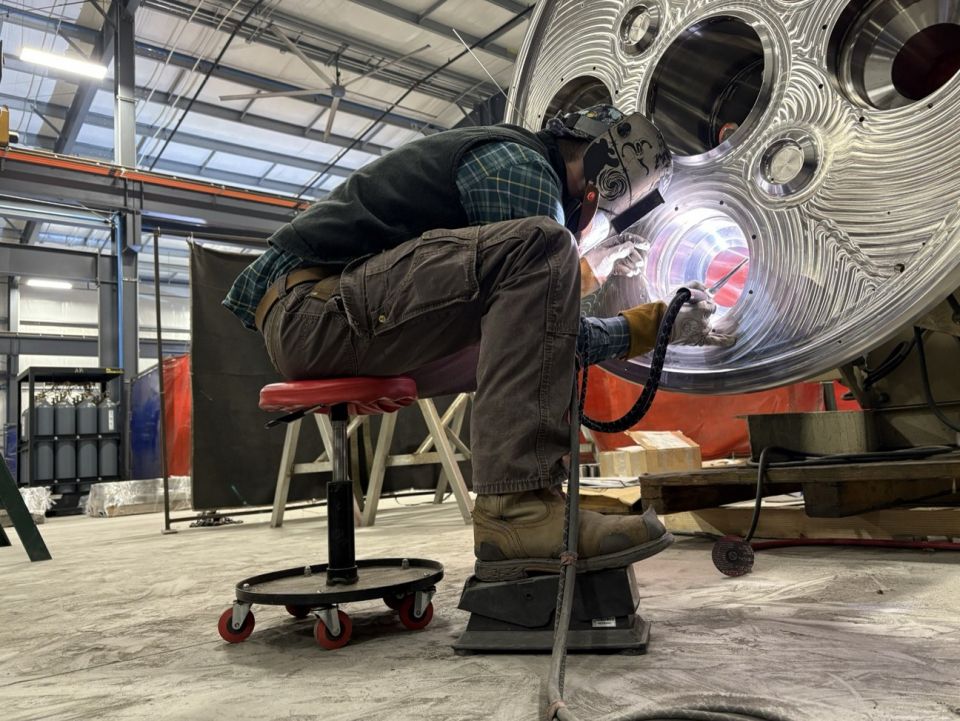
Much of the work was done in-house. In an ANS-hosted panel discussion in March, LANL engineer Nicholas Thompson said that ZiaCore’s heat pipes and advanced moderators were built at the lab.
In an August 1 LinkedIn post, Thompson said the team used a mixture of existing fuel and new fuel purchased for the project.
Critical context: While the ZiaCore team’s achievement was not announced until last week, it preceded a series of other zero-criticality test announcements from companies participating in the Reactor Pilot Program (RPP) that raced to reach criticality by July 4.
Nuclear Newswire checked in on the RPP companies as the deadline approached. Three met the deadline—Antares, Valar Atomics, and Aalo Atomics—and Oklo’s Groves Isotope Test Reactor is expected to achieve criticality soon. A fourth company—Deployable Energy, which is not part of the RPP but is participating in the DOE's Nuclear Energy Launch Pad—also reached criticality by the July deadline.
While there is a wide gap between the zero-power criticality milestone—where a fission chain reaction is established but stopped before measurable generation of heat or creating fission products—and full-scale power approved for commercial use, it remains an important checkpoint demonstrating the viability of key components.
According to LANL, the ZiaCore team conducted a series of tests at more than 800°C and at near-zero-power criticality. “Researchers were able to glean key data about the operations and characteristics of the full-scale system, including temperature coefficients of reactivity. These are needed insights for this system and for the larger category of microreactor development,” LANL stated.
Quoted: “The execution of our ZiaCore experiment will support an entire category of nuclear power microreactors,” said Christopher Stanek, director of the Nuclear Energy Program Office at LANL. “The experiment will provide valuable data for low-enriched reactor technologies, including components developed at Los Alamos, at representative reactor temperatures.”
Ellen Cerreta, LANL’s associate laboratory director for physical sciences, said, “This project draws together experimentalists, physicists, engineers as well as production and fabrication experts.” She continued, “The team saw a pressing need in our energy landscape and was able to move quickly to build on Los Alamos’s strengths in heat pipes, materials development, and criticality testing. The experiments proved a success not just on the terms of zero-power criticality, but how Los Alamos is able to pivot to important, practical applications in the national interest.”
In his LinkedIn post, Thompson called attention to the time between achievement and announcement, writing, “After an entirely too long delay, we can finally share that LANL achieved criticality with our ZiaCore critical experiment at the National Criticality Experiments Research Center (NCERC). This was a demonstration experiment of the key technologies used in the ZiaCore reactor design (heat pipe cooling, zirconium hydride moderation) and was performed with the central core at over 800C. It was also performed on a fairly small budget—it was funded by the LANL LDRD program—and that included buying new fuel, making heat pipes and zirconium hydride, and doing the critical experiment at NCERC.”